
 Worksheets
Reproductive system
Total questions: 65
Worksheet time: 7hrs 52mins
What is the function of the human male reproductive system?
grow and develop baby
produce egg and deliver egg to female
internal fertilization
produce sperm and deliver sperm to female
Which part of the female reproductive system is the site of fertilization?
Uterus
Fallopian tube
Ovary
Cervix
Which structure allows nutrients to pass to the embryo and takes wastes away from the embryo?
Placenta
Ovary
Testes
Fallopian tubes
In an embryo, the process when the cells start becoming the many specialized types of tissues and organs it needs is known as
Fertilization
Differentiation
Genetic recombination
Meiosis
What is the periodic shedding of tissues and blood from the inner lining of the
uterus?
menopause
ovulation
pregnancy
menstruation
What is the main reproductive organ in females? What hormone does it secrete?
Testes: Estrogen
Testes: Testosterone
Ovaries: Estrogen
Ovaries: Testosterone

Identify the structure labeled "B".
Fallopian Tubes
Ovaries
Uterus
Placenta

What is the function of A & B?
A - transport gametes (eggs)
B - Produce eggs
A - produce eggs
B - transport gametes (eggs)
A - transport gametes (sperm)
B - produce sperm
A - produce sperm
B - transport gametes (sperm)
The male and female reproductive systems are regulated by...
hormones
sex drive
number of chromosomes
heredity

Where does the following occut?
A) Meiosis?
B) Fertilization?
C) Growth & Development of Baby?
A) 5
B) 4
C) 3
A) 4
B) 5
C) 3
A) 3
B) 4
C) 5
A) 3
B) 5
C) 4
What is one difference between Meiosis and Mitosis?
Meiosis (4 different cells made)
Mitosis (2 identical cells made)
Meiosis (2 identical cells made)
Mitosis (4 different cells made)
Meiosis (offspring identical to parent)
Mitosis (offspring different from parent)
Meiosis (offspring have 46 chromosomes)
Mitosis (offspring have 23 chromosomes)
Why are you not genetically identical to your mom?
You get all your genes from her
You grew and developed in her
You dad has strong genes
You get half DNA from mom and half DNA from dad
What is the function of A & B?
A - transport gametes (eggs)
B - Produce eggs
A - produce eggs
B - transport gametes (eggs)
A - transport gametes (sperm)
B - produce sperm
A - produce sperm
B - transport gametes (sperm)
The male hormone that regulates sex drive and male characteristics?
Progesterone
Estrogen
Testosterone
The female sex hormone that gives female characteristics
Estrogen
Progesterone
Testosterone
Identify during which trimester does the following event takes place.
LUNGS AND DIGESTIVE SYSTEM MATURE
FIRST TRIMESTER
SECOND TRIMESTER
THIRD TRIMESTER
Identify during which trimester does the following event takes place.
ALL ORGAN SYSTEMS BEGIN TO FORM DURING CELL DIFFERENTIATION
FIRST TRIMESTER
SECOND TRIMESTER
THIRD TRIMESTER

Sperm are produced in the
Bladder
Testes
Scrotum
Ovaries

Human eggs are usually fertilized in the
Uterus
Ovary
Oviduct
Cervix

Which of the following is NOT true about the placenta?
The placenta protects baby from drugs the mother uses.
The mother's blood does not mix with the baby's blood in the placenta.
Waste is passed from the embryo through the placenta into the mother's blood.
The placenta prevents some diseases from spreading from the mother to the embryo.
What happens during labor?
Strong muscular contractions push the baby out.
The fetus develops a heartbeat.
The umbilical cord is tied and cut.
Strong muscular contractions of the uterus cause the cervix to enlarge.
The release of a mature egg into an oviduct is called
menstruation
menstrual cycle
ovulation
fertilization
A ___________ is formed when fertilization occurs.
embryo
zygote
fetus
sperm
Sex cells have __________ the number of chromosomes of other body cells.
twice
half
same
none of the above
Which is the correct order of human development?
fetus, embryo, zygote
zygote, embryo, fetus
embryo, fetus, zygote
zygote, fetus, embryo
An egg develops, goes into the oviduct, then travels to the uterus; this is known as
Ovulation
Menstruation
Fertilization
the menstrual cycle
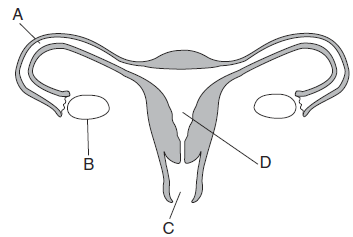
The human female reproductive system is represented below. Where will the embryo attach itself after fertilization?
A- fallopian tube
B - ovary
C - vagina
D - uterus

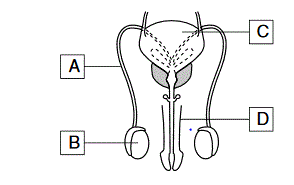
The diagram shows the male reproductive system and part of the urinary system. Which is the prostate gland?
A
B
C
D
What would be the result of cutting both the sperm ducts in a male animal?
Male sex hormones would no longer circulate in the blood.
The animal would be unable to pass urine.
The animal would be unable to develop sperms.
The animal would become unable to reproduce.
A reproductive system is represented in the diagram below. Which structure is correctly paired with its reproductive function?
A – transport of sperm
C– production of sperm
D– maturation of sperm
B– transport of urine
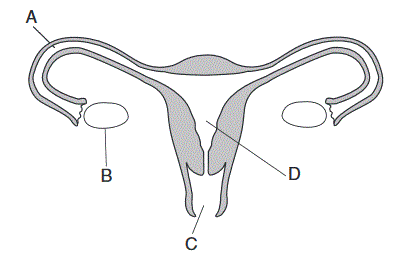
The diagram below represents structures found in the female reproductive system. If the areas labeled A were completely blocked on both sides, the most likely result would be that
egg production would stop
sperm production would stop
fertilization would not occur
an embryo would develop
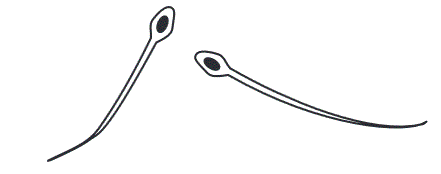
Which statement about the gametes (sex cells) represented
in the diagram below is correct?
They are produced by females
They are fertilized in an ovary
They transport genetic material
They contain 100% of the parents genes
During a vasectomy, the ducts responsible for transporting sperm are cut and tied off. What is the name of these ducts?
the testis
the seminal vesicles
the vas deferens
the prostate
This is where the fetus develops until it is born.
Uterus
Vagina
Urethra
Testes
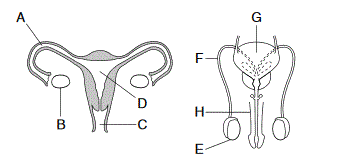
The diagram represents the reproductive systems of the human female and male. In which two structures are the sex cells made.
B and E
B and H
H and E
D and G
What is the function of the ovaries?
To act as a passageway for sperm
To fertilize the ovum (eggs)
To protect the fertilized ovum (eggs)
To produce the ovum (eggs)
How many sperm are needed to fertilize an ovum (egg)?
1 million
1
10
10,000
Once the ovum (egg) has been fertilized it is known as the________.
Embryo
Fetus
Zygote
Egg
This expands to about 10cm during childbirth.
Ovary
Cervix
Fallopian tube
Uterus
During reproduction, what are passed down from parents to their young?
White blood cells
Behaviors
Genetic information
Fingerprint
One function of the male reproductive system in mammals is to
produce insulin necessary for sexual reproduction
transport eggs necessary for fertilization
allow for delivery of gametes (sex cells) needed for reproduction
provide protection for the developing zygote

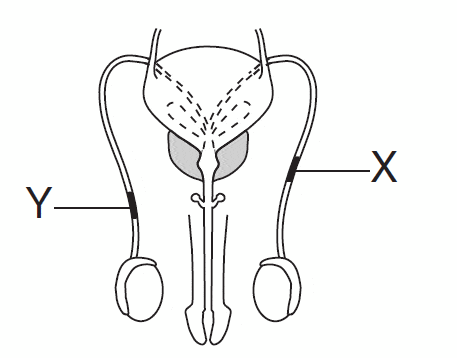
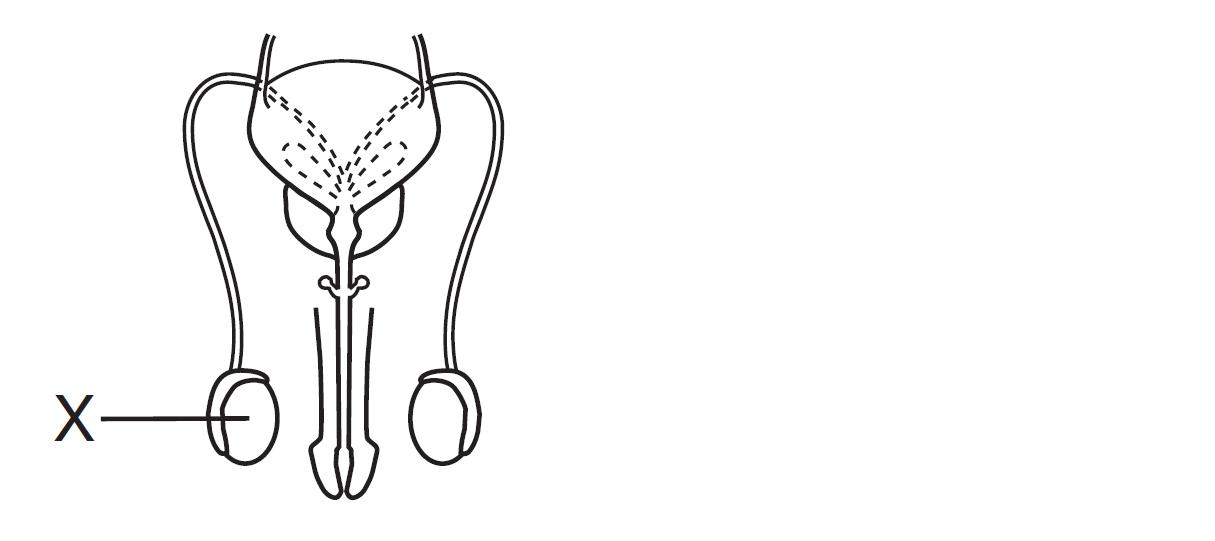
The diagram below represents a system in the human body. The primary function of structure X is to
produce energy needed for sperm to move
provide food for the sperm to carry to the egg
produce and store urine
form gametes (sex cells) that may be involved in fertilization
The human female reproductive system is represented below. Within which structure does the fetus and placenta normally develop?
A
B
C
D
Most mammals (like humans) have adaptations for
internal fertilization and internal development of the fetus
internal fertilization and external development of the fetus
external fertilization and external development of the fetus
external fertilization and internal development of the fetus
A particular species of shark normally reproduces sexually. In captivity, it was found that a female could also reproduce asexually. One negative result from asexual reproduction is
increased gene recombinations
decreased genetic diversity within the species
increased number of males produced
decreased number of eggs used
Sexual reproduction requires _____ parent(s) and asexual reproduction requires ___ parent(s)
1,1
2,2
2,1
1,2

