
 Worksheets
Exploring Scientific Tools and Models
Total questions: 80
Worksheet time: 1hrs 8mins
Which tool would you use to measure the temperature of water in a science experiment?
Wind vane
Celsius thermometer
Magnet
Meter stick
If you want to observe the details of a leaf’s surface, which tool would be most helpful?
Hand lens
Rain gauge
Digital scale
Hot plate
Which tool would you use to measure how much rain has fallen in your backyard?
Beaker
Rain gauge
Magnet
Meter stick
You want to measure the mass of a rock. Which tool should you use?
Digital scale
Wind vane
Notebook
Hand lens
Which tool would help you record your science observations during an experiment?
Notebook
Magnet
Meter stick
Hot plate
If you want to measure the length of your desk, which tool would you use?
Meter stick
Rain gauge
Beaker
Magnet
Which tool would you use to observe the movement of clouds and wind direction?
Wind vane
Digital scale
Hot plate
Hand lens
Which tool would you use to heat a liquid in a science experiment?
Hot plate
Magnet
Rain gauge
Meter stick
Which tool would you use to collect digital data during a science experiment?
Computer
Magnet
Meter stick
Beaker
Which tool would you use to measure the volume of a liquid?
Graduated cylinder
Magnet
Wind vane
Notebook
You are observing a fish in an aquarium. Which tool helps you record your observations?
Notebook
Magnet
Hot plate
Meter stick
Which tool would you use to collect insects from a field for observation?
Collecting net
Magnet
Hot plate
Rain gauge
You are asked to collect evidence of plant growth over a week. Which method would best help you collect measurements as evidence?
Measure the height of the plant each day and record it in a notebook
Draw a picture of the plant once
Guess how tall the plant is
Only look at the plant without recording anything
Which of the following is an example of collecting observations as evidence?
Writing down what you see during an experiment
Making up results
Ignoring changes in the experiment
Only reading about the experiment
If you want to show how the Earth orbits the Sun, which of the following would you use?
Sun-Earth-Moon system model
Magnet
Rain gauge
Hot plate
Which of the following is a limitation of using a model of the solar system?
The model cannot show the actual distances between planets
The model is colorful
The model is made of plastic
The model is easy to carry
Which of the following is an advantage of using a model to study the water cycle?
It helps us see the process in a small space
It is always exactly like the real water cycle
It never needs to be changed
It is made of glass
If you have a model of a plant cell, what is one thing it cannot show you?
How the cell actually works in a living plant
The shape of the cell
The color of the cell parts
The size of the cell parts
You have a model of a volcano. What is one advantage of using this model?
You can safely observe how a volcano erupts
The model is as hot as a real volcano
The model is made of real lava
The model is the same size as a real volcano
If you have a model of a car, what is one limitation?
The model cannot drive like a real car
The model is painted red
The model has wheels
The model is made of plastic
You have a table showing the number of sunny, cloudy, and rainy days in a month. How can you use math to compare the patterns in the weather?
Count and compare the number of each type of day
Only look at the table without counting
Guess which type of day happened most
Ignore the table
If you measure the height of a plant every day for a week, how can you use math to find out how much it grew?
Subtract the height on the first day from the height on the last day
Only look at the plant
Guess the growth
Add the heights together
You have two beakers, one with 100 mL of water and one with 150 mL. How can you compare the amounts?
Subtract 100 from 150 to find the difference
Guess which has more
Ignore the numbers
Add the amounts together
If you record the temperature at noon every day for a week, how can you find the average temperature?
Add all the temperatures and divide by 7
Only look at the highest temperature
Guess the average
Add the highest and lowest temperatures
You are planning an experiment to find out which type of soil holds the most water. Which tools and steps would you use to collect and analyze your data?
Use beakers to measure water, pour water into different soils, use a graduated cylinder to measure how much water drains out, and record results in a notebook
Guess which soil holds the most water
Only look at the soils without measuring
Use a magnet to test the soils
You want to find out if plants grow better in sunlight or shade. How would you collect observations and measurements as evidence for your conclusion?
Plant seeds in both sunlight and shade, measure their height every day, and record your observations in a notebook
Only plant seeds in sunlight
Guess which plant will grow better
Only look at the plants without measuring
You are asked to design a model to show how the Moon orbits the Earth. What materials and steps would you use to create and use your model?
Use balls to represent the Earth and Moon, attach them with string, and move the Moon around the Earth to show the orbit
Draw a picture of the Moon
Only read about the Moon
Use a magnet to represent the Moon
You are given two different models of the water cycle. How would you identify the advantages and limitations of each model?
Compare what each model shows well and what each model cannot show, such as size, materials, and how closely it matches the real water cycle
Only look at the color of the models
Guess which model is better
Only use one model
You have a table showing the number of birds seen in your backyard each day for a week. How can you use mathematical calculations to compare patterns and relationships in the data?
Add up the total number of birds for each day and compare which days had the most and least birds
Only look at the first day
Guess which day had the most birds
Ignore the table
You are asked to design a prototype to solve the problem of carrying water from one place to another. What steps would you take to plan and build your prototype?
Think about the problem, draw a plan, choose materials, build your prototype, and test it to see if it works
Only draw a picture
Guess how to carry water
Use a magnet to carry water


These tools are called what?
Beakers
Cups
Graduated Cylinders
Thermometers

What is the name of this science tool?
Beaker
Meter stick
Thermometer
Stopwatch

What is the name of this science tool?
Spring scale
Two pan balance
Triple beam balance
Microscope

spring scale

Name the tool.
terrarium
spring scale
balance
hand lens

Name the tool.
balance
spring scale
hand lens
thermometer

Name the tool.
spring scale
ruler
hand lens
graduated cylinder

Name the tool.
balance
meter stick
graduated cylinder
hand lens


Name this tool.
Thermometer
Triple Beam Balance
Pan Balance
Safety Goggles
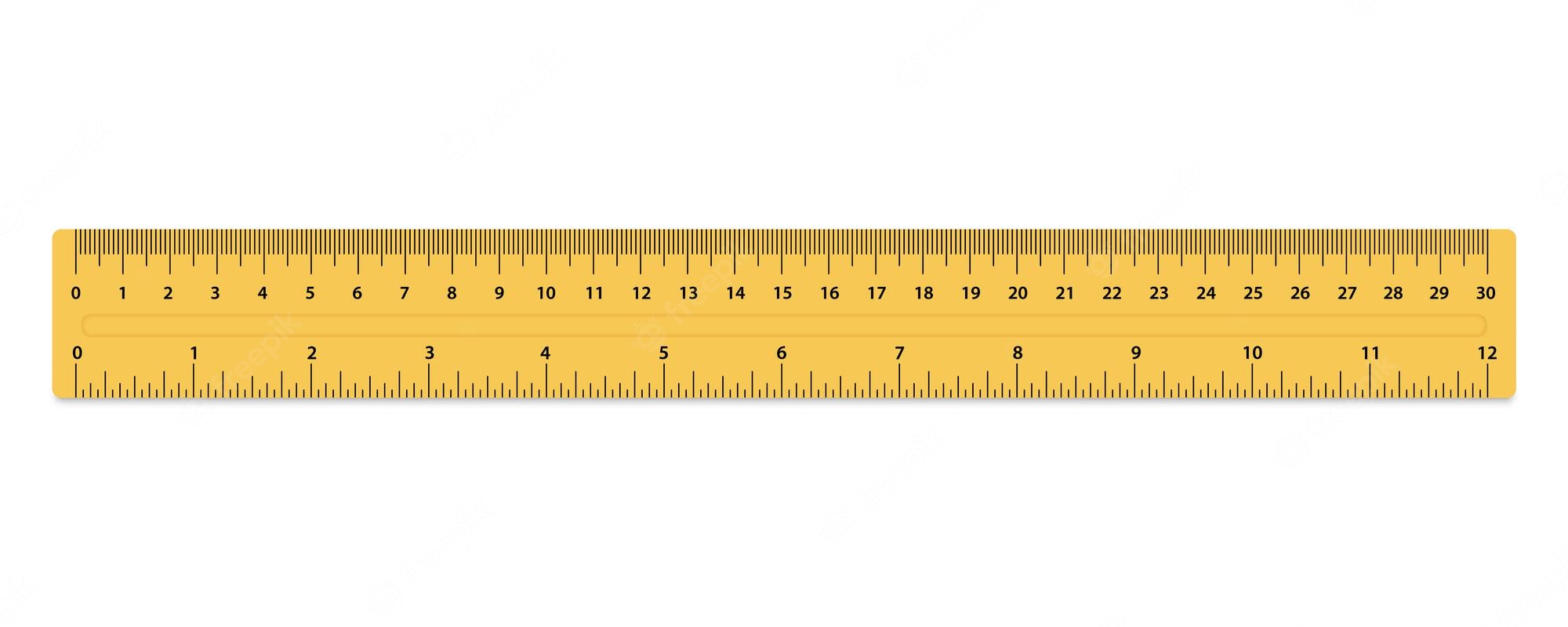
Measuring stick
Ruler
Timer
Tape Measure

Name this tool?
volumetric flask
graduated cylinder
triple beam balance
clay triangle

Name the tool.
measuring tape
hand lens
meter stick
spring scale
spring scale

These kind of observations are made using instruments such as rulers, balances and thermometers.
qualitative
quantitative
Match the following scientific tools with their purposes
Beakers
Used to hold and pour liquids
Graduated cylinders
Used to measure liquids
Wind vane
Used to determine direction of wind
Anemometer
Used to determine wind speed
Compass
Determine direction of true north

Name the tool.
terrarium
spring scale
balance
hand lens
Name the tool.
balance
spring scale
hand lens
thermometer
Name the tool.
spring scale
ruler
hand lens
graduated cylinder
Name the tool.
balance
meter stick
graduated cylinder
hand lens
Name this tool.
Thermometer
Triple Beam Balance
Pan Balance
Safety Goggles
Measuring stick
Ruler
Timer
Tape Measure
Name this tool?
volumetric flask
graduated cylinder
triple beam balance
clay triangle

Students were investigating some properties of rocks. They wanted to compare the volumes of the rocks.
Which tool should the students use to accurately measure the volume of each rock?


Name the tool.
measuring tape
hand lens
meter stick
spring scale
spring scale
Match the following parts of the experiment: Esther became interested in insulation while her parent’s new house was being built. She decided to determine which insulation transferred the least heat. She filled each of 5 jars half-full with water. She sealed each jar with a plastic lid.Then she wrapped 4 of the jars with a different kind of insulation, leaving one jar without insulation. She put the jars outside in the direct sunlight. Later, she measured the temperature of the water in each jar.
Control Group
Jar with no insulation.
Experimental Group
Jars with insulation
Independent Variable
Type of insulation
Dependent Variable
Temperature of water.
Controlled Variable
How much water
Match the following descriptions with the correct scientific terms:
Constants
Conditions that stay the same
Independent Variable
The variable that is changed on purpose
Control
Represents the normal conditions
Prediction
An "If .... then prediction statement
Dependent Variable
The variable that we measure
Match the following parts of the experiment: Sophia became interested in insulation while her parent’s new house was being built. She decided to determine which insulation transferred the least amount of heat. She filled each of 5 jars half-full with water. She sealed each jar with a plastic lid. Then she wrapped 4 of the jars with a different kind of insulation, leaving one jar without insulation. She put the jars outside in the direct sunlight. Later, she measured the temperature of the water in each jar.
Control Group
Jar with no insulation.
Experimental Group
Jars with insulation
Independent Variable
Type of insulation
Dependent Variable
Temperature of water
Constant
How much water
Match the following parts of the experiment:
Sophia became interested in insulation while her parent’s new house was being built. She decided to determine which insulation transferred the least amount of heat. She filled each of 5 jars half-full with water.
She sealed each jar with a plastic lid. Then she wrapped 4 of the jars with a different kind of insulation, leaving one jar without insulation. She put the jars outside in the direct sunlight. Later, she measured the temperature of the water in each jar.
Control Group
Jar with no insulation.
Experimental Group
Jars with insulation
Independent Variable
Type of insulation
Dependent Variable
Temperature of water
Constant
How much water
Match the following descriptions with the correct scientific terms:
Constants
Conditions that stay the same
Independent Variable
The variable that is changed on purpose
Control
Represents the normal conditions
Prediction
An "If .... then prediction statement
Dependent Variable
The variable that we measure
Match the following descriptions with the correct scientific terms:
Constants
Conditions that stay the same
Independent Variable
The variable that is changed on purpose
Control
Represents the normal conditions
Hypothesis
An "If .... then prediction statement
Dependent Variable
The variable that we measure
Match the following parts of the experiment:
Esther became interested in insulation while her parent’s new house was being built. She decided to determine which insulation transferred the least heat. She filled each of 5 jars half-full with water.
She sealed each jar with a plastic lid.Then she wrapped 4 of the jars with a different kind of insulation, leaving one jar without insulation. She put the jars outside in the direct sunlight. Later, she measured the temperature of the water in each jar.
Control Group
Jar with no insulation.
Experimental Group
Jars with insulation
Independent Variable
Type of insulation
Dependent Variable
Temperature of water.
Controlled Variable
How much water

When you are making observations during a science investigation, what step of the scientific method are you performing?
Organizing Your Data
Research Your Problem
Test Your Hypothesis
Stating a Conclusion

STATEMENT: In the image, people are practicing white-water rafting.
Which part of the Scientific Method is the person who is experimenting and took the photo carrying out?
Making Observation
Making Inferences
Making Judgment
Communicating with others

An observation about this picture is that
Someone is writing about dogs
It's a nice day to write outside
this person is keeping a diary
there is one notebook

Which of the following is an observation about the man in this image:
The man hates his purple shirt.
The man has a purple shirt.
The man is having a bad day.
This man is upset because he is hungry.

What is a correct observation of this image?
It is raining outside
They drove to go fishing
They left their chairs in the car
The man caught a fish

Which step of the scientific method would this scenario be:
You happen to notice that your cat is gaining weight since switching to the new cat food
Propose a hypothesis
Ask a question
Observation
Iterate
Which of the following is an observation about the man in this picture:

What would be an observation?
The minions are at a party.
The minions are yellow.
It is Bob's birthday.
STATEMENT: In the picture, the people are whitewater rafting.
What is this statement considered in the Scientific Method?
Making Observation
Making Inferences
Making Judgement
Communicating with others

Which of the following is an observation about this picture?
Match the following scientific tools with their purposes
Beakers
Used to hold and pour liquids
Graduated cylinders
Used to measure liquids
Wind vane
Used to determine direction of wind
Anemometer
Used to determine wind speed
Compass
Determine direction of true north

