
 Worksheets
Space Unit Review
Total questions: 79
Worksheet time: 2hrs 50mins
How many planets are there?
7
9
8
3
What are the 4 inner planets?
Mercury, Jupiter, Saturn, Pluto
Earth, Venus, Mars, Neptune
Mercury, Venus, Earth, Mars
Jupiter, Saturn, Neptune, Uranus
What are the 4 outer planets?
Mercury, Venus, Earth, Mars
Uranus, Mercury, Earth, Mars
Jupiter, Uranus, Saturn, Neptune
Jupiter, Saturn, Earth, Mars
The inner planets share 2 qualities or characteristics
Humans can live on them, they all have water
They are rocky, and humans can find food on them
They are rocky and close to the Sun
They are close to the Sun, and humans can live on them
The third planet from the Sun, has liquid water, and keeps a temperature that allows humans to live
Earth
Venus
Mercury
Mars
The fourth planet from the Sun, called the Red planet, and extensively explored and observed
Neptune
Venus
Jupiter
Mars
What are the 2 characteristics of the 4 outer planets.
They are rocky and small in size
Larger planets and made of gas
Closer to the Sun and made of gas
Farther from the Sun and made of gas
The fifth planet, the largest planet and has a large storm called the Giant Red Spot that is visible from Earth
Neptune
Uranus
Jupiter
Earth
The sixth planet, known for its rings made of ice particles, considered the lightest planet and is 95% than Earth
Jupiter
Saturn
Neptune
Uranus
The seventh planet, originally called Herschel, rotates on its side due to the angle of the axis.
Uranus
Jupiter
Neptune
Mercury
The eighth planet, a dark blue color, windiest planet, with a set of rings including a set of rings that are braided
Neptune
Uranus
Earth
Mars
Discovered in 1930, originally a planet and then switched to a dwarf planet in 2006.
Pluto
Neptune
Uranus
Jupiter
Inner Planets- select all that apply
smaller than outer planets
rocky
many moons
thin atmosphere
Outer Planets- select all that apply
temperatures are colder than inner planets
larger
rocky
many moons
gaseous


What are the four terrestrial (inner) planets?
Earth, Uranus, Mercury, Venus
Mercury Venus Earth Saturn
Mars, Earth , Mercury, Venus
Mars, Earth, Neptune, Mercury
Which planets are the asteroid belt in between?
Venus & Earth
Earth & Mars
Mars & Jupiter
Jupiter & Saturn
Saturn & Uranus

A
B
C
D

These are found primarily in between Mars and Jupiter, but also found in the Kuiper belt.
Asteroids
Comets
meteors
moons

Which of the following are listed from smallest to largest?
solar system, universe, galaxies
planet, solar system, universe, galaxies
planet, solar system, galaxies, universe
dwarf planets, moons, planets, comets,


What is at the center of our solar system?
asteroid belt
Earth
sun
moon

Planets that are made up of gases.
inner planets
outer planets
Planets that are mostly rocky.
inner planets
outer planets
Planets that have a dense atmosphere.
inner planets
outer planets
Planets that have a thin atmosphere.
inner planets
outer planets
Planets that are smaller in size.
inner planets
outer planets
Planets that are larger in size.
inner planets
outer planets
Planets that are closer to the sun.
inner planets
outer planets
Planets that are father away from the sun.
inner planets
outer planets
Planets that have a warmer temperature.
inner planets
outer planets
Planets that have a colder temperature.
inner planets
outer planets
Planets that have a shorter length of year.
inner planets
outer planets
Planets that have a longer length of year.
inner planets
outer planets
What is a celestial object?
A type of star
A type of planet
A man-made object found in space
Any natural object found in space
Which of the following is NOT a characteristic of a planet?
A planet orbits a star.
A planet’s gravity is great enough so that its shape is rou
A planet has cleared its orbital path of other celestial objects.
A planet has at least one moon.
Most asteroids are found:
A - in a region between Mars and Jupiter
B - in a region between Mercury and the sun
C - in a region beyond Neptune
D - Both A and C
Complete the statement. A meteoroid that penetrates Earth’s atmosphere is called a________ and a meteoroid that impacts Earth’s surface is called a ________.
asteroid, meteor
meteor, meteorite
asteroid, meteorite
meteorite, meteor
What extraterrestrial object produces a coma and tail as it burns gas and dust when passing close to the sun?
Asteroid
Comet
Meteoroid
None of the above
The path an object takes as it revolves around another object in space
Rotation
Axis
Orbit
North Pole
South Pole
This is known as a "shooting star" and has entered Earth's atmosphere
asteroid
meteor
meteorite
asteroid belt
This is known as a "dirty snowball"
comet
asteroid
meteor
meteorite
The Earth is a satellite.
True
False
Satellites can be man made or natural.
True
False
a device used to magnify or clearly see distant objects
spectroscope
satellite
telescope
space probe
A telescope is essentially a large magnifying glass.
True
False

Which of these is a spacecraft designed to go places too dangerous for humans to go and gather information while orbiting planets other that Earth?
space probes
space shuttle
space station
space telescope
A man-made object that is put into orbit around the Earth is called ___?
a satellite
a space probe
a telescope
a spectroscope
Astronauts live in the ____________________ and conduct experiments.
International Space Room
International Space Station
International Space Rocket
International Space House
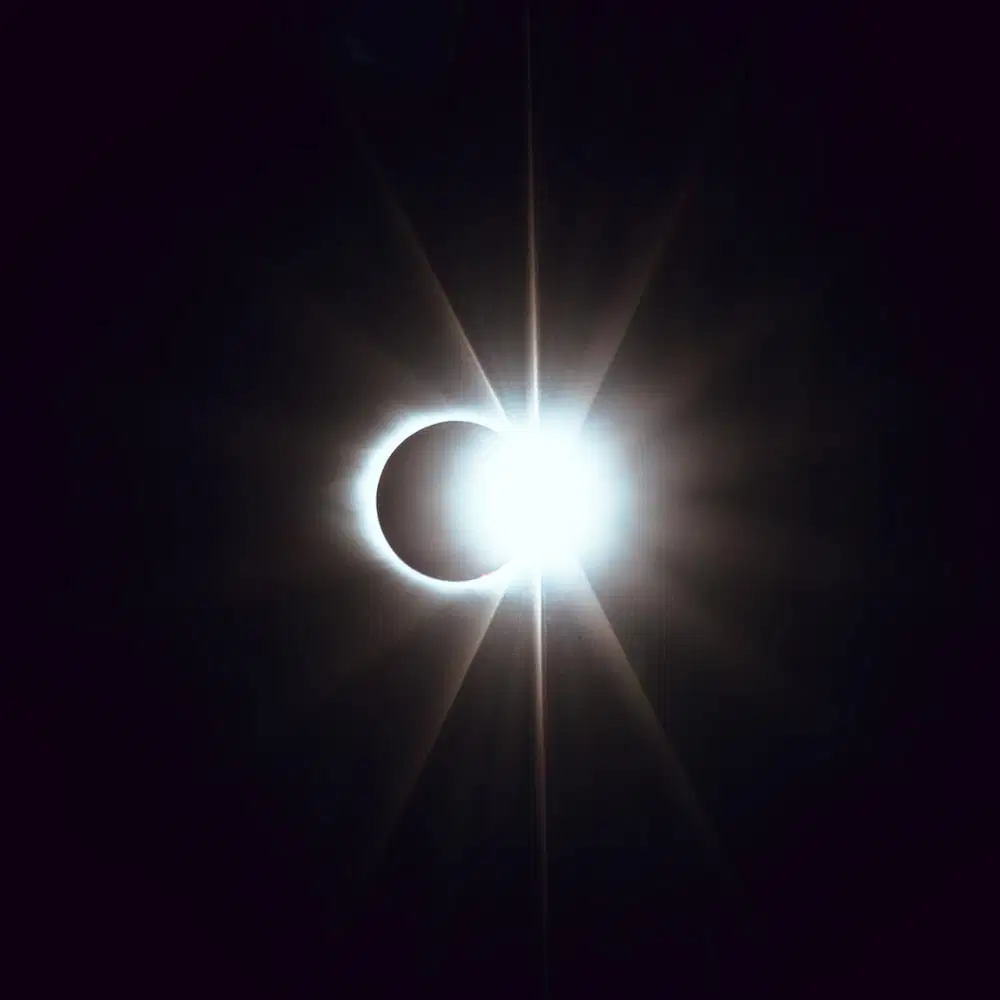
Why does the Moon shine at night?
The Moon does not produce its own light, but it shines because it reflects the light of the Sun.
The Moon produce its own light.
The Moon produce its own light, and it shines because it reflects the light of the Sun.
The Moonshines because does not reflects the light of the Sun.

What do natural and artificial satellites have in common?
the don't have anything in common
they orbit celestial bodies
they send information to the Earth
the float outer space with no direction

What's the name of the Earth's natural satellite?
(a)

Artificial satellites are launched into space on rockets.
True
False
A machine that orbits in space
Industry
Satellite

Artificial satellites are used to study the Earth and other planets.
True
False
Which planet in our solar system is most like Earth?
Mercury
Venus
Mars
Jupiter

When did Pluto become a dwarf planet?
when it was discovered
last year
1806
2006
The most recent definition of a planet was adopted by the International Astronomical Union in 2006. It says a planet must do three things, one of those things are...
It must be big enough to attract comets and asteroids.
It must be big enough to be seen from a telescope.
It must be big enough to have enough gravity to force it into a spherical shape.
It must be big enough to have enough gravity to force a moon into orbit.
The most recent definition of a planet was adopted by the International Astronomical Union in 2006. It says a planet must do three things, one of those things are...
It must orbit a larger planet.
It must orbit a star (in our cosmic neighborhood, the Sun).
It must orbit a moon.
It must orbit the MIlky Way
The most recent definition of a planet was adopted by the International Astronomical Union in 2006. It says a planet must do three things, one of those things are...
It must have cleared away any other objects of a similar size near its orbit around the Sun.
It must have organic life forms.
It must have an an orbit inside the asteroid belt.
It must have at least one moon.
Pluto was declassified has a planet because...
it's too small.
it's not a sphere.
it hasn't cleared it's orbit of debris.
it's orbit around the Sun is so strange.

The telescope is used to study the ........................
minerals
earthquakes
celestial bodies
volcanoes
What are man-made objects that orbit Earth for communication and research?
Natural Satellites
Artificial Satellites
Celestial Bodies
Dwarf Planets

