
Font size
 Worksheets
24-25 Science Year in Review
Total questions: 79
Worksheet time: 58mins
tilt of the earth's axis


What happens in the northern hemisphere when the area in which you live tilts away from the sun?


What season is the Southern Hemisphere experiencing in this picture?
summer
winter
spring
fall/autumn

Identify the threat level of an object with a diameter of: 18 m
Low Threat
Medium Threat
Medium-High Threat
High Threat
Identify the effect the object can have if it falls to the Earth: 97 m
Can burn up upon entering the Earth's atmosphere, causing little to no damage
Local damage to impact area
Significant local damage or national damage
Worldwide effects
As an objects (a) increases, its threat level (b) .
I’m icy, dusty, with a glowing tail,
I fly by the sun on a distant trail.
People watch me from far and wide,
As I streak through the starry night sky.
WHAT AM I?
Asteroid
Meteor
Meteorite
Comet
I was part of space, far from home,
But now I’ve landed on Earth’s dome.
I made it through the atmosphere,
And now I’m lying somewhere near.
WHAT AM I?
Asteroid
Meteor
Meteorite
Comet
NEO stands for...
Nice Earring Olivia
Near Earth Object
Night Earth Outing
Near End Ovation
Oceans, forests, skies so blue,
The only world known to cradle you.
With life abundant on land and sea—
What planet could this one be?
Venus
Saturn
Neptune
Earth

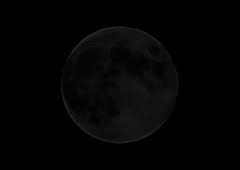
Which moon phase is shown?
New Moon
Third or Last Quarter
Waxing Gibbous
Full Moon
I race around the Sun in record time,
Yet barely have an atmosphere to climb.
I’m closest to the solar flame—
Can you guess my speedy name?
Venus
Mercury
Jupiter
Neptune

Which moon phase is shown?
Waxing Crescent
Waning Gibbous
Full Moon
First Quarter

Which moon phase is shown?
First Quarter
New Moon
Waning Crescent
Waxing Crescent
Space is full of _____________________.
ash and dust
celestial objects
water
hidden caves
About two-thirds of the Earth meteorite impact craters have been found in what type of rock?
Sedimentary
Igneous
Lava Rock
Metamorphic
Scientists use ______________ to put fossil meteorites into chronological order of when they hit the Earth's surface.
asteroids
relative dating
shatter cones
strata
I spend most of my time in space,
Between Mars and Jupiter’s place.
I’m rocky and big, just floating around
Until gravity pulls me down!
WHAT AM I?
Asteroid
Meteor
Meteorite
Comet
Any trace, mark, or remains of an organism at least 10,000 years old considered?
metamorphic rock
fossil
mineral
One theory about how the dinosaurs became extinct is that?
glaciers covered the earth and wiped out all living things.
earthquakes opened large cracks in the earth and swallowed up the dinosaurs.
a large asteroid hit the earth, causing catastrophic events that eventually caused all the dinosaurs to die.
Hardened tree sap, which often contains insect fossils, is called?
carbon
mineral
amber
The wearing down and breaking of rocks and soil is called?
deposition
erosion
weathering
One example of a geoscience process that can QUICKLY change the surface of the Earth is?
weathering
erosion
deposition
earthquake
Fossilization Possible (YES or NO):
A beaver dies in a muddy swamp, and its body is quickly covered by sediment.
YES
NO
Fossilization Possible (YES or NO):
Hot lava burns and destroys the living organisms near Mount Mazama.
YES
NO
Fossilization Possible (YES or NO):
A bird falls to the forest floor and decomposes, with no sediment covering the remains.
YES
NO

Which layer do we find Trilobite Fossils?
1
3
2
6
TRUE or FALSE: Based on the image...Trilobite Fossils can be found on MULTIPLE layers of the Earth?
TRUE
FALSE
The chemical process that occurs when sediments bond together into sedimentary rock
basement rock
cementation
compaction
period
A geological principle by which the oldest layer of sedimentary rock can be found on the bottom and the youngest found on the top
epoch
strata
superposition
era
What type of rock are fossils most likely to be found in?
Igneous
Metamorphic
Sedimentary

A fast-moving river moves rocks downstream.
Weathering
Erosion
Deposition
Weathering (a) Erosion (b) Deposition (c) .
What causes the creation of mountain chains like the Himalayas?
erosion
collision of tectonic plates
rocks and minerals
weathering
TRUE or FALSE: Mountain Ranges form QUICKLY
TRUE
FALSE
One plate going under another plate
subduction
glacier
fault line
uplift
Wegener noticed that the coasts of South America and Africa matched and fit together like a...
puzzle piece
tornado
mountain
super
What causes the creation of mountain chains like the Himalayas?
erosion
collision of tectonic plates
rocks and minerals
weathering
Uplift is where rock is pushed ______________
downward
sideways
upward
together
A large mass of moving ice and snow on land
tectonic plates
glacier
fault line
uplift
Explosive, Not Explosive or Somewhat Explosive: Mafic-Low Viscosity and Low Gas
Explosive
Not Explosive
Somewhat Explosive
Explosive, Not Explosive or Somewhat Explosive: Felsic-High Viscosity and High Gas Content
Explosive
Not Explosive
Somewhat Explosive
Define Landslide
Rock fragments and particles ejected by a volcanic eruption
A crater made by the collapse of a volcanic cone during an huge eruption
A measurement of how easily liquid flows
A mass of rocks and earth moving suddenly and quickly down a slope
An Active Volcano....
Volcano has not erupted for around 10,000 years and no longer has a magma supply
Volcano erupts regularly or has had at least one eruption in the last 10,000 years
Volcano has been active in the past, but has not erupted in the last 10,000 years
What is it called when magma is forced upward by pressure from under the earth and bursts through the earth's crust?
Weathering
Erosion
Deposition
Eruption

Plant root grow in a rock and cause it to split/break.
Weathering
Erosion
Deposition

The soil from a hillside is washed away by rain.
Weathering
Erosion
Deposition
Rocks get (a) by weathering, (b) through erosion, and (c) somewhere else through deposition.
TRUE or FALSE: Every rocks journey is EXACTLY the SAME.
TRUE
FALSE
Convergent Plates?
Collide
Spread Apart
Slide Past
Divergent Plates?
Collide
Spread Apart
Slide Past
Transform Plates?
Collide
Spread Apart
Slide Past
Sedimentary rocks are made from ________________.
Fire
Magma
Pieces of Other Rocks
What process is defined as: Squeezing sediments together
Erosion
Cementation
Compaction
Weathering
TRUE or FALSE: Studying the behavior of the land, air, and other physical feature around a volcano can help predict future eruptions
TRUE
FALSE
TRUE or FALSE: Volcanoes change in measurable ways before an eruption
TRUE
FALSE

Mid-oceanic ridges form where two plates are separating and new ocean floor is being made. What type of tectonic boundary is found in this area?
Divergent Boundary
Strike-Slip Boundary
Transform Boundary
Convergent Boundary
Earth's plates meet at ____________.
plate tectonics
plate boundaries
continental drift
oceans

What type of plate boundary is represented in the picture?
Athensphere
Divergent
Transform
Convergent

What type of plate boundary is pictured above?
Convergent
Transform
Divergent

What is the mass on this triple beam?
270g
202g
272.5g


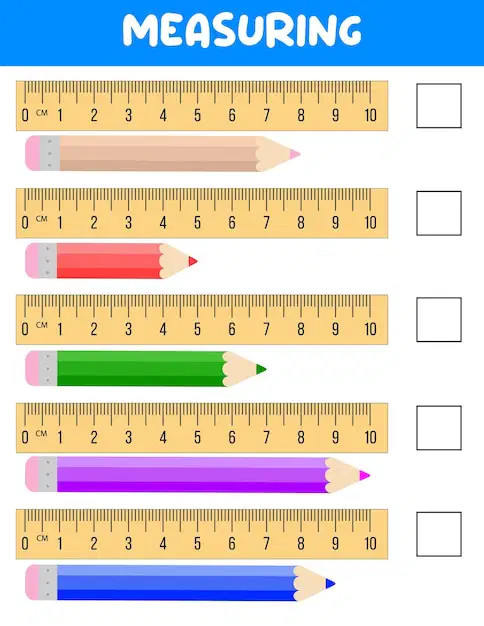
What is the length of the red pencil?
7 cm
10 cm
5 cm
4 cm
What is the length of the green pencil?
7 cm
10 cm
5 cm
9 cm

How many PROTONS are in an atom of Boron?
10.811
5
6

How many ELECTRONS are in an atom of Carbon?
6
13
12.011

How many NEUTRONS are in an atom of Krypton?
36
84.80
49
How many ELECTRONS are in an atom of Krypton?
36
84.80
49

How many ELECTRONS are in an atom of Gold?
196.967
79
118

How many PROTONS are in an atom of Fluorine?
9
18.9984
10

