
 Worksheets
Earth Sci Final Exam
Total questions: 68
Worksheet time: 2hrs 33mins
The primary energy source for the Sun is:
Nuclear fission
Nuclear fusion
Radioactive decay
Chemical combustion
The Big Bang theory explains:
the origin of the universe
the structure of atoms
the formation of mountains
the evolution of species
Which element is fused by main-sequence stars to form helium? (Our Sun is a main-sequence star)
Hydrogen
Oxygen
Carbon
Nitrogen
What causes the elliptical motion pattern of orbiting objects in the solar system?
Magnetism
Gravity
Wind
Solar Energy
What is plate tectonics?
Study of Earth's atmosphere
Study of Earth's oceans
Theory explaining Earth's crust structure
How old do scientists estimate the Earth to be?
4.5 million years
4.5 billion years
6,000 years
1 million years
Scientists estimated the age of the Earth by:
Using radiometric dating methods
Observing weather patterns
Measuring ocean currents
Counting animal populations
What drives the cycling of matter between Earth's surface and deep mantle?
Solar Energy
Heat Flow
Wind
Ocean Currents
What is a feedback loop in Earth's systems?
A continuous cycle of cause and effect
A one-time event causing change
A stable condition with no change
A random event with unpredictable outcomes
Name the Earth system that corresponds to the description. Use the correct -sphere name for each of Earth's systems. Example: ICE _______Cryosphere__________
WATER: _______
LAND/ROCK: _______
WATER: Hydrosphere, LAND/ROCK: Geosphere or Lithosphere
WATER: Atmosphere, LAND/ROCK: Biosphere
WATER: Lithosphere, LAND/ROCK: Hydrosphere
WATER: Biosphere, LAND/ROCK: Atmosphere
Thermal convection is:
the transfer of heat by the movement of fluids
the transfer of heat through direct contact
the transfer of heat by electromagnetic waves
the process of heat loss through evaporation
What is the primary cause of climate change?
Solar Flares
Volcanic Activity
Human Activity
El Niño
What property of water affects Earth materials and surface processes?
Density
Cohesion
Solubility
All of the above
What provides the energy for tectonic plate motion?
Solar Energy
Mantle Convection
Gravitational Pull
Earth's Rotation
What influences human activity?
Availability of natural resources
Occurrence of natural hazards
Changes in climate
All of the above
What is sustainability?
Using resources at a rate that can be maintained indefinitely
Using all available resources for human benefit
Ignoring the environmental impact of human activities
Focusing only on economic growth
What is the impact of human activities on natural systems?
They can cause pollution and habitat destruction.
They always improve natural systems.
They have no effect on natural systems.
They only affect urban areas.
How are Earth systems being modified due to human activity?
Pollution
Deforestation
Overfishing
All of the above
What is the most abundant component of Earth's atmosphere?
Oxygen
Nitrogen
Carbon Dioxide
Helium
What is the lithosphere?
Earth's outer shell
Earth's inner core
Earth's atmosphere
Earth's oceans
What is the hydrosphere?
All of Earth's water
Earth's atmosphere
Earth's crust
Earth's core
Which lists three renewable resources.
Solar energy, wind energy, water
Coal, oil, natural gas
Plastic, glass, metal
Uranium, coal, petroleum
Which lists three non-renewable resources.
Coal, oil, natural gas
Solar, wind, hydroelectric
Wood, biomass, geothermal
Sunlight, wind, tidal energy
Biodiversity is:
The variety of life in the world or in a particular habitat.
A type of pollution.
A method of farming.
A weather phenomenon.
Which lists three natural hazards?
Earthquake, Flood, Hurricane
Car accident, Theft, Pollution
Deforestation, Urbanization, Mining
Internet outage, Power failure, Software bug
What is deforestation?
Planting of trees
Removal of trees
Conservation of forests
Study of forests
The greenhouse effect is:
The process by which certain gases trap heat in the Earth's atmosphere
The process of plants making food using sunlight
The movement of tectonic plates
The cycle of water evaporating and condensing
A fossil fuel is:
A type of renewable energy source
A fuel formed from the remains of ancient plants and animals
A type of modern synthetic material
What does "conservation of environmental resources" mean?
Wasteful use of resources
Sustainable use of resources
Ignoring environmental impact
Focusing only on economic growth
A feedback mechanism is:
a process that uses the conditions of one component to regulate the function of the other
a type of cell division
a method of energy production
a form of genetic mutation
A natural resource is:
A man-made object
A resource found in nature
A type of artificial material
A product created in factories
What is an endangered species?
A species that is abundant
A species that is extinct
A species that is at risk of extinction
A species that is harmful to the environment
What is pollution?
The introduction of harmful substances into the environment
The removal of harmful substances from the environment
The natural occurrence of substances in the environment
What is climate change?
A short-term change in weather patterns
A long-term change in global or regional climate patterns
What is an ecosystem?
A community of living organisms and their environment
A single species of organism
Put these star types in order from smallest to biggest size.
Star types: Red Giant, White Dwarf and Main-sequence
1 is the smallest; 3 is the largest
1. White Dwarf 2. Main-sequence 3. Red Giant
1. Red Giant 2. Main-sequence 3. White Dwarf
1. Main-sequence 2. White Dwarf 3. Red Giant
1. Main-sequence 2. Red Giant 3. White Dwarf
Life could not exist without exploding stars because:
They create and distribute many of the elements found in the Periodic Table that are essential for life.
They provide the energy needed for photosynthesis.
They are responsible for the formation of planets.
They control the temperature of the universe.
The universe is:
Expanding
Contracting
Static
Collapsing
What happens in a positive feedback loop related to climate change?
The system stabilizes
The system amplifies changes
The system reverses changes
Which of the following is an example of how Earth's climate may influence life on Earth, and how life on Earth may influence Earth's climate?
Earth's climate affects plant growth; plants absorb carbon dioxide and influence the climate.
Earth's gravity affects tides; tides influence the moon's orbit.
Earth's rotation causes day and night; animals sleep at night.
Earth's core generates heat; volcanoes erupt.
What is a landform?
A natural feature of Earth's surface
A type of weather
A type of plant
What is the process by which oceanic crust sinks into the mantle at a convergent boundary?
Subduction
Evaporation
Erosion
Deposition
Which is older? Oceanic Crust or Continental Crust
Continental Crust
Oceanic Crust
Both are the same age
Neither has an age
Which type of plate boundary is associated with the creation of new oceanic crust?
Transform boundary
Convergent boundary
Divergent boundary
Meteorites provide information about Earth's formation because they:
Are remnants from the early solar system
Are pieces of the Moon
Formed after Earth
Are made entirely of ice
49. Gravity and inertia work together to keep a planet in orbit around the sun by:
Pulling the planet toward the sun and keeping it moving forward
Pushing the planet away from the sun and stopping its motion
Only pulling the planet toward the sun
Only keeping the planet moving forward
Which of the following best describes the shape of planetary orbits?
Perfect circles
Ellipses
Hyperbolic paths
Straight lines
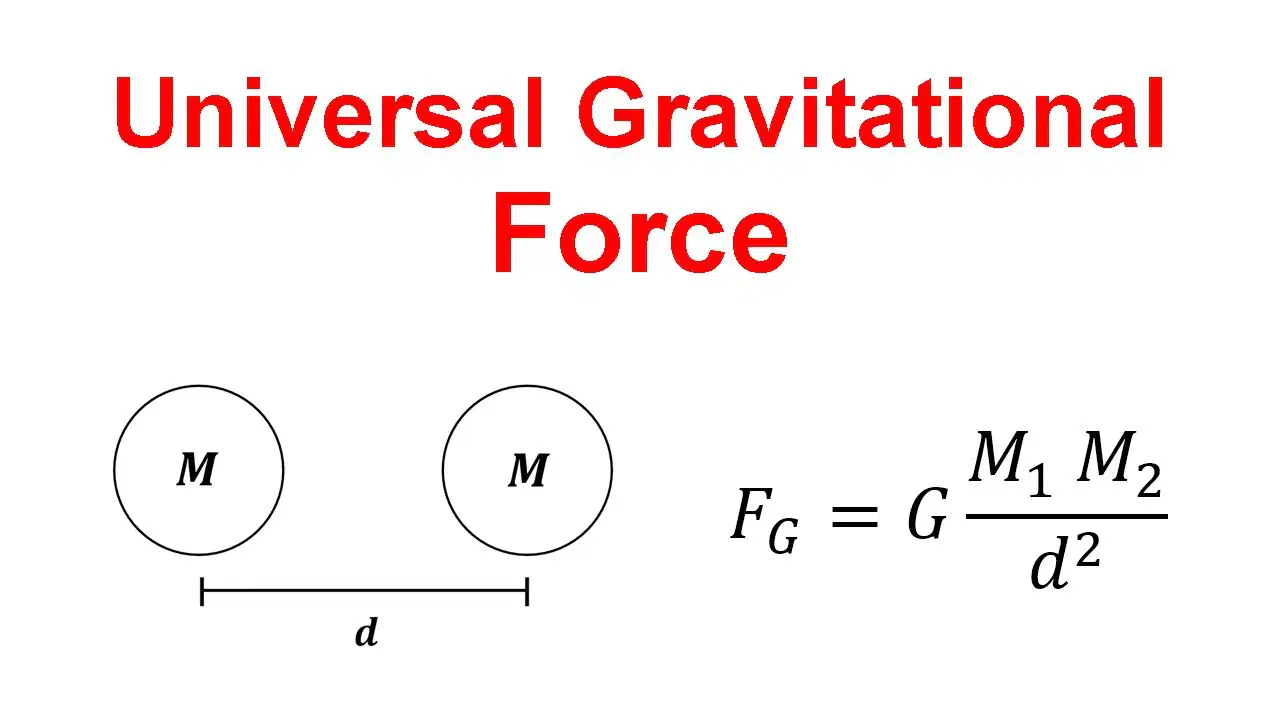
Newton's Law of Universal Gravitation states that the force between two objects depends on which of the following factors?
The distance between the objects ONLY.
The distance between the objects and the objects’ masses.
The objects’ masses ONLY.
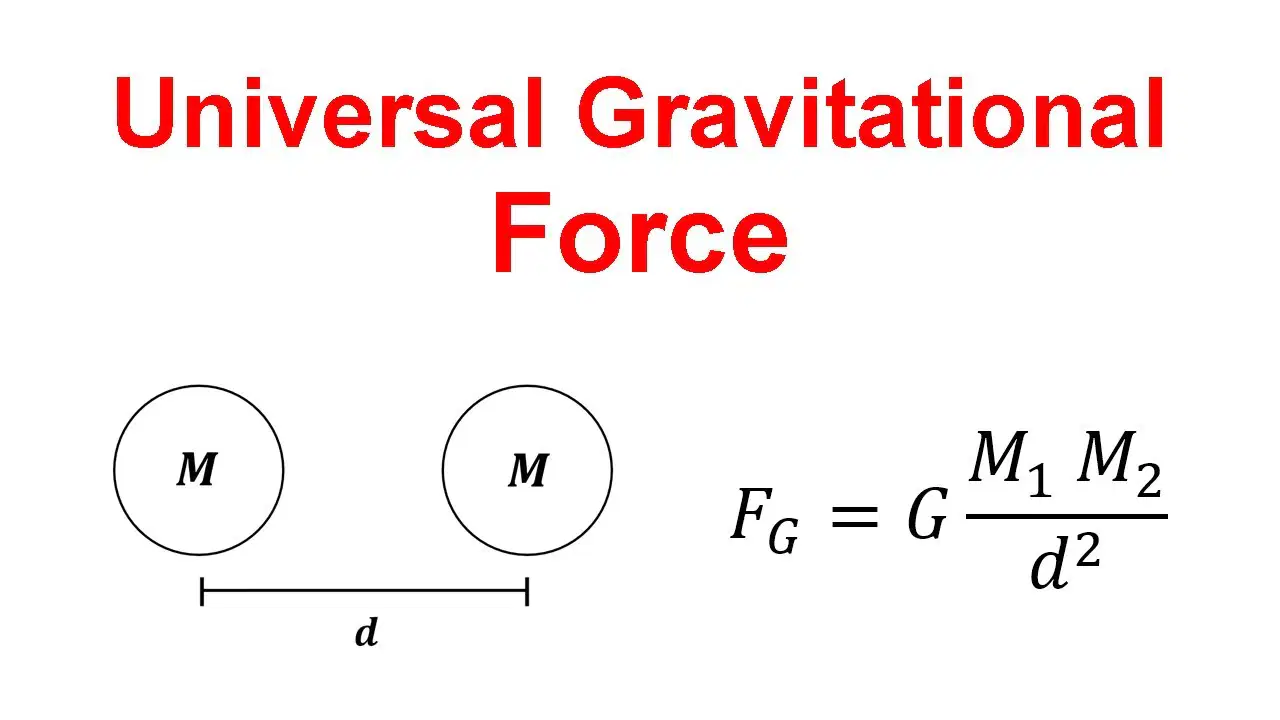
If the distance between two objects is doubled, how does the gravitational force between them change?
Increase Gravity Force
Decrease Gravity Force
The albedo of ice is:
higher than the albedo of water
lower than the albedo of water
equal to the albedo of water
unrelated to the albedo of water
Earth's Energy Balance refers to the balance between which of the following?
Incoming radiation energy and outgoing radiation energy
Solar energy and geothermal energy
Wind energy and tidal energy
Chemical energy and nuclear energy
Ice floats on water because:
Ice is denser than liquid water.
Ice is less dense than liquid water.
Ice and liquid water have the same density.
Ice dissolves in water.
Upwelling is the process in which:
Warm surface water moves downward.
Cold, nutrient-rich water rises to the surface.
Ocean water becomes more saline.
Waves break on the shore.
Water is considered a universal solvent because:
It is a transparent liquid
It dissolves many substances
It has a high boiling point
It is necessary for life processes
How does water affect the Earth's climate?
By regulating temperature and redistributing heat
By causing earthquakes
By volcanic activity
When considering the cost/benefit ratio of managing natural resources, a cost refers to:
The negative impacts or expenses involved
The positive outcomes or benefits gained
The total amount of resources available
The time required to manage resources
What is a galaxy?
A single star
A collection of stars, solar systems, gas and dust
A star and some planets
A moon
What is a Subduction Zone?
A place where two tectonic plates move away from each other
A place where one tectonic plate slides beneath another
A place where two tectonic plates slide past each other
A place where magma rises to the surface
A divergent boundary is:
A place where two tectonic plates move away from each other
A place where two tectonic plates collide
A place where one tectonic plate slides past another
A place where tectonic plates do not move
Define: Albedo.
Albedo is the measure of the reflectivity of a surface, expressed as a percentage of reflected sunlight.
Albedo is the process of photosynthesis in plants.
Albedo is the rate at which a substance dissolves in water.
Which Earth system includes all living organisms?
Hydrosphere
Atmosphere
Geosphere
Biosphere
What is the main cause of ocean acidification?
Deforestation
Increase in solar radiation
Volcanic eruptions
Absorption of carbon dioxide from the atmosphere
Which process describes the movement of water from plants to the atmosphere?
Evaporation
Precipitation
Transpiration
Condensation
Which layer of the Earth is liquid and responsible for generating Earth's magnetic field?
Mantle
Outer core
Crust
Inner core
Which of the following is a renewable energy source?
Coal
Petroleum
Natural gas
Solar power
Which process describes the breaking down of rocks by wind, water, or ice?
Erosion
Photosynthesis
Condensation
Evaporation
Which layer of the Earth is composed mostly of liquid iron and nickel?
Outer core
Mantle
Inner core
Crust
Which process is responsible for the formation of sedimentary rocks?
Melting and cooling
Evaporation
Photosynthesis
Compaction and cementation

