
 Worksheets
HBHD Ch 19
Total questions: 75
Worksheet time: 38mins
Body fluid volumes are related to which of the following factors?
Age, gender, and body weight
Diet and exercise only
Height and eye color
Blood type and ethnicity
Which of the following correctly lists and describes the major body fluid compartments and their subdivisions?
Intracellular fluid and extracellular fluid; extracellular fluid is further divided into interstitial fluid and plasma.
Plasma and lymph; plasma is further divided into intracellular and extracellular compartments.
Interstitial fluid and plasma; interstitial fluid is further divided into intracellular and extracellular compartments.
Intracellular fluid and plasma; plasma is further divided into interstitial and extracellular compartments.
Water enters and leaves the body through which of the following avenues?
Ingestion and excretion
Photosynthesis and respiration
Diffusion and osmosis only
Evaporation and condensation
Which of the following mechanisms is used by the body to maintain fluid balance?
Osmosis and hormonal regulation
Photosynthesis
Fermentation
Transpiration
The forces that move fluids into and out of the blood are:
Osmotic and hydrostatic pressures
Gravity and friction
Magnetic and electric forces
Thermal and sound waves
Common examples of fluid imbalances include:
Dehydration and overhydration
Hypertension and hypotension
Hyperglycemia and hypoglycemia
Anemia and polycythemia
Electrolytes in body fluids are important because they:
Regulate nerve and muscle function
Provide structural support to cells
Act as enzymes
Store genetic information
Common examples of electrolyte imbalances include:
Hyponatremia, hyperkalemia, hypocalcemia, and hypermagnesemia
Hypertension, diabetes, asthma, and arthritis
Anemia, leukemia, lymphoma, and thrombocytopenia
Bronchitis, pneumonia, tuberculosis, and influenza
Fill in the blank: Water is the most abundant body compound in the human body. The average body water volume in reference tables is based on a healthy, nonobese ____-kg male.
70
50
90
60
What is the average total body water volume in a 70-kg male?
20 L
30 L
40 L
50 L
Fill in the blank: In a 70-kg male, the volume of plasma is ____ L.
3
2
5
7
Fill in the blank: Water makes up ____% of body weight in newborn infants.
80
60
50
70
Which of the following statements is true?
Water is 60% of body weight in adult males
Water is 50% of body weight in adult females
Both A and B
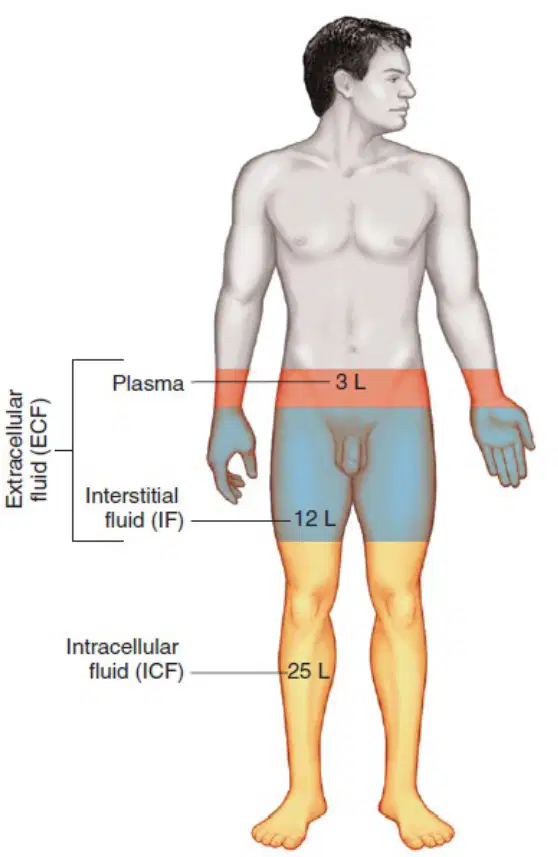
According to the diagram 'Relative Volumes of Three Body Fluids', what is the volume of plasma in the human body?
3 L
12 L
25 L
5 L
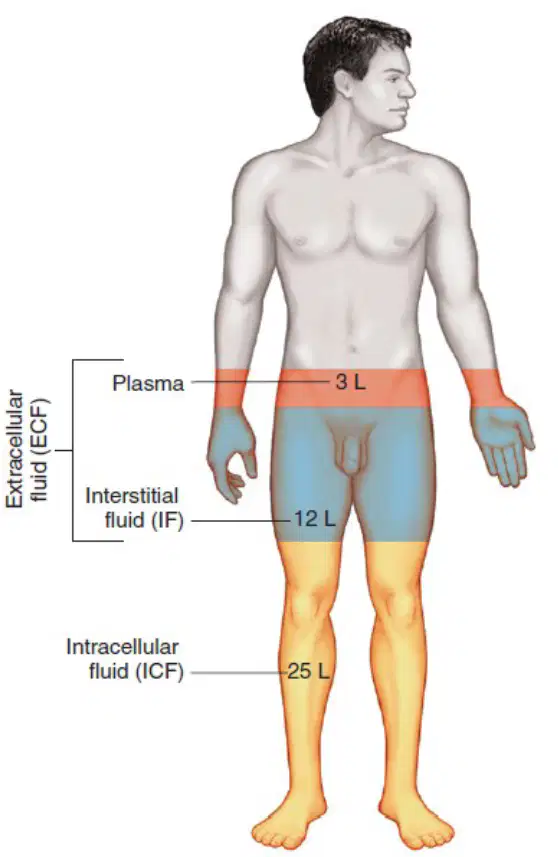
According to the diagram 'Relative Volumes of Three Body Fluids', which body fluid has a volume of 12 L?
Plasma
Interstitial fluid (IF)
Intracellular fluid (ICF)
Blood
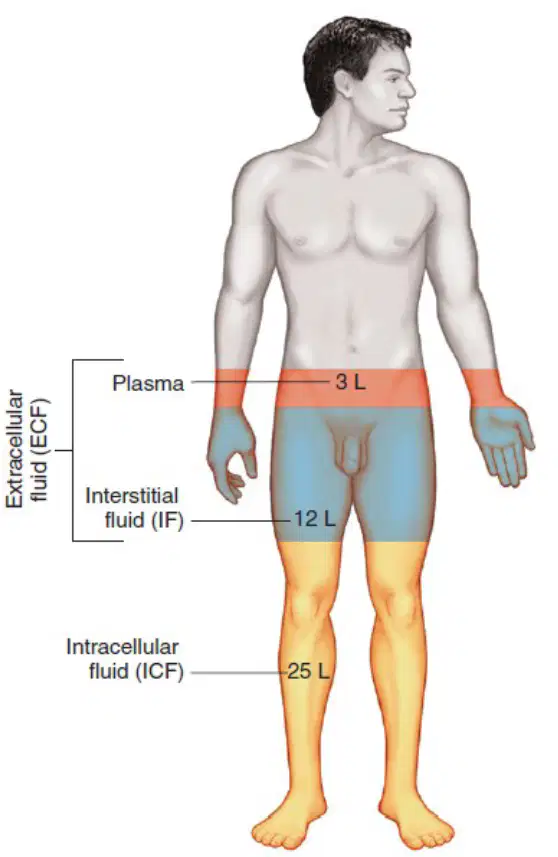
According to the diagram 'Relative Volumes of Three Body Fluids', which body fluid has the largest volume?
Plasma
Interstitial fluid (IF)
Intracellular fluid (ICF)
Lymph
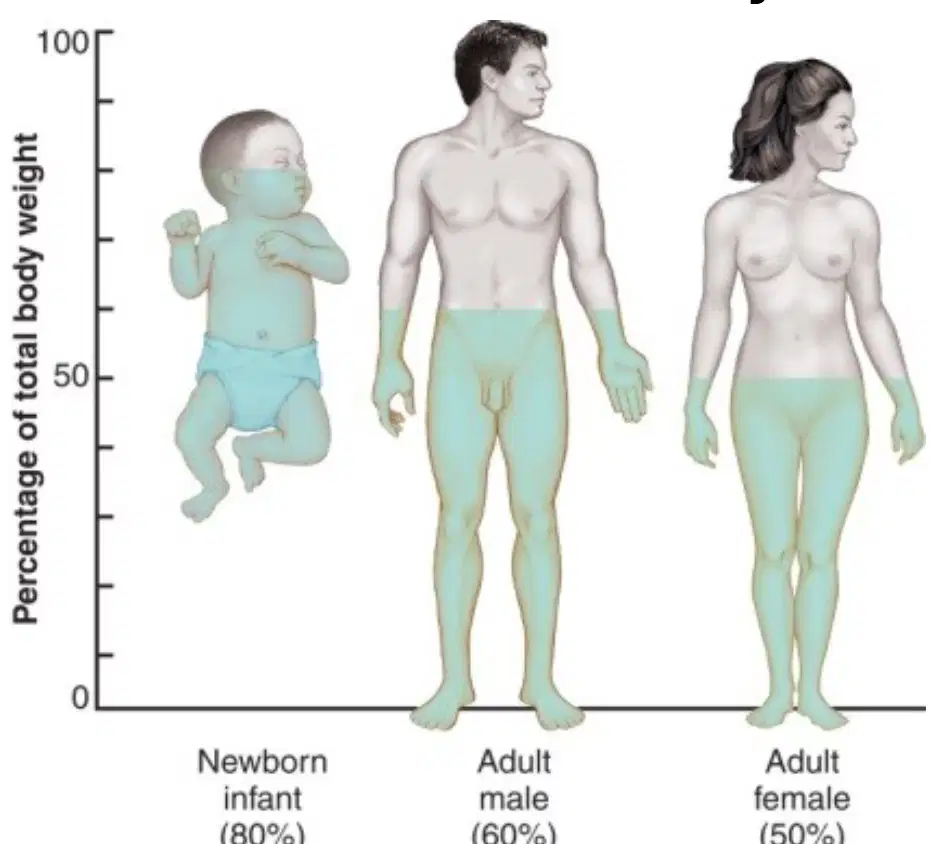
According to the diagram 'Water in the Body', what percentage of a newborn infant's body weight is water?
50%
60%
80%
100%
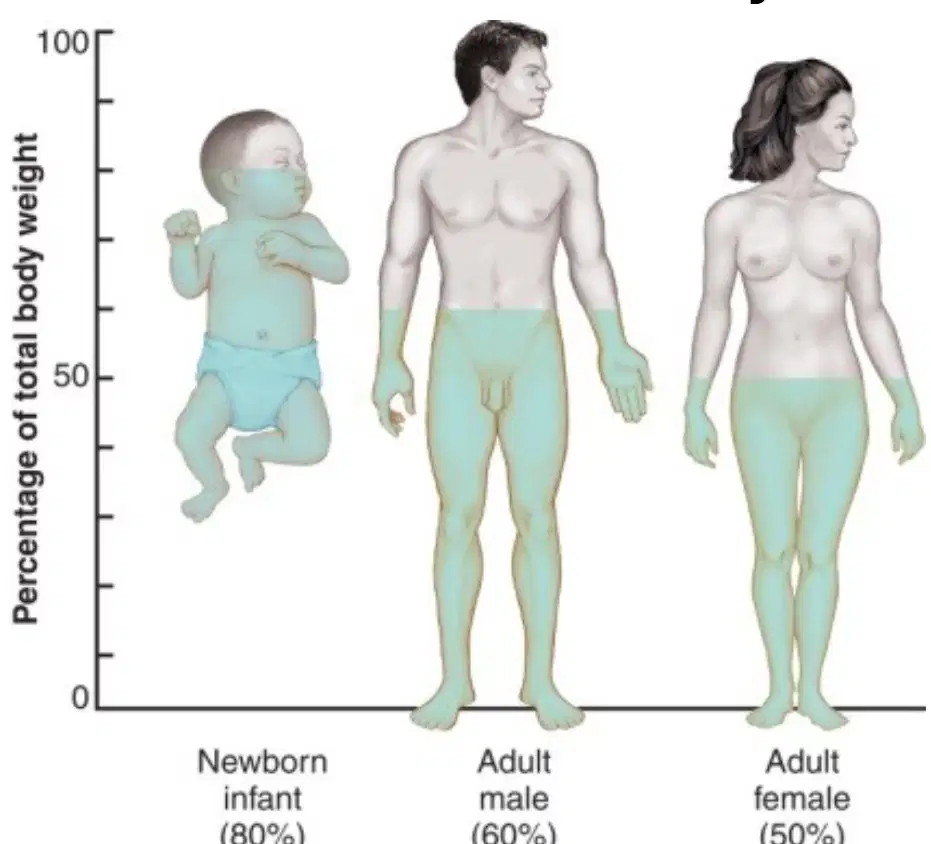
According to the diagram 'Water in the Body', what percentage of an adult male's body weight is water?
50%
60%
80%
100%
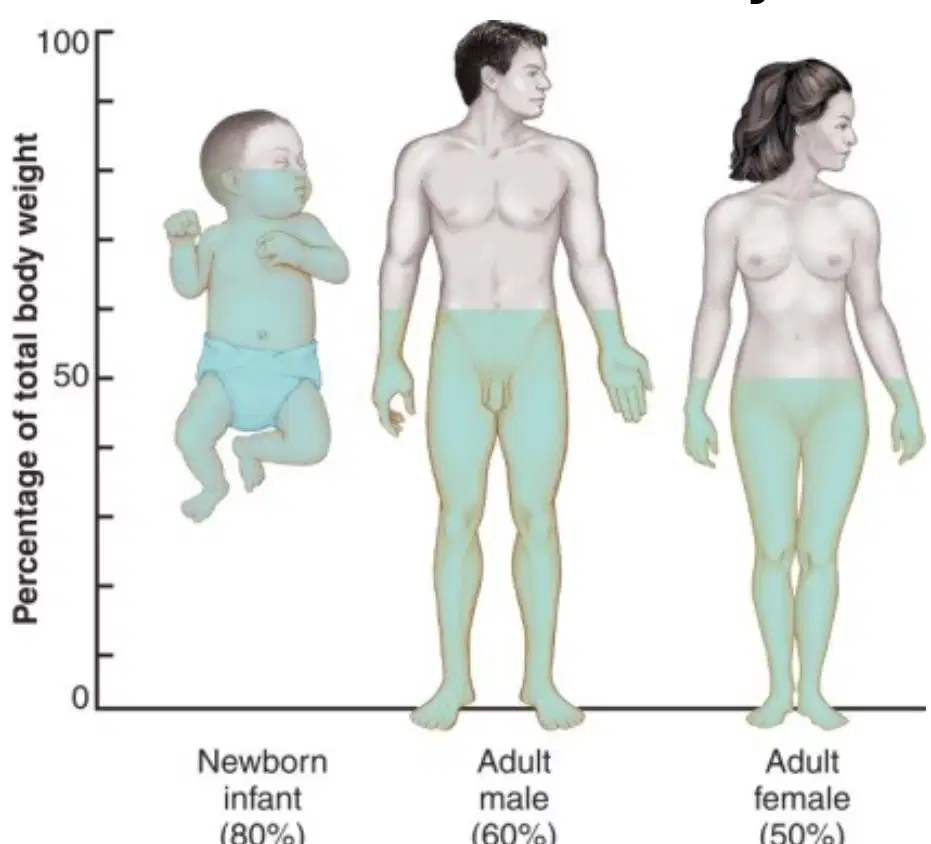
According to the diagram 'Water in the Body', what percentage of an adult female's body weight is water?
50%
60%
80%
100%
Variation in total body water is related to which of the following factors?
Total body weight of individual
Fat content of body
Gender
Age
All of the above
Fill in the blank: The more fat in the body, the ______ the total water content per kilogram of body weight.
less
greater
same
higher
Female body has about 10% less total body water than male body.
True
False
Fill in the blank: In a newborn infant, water may account for ______% of total body weight.
80
60
50
70
Fill in the blank: In the elderly, water per kilogram of weight ______.
decreases
increases
remains the same
fluctuates
What is the liquid part of whole blood called?
Plasma
Serum
Hemoglobin
Platelets
Which type of extracellular fluid surrounds the cells?
Interstitial fluid (IF)
Plasma
Lymph
Cerebrospinal fluid
Which of the following is NOT a type of transcellular fluid?
Lymph
Joint fluids
Plasma
Cerebrospinal fluid
Extracellular fluid (ECF) is also called the _______ environment of the body.
internal
external
aqueous
cellular
Where is Intracellular Fluid (ICF) located?
Inside cells
Outside cells
In the bloodstream
In the digestive tract
What is the function of Intracellular Fluid (ICF)?
Serves as solvent to facilitate intracellular chemical reactions
Transports oxygen in the blood
Stores genetic information
Regulates body temperature
The extracellular fluid compartment is composed of _____ and _____
interstitial fluid and plasma
cytoplasm and nucleoplasm
plasma and cytosol
mitochondria and lysosomes
The largest volume of water in the human body is contained in which fluid compartment?
Intracellular fluid
Extracellular fluid
Plasma
Interstitial fluid
The body’s main mechanism for maintaining fluid balance is to adjust its _____
urine output
heart rate
blood pressure
body temperature
Fill in the blank: One source of fluid INTAKE is ________ we drink.
Liquids
Solids
Gases
Vapors
Fill in the blank: Water in ________ we eat is a source of fluid INTAKE.
food
air
clothes
books
Fill in the blank: Metabolic water (from ________ respiration) is a source of fluid INTAKE.
cellular
pulmonary
digestive
cutaneous
Fill in the blank: Water vapor (during ________) is a source of fluid OUTPUT.
respiration
digestion
circulation
excretion
Sweating (from ________) is a source of fluid OUTPUT.
skin
lungs
kidneys
intestines
Fill in the blank: ________ (from kidney) is a source of fluid OUTPUT.
Urine
Sweat
Saliva
Tears
Fill in the blank: Water lost in the ________ is a source of fluid OUTPUT.
feces
lungs
skin
muscles
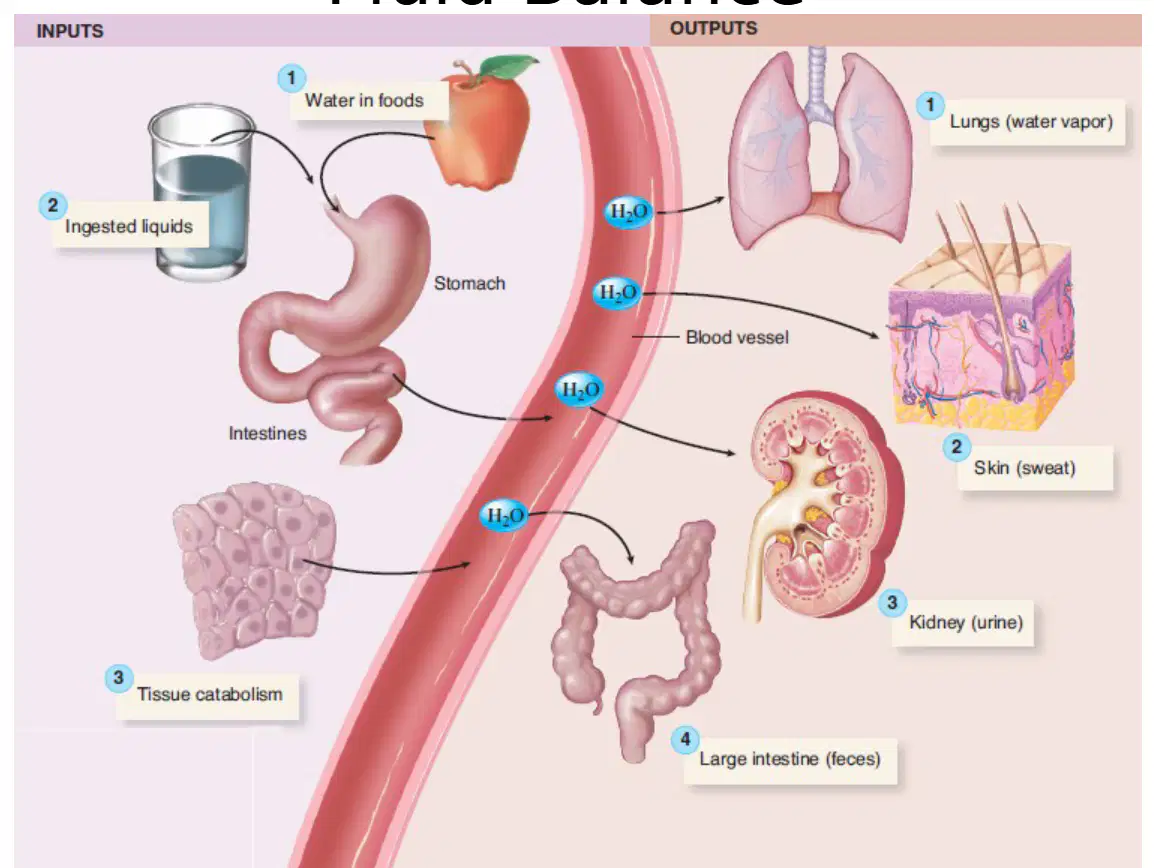
Which of the following is NOT an input of water in the human body?
Water in foods
Ingested liquids
Tissue catabolism
Skin (sweat)

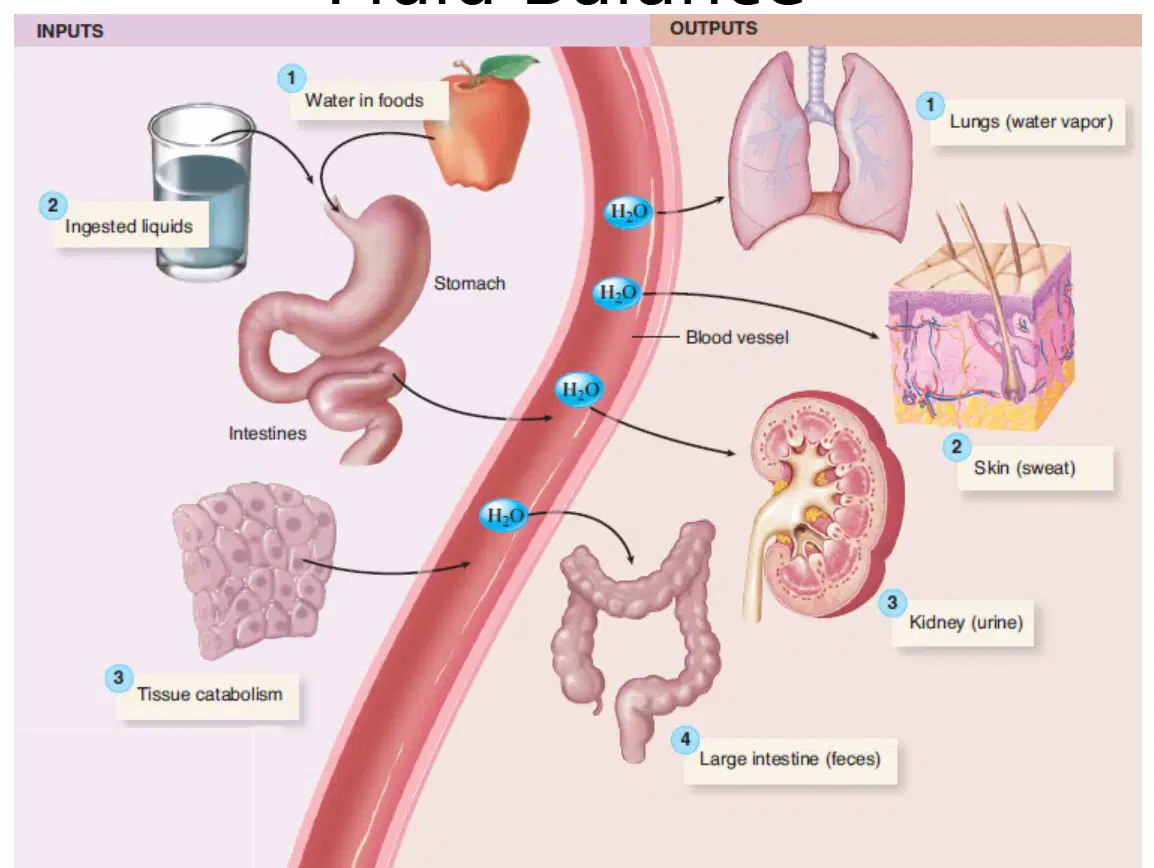
Which organ is responsible for water output in the form of urine?
Lungs
Skin
Kidney
Large intestine
Match the following water inputs and outputs with their correct descriptions:
Water in foods
Water obtained from eating
Ingested liquids
Water obtained from drinking
Tissue catabolism
Water produced by breakdown of tissues
Lungs (water vapor)
Water lost through breathing
Skin (sweat)
Water lost through sweating
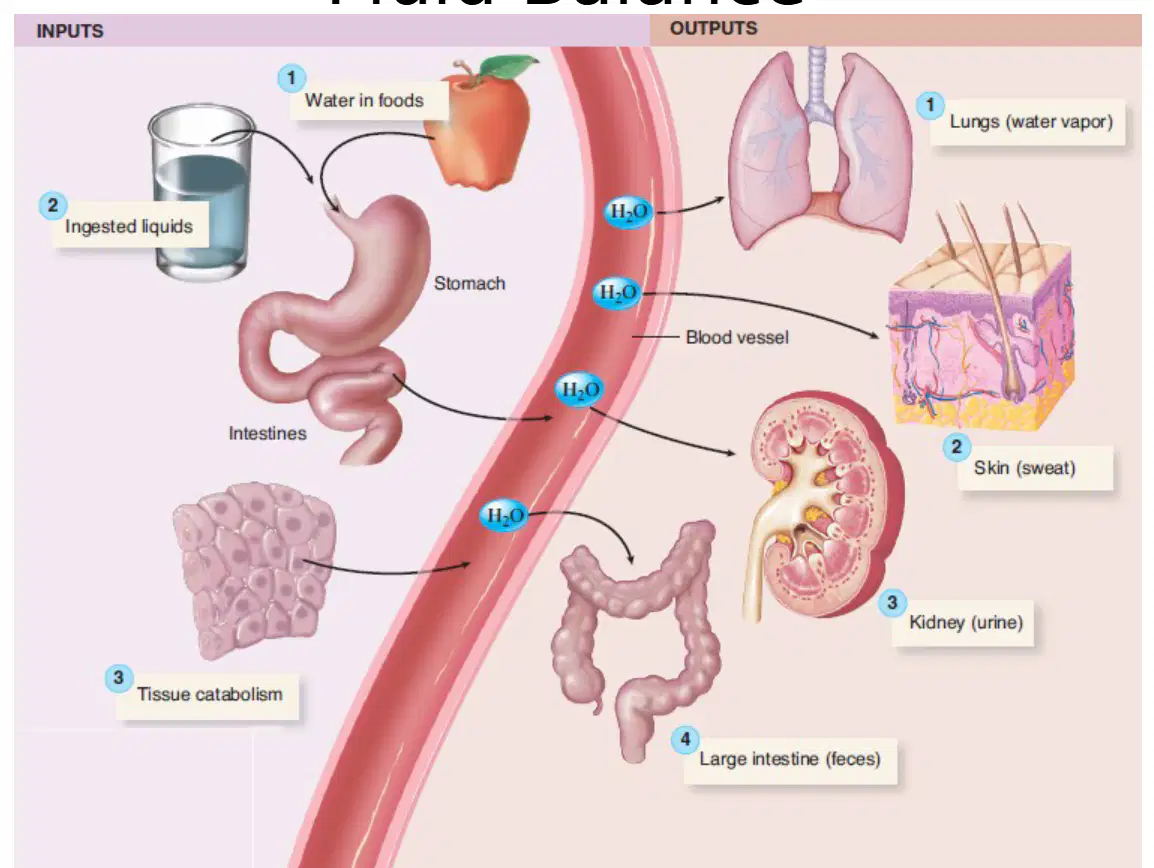
Fill in the blank: Water is lost from the body through the _______ as water vapor.
lungs
skin
intestines
kidneys

Fill in the blank: Water is obtained from _______ in addition to ingested liquids and tissue catabolism.
foods
air
sunlight
minerals
Which organs are responsible for fluid output?
Lungs, skin, kidneys, and large intestine
Heart, liver, pancreas, and spleen
Stomach, esophagus, trachea, and gallbladder
Bones, muscles, tendons, and ligaments
Fluid output, mainly ______ volume, adjusts to fluid intake.
urine
blood
saliva
sweat
Which hormone is released from the posterior pituitary gland when ECF volume is low?
Antidiuretic hormone (ADH)
Aldosterone
Insulin
Thyroxine
ADH and aldosterone from the adrenal cortex increase kidney tubule reabsorption of sodium and water from tubular urine into blood; this tends to increase ECF (and total body fluid) by ______ urine volume.
decreasing
increasing
stabilizing
diluting
How many main factors affect plasma, IF, and ICF volumes?
Three
Two
Four
Five
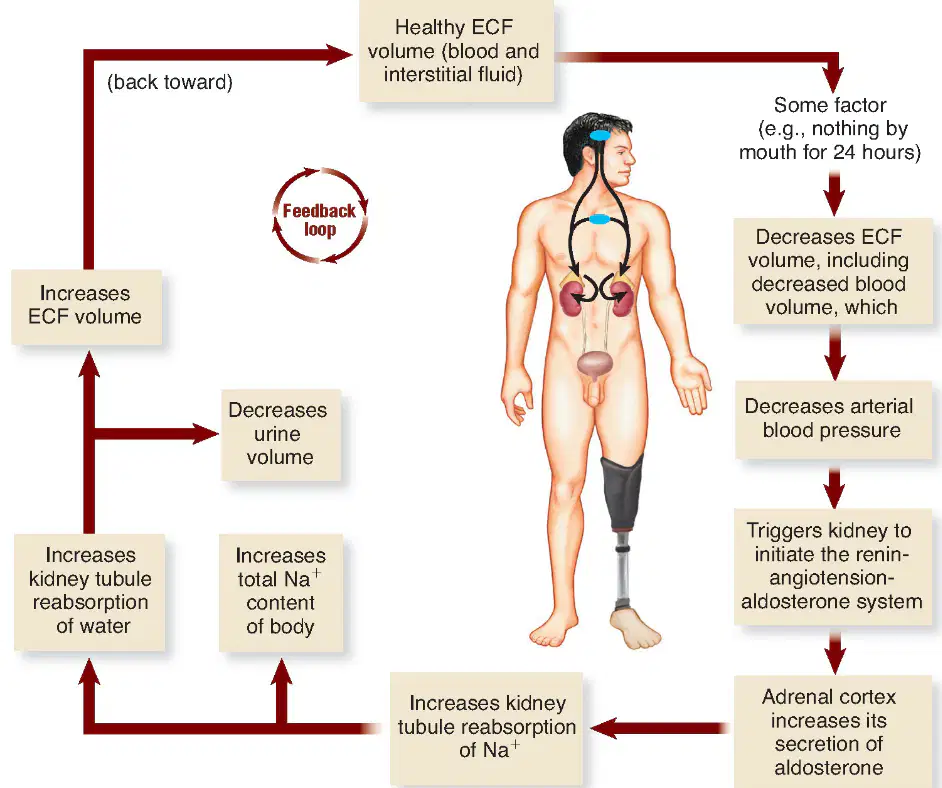
What does a decrease in ECF (extracellular fluid) volume, including decreased blood volume, cause?
Decreases arterial blood pressure
Increases heart rate
Increases blood glucose levels
Enhances oxygen saturation
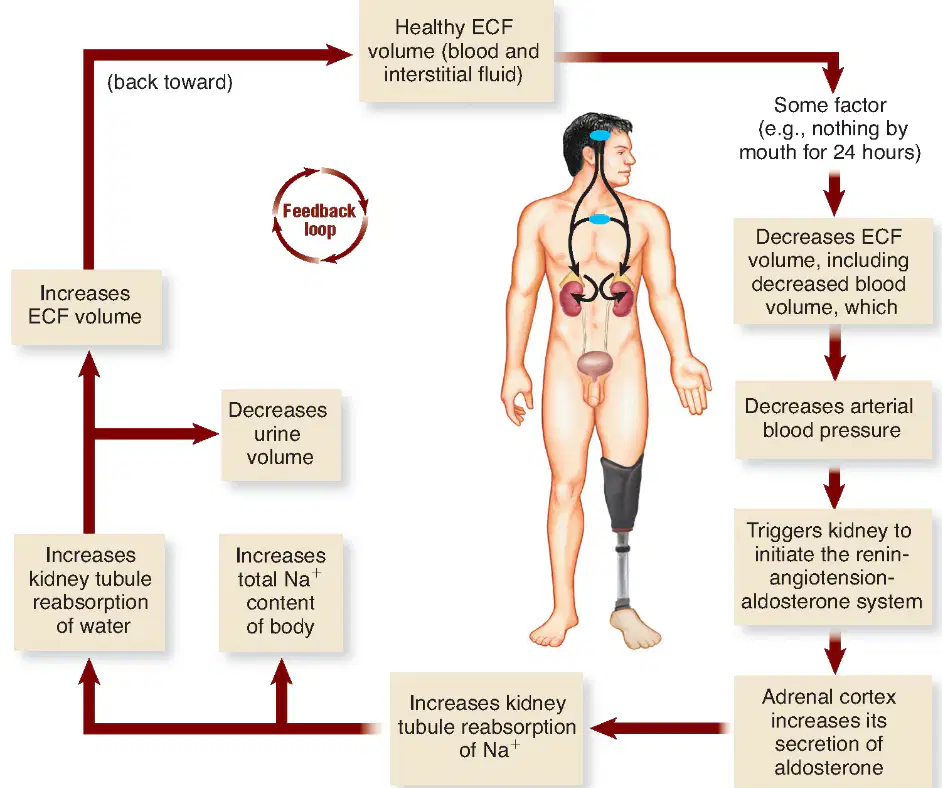
What triggers the kidney to initiate the renin-angiotensin-aldosterone system?
Decreased arterial blood pressure
Increased blood glucose levels
Elevated body temperature
High oxygen concentration
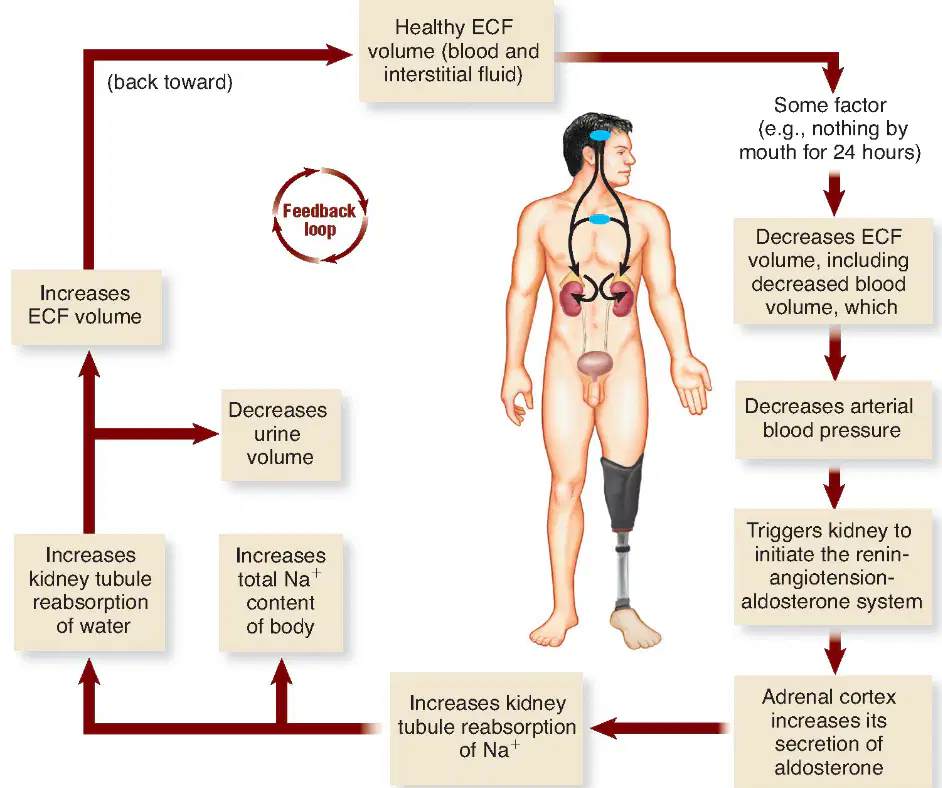
What does the adrenal cortex do in response to the renin-angiotensin-aldosterone system?
Increases its secretion of aldosterone
Decreases its secretion of cortisol
Inhibits the release of adrenaline
Reduces its secretion of androgens
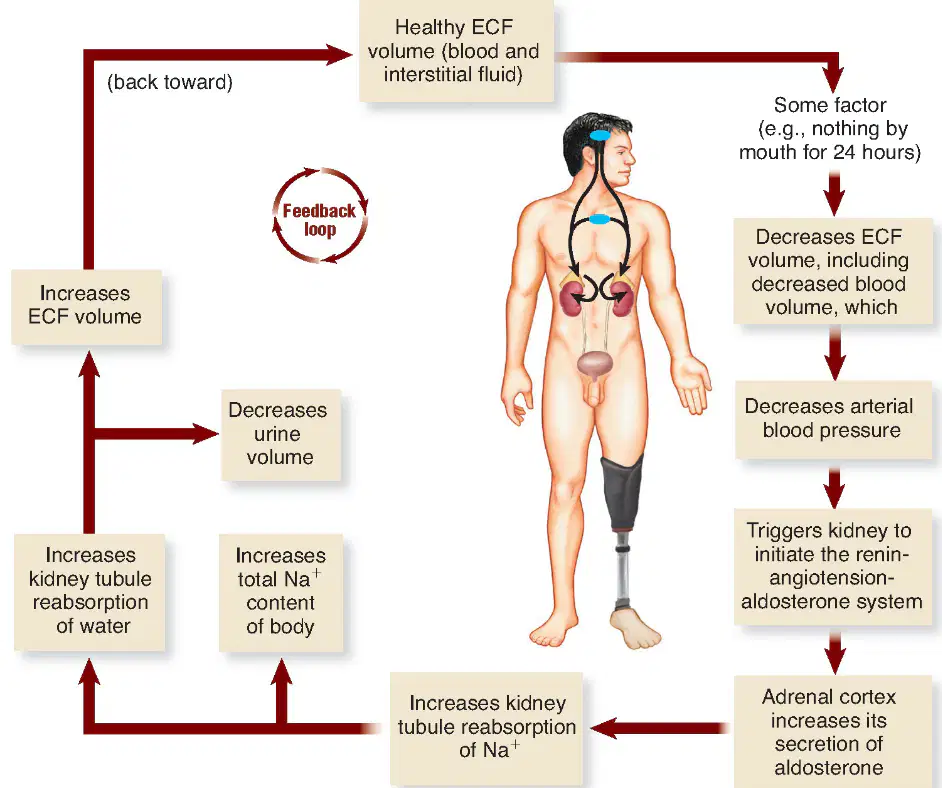
What is the effect of increased aldosterone secretion on the kidney tubules?
Increases kidney tubule reabsorption of Na+
Decreases kidney tubule reabsorption of Na+
Increases kidney tubule excretion of Na+
Decreases kidney tubule reabsorption of K+
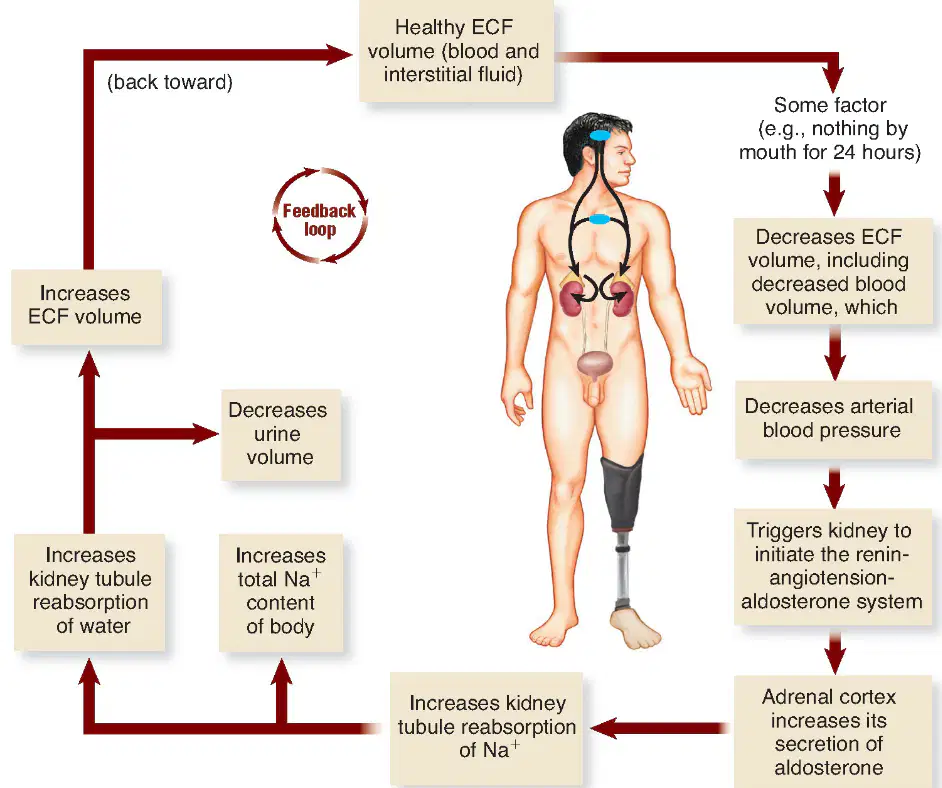
What is the result of increased kidney tubule reabsorption of Na+?
Increases total Na+ content of body
Decreases blood pressure
Reduces urine concentration
Leads to hypokalemia
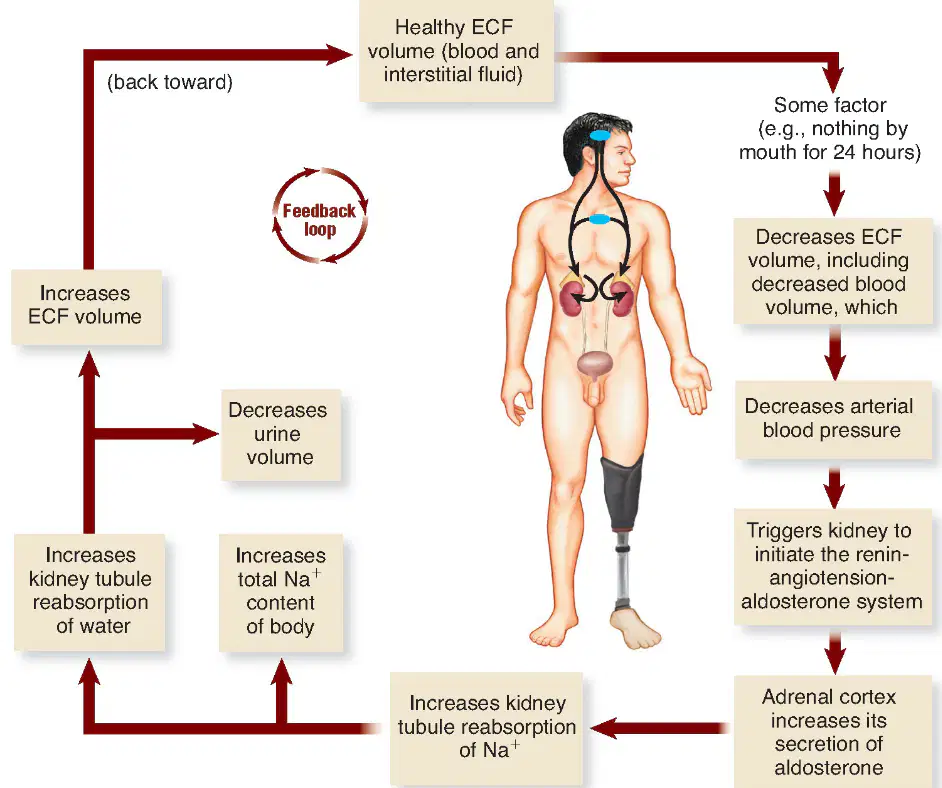
What is the result of increased total Na+ content of the body?
Increases kidney tubule reabsorption of water
Decreases blood pressure
Reduces urine output significantly
Causes hypokalemia
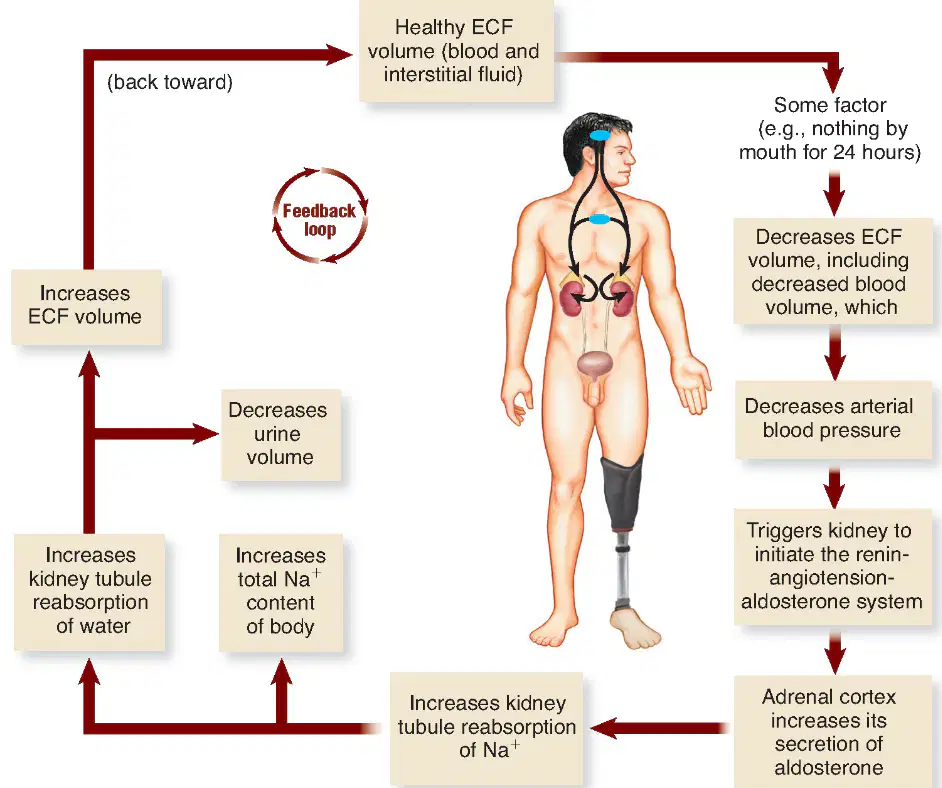
What is the result of increased kidney tubule reabsorption of water?
Decreases urine volume
Increases urine volume
Causes dehydration
Leads to high blood sugar

What is the result of decreased urine volume?
Increases ECF volume
Decreases ECF volume
Increases urine concentration
Decreases blood pressure
Fill in the blank: Sensory receptors detect change in volume and concentration of _____ and send signals to the hypothalamus.
ECF
RBC
DNA
ATP
Signals from the hypothalamus cause the feeling of thirst, which triggers drinking of fluids to restore _____
balance
temperature
pressure
digestion
If adequate fluids are not taken in, the body will compensate by decreasing saliva production and the production of other fluids, but water is still lost through _____ and expiration.
sweating
digestion
urination
absorption
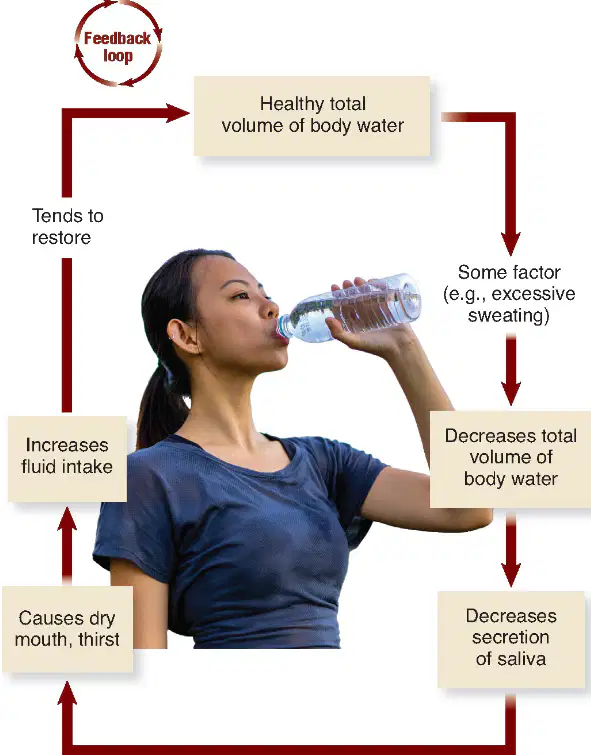
Refer to the diagram 'Homeostasis of the Total Volume of Body Water.' What is the initial effect of excessive sweating on the body?
Increases total volume of body water
Decreases total volume of body water
Increases secretion of saliva
Causes dry mouth, thirst
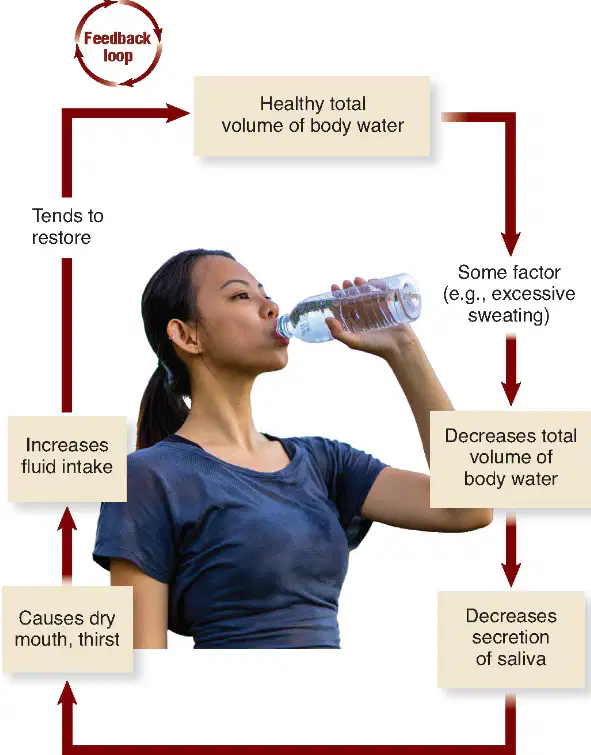
What happens when the secretion of saliva decreases?
It causes dry mouth and thirst.
It improves digestion.
It increases saliva production.
It causes excessive sweating.
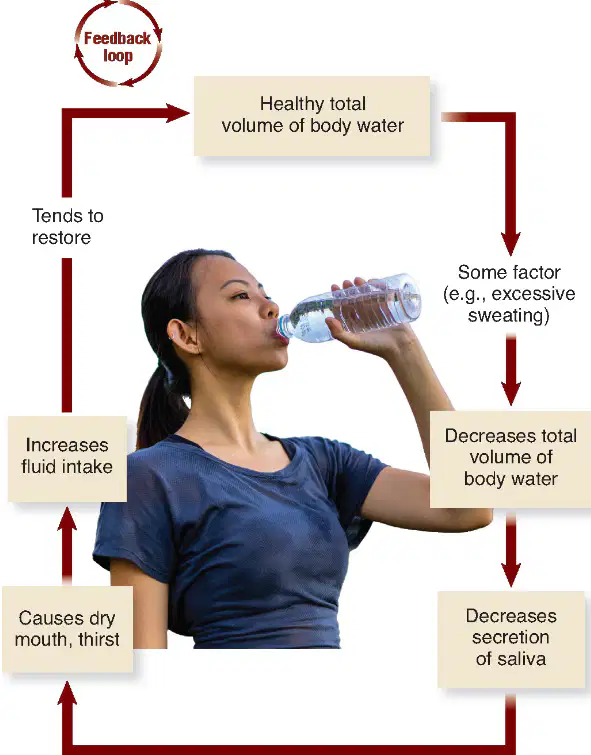
What is the body's response to dry mouth and thirst?
Decreases fluid intake
Increases fluid intake
Decreases total volume of body water
Increases secretion of saliva
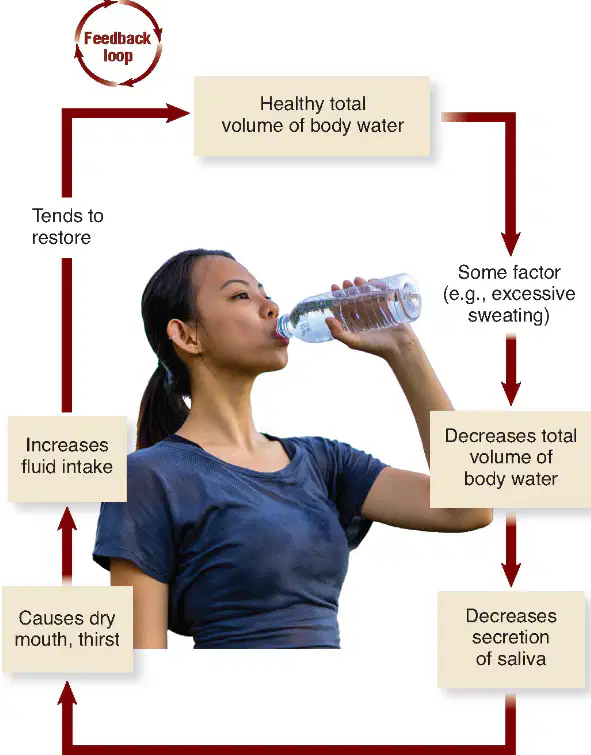
What is the purpose of the feedback loop in this process?
To restore and maintain a healthy total volume of body water.
To increase the rate of cellular respiration.
To promote the breakdown of proteins.
To enhance the absorption of vitamins.
Increased capillary blood pressure transfers fluid from blood to IF. This process is called a ________.
fluid shift
osmosis
filtration
reabsorption
Blood plasma protein concentration contributes to ________ pressure, thus attracting water and holding it in the plasma.
osmotic
hydrostatic
atmospheric
turgor
Fill in the blank: Dehydration is defined as the total volume of body fluids being ______ than normal.
smaller
larger
equal
unchanged
Dehydration occurs when fluid output exceeds intake for an extended period.
True
False
Fill in the blank: If IF volume shrinks first and treatment is not given, ______ volume and plasma volume decrease.
ICF
ECF
CSF
Lymph
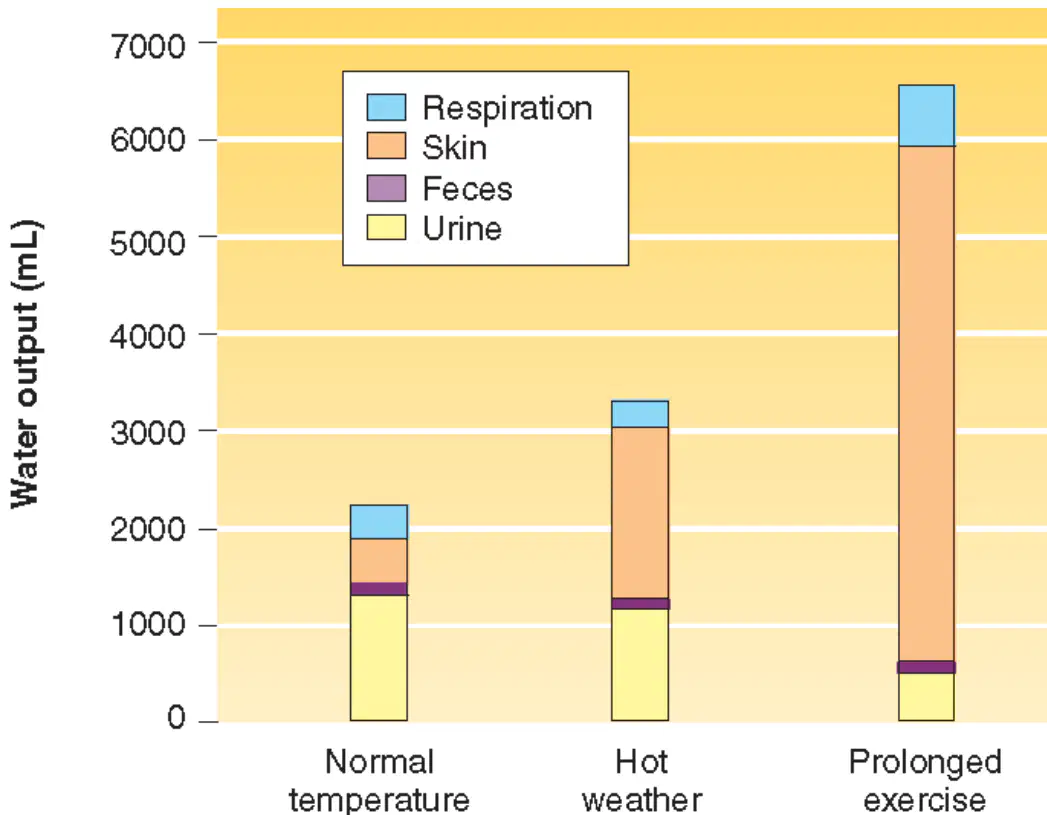
Under which condition is the total water output the highest?
Normal temperature
Hot weather
Prolonged exercise
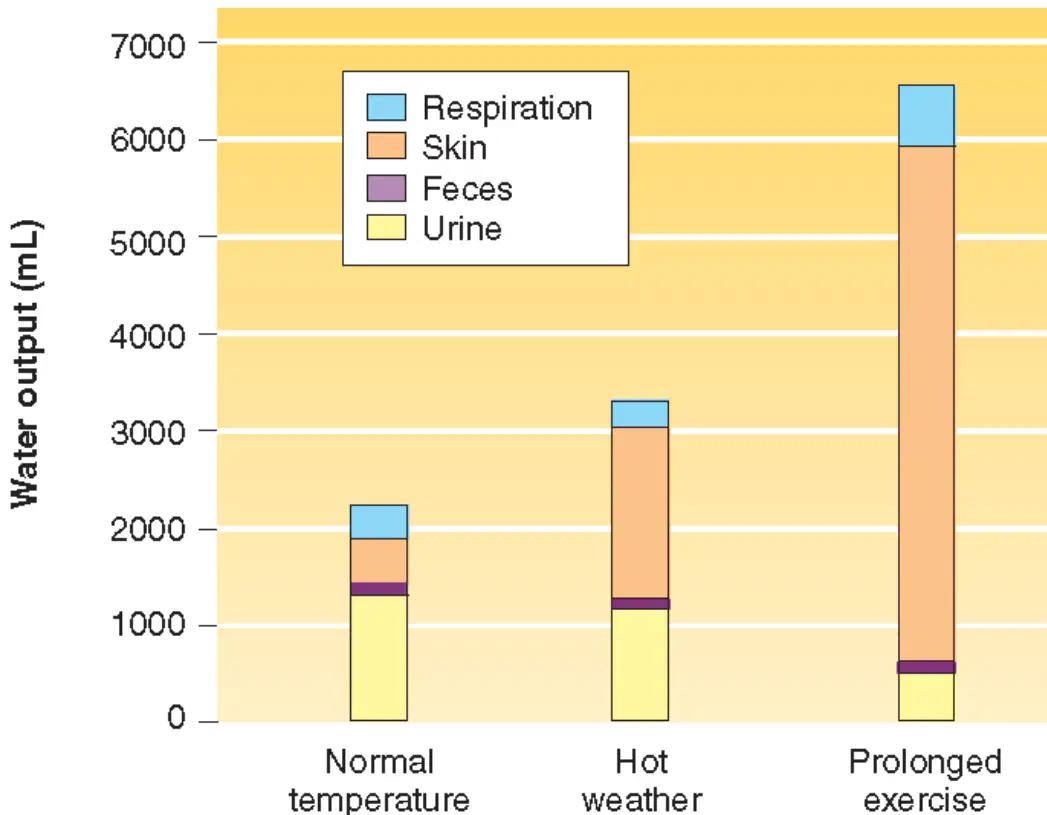
Refer to the bar graph titled 'Dehydration'. Which category contributes the most to water loss during prolonged exercise?
Respiration
Skin
Feces
Urine
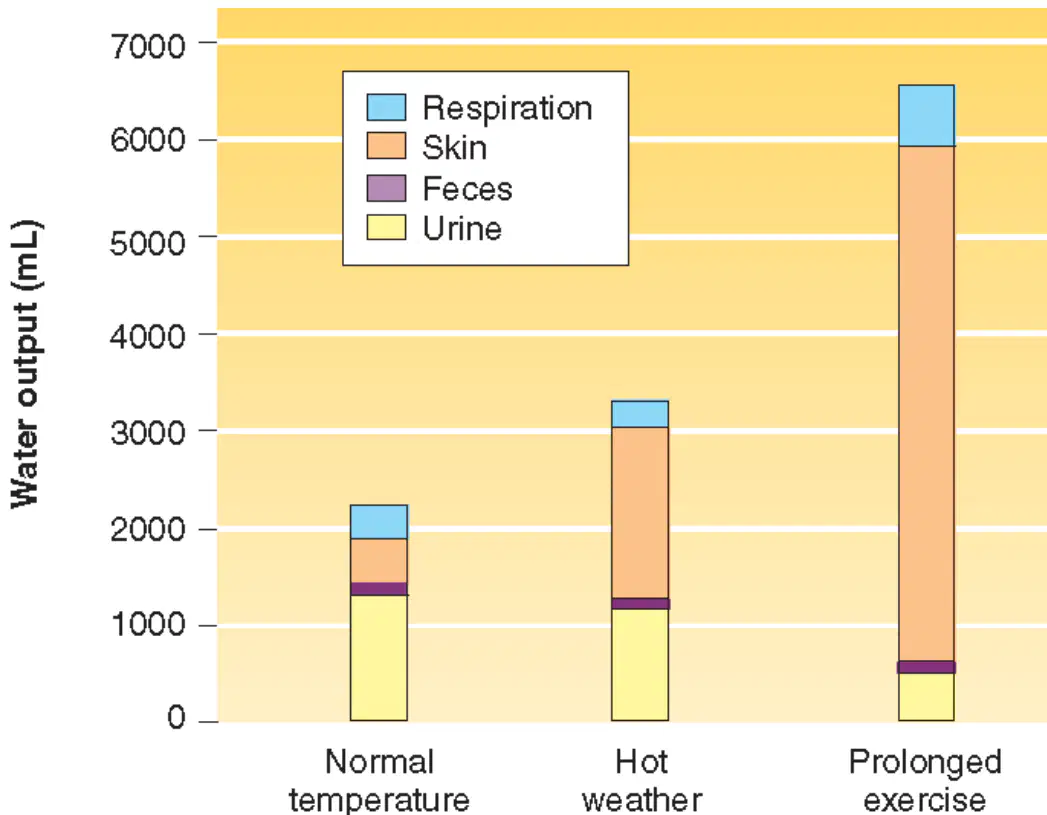
Refer to the bar graph titled 'Dehydration'. Fill in the blank: The water output from urine is highest during _________?
Normal temperature
High temperature
After exercise
During sleep
Match the following conditions to their approximate total water output:
2000 mL
1
3500 mL
2
6500 mL
3
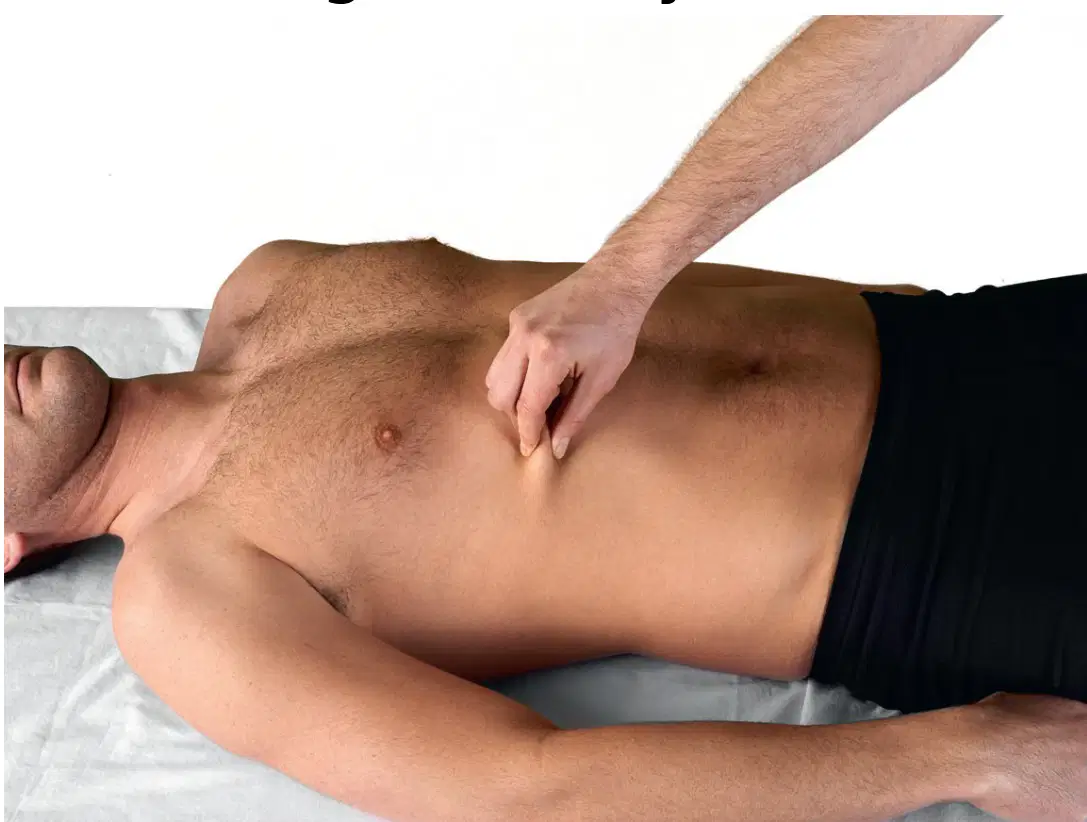
What is the procedure shown in the image used to test for?
Fever
Dehydration
Blood pressure
Heart rate

