

Wayground logo

Free Printable Worksheets

Font size

S
M
L
XL
Worksheets

MR. OKECH REAGAN

Total questions: 100

Worksheet time: 2hrs 39mins

Name
Class
Date
1.
  • Name five common laboratory apparatus used in a science lab and their functions.

a)
Beaker, Test Tube, Pipette, Bunsen Burner, Balance
b)
Thermometer
c)
Centrifuge
d)
Microscope
2.
  • Why is a Bunsen burner preferred for heating in the lab?

a)
A Bunsen burner is preferred for its controllable flame and efficient heating.
b)
A Bunsen burner is preferred for its low cost and portability.
c)
A Bunsen burner is used because it produces no flame at all.
d)
A Bunsen burner is favored for its ability to heat liquids without a flame.
3.

Draw and label a tripod stand and wire gauze

a)
An illustration of a tripod stand with four legs and a solid plate instead of gauze.
b)
A labeled diagram of a beaker and a Bunsen burner.
c)
A labeled drawing of a tripod stand with three legs converging at the top and a wire gauze represented as a rectangular mesh.
d)
A drawing of a single-legged stand with a circular base and no gauze.
4.

What precautions should be taken when using a thermometer?

a)
Clean the thermometer, avoid touching the tip, follow instructions, wait for accurate reading, and store properly.
b)
Ignore the waiting time for a reading
c)
Store the thermometer in direct sunlight
d)
Use the thermometer without cleaning it
5.

Differentiate between a measuring cylinder and a beaker.
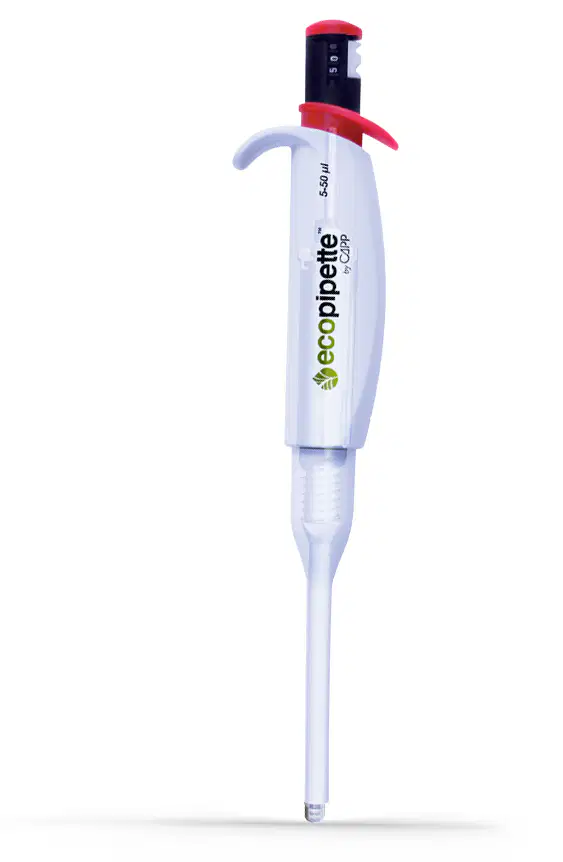
a)
A measuring cylinder is used for heating liquids, while a beaker is for precise measurements.
b)
A measuring cylinder is wider than a beaker, making it easier to pour liquids.
c)
A measuring cylinder is primarily used for solid measurements, while a beaker is for liquids.
d)
A measuring cylinder is for precise measurements, while a beaker is for mixing and holding liquids.
6.

Which apparatus would you use to measure 25 ml of water accurately?

a)
Graduated pipette or volumetric flask
b)
Beaker
c)
Test tube
d)
Measuring cup
7.

Identify two heat sources used in a school laboratory.

a)
microwave oven
b)
electric kettle
c)
incubator
d)
Bunsen burner, hot plate
8.
  • Why is it important to label chemicals properly in a laboratory?

a)
Labels can be handwritten without any specific information.
b)
Proper labeling of chemicals is essential for safety and effective handling in a laboratory.
c)
Labeling is only necessary for hazardous materials.
d)
Proper labeling is not required if chemicals are stored in cabinets.
9.

What is the function of a test tube holder?

a)
To measure the volume of liquids in test tubes.
b)
The function of a test tube holder is to hold test tubes securely.
c)
To mix the contents of test tubes.
d)
To heat test tubes during experiments.
10.

List three safety rules when using chemicals in the lab.

a)
1. Always wear appropriate personal protective equipment (PPE) such as gloves, goggles, and lab coats. 2. Know the properties and hazards of the chemicals you are using. 3. Ensure proper ventilation in the lab to avoid inhalation of harmful fumes.
b)
Ignore spills and clean them up later.
c)
Use any type of clothing without considering safety.
d)
Always mix chemicals without checking compatibility.
11.

What steps should be taken when cleaning glassware after an experiment?

a)
Soak in bleach, rinse with hot water, and dry with a cloth.
b)
Rinse, scrub with detergent, rinse with distilled water, and air dry.
c)
Wipe with a dry paper towel and store immediately.
d)
Place in the dishwasher without rinsing first.
12.

How would you measure the temperature of boiling water safely?

a)
Place your hand in the water to feel the temperature.
b)
Use a metal spoon to gauge the heat.
c)
Use a digital or infrared thermometer to measure the temperature.
d)
Wait for the water to cool down before checking.
13.

Name one apparatus used to measure time in an experiment.

a)
Hourglass
b)
Stopwatch
c)
Clock
d)
Timer
14.

Explain how to light a Bunsen burner safely.

a)
Adjust the flame before lighting the burner.
b)
Light the burner without checking for gas leaks.
c)
Turn on the gas and use a match to ignite directly.
d)
Light a Bunsen burner by ensuring safety, connecting to gas, igniting with a striker, and adjusting the flame.
15.

Describe how to handle broken glass in the lab.

a)
Use your bare hands to pick up all pieces, regardless of size.
b)
Wear gloves and protective eyewear, pick up large pieces by hand, use a broom for small shards, dispose in a broken glass container.
c)
Sweep all glass into a dustpan and throw it in the regular trash.
d)
Ignore the broken glass and continue with your work.
16.

Name the parts of a light microscope.

a)
Objective mirror, focus knob, light filter
b)
Eyepiece, objective lenses, stage, light source, diaphragm, base
c)
Condenser lens, mirror, stage clips
d)
Camera, projector, lens cap
17.

What is the function of the objective lens in a microscope?

a)
The objective lens focuses light to magnify the specimen.
b)
The objective lens illuminates the specimen.
c)
The objective lens adjusts the focus of the light source.
d)
The objective lens holds the specimen in place.
18.
  • Why is staining important when observing cells?

a)
Staining is only necessary for plant cells.
b)
Staining is important because it increases visibility of cell structures and allows for better differentiation and identification of cells.
c)
Staining makes cells less visible under a microscope.
d)
Staining is used to kill cells before observation.
19.

Differentiate between plant and animal cells using observable features.

a)
Animal cells have a cell wall, chloroplasts, and large vacuoles; plant cells do not.
b)
Plant cells are smaller than animal cells and have more organelles.
c)
Plant cells have a cell wall, chloroplasts, and large vacuoles; animal cells do not.
d)
Animal cells contain chloroplasts and large vacuoles; plant cells do not.
20.

Why is the nucleus referred to as the control center of the cell?

a)
The nucleus is referred to as the control center of the cell because it houses the DNA that regulates cellular activities.
b)
The nucleus produces energy for the cell.
c)
The nucleus is responsible for protein synthesis.
d)
The nucleus transports nutrients throughout the cell.
21.

Define an element and give three examples.

a)
Sodium (Na)
b)
Water (H2O)
c)
Examples of elements include Hydrogen (H), Oxygen (O), and Carbon (C).
d)
Gold (Au)
22.

How does a compound differ from a mixture?

a)
A compound is a mixture of elements that can be separated easily.
b)
A compound retains the properties of its individual components like a mixture.
c)
A compound is chemically bonded and has a fixed composition, while a mixture is physically combined and retains the properties of its components.
d)
A mixture has a fixed composition and is chemically bonded.
23.

Give two examples of homogeneous mixtures.

a)
Sugar, flour
b)
Saltwater, air
c)
Sand, gravel
d)
Oil and water
24.

Identify elements found in water and salt.

a)
Hydrogen, Oxygen, Sodium, Chlorine
b)
Iron
c)
Potassium
d)
Calcium
25.
  • What is a heterogeneous mixture? Give one example.

a)
A glass of water.
b)
A salad.
c)
A bowl of rice.
d)
A smoothie.
26.

Which method would you use to separate sand from salt solution?

a)
Evaporation
b)
Distillation
c)
Centrifugation
d)
Filtration
27.

Explain how distillation is used to purify water.

a)
Distillation involves freezing water to remove impurities.
b)
Distillation uses chemical reactions to purify water.
c)
Distillation purifies water by filtering it through sand.
d)
Distillation purifies water by heating it to create steam, which is then condensed back into liquid, removing impurities.
28.

Why is air classified as a mixture?

a)
Air cannot be separated into its components.
b)
Air is a pure substance with a fixed composition.
c)
Air is a solid at room temperature.
d)
Air is a mixture because it contains multiple gases that can be separated and retain their individual properties.
29.

Give three differences between compounds and mixtures.

a)
Compounds are always solid; mixtures can be liquid or gas.
b)
Compounds have a fixed composition; mixtures do not.
c)
Mixtures have a uniform composition; compounds do not.
d)
Compounds can be separated by physical means; mixtures cannot.
30.

What is the importance of separating mixtures in real life?

a)
Separating mixtures is only useful in laboratories.
b)
It is primarily used for aesthetic purposes.
c)
Mixtures should never be separated under any circumstances.
d)
Separating mixtures is important for obtaining pure substances, recovering valuable materials, ensuring safety, and enhancing product quality.
31.

Name the main organs of the human digestive system.

a)
Heart, lungs, brain
b)
Mouth, esophagus, stomach, small intestine, large intestine, rectum, anus
c)
Kidneys, bladder, urethra
d)
Liver, pancreas, gallbladder
32.

Describe the function of the stomach in digestion.

a)
The stomach absorbs nutrients directly into the bloodstream.
b)
The stomach stores food without any processing.
c)
The stomach produces bile for fat digestion.
d)
The stomach mechanically and chemically digests food, turning it into chyme.
33.

What is the role of enzymes in digestion?

a)
Enzymes increase the size of food particles during digestion.
b)
Enzymes are responsible for the absorption of nutrients in the bloodstream.
c)
Enzymes facilitate the breakdown of food into absorbable nutrients during digestion.
d)
Enzymes protect the stomach lining from acid during digestion.
34.

Why is digestion important to the body?

a)
Digestion is only necessary for weight loss.
b)
Digestion helps the body to produce hormones.
c)
Digestion is important because it allows the body to absorb nutrients from food.
d)
Digestion is primarily for detoxifying the blood.
35.
  • Differentiate between mechanical and chemical digestion.

a)
Mechanical digestion involves chemical reactions, while chemical digestion is purely physical.
b)
Mechanical digestion occurs only in the stomach, while chemical digestion happens in the mouth.
c)
Mechanical digestion is faster than chemical digestion, which takes longer to break down food.
d)
Mechanical digestion is the physical breakdown of food, while chemical digestion is the enzymatic breakdown of food.
36.

Explain the function of bile in fat digestion.

a)
Bile absorbs carbohydrates in the intestine.
b)
Bile neutralizes stomach acid before digestion.
c)
Bile breaks down proteins for digestion.
d)
Bile emulsifies fats to aid in their digestion.
37.
  • What happens in the small intestine during digestion?

a)
The small intestine primarily stores waste before excretion.
b)
The small intestine is where most digestion and nutrient absorption occur.
c)
Most digestion occurs in the stomach, not the small intestine.
d)
The small intestine is mainly responsible for producing bile.
38.
  • How is the large intestine adapted to its function?

a)
The large intestine absorbs nutrients and has a narrow diameter.
b)
The large intestine produces digestive enzymes for breaking down food.
c)
The large intestine is primarily responsible for protein synthesis.
d)
The large intestine has a wide diameter, muscular walls for movement, and beneficial bacteria for fermentation.
39.

Name three digestive enzymes and the food they act on

a)
Cellulase (proteins)
b)
Amylase (carbohydrates), Pepsin (proteins), Lipase (fats)
c)
Sucrase (carbohydrates)
d)
Lactase (fats)
40.
  1. Why is a balanced diet important in digestion?

a)
A balanced diet has no effect on digestion.
b)
A balanced diet is important in digestion because it provides essential nutrients that support digestive health and function.
c)
A balanced diet is only important for weight loss.
d)
A balanced diet is only necessary for athletes.
41.
  • Identify two types of plant reproduction.

a)
Photosynthesis and respiration
b)
Sexual reproduction and asexual reproduction.
c)
Plant growth and nutrient absorption
d)
Seed dispersal and germination
42.

What is the difference between pollination and fertilization?

a)
Pollination occurs only in animals.
b)
Fertilization is the process of seed dispersal.
c)
Pollination and fertilization are the same process.
d)
Pollination is the transfer of pollen; fertilization is the fusion of gametes.
43.

Name three agents of pollination.

a)
Bees, wind, and water
b)
Mammals, ice, and gravity
c)
Birds, rocks, and fire
d)
Insects, soil, and sunlight
44.

Describe the structure of a typical flower.

a)
A typical flower has only leaves and roots.
b)
A typical flower consists of only petals and stems.
c)
A typical flower is made up of thorns and bark.
d)
A typical flower has petals, sepals, stamens, and carpels.
45.

What is the function of the stigma in a flower?

a)
The stigma produces nectar to attract pollinators.
b)
The stigma functions to receive and hold pollen for fertilization.
c)
The stigma protects the ovary from pests.
d)
The stigma is responsible for photosynthesis in the flower.
46.

Explain how seeds are dispersed.

a)
Seeds are only dispersed by gravity.
b)
Seeds are dispersed exclusively by fire.
c)
Seeds are never dispersed by animals.
d)
Seeds are dispersed by wind, water, animals, and mechanical means.
47.

How is the flower adapted for insect pollination?

a)
Flowers are adapted for insect pollination by being dull in color and odorless.
b)
Flowers rely solely on wind for pollination without any insect attraction.
c)
Flowers produce toxic substances to repel insects during pollination.
d)
Flowers are adapted for insect pollination by having bright colors, sweet scents, and nectar to attract insects.
48.

What is vegetative propagation? Give two examples.

a)
Seed propagation - growing plants from seeds.
b)
Grafting - joining two plant parts together to grow a new plant.
c)
Layering - burying a part of the stem to encourage root growth.
d)
Examples of vegetative propagation include: 1) Cutting - where a piece of the stem or leaf is cut and planted to grow a new plant. 2) Runners - where horizontal stems grow along the ground and produce new plants at their nodes, as seen in strawberries.
49.

Why is seed dispersal important?

a)
Seed dispersal is only important for animals.
b)
Seed dispersal has no impact on plant growth.
c)
Seed dispersal is primarily for aesthetic purposes.
d)
Seed dispersal is important for plant reproduction, reducing competition, maintaining genetic diversity, and enabling colonization of new habitats.
50.

Differentiate between cross-pollination and self-pollination.

a)
Self-pollination requires the assistance of insects, while cross-pollination does not.
b)
Cross-pollination involves two different plants, while self-pollination occurs within the same plant.
c)
Cross-pollination occurs within the same plant, while self-pollination involves two different plants.
d)
Cross-pollination is a type of self-pollination that occurs in the same flower.
51.

Name the main parts of the male and female reproductive systems.

a)
ovaries, vas deferens, cervix, penis
b)
Male: testes, vas deferens, prostate gland, penis; Female: ovaries, fallopian tubes, uterus, vagina.
c)
fallopian tubes, prostate gland, scrotum, uterus
d)
testes, uterus, prostate gland, vagina
52.

What is fertilization and where does it occur?

a)
Fertilization occurs in the ovaries.
b)
Fertilization occurs in the cervix.
c)
Fertilization occurs in the fallopian tubes.
d)
Fertilization occurs in the uterus.
53.

Describe two physical changes in boys during puberty.

a)
Decrease in height and stature.
b)
Development of a higher voice pitch.
c)
Increase in body fat percentage.
d)
1. Growth of facial and body hair. 2. Increase in muscle mass and strength.
54.
  • Describe two physical changes in girls during puberty.

a)
Deepening of voice.
b)
1. Development of breasts. 2. Onset of menstruation.
c)
Growth of body hair.
d)
Increase in height.
55.

What is the role of the placenta during pregnancy?

a)
The placenta provides nutrients and oxygen to the fetus, removes waste, and produces hormones.
b)
The placenta acts as a barrier to prevent any substances from reaching the fetus.
c)
The placenta is responsible for the fetus's physical development only.
d)
The placenta serves as a storage unit for the fetus's waste products.
56.

What is menstruation?

a)
Menstruation is the process of ovulation in the ovaries.
b)
Menstruation is the fertilization of an egg by sperm.
c)
Menstruation is the monthly production of testosterone in males.
d)
Menstruation is the monthly shedding of the uterine lining in individuals with a uterus.
57.

Why is reproductive health education important in schools?

a)
It focuses solely on physical education.
b)
Reproductive health education is crucial for informed decision-making, prevention of STIs and unintended pregnancies, and promoting healthy relationships.
c)
It encourages students to avoid all relationships.
d)
It helps students memorize historical dates.
58.

Explain how pregnancy occurs in humans.

a)
Pregnancy is initiated by the release of hormones without any fertilization.
b)
Pregnancy occurs when an egg is implanted without fertilization.
c)
Pregnancy happens when two eggs combine in the ovaries.
d)
Pregnancy occurs when a sperm fertilizes an egg, leading to the development of an embryo in the uterus.
59.
  • Identify three ways of preventing sexually transmitted infections (STIs).

a)
1. Use condoms during sexual activity. 2. Get vaccinated against STIs. 3. Regular STI screenings.
b)
Using the same needle for injections.
c)
Avoiding all forms of sexual activity.
d)
Engaging in unprotected sex regularly.
60.

What are some signs of adolescence?

a)
Signs of adolescence include growth spurts, development of secondary sexual characteristics, mood swings, and increased independence.
b)
Decreased social interactions
c)
Heightened interest in childhood toys
d)
Increased appetite for junk food
61.

Define osmosis and diffusion.

a)
Osmosis and diffusion are the same processes that involve the movement of gases only.
b)
Osmosis is the movement of water across a membrane; diffusion is the movement of molecules from high to low concentration.
c)
Osmosis is the movement of molecules across a membrane; diffusion is the movement of water from low to high concentration.
d)
Osmosis is the movement of nutrients into cells; diffusion is the movement of waste out of cells.
62.

Give one example of diffusion in everyday life.

a)
The scent of perfume spreading in the air.
b)
Sugar dissolving in coffee
c)
Ice melting in the sun
d)
Water boiling in a pot
63.

Why is osmosis important in plant cells?

a)
Osmosis helps in photosynthesis by converting sunlight into energy.
b)
Osmosis is important in plant cells because it maintains turgor pressure and supports nutrient uptake.
c)
Osmosis is responsible for the movement of water from roots to leaves only during winter.
d)
Osmosis prevents plants from wilting by absorbing carbon dioxide from the air.
64.
  • What happens to a plant cell placed in salty water?

a)
The plant cell produces more chlorophyll.
b)
The plant cell loses water and shrinks.
c)
The plant cell remains unchanged.
d)
The plant cell absorbs water and expands.
65.

How do guard cells use osmosis to control water loss?

a)
Guard cells release oxygen to prevent water loss.
b)
Guard cells close stomata to increase photosynthesis.
c)
Guard cells use osmosis to regulate turgor pressure, opening and closing stomata to control water loss.
d)
Guard cells absorb water to increase leaf size.
66.
  • Describe a simple experiment to demonstrate diffusion.

a)
Add food coloring to water and observe its spread.
b)
Add sugar to water and stir to see the immediate effect.
c)
Mix salt in water and measure the temperature change.
d)
Place a drop of oil on water and observe the layer.
67.
  • Differentiate between osmosis and diffusion using particles.

a)
Osmosis involves water movement across a membrane, while diffusion involves the movement of any particles.
b)
Osmosis and diffusion are the same process involving the movement of solutes.
c)
Diffusion only occurs in gases, while osmosis occurs in liquids.
d)
Osmosis is the movement of particles across a membrane, while diffusion is the movement of water.
68.

Why do animal cells burst in pure water but plant cells do not?

a)
Plant cells absorb water faster than animal cells.
b)
Animal cells burst in pure water due to osmosis, while plant cells do not because of their rigid cell wall.
c)
Animal cells have a thicker membrane than plant cells.
d)
Animal cells have a cell wall that prevents bursting.
69.

What is turgor pressure?

a)
Turgor pressure is the weight of the plant cell's contents.
b)
Turgor pressure is the pressure of the fluid inside a plant cell that maintains its shape and rigidity.
c)
Turgor pressure is the pressure of air inside a plant cell.
d)
Turgor pressure is the force exerted by the cell wall on the cytoplasm.
70.

How does osmosis help in absorption of water by roots?

a)
Osmosis prevents water from entering the roots.
b)
Osmosis causes roots to lose water to the soil.
c)
Osmosis helps roots absorb water by allowing water to move from the soil (lower solute concentration) into the root cells (higher solute concentration).
d)
Osmosis is the process of roots producing water internally.
71.

Define pressure and state its unit.

a)
The unit of pressure is Atmosphere (atm).
b)
The unit of pressure is Pascal (Pa).
c)
Pressure is defined as force per unit area measured in Joules (J).
d)
The unit of pressure is Newton (N).
72.
  • Why do pointed objects exert more pressure than flat ones?

a)
Pressure is independent of the object's shape.
b)
Pointed objects exert more pressure than flat ones due to their smaller contact area.
c)
Flat objects have sharper edges than pointed ones.
d)
Pointed objects are heavier than flat ones.
73.

What is atmospheric pressure?

a)
Atmospheric pressure is the amount of moisture in the air.
b)
Atmospheric pressure is the pressure exerted by the weight of the atmosphere, commonly measured as 1013.25 hPa at sea level.
c)
Atmospheric pressure is the force of gravity on the Earth's surface.
d)
Atmospheric pressure is the temperature of the atmosphere.
74.
  • Describe how pressure is applied in hydraulic brakes.

a)
Pressure is applied by pushing a piston in the master cylinder, which creates hydraulic pressure in the brake fluid that activates the brake calipers.
b)
Pressure is generated by a vacuum system that releases air from the brake lines.
c)
Pressure is created by a spring mechanism that pushes the brake fluid out of the reservoir.
d)
Pressure is applied by pulling a lever that directly engages the brake pads.
75.

What factors affect pressure in liquids?

a)
Depth, density of the liquid, and gravitational acceleration.
b)
Temperature and humidity
c)
Surface tension and volume
d)
Color and viscosity
76.

Why do divers wear special suits at great depths?

a)
Divers wear special suits to protect against pressure, cold, and to ensure safety at great depths.
b)
To reduce the need for oxygen tanks
c)
To improve visibility in murky waters
d)
To enhance buoyancy and float on the surface
77.

Explain why a sharp knife cuts better than a blunt one.

a)
A sharp knife cuts better than a blunt one because it applies force over a smaller area, allowing for easier penetration.
b)
A blunt knife is easier to control while cutting.
c)
A sharp knife requires more force to cut through materials.
d)
A blunt knife is safer to use than a sharp one.
78.
  • Describe an experiment to show pressure increases with depth in liquids.

a)
Pressure increases with depth in liquids, as demonstrated by measuring pressure at various depths in a water-filled container.
b)
Pressure is only affected by temperature in liquids.
c)
Pressure remains constant at all depths in liquids.
d)
Pressure decreases with depth in liquids.
79.

Why is a wide base important for a water tank stand?

a)
A wide base helps in reducing the cost of materials.
b)
A wide base is only necessary for large tanks.
c)
A wide base is important for stability and weight distribution.
d)
A wide base is primarily for aesthetic purposes.
80.
  1. Give real-life applications of pressure in liquid

a)
Water filtration systems
b)
Air pressure in tires
c)
Cooking with steam
d)
1. Hydraulic systems (e.g., car brakes). 2. Submarines and underwater exploration.
81.

State two forms of energy.

a)
Mechanical energy and sound energy
b)
Kinetic energy and potential energy.
c)
Nuclear energy and solar energy
d)
Thermal energy and chemical energy
82.

What is energy transformation? Give an example.

a)
The conversion of solar energy to thermal energy in a solar panel.
b)
The change of gravitational energy to sound energy in a waterfall.
c)
An example of energy transformation is the conversion of kinetic energy to electrical energy in a hydroelectric power plant.
d)
The transformation of chemical energy to mechanical energy in a car engine.
83.

Describe how a solar panel works.

a)
A solar panel works by reflecting sunlight to generate power.
b)
A solar panel stores electricity for later use.
c)
A solar panel generates heat for water heating systems.
d)
A solar panel works by converting sunlight into electricity using the photovoltaic effect.
84.
  • State three renewable sources of energy.

a)

Nuclear energy ,Coal energy, Natural gas

b)
Solar energy, wind energy, hydroelectric energy
85.

How does a wind turbine generate electricity?

a)
A wind turbine generates electricity by burning fossil fuels to create steam.
b)
A wind turbine generates electricity by using solar panels to capture sunlight.
c)
A wind turbine generates electricity by harnessing geothermal energy from the earth.
d)
A wind turbine generates electricity by converting wind energy into mechanical energy, which is then transformed into electrical energy.
86.

What is chemical energy?

a)
Chemical energy is the energy released during a chemical reaction.
b)
Chemical energy is the energy stored in the bonds of chemical compounds.
c)
Chemical energy is the energy associated with the motion of molecules.
d)
Chemical energy is the energy that can be converted into electrical energy.
87.
  • Explain how food provides energy to the human body.

a)
Food is converted directly into muscle mass.
b)
Food provides energy to the human body by breaking down macronutrients into glucose, amino acids, and fatty acids, which are then converted into ATP for cellular energy.
c)
Food provides energy by increasing body temperature.
d)
Food acts as a storage unit for energy without any conversion.
88.

Why is energy conservation important?

a)
Energy conservation is only important for large corporations.
b)
Energy conservation has no impact on climate change.
c)
Energy conservation is crucial for sustainability, cost savings, and environmental protection.
d)
Energy conservation is primarily about reducing physical activity.
89.

How does a battery demonstrate energy transformation?

a)
A battery changes light energy into sound energy.
b)
A battery demonstrates energy transformation by converting chemical energy into electrical energy.
c)
A battery transforms mechanical energy into chemical energy.
d)
A battery converts electrical energy into thermal energy.
90.

Name a device that converts electrical energy into heat energy.

a)
Fan
b)
Heater
c)
Light bulb
d)
Refrigerator
91.

How does the structure of the small intestine relate to its function?

a)
The small intestine has a smooth surface to reduce friction during digestion.
b)
The structure of the small intestine, with its folds, villi, and microvilli, maximizes surface area for nutrient absorption.
c)
The small intestine's primary role is to store waste before excretion.
d)
The small intestine is mainly responsible for producing digestive enzymes.
92.
  • Why is the microscope important in the study of cells?

a)
The microscope is used to study the behavior of light.
b)
The microscope is important for studying animal behavior.
c)
The microscope helps in understanding chemical reactions in cells.
d)
The microscope is important because it enables the visualization and study of cells, which are not visible to the naked eye.
93.

Describe how you would separate a mixture of iron filings and sand.

a)
Use a magnet to attract the iron filings away from the sand.
b)
Pour water over the mixture to separate them.
c)
Heat the mixture to evaporate the sand.
d)
Use a sieve to filter out the sand.
94.

What adaptations help flowers attract pollinators?

a)
Dull colors and lack of fragrance
b)
Thorns and spines
c)
Heavy pollen production
d)
Bright colors, enticing scents, and nectar production.
95.
  • How do enzymes speed up digestion?

a)
Enzymes are not involved in the digestion process at all.
b)
Enzymes slow down digestion by increasing the temperature of food.
c)
Enzymes speed up digestion by lowering the activation energy of biochemical reactions, allowing food to be broken down more quickly.
d)
Enzymes only work in the stomach and not in the intestines.
96.

Why are adolescents advised to maintain personal hygiene?

a)
To enhance athletic performance
b)
To avoid academic responsibilities
c)
To increase social media presence
d)
Adolescents are advised to maintain personal hygiene to prevent infections, manage body odor, and enhance self-esteem.
97.
  • Compare and contrast fertilization in plants and humans.

a)
Fertilization in plants occurs through internal processes, while in humans it is external.
b)
Both plants and humans use pollen for fertilization.
c)
Fertilization in humans involves the transfer of seeds, similar to plants.
d)
Fertilization in plants is external and often involves pollen transfer, while in humans it is internal and occurs through sperm-egg fusion.
98.

How does a vacuum flask reduce heat loss?

a)
A vacuum flask reduces heat loss by using a vacuum between double walls to minimize heat transfer.
b)
It circulates air to maintain temperature.
c)
It uses a layer of foam to trap heat.
d)
It employs a chemical reaction to generate heat.
99.

Why do mountaineers carry oxygen tanks at high altitudes?

a)
To store food and supplies for the climb.
b)
Mountaineers carry oxygen tanks to supplement oxygen intake due to lower oxygen levels at high altitudes.
c)
To keep warm in cold weather.
d)
To carry extra weight for training purposes.
100.
  1. How is scientific knowledge used to improve human health?

a)
Scientific knowledge improves human health by enabling the development of vaccines, treatments, and health policies.
b)
Scientific knowledge is only used in laboratories.
c)
Scientific knowledge has no impact on health policies.
d)
Scientific knowledge is irrelevant to vaccine development.