
 Worksheets
Global 9/10 End Year Review
Total questions: 91
Worksheet time: 1hrs 7mins
Mr O'Gorman's favorite chain restaurant/fast food
5 Guys
Chipotle
Shake Shack
Chik-Fil-A


Which of the following would be a member of the first Estate?


A reason some businesses hired children was:
To provide the children a bright future and opportunities
So they could save money by paying the children less money
So the children could take care of the heavy labor required for their business
To improve their public image
In pre-industrial times (before the industrial revolution), most people lived…
on very large farms
on rented lands
in cities
in rural villages
The agricultural (farming) revolution led to Britain’s industrialization (mass production) because…
It created new inventions that could be used for urban industrialization
It greatly increased the number of people working in agricultural fields
It encouraged the fair and equal treatment of workers on farms and in factories
It destroyed the cottage industry and made people look for work to work in factories
The agricultural (farming) revolution would allow for….
Larger populations
Increase in wealth of peasants
Decreased populations
More small family farms
All of the following were effects of the conditions in factories on children EXCEPT…
They could lose hands or other body parts in machines
They could be beaten by the owners/managers of the factories
They were paid very well for the work that they did
They could work up to 16 hours a day with very few breaks for little pay
The movement of people into cities is called…
Emigration
Immigration
Urbanization
Absorption
What is Jacob Riis describing in the quote below?
“Bedrooms in tenements [run down apartments] were dark closets, utterly [completely] without ventilation [windows]. There couldn’t be any. The houses were built like huge square boxes, covering nearly the whole lot. Some light came in at the ends, but the middle was always black.”—Jacob Riis, The Battle with the Slum, 1902
Why governments should build parks in cities
The poor ventilation and lack of light in tenements
The homes immigrants had before arriving in the United States
The poor ventilation and lack of light in factories

What was the cause of these effects:
The Agricultural Revolution
The Industrial Revolution
The Capitalist Revolution
The Enclosure Movement

The Industrial Revolution began in this country.
The United States
Great Britain
Germany
Russia

What natural resources gave Great Britain an advantage in the Industrial Revolution?
water and forests
wildlife and precious gems
coal and iron
good harbors

How did industrialization impact women?
Many women entered the paid workplace.
Many women practiced traditional economic activities.
It had no impact on the lives of women.
Women moved from cities to rural areas.
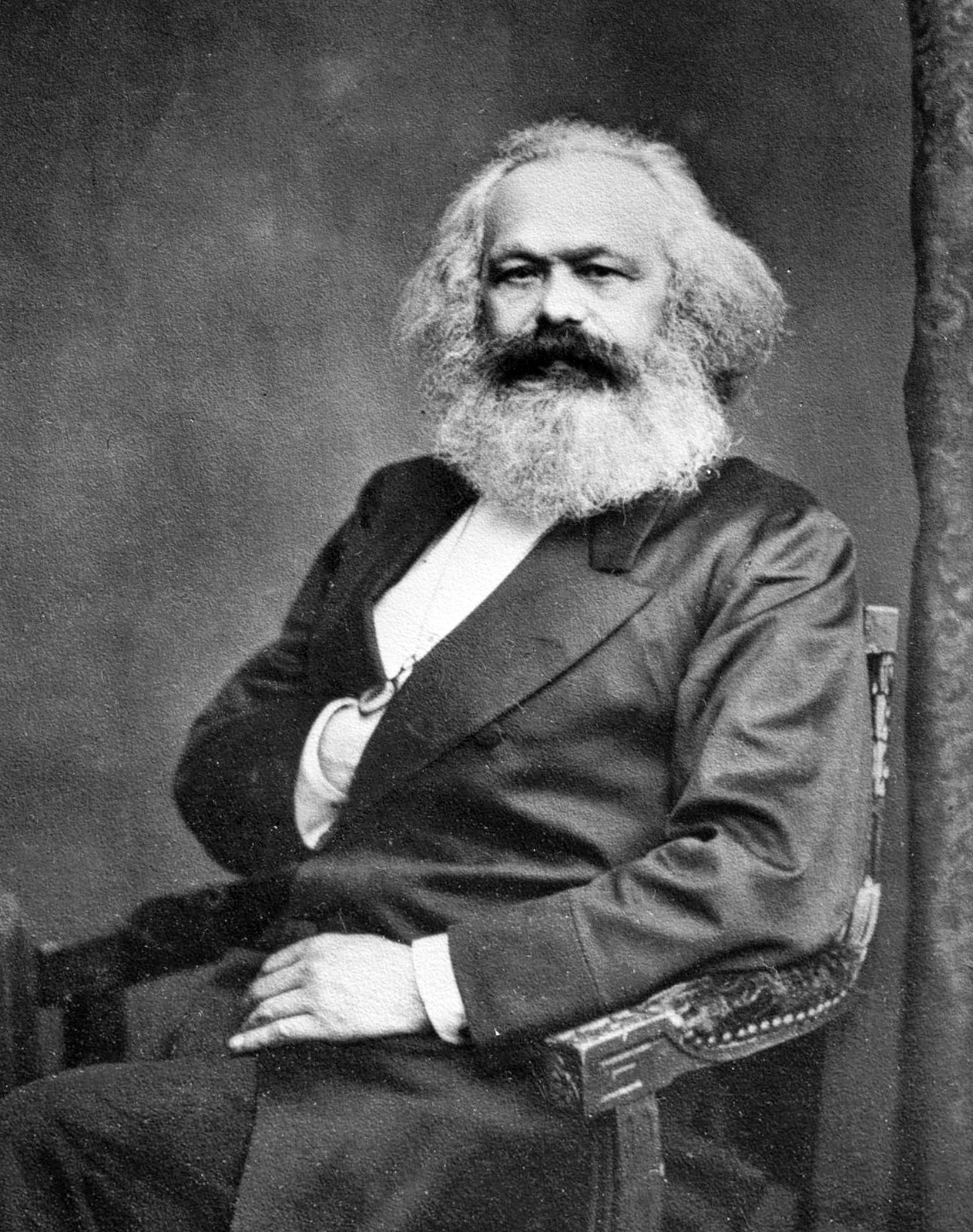
Karl Marx spelled out how he believed that workers should rise up against factory owners, outlining the basic principles of (select 2)
capitalism
socialism
communism
command economies

This picture shows which problem of the factory system in Great Britain? Choose the BEST answer.
Unsafe working conditions
Unfair wages for women
Urbanization
Child Labor


White Man's Burden
Nationalism
Religious Reform

King Leopold II of Belgium took over what African country?
South Africa
Egypt
Nigeria
Congo
The Congo was rich in what resources? (check two)
rubber sap
coal
gold
ivory
What does the phrase 'The White Man's Burden' refer to?
The responsibility of the white man to civilize and govern other races
The burden of guilt carried by the white man for their actions
The burden of maintaining power and control over colonies
The burden of economic exploitation and resource extraction

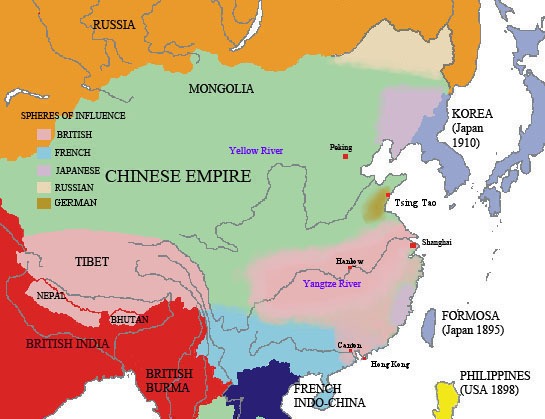
Which company controlled India?
British India Tea Company
British East India Company
East India Trading Company

Which Conclusion about the 19th century is best supported by this table?
Asia had the most natural resources for developement.
The United States developed the largest colonial empire.
Western Europe was the most heavily industrialized area.
France experienced the greatest industrial growth.
Russian troops withdrew from World War I because--
Great Britain became neutral
submarine warfare disrupted trade
the United States entered the war
communists overthrew the government

What is nationalism?
Being proud of your heritage or country
Creating partnerships
Seizure of country from stronger country
Building an army

Which countries were part of the Triple Alliance?
Russia, France, Great Britain
Germany, Austria-Hungary, Italy
Russia, Germany, Austria-Hungary
France, Germany, Italy

Which countries were part of the Triple Entente?
Russia, Great Britain, France
Austria-Hungary, Germany, Italy
Serbia, Austria-Hungary, Germany
Italy, France, Great Britain

What is militarism?
Building an army
Creating partnerships
Seizure of territory by a stronger country
Proud of your heritage

What is an alliance?
Building partnerships
Seizure of territory by another country
Proud of your heritage
Building an army

What was Serbia trying to accomplish for the Slavic people?
A Slavic nation
Slavic independence
Slavic homeland
All of the above

What is No Man's Land?
Land between the opposing trenches
Land used for battlefields
Land used for the bathroom
Land behind the trenches

Which countries made up the Allied Powers in WWI?
Germany, Austria-Hungary, Bulgaria, Ottoman Empire
Russia, United States, France, Great Britain, Italy, Romania
Germany, Austria-Hungary, Italy
Russia, Great Britain, France

Which country dropped out of WWI due to their country's revolution?
Germany
France
Russia
Great Britain

Why did the United States enter World War I?(select 2)
German submarines sunk the Lusitania killing 128 Americans
Germany sent Zimmerman telegram to Mexico asking them to join the war
United States wanted to help their allies Great Britain and France
Italy asked the United States to help in the war

What treaty is signed to end WWI?
Treaty of Versailles
Treaty of Paris
Geneva Convention
Paris Peace Accords

Which country takes the blame of WWI and has to pay reparations (war debt)?
Germany
Austria-Hungary
Russia
Ottoman Empire

Who leads the Bolsheviks during the Russian Revolution?
Vladimir Lenin
Karl Marx
Kaiser Wilhelm II
Friedrich Engels

What was the goal of the Zimmerman Telegram?
A German offer to Mexico to form an alliance against the US
An offer to split up colonized land in Africa
A letter declaring war between Germany and France
The telegram that spread news that WWI has begun

Poster were used as a part of the war machine. What does this World War I poster represent?
Imperialism
Prohibition
Neutrality
Propaganda

Which brutal dictator and leader of the Nazi party wanted to rebuild his military and make his country a strong nation?
Hitler
Mussolini
Stalin

In a show of Appeasement, the Munich Agreement allowed -
Germany to take the Sudetenland
Germany to not take any more land
Czechoslovakia to decide whether Germany gets the Sudetenland or not
France to surrender to Germany

The Allies consisted of......
Japan, Germany, and America
America, France, and Australia
America, U.S.S.R, and Britain
Germany, China, Japan, and Hawaii

Where was the atom bomb dropped?
Hirtimo and Pearl Harbor
Pearl Harbor and Hiroshima
Hiroshima and Normandy
Hiroshima and Nagasaki
• Men are born and remain free and equal in rights. Social distinctions may be founded only upon the general good.
• Any law which violates the inalienable rights of man is essentially unjust and tyrannical; it is not a law at all.
Which event was an attempt to implement these ideas?
Berlin Conference
Congress of Vienna
German Unification
French Revolution
Which heading best completes the partial outline below?
I. ____________________________________
A. Austria-Hungary blamed Serbia for encouraging terrorism.
B. Russia supported the Serbian desire for self-determination.
C. Great Britain believed it had a duty to protect Belgium from German invasion.
Who Was Responsible for World War I?
Could the Stalemate in World War I Have Been Prevented?
What Was the Role of Imperialism in World War I?
Could an Armistice End World War I?
Stalin’s forced collectivization in Ukraine in the 1930s resulted in the
elimination of the army’s dominance in government decisions
expansion of Soviet agriculture at the expense of industry
starvation and death of millions of people
strong support from Western nations
"Seventy years ago in Munich, the British prime minister, Neville Chamberlain, signed a document that allowed Germany to grab a large chunk of Czechoslovakia. The “Munich Agreement” would come to be seen as an abject [despicable] betrayal of what Chamberlain termed “a far away country of which we know little.” But that was not what many people thought at the time. . . .
— Ian Buruma, “The Wrong Lesson of Munich”
Which policy is associated with the historical episode described in this passage?
nonalignment
fundamentalism
appeasement
containment
A study of the rule of Czar Nicholas II and the rule of King Louis XVI would show that
overspending on warfare can lead to victory
democratic governments often result from revolution
leaders who ignore the needs of their people are likely to be overthrown
strong advisors usually help monarchs implement successful reforms
-Japan fights China (1894)
-Japan defeats Russia (1905)
-Japan annexes Korea (1910)
These events reflect the growing power of Japan and its desire to
spread Shinto
acquire warm-water ports
obtain natural resources
suppress the Boxer Rebellion
Source 1: Excerpt from Otto von Bismarck’s Opening Speech at the Berlin Conference, 1884
"The European powers gathered here today have a solemn duty to civilize the African continent. The progress of human industry and commerce demands that we bring order and governance to the lands that have yet to benefit from the advancements of modernity. Through clear agreements and cooperation, we shall ensure that Africa is open for all to develop its resources and uplift its peoples."
Which of the following best describes the broader historical justification used by Bismarck and other European leaders for their imperialist actions in Africa?
The preservation of traditional African political structures
The belief that European intervention was necessary for the economic and moral uplift of Africa
The need to stop the spread of communism in non-industrialized regions
The protection of Africa from exploitation by non-European powers
Source 1: Excerpt from Otto von Bismarck’s Opening Speech at the Berlin Conference, 1884
"The European powers gathered here today have a solemn duty to civilize the African continent. The progress of human industry and commerce demands that we bring order and governance to the lands that have yet to benefit from the advancements of modernity. Through clear agreements and cooperation, we shall ensure that Africa is open for all to develop its resources and uplift its peoples."
The Berlin Conference led directly to which of the following consequences?
The elimination of European rivalries over African territories
The division of Africa among European powers without consideration for existing ethnic or political boundaries
The rapid decolonization of African nations in the early 20th century
The establishment of African-led governments with European oversight
Source 1: Excerpt from Otto von Bismarck’s Opening Speech at the Berlin Conference, 1884
"The European powers gathered here today have a solemn duty to civilize the African continent. The progress of human industry and commerce demands that we bring order and governance to the lands that have yet to benefit from the advancements of modernity. Through clear agreements and cooperation, we shall ensure that Africa is open for all to develop its resources and uplift its peoples."
A historian evaluating Bismarck’s speech would likely argue that it reflects which of the following common features of imperial rhetoric?
The emphasis on economic exploitation as the primary motive for imperial expansion
The claim that European involvement was necessary for the advancement of so-called ‘uncivilized’ societies
The promotion of indigenous sovereignty in collaboration with European powers
The assertion that European nations had no interest in African resources

These rules reflect the Japanese policy of
(you can click on the image to enlarge)
totalitarianism
appeasement
interdependence
isolationism

What cause of the French Revolution is represented by this image?
Weak leadership of the monarchy
Unequal social class system
Economic crisis
Inspiration from the Enlightenment

Which conclusion is best supported by the information on the map?
England's natural resources led to the growth of industrial cities.
People emigrated from Great Britain because of pollution.
Great Britain's prosperity unified the people.
In 1830, England had an unfavorable balance of trade.

