wayground logo

Free Printable Worksheets

Font size

S
M
L
XL
Worksheets

Biology: Unit 1

Total questions: 86

Worksheet time: 1hrs 7mins

Name
Class
Date
1.

It is a branch of Science that studies all living things

a)

Life Sciences

b)

Physical Science

c)

Earth Science

d)

Astronomy

2.

It is the study of Earth. It studies the processes that form and shape Earth's surface

a)

Biology

b)

Earth Science

c)

Physics

d)

Chemistry

3.

A fossil is found in your backyard and you want to identify its history. Who is the right person to help you?

a)

Microbiologist

b)

Molecular biologist

c)

Paleontologist

d)

Botanist

4.

It is the branch of science which deals with celestial objects, space, and the physical universe as a whole.

a)

Physics

b)

Astronomy

c)

Cell Biology

d)

Marine Biology

5.

The science that covers animals and animal life.

a)

Epidimiology

b)

Botany

c)

Zoology

d)

Anatomy

6.

A possible answer to a question that can be tested.

a)

Observation

b)

Hypothesis

c)

Principle

d)

Inference

7.

Defines relationships that are valid everywhere in the universe

a)

Scientific Theory

b)

Principle

c)

Scientific Law

d)

Fact

8.

Information obtained through the senses.

a)

Observation

b)

Hypothesis

c)

Principle

d)

Inference

9.

A well-tested explanation for a set of observations or experimental results

a)

Scientific Theory

b)

Principle

c)

Scientific Law

d)

Fact

10.

A series of steps used to solve a scientific problem

a)

Scientific Theory

b)

Scientific Method

c)

Scientific Law

d)

Scientific Principle

11.

The condition in an experiment that is changed or manipulated.

a)

Dependent Variable

b)

Experimental Group

c)

Independent Variable

d)

Control Group

12.

The condition in an experiment that is observed or measured

a)

Dependent Variable

b)

Experimental Group

c)

Independent Variable

d)

Control Group

13.

In an experiment the group that serves as a standard for comparison and receives no experimental treatment.

a)

Dependent Variable

b)

Experimental Group

c)

Independent Variable

d)

Control Group

14.

In an experiment the group that receives the experimental treatment.

a)

Dependent Variable

b)

Experimental Group

c)

Independent Variable

d)

Control Group

15.
A scientific ____________ is a broad explanation for events that is widely accepted as true.
a)
law
b)
theory
c)
observation
d)
method
16.
A scientific ____________ is a statement that describes what always happens under certain conditions in nature.
a)
law
b)
theory
c)
method
d)
variable
17.
What is the first stage in the Technological Design Process
a)
Define a problem
b)
Research
c)
Concept
d)
Construction
18.
How many trials or tests should you complete?
a)
1 or 2
b)
3
c)
as many as needed until the problem is solved
d)
as many as they tell me to do.
19.
What does modification mean in the design process?
a)
changes to prototype
b)
changes to the design
c)
changes to concept drawing
d)
all apply
20.
During which step of the Design Process do you experiment with the prototype under controlled conditions and collect /record data
a)
Test and Evaluate
b)
Imagine
c)
Improve
d)
Share Results
21.
all matter is made of what 
a)
energy 
b)
atoms 
c)
electrons 
d)
compounds 
22.
The positive particles of an atom are 
a)
electrons 
b)
positrons 
c)
neutrons 
d)
protons 
23.
Particles in an atom that are neutral and have no charge are 
a)
negatrons 
b)
electrons 
c)
neutrons 
d)
protons 
24.
The particles that are found in the nucleus of an atom are
a)
neutrons and electrons
b)
electrons only
c)
protons and neutrons
d)
protons and electrons
25.
The smallest part of an element is known as the 
a)
Periodic Table
b)
Atom
c)
Group
d)
Period
26.
electrons have this type of charge?
a)
negative
b)
positive
c)
neutral
27.
Where are electrons of an atom found?
a)
Nucleus
b)
Electron Cloud
c)
Some are in the nucleus and some in the electron cloud.
d)
They are moving everywhere.
28.
These particles orbit around the nucleus of an atom.  What are they called?
a)
electrons
b)
protons
c)
neutrons
d)
photons
29.

These are the SMALLEST subatomic particles

a)

Proton

b)

Neutron

c)

Electron

30.

In an element box, the number at top is the

a)

atomic number

b)

atomic name

c)

atomic mass

d)

atomic symbol

31.

The chemical symbol in this element box is

a)

26

b)

Fe

c)

Iron

d)

55.845

32.

The number 16 for the atomic element sulfur is the

a)

ionic number

b)

isotope

c)

atomic mass

d)

atomic number

33.
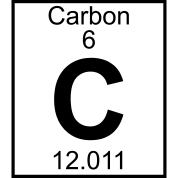
What does 12.011 represent?
a)
atomic mass
b)
atomic number
c)
element name
d)
chemical symbol 
34.

Classification system for elements is called:

a)

Elements

b)

Periods

c)

The Periodic Table of Elements

d)

Families

35.

The subatomic particles are called:

a)

protons, nucleus and electrons

b)

protons, electrons and neutrons

c)

protons, positives and negatives

d)

cloud, shell and quarks

36.
How are covalent bonds formed?
a)
Sharing of electrons
b)
Transfer of electrons
37.
How are ionic bonds formed?
a)
Transfer of electrons
b)
Sharing of electrons
38.
Why do elements bond?
a)
To be friends
b)
To create a new element
c)
To become stable
39.
Ionic or covalent?
H2O
a)
Ionic
b)
Covalent
40.

What is the basis of hydrogen bond?

a)

Attraction forces between hydrogen atom bonded with another hydrogen atom

b)

Attraction forces between hydrogen atom bonded with a high electronegativity atom (F, O, N)

c)

Attraction forces between hydrogen atom bonded with a high electronegativity atom (F, O, N) with atom (F, O, N) of another molecule

d)

Attraction forces between hydrogen atom with another hydrogen atom of another molecule

41.
What is water?
a)
An atom
b)
A molecule composed of 2 parts Oxygen and one part Hydrogen
c)
A molecular compound composed of 2 parts Hydrogen and one part Oxygen
d)
A pure substance composed of 2 parts Hydrogen and one part Oxygen
42.
What is the chemical formula for water?
a)
H20
b)
h2o
c)
H2O2
d)
H2O
43.
Is the density of water ice lower, higher, or the same as liquid water?
a)
Lower
b)
Higher
c)
The same
d)
Um... what is density again
44.

Why does water ice have a lower density than liquid water?

a)

Because it floats

b)

Because it is a crystal

c)

Because the molecules expand in volume as water freezes into a crystal

d)

Because ice is colder than water

45.
What is adhesion?
a)
Water's ability to stick to itself
b)
Water's ability to stick to other substances
c)
The strength of the cohesion of all the water molecules combined
d)
Tape, glue and other adhesives
46.
What is cohesion?
a)
Water's ability to stick to itself
b)
Water's ability to stick to other substances
c)
The strength of the cohesion of all the water molecules combined
d)
Tape, glue and other adhesives
47.
What is surface tension?
a)
Water's ability to stick to itself
b)
Water's ability to stick to other substances
c)
The strength of the cohesion of all the water molecules combined
d)
Tape, glue and other adhesives
48.
What word describes when water is attracted to other substances?
a)
cohesion
b)
adhesion
c)
capillary action
d)
surface tension
49.
What two elements make up water?
a)
Helium and oxygen
b)
Hydrogen and oxygen
c)
helium and carbon
d)
oxygen and carbon
50.

When water and other liquids stick together to form drops or thin films called ________________.

a)

adhesion

b)

capillary action

c)

cohesion

d)

surface tension

51.
molecule in which opposite ends have opposite electric charges
a)
cohesion
b)
polar molecule
c)
hydrogen bond
d)
solution
52.
Water is a universal solvent because it...
a)
It can be found anywhere
b)
It freezes when it gets cold
c)
floats when frozen
d)
Dissolves most substances
53.
Which term refers to water having partial positive and a partial negative charge?
a)
cohesion
b)
surface tension
c)
polarity
d)
adhesion
54.
A high specific heat means...
a)
It heats up quickly with energy added
b)
It requires more energy to change temperature
55.

What property of water allows water to flow against gravity?

a)

Polarity

b)

Cohesion

c)

Capillary Action

d)

Adhesion

56.

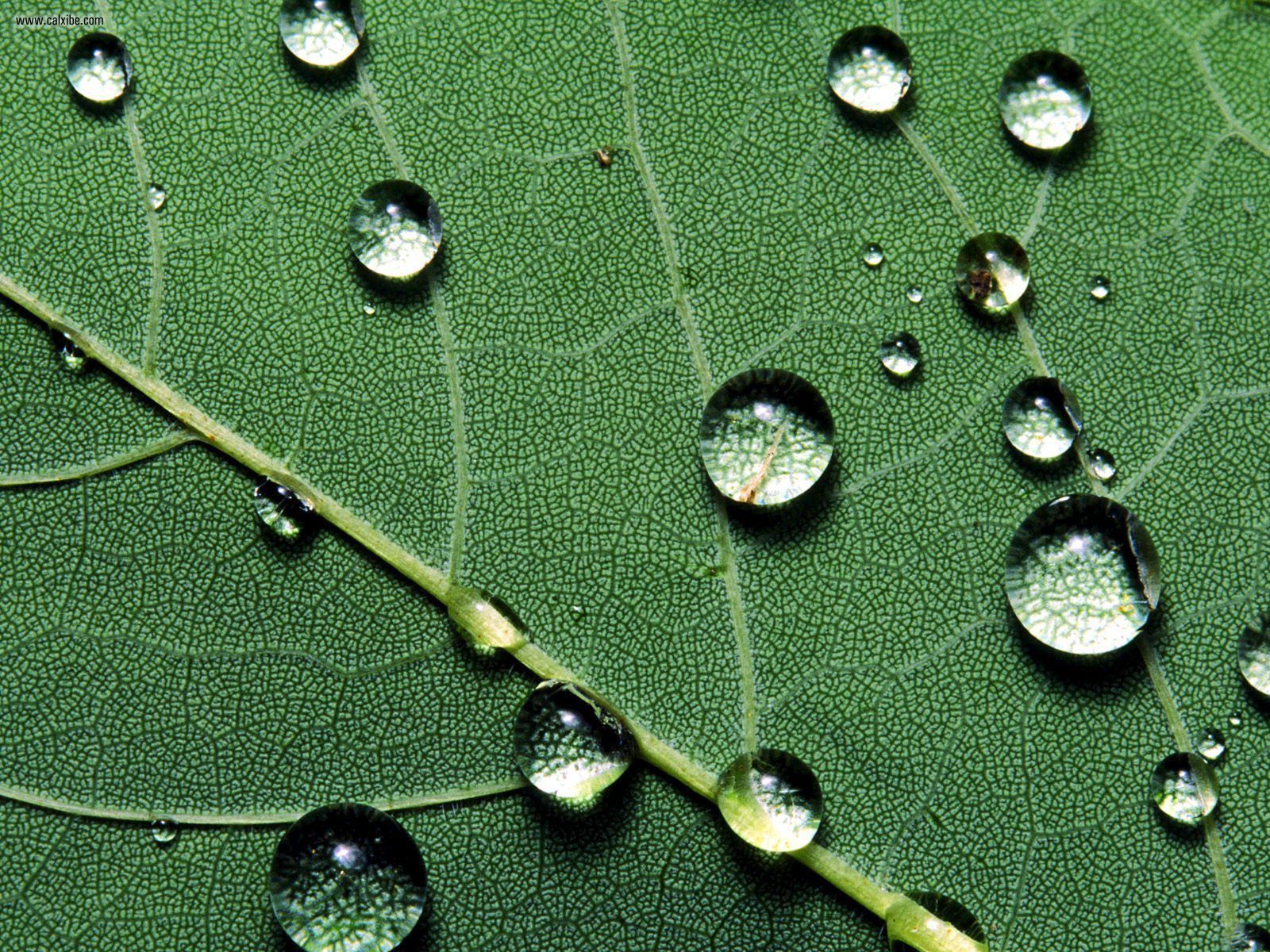
Refer to the picture of water sticking to a leaf; this is occurring because of:

a)

Adhesion

b)

Cohesion

57.
Why are macromolecules also known as "polymers?"
a)
They are large molecules made up of many monomers. 
b)
They are large molecules added together. 
c)
There are many types of macromolecules. 
d)
Many organisms have macromolecules.
58.
Which of the following is NOT a biological macromolecule?
a)
Water
b)
Lipid
c)
Carbohydrate
d)
Nucleic Acid
59.
All biological macromolecules are organic, meaning they have ________ and hydrogen bonds.
a)
Carbon
b)
Hydrogen
c)
Nitrogen
d)
Oxygen
60.
What are the monomers (building blocks) of CARBOHYDRATES?
a)

Monosaccharides/Glucose (simple sugars)

b)
Amino Acids
c)
Nucleotides
d)
Triglycerides/No true monomer
61.
What are the monomers (building blocks) of PROTEINS?
a)
Monosaccharides (simple sugars)
b)
Amino Acids
c)
Nucleotides
d)
Triglycerides/No true monomer
62.
What are the monomers (building blocks) of NUCLEIC ACIDS?
a)
Monosaccharides (simple sugars)
b)
Amino Acids
c)
Nucleotides
d)
Triglycerides/No true monomer
63.
What is the primary function of CARBOHYDRATES?
a)
Source of energy
b)
Long term storage of energy
c)
Transmitting genetic information
d)
Cell processes and cell signaling
64.
What is the primary function of LIPIDS?
a)
Source of energy
b)
Long term storage of energy
c)
Transmitting genetic information
d)
Cell processes and cell signaling
65.
What is the primary function of NUCLEIC ACIDS?
a)
Source of energy
b)
Long term storage of energy
c)
Transmitting genetic information
d)
Cell processes and cell signaling
66.
The food in the image is full of which macromolecule?
a)
Carbohydrates
b)
Lipids
c)
Proteins
67.
The food in the image is full of which macromolecule?
a)
Carbohydrates
b)
Lipids
c)
Proteins
68.
The food in the image is full of which macromolecule?
a)
Carbohydrates
b)
Lipids
c)
Proteins
69.

What are the building blocks (or monomers) of carbohydrates?

a)

Nucleotides

b)

Monosaccharides (Glucose)

c)

Amino Acids

d)

Glycerols

70.

Which type of food would you choose for a quick energy boost?

a)

apple

b)

steak

c)

cheese sticks

d)

pizza

71.

A ____________________ is a large molecule.

a)

Micromolecule

b)

Macromolecule

c)

Amino Acid

d)

Monosaccharide

72.

_______________ are the monomers of carbohydrates.

a)

Monosaccharides

b)

Polymers

c)

Complex sugars

d)

Fructose

73.

What is the monomer of nucleic acids?

a)

RNA

b)

DNA

c)

Nucleotides

d)

Nucleic pieces

74.

Nucleic acids make up which of the two molecules listed below?

a)

RNA

b)

FDA

c)

DNA

d)

RDA

75.
Which elements are found in a carbohydrate?
a)
C, H, O (with the same number of C as O)
b)
C, H, O, (with a different numbers of C and O)
c)
C, H, O, N
d)
C, H, O, N, P
76.
Which elements are found in a lipid?
a)
C, H, O (with the same number of C as O)
b)
C, H, O, (with a different numbers of C and O)
c)
C, H, O, N
d)
C, H, O, N, P
77.
Which elements are found in a protein?
a)
C, H, O (with the same number of C as O)
b)
C, H, O, (with a different numbers of C and O)
c)
C, H, O, N
d)
C, H, O, N, P
78.
Which elements are found in a nucleic acid?
a)
C, H, O (with the same number of C as O)
b)
C, H, O, (with a different numbers of C and O)
c)
C, H, O, N
d)
C, H, O, N, P
79.
Which macromolecule is shown in the image?
a)
Carbohydrate
b)
Lipid
c)
Protein
d)
Nucleic Acid
80.
Which macromolecule is shown in the image?
a)
Carbohydrate
b)
Lipid
c)
Protein
d)
Nucleic Acid
81.
Which macromolecule is shown in the image?
a)
Carbohydrate
b)
Lipid
c)
Protein
d)
Nucleic Acid
82.
Which macromolecule is shown in the image?
a)
Carbohydrate
b)
Lipid
c)
Protein
d)
Nucleic Acid
83.

Carbon can form _____ bonds with other elements.

a)

1

b)

2

c)

3

d)

4

84.

Carbon forms ________ bonds with other atoms by sharing electrons with the other elements.

a)

ionic

b)

covalent

c)

hydrogen

d)

peptide

85.

A _________ reaction removes a molecule of water to bond molecules together to create a polymer.

a)

hydrolysis

b)

water

c)

dehydration synthesis

d)

magical

86.

What type of reaction is shown?

a)

Dehydration synthesis

b)

Hydrolysis