
 Worksheets
Plate Tectonics Review
Total questions: 136
Worksheet time: 3hrs 50mins


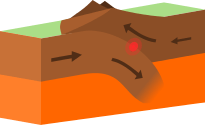
Which of the following causes Earth's tectonic plates to move?
Energy from the Sun
Magnetic Pole Reversal
Convection currents in the mantle
Faults in Mountain Ranges


What occurs when two plates come together and the denser one is forced under back into the mantle?
reduction
conduction
subduction
convection
What is the process that continually adds new crust to the ocean floor along both sides of the mid-ocean ridge?
subduction
continental drift
convergent
sea floor spreading
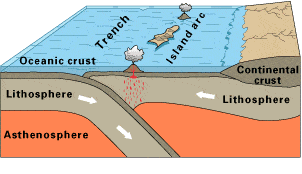
Observe this diagram of a plate boundary. One statement BEST describes what is happening. It is that
the oceanic crust is melting.
the denser ceanic crust is subducting under the less dense oceanic crust
volcanic islands are forming.
the tectonic plates are moving away from each other.

Most geologists think that the movement of Earth’s plates is caused by _______
convection.
continental drift.
subduction.
conduction.
A place where two plates slip past each other, moving in opposite directions, is known as a _______
transform boundary
divergent boundary.
convergent boundary.
rift valley.

Below is a picture of sea-floor spreading. How are the ocean crusts moving?
Converging
Diverging
Sliding
No movement

How is it possible for new crust to be formed without increasing the surface area of the Earth?
Crust is destroyed at the same time it is created
New crust is underwater where it sinks
New crust breaks more easily than old crust
Mountains are created when....
Two continental plates collide
Two oceanic plates pull apart
An Oceanic plate subducts under a Continental Plate
Two continental plates pull apart

Ocean Ridges are formed by _______ plate boundaries
Convergent Oceanic / Continental
Convergent Continental / Continental
Convergent Oceanic / Oceanic
Divergent

The outer layer of the Earth (the crust) is the...
Mantle
Asthenosphere
Lithosphere
Crust

What causes convection currents?
Hot magma rises while cool magma sinks
The rotation of the Earth
Ocean currents pulling plates apart
The spinning of the Earth's core

Why does oceanic crust subduct under continental crust?
Oceanic crust is thin
Oceanic crust is dense
Continental crust is thin
Continental crust is dense

A supercontinent containing all of Earth's land that existed about 225 million years ago.
Pangea
Gondwanaland
Rodinia
Pannotia

The theory that the continents have not always been in their present locations but have moved there over millions of years
Continental Drift Theory
Plate Tectonics
Alfred Wegener
Lystrasaurus

The place where two plates meet.
plate boundary
tectonic plate
asthenosphere
crust

Thinner, more dense, younger crust, primarily basaltic, making ocean floor
mantle
continental crust
oceanic crust
asthenosphere

The portion of the earth's crust that primarily contains granite, is less dense than oceanic crust, and is 20-50 km thick
mantle
continental crust
oceanic crust
asthenosphere

The process that creates new seafloor as plates move away from each other at the mid-ocean ridges
stressing
seafloor spreading
subduction
shearing
The fact that similar fossils are found on both sides of the ocean is evidence of____.
magnetic reversal
continental drift
seafloor spreading
oceanic drift

Boundary between two plates that are sliding past each other
transform
divergent
convergent
strike-slip
What is an extinct volcano?
A volcano that has erupted at least once in the last 10,000 years.
A volcano that hasn’t erupted in the last 10,000 years, but could still erupt.
A volcano that should never erupt again.
New land is created when lava flows cool and harden to form rock.
True
False
How can volcanic ash help the environment?
It can be recyled.
Mineral in the ash can help plants grow.
the wind carries ash.
Animals can eat the minerals in the ash.

What ocean does the Ring of Fire surround?
The Pacific Ocean
The Atlantic Ocean
The Arctic Ocean
The Indian Ocean
There are more volcanoes and earthquakes in the Ring of Fire than anywhere else in the world.
True
False
What is the Ring of Fire?
A ring of mountains around the Pacific Ocean
A tectonic region with frequent earthquakes and volcanoes
A circle of lakes formed by volcanic eruptions
A single large volcano in the Pacific
Why is the Ring of Fire so geologically active?
The region has many tectonic plate boundaries
The Pacific Ocean is shrinking
Magma flows continuously without stopping
It is located near the equator
What happens when an oceanic plate subducts beneath a continental plate?
A mid-ocean ridge forms
A rift valley is created
The oceanic plate sinks, melts, and forms magma
The plates stop moving
What is the main cause of earthquakes at transform boundaries?
Plates sliding past each other, creating friction
Magma pushing through cracks in the crust
Plates pulling apart and forming new crust
One plate sinking beneath another
Why do volcanoes form at divergent boundaries?
The plates collide, forcing magma to rise
The plates move apart, allowing magma to rise and form new crust
The plates grind against each other, creating pressure
The plates stay still, causing magma to break through
Why is the Ring of Fire prone to earthquakes and volcanoes?
It has frequent storms that weaken the crust
Many tectonic plate boundaries meet in this region
It is located in a hot climate
The ocean currents are strong
What happens when energy builds up along a plate boundary?
A volcanic eruption occurs immediately
The plates freeze in position
The energy is suddenly released as an earthquake
The ocean absorbs the energy
What are the layers inside the Earth?
Crust, mantle, outer core, inner core
Crust, outer core, mantle, inner core
Mantle, crust, outer core, inner core
Mantle, outer core, inner core, crust
What is the largest plate that rubs up against many other plates?
Pacific plate
Atlantic plate
Indian plate
Antarctic plate
The Pacific Ring of Fire is an arc around the Pacific Ocean where many volcanoes and earthquakes are formed.
True
False

Convection currents in the mantle are thought to be the driving force behind tectonic movement. At which location do the convection currents cause the plates to diverge or move apart?


Molecules that are less dense than the surrounding particles will...
Molecules that are more dense than the surrounding particles will...

How do DIVERGENT boundaries affect the crust?
They create crust
They destroy crust
They don't destroy or create

Where would the oldest rock be found?
L
M
N
O
Where would the youngest rock be found?
L
M
N
O

If new land is being made, why is the Earth not getting bigger?
The idea that the surface of Earth is broken into pieces that move due to convection currents in the mantle:
hypothesis of continental drift
theory of plate tectonics
Alfred's Great Idea
Wegener's Theorem


Convection currents happen inside the Earth. Magma is heated by ______ and rises towards the crust.
the sun
the core
plate tectonics
Sea-floor spreading begins at the
Deep ocean trench
Mid-ocean ridge
Continent's edge

What words describe M? choose all
deep ocean trench
mid ocean ridge
sea floor spreading
subduction

What feature is at C?
Deep ocean trench
Mid ocean ridge
sea floor spreading
subduction

What is the process happening at R?
Deep ocean trench
mid ocean ridge
subduction
sea floor spreading

Ferromagnetic molecules make up little shavings of iron that are in rock and align themselves to magnetic north when the rock is molten and liquid. Where do we find this?
Past the subduction zones where land and ocean plates collide
On either side of mid-ocean ridges
On the land under the Antarctic cap
In the layers of rock surrounding the Grand Canyon
In the convection cells of the mantle

The diagram shows the magnetic polarity (they look like zebra stripes) of the seafloor at the Mid-Ocean Ridge. Which of the following statements is true about the magnetic polarity pattern of the ridge?
Stripes of normal polarity and reversed polarity DO NOT alternate across the ocean bottom.
Stripes form mirror images (are symmetrical) on either side of the mid-ocean ridges
Stripes form different images on either side of the mid-ocean ridges
there is not a pattern that is created

In the 1960s, scientists studying the ocean floor discovered _____________.
that the ocean floor had magnetic patterns
the Titanic
that the ocean floor had magical properties
that the ocean floor was as smooth as a desert
Throughout Earth's history, the north and the south magnetic poles have switched places many times.
true
false
Oceanic crust near the mid-ocean ridge is younger than oceanic crust farther away from the ridge.
true
false
Label the diagram
Select where sea-floor spreading is occurring on the diagram
Fold mountains are created by ____________ boundaries.
Destructive
Constructive
Passive
None of them
What happens when two lighter plates collide?
Buckle downwards creating fold mountains
Buckle upwards creating fold mountains
What happens when a lighter plate and a heavier plate collide?
Lighter plate sinks underneath, creating fold mountains.
Heavier plate sinks underneath and the lighter plate buckles upwards, creating fold mountains.
Both plates buckle upwards, creating fold mountains.
Write the letter "E" at the epicentre. Write the letter "F" at the focus. Write the letters "FL" at the fault line. Write the letter "S" at the seismic waves

The instrument used to measure tremors in the earth's crust is called
The Richter Scale
Seismograph
Formed when tension causes large blocks of Earth’s crust to drop down relative to other blocks
Block
Dome
Volcanic
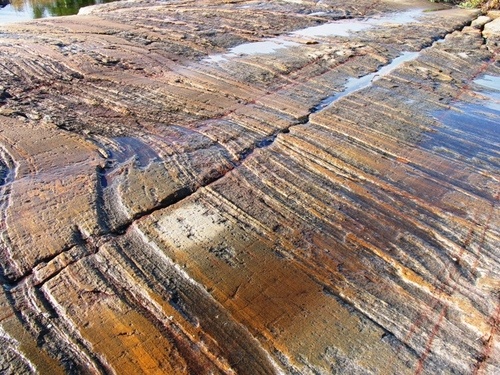

What evidence did Wegener use to support his theory?
Continents and fossils fitting together/matching-up like puzzle pieces
glacier scars and other climate evidence from temperature
mountain ranges and rocks line up across continents
all of the above

According to the continental drift hypothesis, the presence of similar fossils in South America and Africa supports which scientific idea?
Animals easily and frequently travel from Africa to South America.
Species of animals probably traveled between continents on natural rafts (such as trees destroyed in tsunamis).
Land bridges once existed that connected the continents.
South America and Africa were once connected together.
Alfred Wegener thought which 2 continents looked like puzzle pieces that could fit together?
Antarctica and Asia
South America and Africa
South America and Australia
Africa and Pangaea
What evidence of an ancient organism was used to support the theory that the continents used to be joined?
Same rocks were found on different continents
Glacial grooves were found on different continents
Fossilized evidence of the same organism found on different continents
Africa and South America look like puzzle pieces that fit together
What piece of evidence for Continental Drift states that similar types and ages of rocks are found on different continents?
Continent Shape
Fossil/Climate Evidence
Landform/Rock Evidence
Glacial Evidence
What piece of evidence for Continental Drift states that the same plant and animal fossils are found on continents separated by oceans.
Continent Shape
Fossil/Climate Evidence
Landform/Rock Evidence
Glacial Evidence

Wegener found fossils of ancient ferns on Antarctica, this shows
That some ferns can survive temperatures well below freezing
That humans put ferns on Antarctica millions of years ago
That Antarctica drifted from a warmer climate where plants could grow
That fossils can be formed in cold climates
Coal is an example of evidence of climate change because.....
It forms in cold areas and is found in tropical areas, so the continents used to be closer to the North Pole
None of the above
It forms in tropical areas but was found in non-tropical continents, so those continents used to be closer to the equator
It forms in tropical areas and was found in tropical swampy areas that are near the equator
Give an example of evidence provided by terrestrial features
Freshwater fossils were found in places separated by oceans, they could not have swum so far
Tropical fossil remains found under Arctic ice where it used to be a warmer area
Mountain ranges on two different continents separated by the ocean that align, same age and same type of rock
Glacial striations found in South Africa
Which letter below gives the best statement for the fossil evidence?
The Lystrosaurus fossils were found on the same continent in many places
The Lystrosaurus fossils were found on several continents and could not swim, which means the continents were connected
The Lystrosaurus fossils were found on two continents that were already connected
The Lystrosaurus fossils were found on several continents and could swim
The mesosaur is an example of what type of evidence
Evidence of matching fossils
Evidence of matching land features
Evidence of climate change

This image is an example of what type of evidence?
Evidence of matching earth features
Evidence of climate change
Evidence of matching fossils

Match the type of boundary with the events
Convergent
Destroys crust
Divergent
Creates crust
Transform
No crust is created or destroyed
Match the movement to the plate boundary type
Away from each other
Divergent
Towards each other
Convergent
Side by side
Transform
Match the type of volcano to the picture
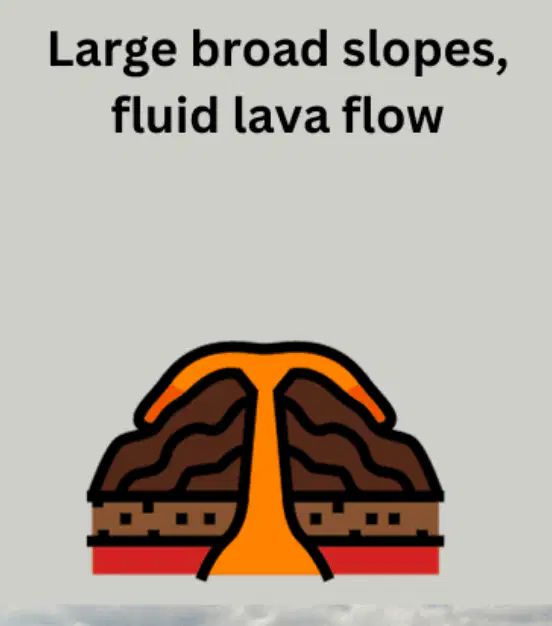
Shield Volcano
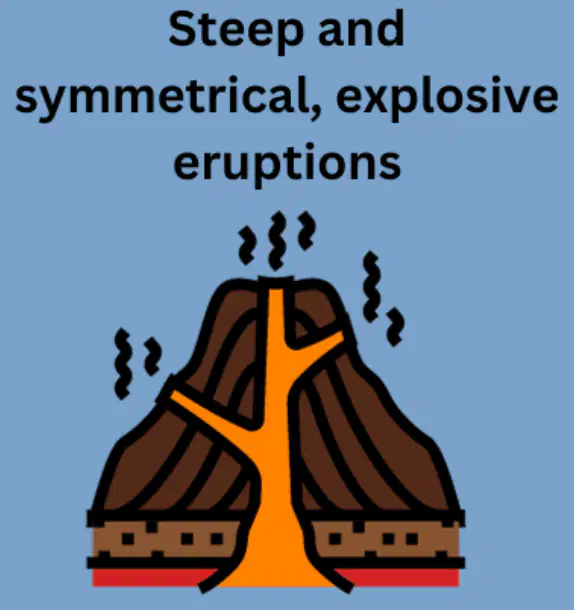
Composite Volcano
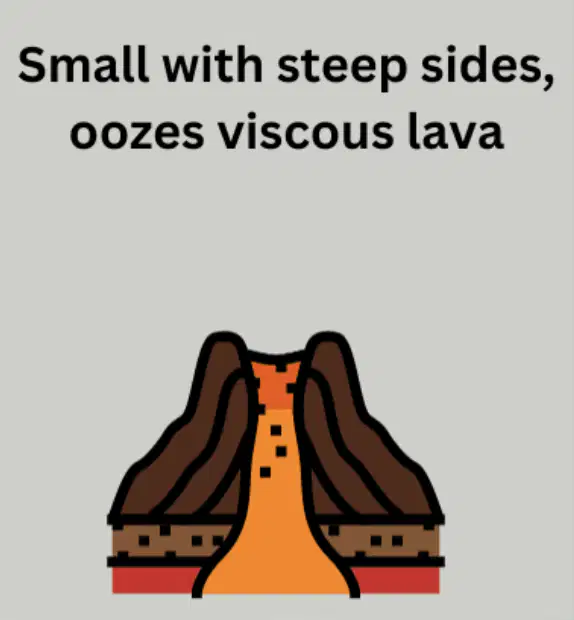
Lava Dome
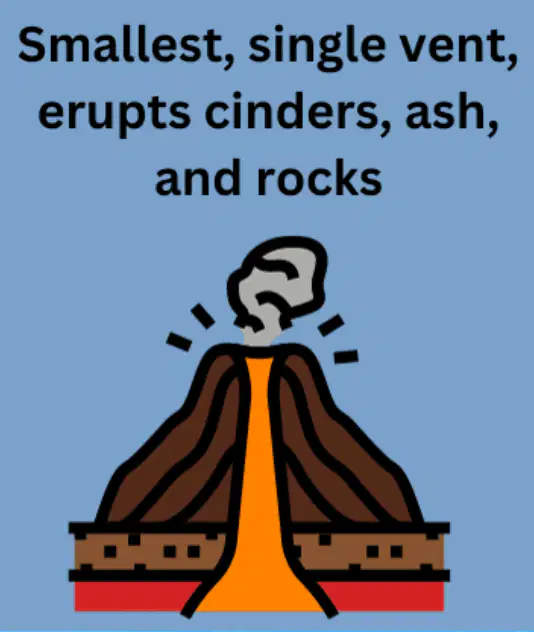
Cinder Cone
Hotspots are volcanoes that form...
at convergent plate boundaries.
at divergent plate boundaries.
at transform plate boundaries.
in the middle of a tectonic plate.

Which island is the oldest?
A
B
C
D
E
Which island is the youngest?
A
B
C
D
E
Where would you expect the next island in this chain to form?
to the left of A
between D and E
to the right of E
between A and B
How did the Hawaiian islands form?
at an ocean-ocean convergent boudary
at a hotspot
at a ocean-continental convergent boundary
at an oceanic divergent boundary
Oceanic crust is usually _____ dense than continental crust
less
more

Which city on the map is most likely to experience a major earthquake?
Paris
New York
Juneau
Rio de Janeiro
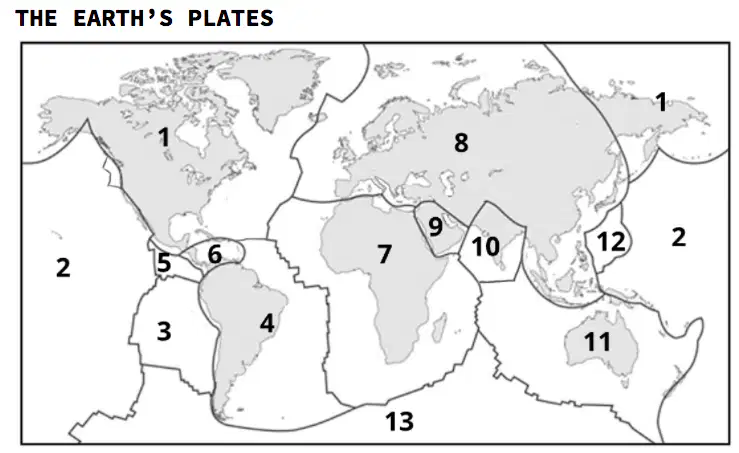
What is the name of plate 2?
Pacific Plate
Eurasian Plate
Indo-Australian Plate
Nazca Plate
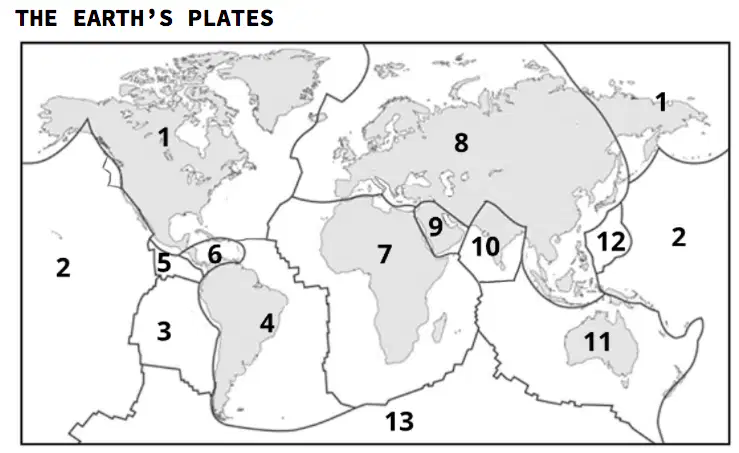
What is the name of plate 8?
African Plate
Australian Plate
North American Plate
Eurasian Plate
What is the name of plate 4?
African Plate
South American Plate
North American Plate
Indian Plate
What is the name of plate 6?
Cocos Plate
South American Plate
Caribbean Plate
Arabian Plate


The place where an earthquake originates inside the Earth's surface is called...
Epicenter
Focus
Underground
Crust

Which city is closest to the epicenter?
A
B
C

Which seismogram represents a city that is far from the epicenter of an earthquake?
New York, NY
Nome, Alaska
Guadalajara, Mexico

Match the magnitude of the earthquake
to its impact.
People cannot feel it, but a seismograph can.
1
Materials in your house might shake a little.
3
Buildings that were poorly made might get damaged,
5
Most buildings will get damaged.
7
Extreme destruction and death.
9
How do earthquakes contribute to the formation of tsunamis?
By causing the seafloor to uplift or subside, displacing a large volume of water and creating powerful waves.
By releasing large amounts of energy into the ocean, creating massive waves.
By causing the ocean currents to change direction, resulting in powerful waves.
By melting glaciers and icebergs, releasing large amounts of water into the ocean and creating powerful waves.
True or False: All tectonic plates move at the same speed.
True
False
True or False: A tectonic plate can move at different rates at different parts of its boundary
True
False
Categorise the characteristics of the crust types
Thin
Thick
More dense
Less dense
Lighter colour
Darker colour
Mostly basalts
Mostly granites
Younger crust
Older crust

Reorder the steps of convection currents in the mantle
Magma is heated by the core and rises up towards the crust.
The magma spreads out when it reaches the crust.
The magma cools as it spreads out
The cooled magma sinks back down through the mantle
True or False: As heated magma spreads out under the crust it drags the crust along by friction. This causes the movement of tectonic plates.
True
False
True or False: The mantle is solid
True
False

