Wayground logo

Free Printable Worksheets

Font size

S
M
L
XL
Worksheets

Biology Midterm Review 25/26

Total questions: 131

Worksheet time: 2hrs 43mins

Name
Class
Date
1.

Catabolic reactions are best described as:

a)

Building larger molecules from smaller ones, requiring energy

b)

Breaking down larger molecules into simpler compounds, releasing energy

c)

Speeding up reactions without being permanently altered

d)

Absorbing energy in the form of heat or light

2.

Which term refers to substances that are changed during a chemical reaction?

a)

Product

b)

Reactant (substrate)

c)

Catalyst

d)

Enzyme

3.

Which process requires consuming energy to build larger molecules from smaller ones?

a)

Catabolic

b)

Exothermic

c)

Anabolic

d)

Endothermic

4.

Which term describes substances that speed up reactions without being permanently altered?

a)

Product

b)

Catalyst

c)

Reactant

d)

Metabolism

5.

What happens during denaturation of an enzyme?

a)

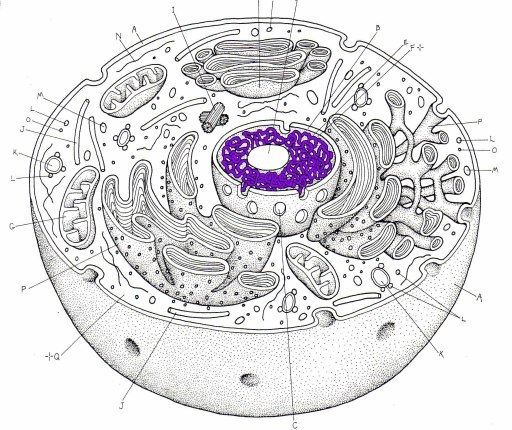
The enzyme speeds up the reaction

b)

The enzyme’s active site gets deformed and loses its specific shape

c)

The enzyme absorbs energy in the form of heat or light

d)

The enzyme releases energy during cellular respiration

6.

Which of the following is an example of an exothermic reaction?

a)

Photosynthesis

b)

Cellular respiration

c)

Digestion of dead cells

d)

Absorption of heat by plants

7.

Where does the substrate bind with the enzyme?

a)

Product site

b)

Active site

c)

Catalyst site

d)

Metabolic site

8.

Following will likely decrease the activity of this enzyme?

a)

Increased amount of substrate

b)

Temperatures above 50ºC

c)

Increased amount of enzyme

d)

Decreased amount of inhibitors

9.

A student placed a test tube containing a mixture of compounds into a beaker of water maintained at 30ºC. A chemical reaction took place and was completed in 30 minutes. A second test tube containing an equal amount of the same mixture plus substance Y was placed in the same beaker of water. The chemical reaction in the second test tube was completed in less than one minute. Substance Y was most likely –

a)

an auxin

b)

a sugar

c)

an enzyme

d)

a nucleotide

10.

Which process converts glucose into ATP?

a)

Photosynthesis

b)

Cellular respiration

c)

Fermentation

d)

Glycolysis

11.

What is the energy carrying molecule of cells?

a)

DNA

b)

ATP

c)

Glucose

d)

Chlorophyll

12.

Which process uses energy from sunlight to make the sugar glucose?

a)

Fermentation

b)

Cellular respiration

c)

Photosynthesis

d)

Glycolysis

13.

Organisms that use light to make their food are called:

a)

Chemoautotrophs

b)

Photoautotrophs

c)

Heterotrophs

d)

Anaerobes

14.

What is the coin shaped membrane that contains chlorophyll and is the location of light-dependent reactions of photosynthesis?

a)

Stroma

b)

Grana

c)

Thylakoid

d)

Mitochondria

15.

What are stacks of thylakoids called?

a)

Stroma

b)

Grana

c)

Chloroplasts

d)

Mitochondria

16.

Which process breaks glucose down into 2 pyruvate molecules?

a)

Glycolysis

b)

Photosynthesis

c)

Fermentation

d)

Cellular respiration

17.

Fermentation is best described as:

a)

Process of creating ATP without Oxygen

b)

Process of creating ATP with Oxygen

c)

Process of breaking down glucose into pyruvate

d)

Process of converting glucose into ATP

18.

Aerobic respiration occurs:

a)

With Oxygen

b)

Without Oxygen

c)

With sunlight

d)

With glucose only

19.

Anaerobic respiration occurs:

a)

With Oxygen

b)

Without Oxygen

c)

With sunlight

d)

With glucose only

20.

Plants carry out both photosynthesis and cellular respiration. Which statement best compares the way these two processes handle energy?

a)

Photosynthesis converts light energy into chemical energy stored in glucose, while cellular respiration releases that stored energy to produce ATP for cellular work.

b)

Photosynthesis releases energy from glucose molecules to create ATP, while cellular respiration stores light energy in the bonds of glucose.

c)

Photosynthesis captures energy directly into ATP for long-term storage, while cellular respiration breaks down water molecules to release ATP.

d)

Photosynthesis captures heat energy from sunlight to warm plant tissues, while cellular respiration stores that heat energy in chemical bonds.

21.

Photosynthesis and cellular respiration have a unique relationship in that the products of one are the reactants of the other. Evaluate the model provided. The reactants and products are missing from the diagram. Select ALL of the answers below that correctly pair the letter on the diagram with the product or reactant.

a)

D is ATP

b)

A is sunlight

c)

B is H2O

d)

F is CO2 + H2O

e)

C is CO2 + C6H12O6

22.

Which of these statements accurately describes the energy conversion that occurs in cellular respiration?

a)

ATP is converted into thermal energy

b)

Chemical energy is converted into ATP

c)

Heat energy is converted into chemical energy

d)

Light energy is converted into kinetic energy in the products

23.

In the second reaction shown here (cellular respiration), which of these descriptions compares the products and reactants?

a)

The process produces ADP as a product, which has a lower energy level compared to the reactants.

b)

The process produces inorganic molecules only, which have a lower energy level compared to the products.

c)

The process produces ATP as a product, which provides a greater cellular energy compared to the reactants.

d)

The process produces heat energy as a byproduct, which causes the reactants to be less energetic compared to the products.

24.

What is a detritivore?

a)

An organism that consumes dead organic material

b)

An organism that eats meat as a source of energy

c)

An organism that creates its own food

d)

An organism that consumes only plant life

25.

Which term describes an organism that eats both plants and animals?

a)

Herbivore

b)

Carnivore

c)

Omnivore

d)

Producer

26.

What is the main role of a producer in an ecosystem?

a)

To consume dead organic material

b)

To create its own food using sunlight or chemical energy

c)

To eat both plants and animals

d)

To consume only plant life

27.

Which organism receives the least amount of energy in a food chain?

a)

Producer

b)

Primary consumer

c)

Secondary consumer

d)

Tertiary consumer

28.

Which population would show the quickest increase if perch were eliminated from the food chain?

a)

pike

b)

smelt

c)

osprey

d)

freshwater shrimp

29.

Wildlife is plentiful in the piney woods. There are over 100 species of birds and many small mammals, including rabbits and squirrels. What else must be included in the piney woods habitat to keep populations in balance?

a)

omnivores, like raccoons

b)

more producers, like plants

c)

small animals, like the opossum

d)

predators, like snakes

30.

In the food web shown, which organisms contain the greatest amount of stored energy?

a)

Snakes and hawks

b)

Rodents and insects

c)

Weeds and shrubs

d)

Insects and hawks

31.
Proteins are made of monomers called ___________
a)
Nucleotides
b)
Monosaccharides
c)
Amino Acids
d)
Glycerol and fatty acids
32.
The element _______is found in all of the organic compounds.
a)
Iron
b)
Nitrogen
c)
Carbon
d)
Oxygen
33.
Proteins are made of monomers called ___________
a)
Nucleotides
b)
Monosaccharides
c)
Amino Acids
d)
Glycerol and fatty acids
34.
The element _______is found in all of the organic compounds.
a)
Iron
b)
Nitrogen
c)
Carbon
d)
Oxygen
35.
DNA and RNA are examples of 
a)
Carbohydrates
b)
Lipids
c)
Proteins
d)
Nucleic Acids
36.
Which macromolecule is made of simple and complex sugars?
a)
lipids
b)
proteins
c)
carbohydrates
d)
nucleic acids
37.
Which macromolecule stores energy, insulates us, and makes up the cell membrane?
a)
lipids
b)
proteins
c)
carbohydrates
d)
nucleic acids
38.
This is one job proteins do NOT have in the body
a)
storing genetic information
b)
structure
c)
speed up chemical reactions
d)
transport things through cell membrane
39.
DNA and RNA are examples of...
a)
proteins
b)
nucleic acids
c)
carbohydrates
d)
lipids
40.
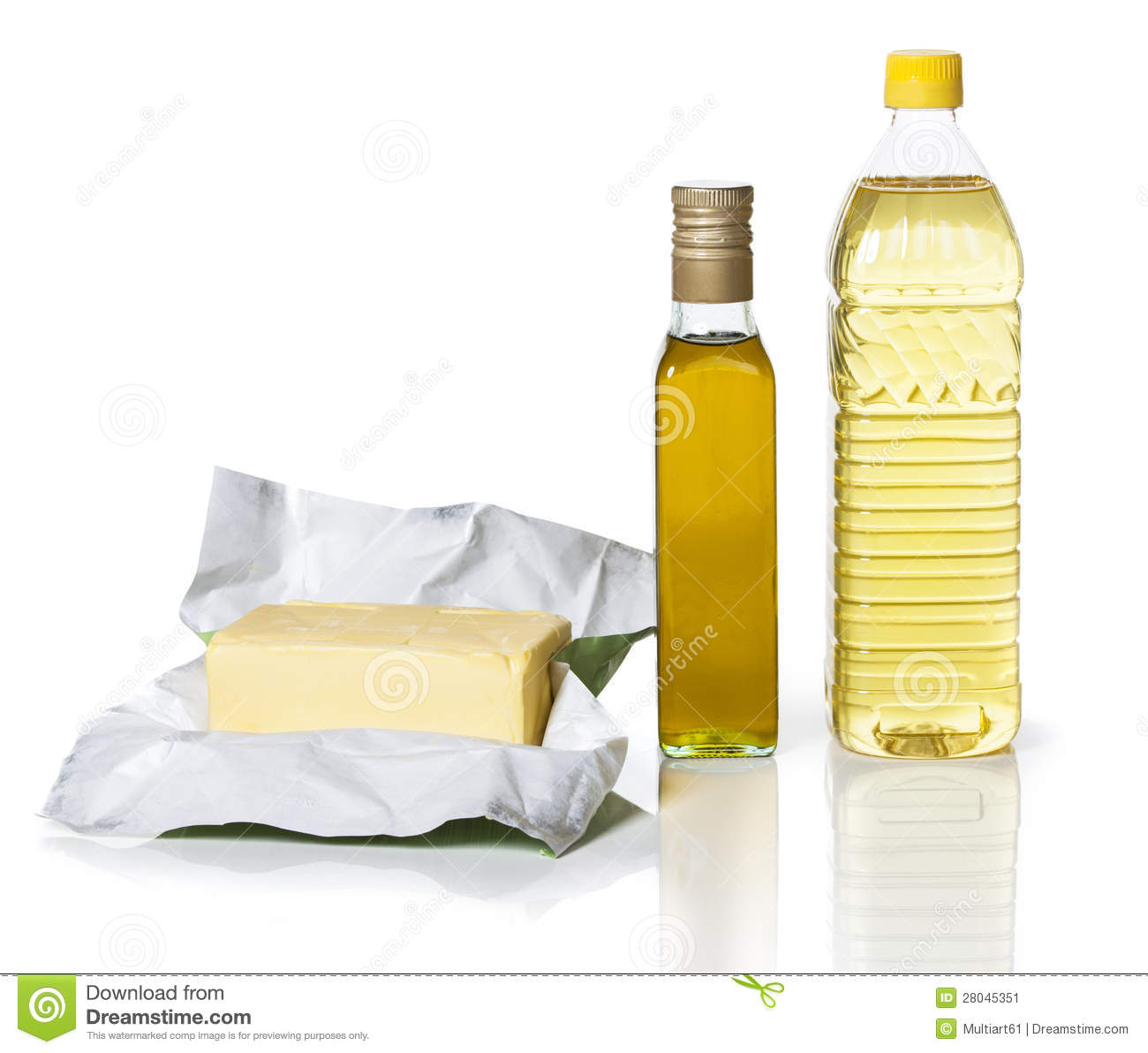
Unsatured fats are healthier for you. Which is an example of an unsaturated fat?
a)
butter
b)
bacon
c)
olive oil
d)
eggs
41.
Another name for fats and oils
a)
proteins
b)
sugar
c)
lipids
d)
nucleic acids
42.
Unsatured fats are healthier for you. Which is an example of an unsaturated fat?
a)
butter
b)
bacon
c)
olive oil
d)
eggs
43.
The word saccharide means:
a)
sugar
b)
glucose
c)
sweetener
d)
carbohydrate
44.

How how carbohydrates and lipids similar?

a)

both contain C, H, O, N, P and store energy

b)

both contain C, H, O, N and give energy

c)

both contain C, H, O, N, S and store energy

d)

both contain C, H, O and give energy

45.

What is the key role (function) of carbohydrates?

a)

energy storage

b)

immunity, muscles, structure for tissues, cell metabolism

c)

instant energy for cells and body functions

d)

genetic information (heredity)

46.

What elements (monomers) make up a protein?

a)

C, H, O

b)

C, H, O, N, (S)

c)

C, H, O, N, P

47.
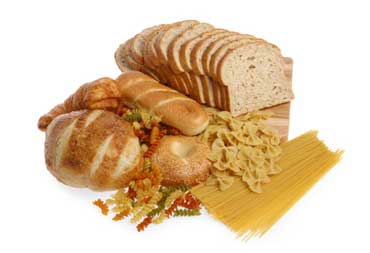
Which biomolecule is found in pasta and bread?
a)
Lipid
b)
Protein
c)
Nucleic Acid
d)
Carbohydrate
48.
Which biomolecule is a main source of quick energy?
a)
Nucleic Acid
b)
Protein
c)
Lipid
d)
Carbohydrate
49.
Which biomolecule is found in fats, oils, and waxes and is a source of long-term energy? 
a)
Proteins
b)
Nucleic Acid
c)
Lipids
d)
Carbohydrate
50.
What is the function of a nucleic acid?
a)
Stores genetic information
b)
Stores energy
c)
Quick source of energy
d)
Builds structures
51.
Which of the following is a characteristic of both Eukaryotic and Prokaryotic cells?
a)
ribosomes
b)
nucleus
c)
membrane bound organelles
d)
simple
52.
Unicellular means
a)
single-celled
b)
unicycle
c)
multi-celled
d)
united cells
53.
Which type of cell?
a)
Prokaryote
b)
Eukaryote
54.
Has membrane bound organelles
a)
Prokaryote
b)
Eukaryote
c)
both
55.
Which of the following is found inside a prokaryote?
a)
cytoplasm
b)
DNA
c)
ribosomes
d)
all of these
56.
Both prokaryotes and eukaryotes have a nucleus.
a)
True
b)
False
57.
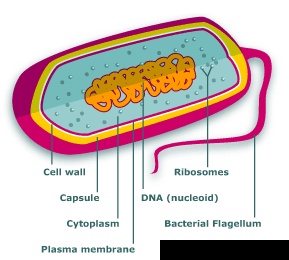
What kind of cell is this?
a)
Eukaryotic
b)
Prokaryotic
58.
Plants and animal cells are examples of ___ cells 
a)
prokaryotic cells 
b)
eukaryotic cells 
59.
Which of the following is a characteristic of both Eukaryotic and Prokaryotic cells?
a)
ribosomes
b)
nucleus
c)
membrane bound organelles
d)
simple
60.
Prokaryote are?
a)
simple, mostly single-celled organism that lacks a nucleus, or any other membrane-bound organelle.
b)
have a peptidoglycan cell wall and many have polysaccharide capsules.
c)
have a true nucleus, which means the cell's DNA is surrounded by a membrane.
d)
contain membrane-bound organelles, such as the nucleus
61.
DNA
a)
synthesize proteins
b)
the genetic material of the cell
c)
an outer covering that separates the cell's interior from its surrounding environment
d)
consisting of a jelly-like cytosol within the cell in which other cellular components are found
62.
Which is true about active transport?
a)
It requires energy
b)
it does not require energy
c)
It moves substances down the concentration gradient
d)
it moves material from high to low concentration
63.
This picture represents which type of cellular transport?
a)
passive transport
b)
endocytosis
c)
exocytosis
d)
osmosis
64.
Large particles of food can be moved into the cell by ________________________.
a)
endocytosis
b)
pinocytosis
c)
exocytosis
d)
osmosis
65.
The most important part of the cell in cell transport
a)
E.R.
b)
cytoplasm
c)
nucleus 
d)
cell membrane
66.
What are two types of passive transport?
a)
endo and exocytosis 
b)
cookies and milk
c)
active and passive 
d)
Osmosis and diffusion
67.
The cell membrane is made mostly of
a)
phospholipid single layer with proteins
b)
phospholipid double layer with proteins
c)
proteins and carbohydrates with ribosomes
d)
carbohydrates surrounded by golgi bodies
68.
What does it mean that a cell membrane is, "selectively or semi-permeable?"
a)
It allows all substances in
b)
It allows some substances in but not others
c)
It allows nothing in
69.
This is a diagram of...
a)
exocytosis
b)
active transport
c)
osmosis
d)
equilibrium
70.
Special proteins help move particles, but NO energy is needed. This is..
a)
facilitated diffusion
b)
exocytosis
c)
active transport
d)
equilibrium
71.
why do cells move things in and out?
a)
they are bored
b)
why not
c)
homeostatis, yo! 
d)
kittens
kittens
72.
Which of the following statements is true for exocytosis?
a)
It helps in the intake of large materials by the cell.
b)
It occurs without the help of any cell organelle.
c)
It is a form of active transport.
d)
It does not require energy.
73.
In passive transport, molecules move from an area of __________ concentration to an area of __________ concentraiton
a)
high, low
b)
low, high
c)
water, salt
d)
active, passive
74.
What type of transport is this?
a)
Endocytosis
b)
Exocytosis
c)
Diffusion
d)
Sodium-Potassium Pump
75.
Active transport uses energy to move things through the cell membrane.
a)
True
b)
False
76.
In active transport materials always move from
a)
high to low concentration
b)
low to high concentration
c)
inside to outside of the cel
d)
outside to inside of the ell
77.

During DNA replication, a DNA strand that has the bases CTAGGT produces a strand with the bases:

a)

AGCTTG

b)

GATCCA

c)

TCGAAC

d)

GAUCCA

78.

In both prokaryotes and eukaryotes, DNA replication happens

a)

before cell division.

b)

in the nucleus

c)

only to telomeres

d)

around the histones

79.

What enzyme works to add DNA to ends of chromosomes in rapidly dividing cells such as those found in an embryo, to prevent genes from being lost during replication?

a)

DNA polymerase

b)

histones

c)

telomerase

d)

chromatin

80.

What nucleotide is going to be opposite from thymine?

a)

adenine

b)

cytosine

c)

guanine

d)

uracil

81.

During replication, what enzyme is responsible for building the complementary strand?

a)

histones

b)

nucleosomes

c)

DNA polymerase

d)

chromatin

82.

In eukaryotes, DNA

a)

is located in the nucleus

b)

floats freely in the cytoplasm

c)

is located in the ribosomes

d)

is circular

83.

DNA replication results in two DNA molecules,

a)

each with two new strands.

b)

one with two new strands and the other with two original strands.

c)

each with one new strand and one original strand.

d)

each with two original strands.

84.

In both prokaryotes and eukaryotes, how many copies of the DNA are left after replication?

a)

1

b)

2

c)

3

d)

4

85.

What type of sugar is in DNA?

a)

glucose

b)

lactose

c)

deoxyribose

d)

ribose

86.

Which of the following forms a base pair with guanine?

a)

uracile

b)

cytosine

c)

thymine

d)

adenine

87.

Which of the following is a nucleotide found in DNA?

a)

ribose + phosphate group + thymine

b)

ribose + phosphate group + uracil

c)

deoxyribose + phosphate group + uracil

d)

deoxyribose + phosphate group + cytosine

88.

When reading DNA, we always start the the ____ end and end at the ____ end.

a)

5’ prime, 3’ prime

b)

3’ prime, 5’ prime

c)

longest end, shortest end

d)

top, bottom

89.

What type of bonds hold the two nitrogen base pairs together in the middle of DNA?

a)

ionic

b)

polar

c)

hydrogen

d)

covalent

90.

Which enzyme proofreads the new strands to make sure they are a copy of the original?

a)

DNA polymerase

b)

DNA amylase

c)

DNA primase

d)

DNA ligase

91.

To begin DNA replication, we first need to unzip the double helix ladder of DNA. What enzyme is responsible for unzipping the DNA strands?

a)

histones

b)

DNA helicase

c)

DNA polymerase

d)

chromatin

92.
What is the name of the step in the diagram above? 
a)
Interphase
b)
Prophase I
c)
Metaphase I
d)
Anaphase I
93.
What type of cells does meiosis produce? 
a)
2 Genetically identical cells
b)
2 Genetically different cells
c)
4 genetically identical cells
d)
4 genetically different cells
94.
In mitosis cells are genetically _______, but in meiosis cells are genetically ______.
a)
diverse, identical
b)
identical, diverse/different
95.

How many cells are formed at the end of Meiosis II?

a)

2

b)

3

c)

4

d)

8

96.
Meiosis occurs in the testes in men and the ___________ in women.
a)
uterus
b)
cervix
c)
ovaries
d)
stomach
97.

Meiosis would occur in which of these cells?

a)

skin cells

b)

liver cells

c)

brain cells

d)

sperm cells

98.
Responsible for creating sex cells are gametes called sperm and egg. 
a)
Meiosis
b)
Mitosis
c)
Metaphase I
d)
Photosynthesis
99.
What phase is  shown in the picture?
a)
anaphase 1
b)
anaphase 2
c)
metaphase 1
d)
telophase 1
100.
The correct order of the phases of mitosis and meiosis could be abbreviated as:
a)
MAPT
b)
PAMT
c)
TPAM
d)
PMAT
101.
What phase is shown here?
a)
Prophase II
b)
Metaphase I
c)
Metaphase II
d)
Anaphase I
102.
What phase is shown here?
a)
Metaphase II
b)
Telophase I
c)
Telophase II
d)
Metaphase I
103.
What phase is shown here?
a)
Telophase II
b)
Anaphase II
c)
Metaphase I
d)
Interphase I
104.
What phase is shown here?
a)
Telophase I
b)
Metaphase II
c)
Telophase II
d)
Anaphase I
105.
The result of meiosis is:
a)
two diploid cells
b)
two haploid cells
c)
four diploid cells
d)
four haploid cells
106.

Which is a type of asexual reproduction?

a)

Mitosis

b)

Meiosis

107.

Which is a type of sexual reproduction?

a)

Mitosis

b)

Meiosis

108.

A cell has 10 chromosomes. It undergoes mitosis. How many chromosomes will each of the new cells have?

a)

5

b)

10

c)

15

d)

20

109.
Meiosis makes sperm and egg cells. In humans, sperm and egg cells each have _____ chromosomes. Therefore a fertilized human egg cell (sperm and egg cell combined) would create a cell with _____ chromosomes.
a)
23, 46
b)
46, 23
c)
2, 4
d)
50, 100
110.
What kind of cells are made in MEIOSIS?
a)
Haploid cells
b)
Diploid Cells
c)
Skin Cells
d)
Liver Cells
111.

How many cells are created at the end of Meiosis I?

a)

2 haploid cells

b)

4 haploid cells

c)

2 diploid cells

d)

4 diploid cells

112.
What is the cell cycle?
a)
The gradual development of something, especially from a simple to a more complex form.
b)
The study of heredity and the variation of inherited characteristics.
c)
The branch of biology that deals with the relations of organisms to one another and to their physical surroundings.
d)
The series of events that take place in a cell leading to its division and duplication of its DNA to produce two daughter cells.
113.
Which part of the Cell Cycle takes the longest?
a)
Interphase
b)
Mitosis
c)
Prophase
d)
Cytokinesis
114.
What happens in the first part of Interphase?
a)
Mitosis
b)
Cell Growth
c)
DNA Replication
d)
Anaphase
115.
What part of the cell cycle results in the splitting of the new cells?
a)
Interphase
b)
Mitosis
c)
Metaphase
d)
Cytokinesis
116.
What does DNA Replication mean?
a)
DNA is made.
b)
DNA makes new cells. 
c)
DNA copies itself.
d)
DNA starts the cell cycle.
117.
True or False. 
After a cell goes through cytokinesis, it starts mitosis all over again.
a)
True
b)
False
118.
True or False.
Mitosis is a continuous process.
a)
True
b)
False
119.
What phase is this cell in?
a)
Cytokinesis
b)
Mitosis
c)
Prophase
d)
Metaphase
120.
What phase is this cell in?
a)
Mitosis
b)
Interphase
c)
Anaphase
d)
Telophase
121.
What phase is this cell in?
a)
Mitosis
b)
Cytokinesis
c)
Prophase
d)
Telophase
122.
What phase is this cell in?
a)
Mitosis
b)
Interphase
c)
Prophase
d)
Telophase
123.
What part of the cell cycle is this cell in?
a)
Mitosis
b)
Interphase
c)
Telophase
d)
Cytokinesis
124.
True or False.
Mitosis is made up of 5 phases.
a)
True
b)
False
125.
What is the longest phase in MITOSIS?
a)
Prophase
b)
Metaphase
c)
Interphase
d)
Anaphase
126.
In what phase do the chromosomes line up in the middle of the cell?
a)
Cytokinesis
b)
Metaphase
c)
Prophase
d)
Telophase
127.
In what phase does chromatin condense to form chromosomes?
a)
Mitosis
b)
Interphase
c)
Prophase
d)
Anaphase
128.
In what phase do the chromosomes get pulled apart into sister chromatid to opposite sides of the cell?
a)
Prophase
b)
Interphase
c)
Metaphase
d)
Anaphase
129.
In what phase do the organelles disperse out into the daughter cells, and the cell prepares for cytokinesis?
a)
Prophase
b)
Interphase
c)
Mitosis
d)
Telophase
130.
What can the cell cycle also be called?
a)
Cell growth
b)
DNA Replication
c)
Preparation for Mitosis
d)
Cell Divison
131.
BONUS:
How long is the whole cell cycle for most animal cells?

a)
2-3 days
b)
24 hours
c)
2-3 hours
d)
23 hours