wayground logo

Free Printable Worksheets

Font size

S
M
L
XL
Worksheets

Polite 8th Grade Final SY 25

Total questions: 62

Worksheet time: 1hrs 21mins

Name
Class
Date
1.
States that younger rocks lie above older rocks if the layers have not been disturbed
a)
Law of crosscutting
b)
Law of superposition
c)
Relative Dating
d)
Unconformity
2.
States that younger rocks lie above older rocks if the layers have not been disturbed
a)
Law of crosscutting
b)
Law of superposition
c)
Relative Dating
d)
Unconformity
3.
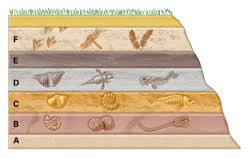
According to the law of superposition, which layer is the youngest?
a)
A
b)
B
c)
C
4.

Which layer is OLDER? Layer E or Intrusion A?

a)

Layer E

b)

Intrusion A

5.
Which rock layer in the diagram seems to be the oldest?
a)
F
b)
E
c)
B
d)
A
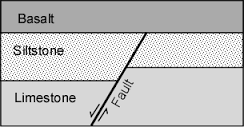
6.
What are the relative ages of the features in order from oldest to youngest?
a)
Limestone, Basalt, Fault, Siltstone
b)
Siltstone, Fault, Basalt, Limestone
c)
Limestone, Fault, Basalt, Siltstone
d)
Limestone, Siltstone, Fault, Basalt
7.
Relative dating of rock layers tells us that the deeper we dig, _______.
a)
the younger the rocks get
b)
the smellier the rocks get
c)
the harder the rocks get
d)
the older the rocks get
8.
How does sedimentary rock usually form?
a)
Vertically
b)
Diagonally
c)
Folding
d)
Horizontally
9.

Check all examples of uniformitarianism

a)

erosion

b)

weathering

c)

tectonic plate movement

d)

deposition

e)

volcanic eruption

10.
Traces or remains of organisms that lived long ago
a)
Fossil
b)
Unconformity
c)
Superposition
d)
Column
11.
What is the law of superposition?
a)
The age of sedimentary rock not found in the original layers.
b)
Metamorphic rock is younger than the nearby igneous rock.
c)
Sedimentary rock in it's original position is older than layers above it.
d)
Metamorphic rock is older because it was deposited to nearby sedimentary rock.
12.
Relative dating of rock layers tells us that the deeper we dig, _______.
a)
the younger the rocks get
b)
the smellier the rocks get
c)
the harder the rocks get
d)
the older the rocks get
13.
A break in the Earth's crust 
a)
fault 
b)
mountain
c)
plate
d)
fossil 
14.
Relative age of a rock is the number of years that have passed since the rock formed?            
a)
true
b)
false
15.
Used to determine whether an object is older or younger than other objects
a)
Superposition
b)
Relative Dating
c)
Fossil
d)
Unconformity
16.
What can be used to determine the relative ages of rock layers?
a)
Living animals
b)
Living plants
c)
Minerals
d)
Fossils
17.
According to the law of superposition, which layer is the youngest?
a)
A
b)
B
c)
C
18.
Which property of fossils allows scientists to determine the relative ages of rock layers?
a)
Fossils form from the remains of living things
b)
Fossils can be analyzed to determine their exact ages
c)
Fossils show change over time as species evolve
d)
Fossils are usually found in sedimentary rock
19.
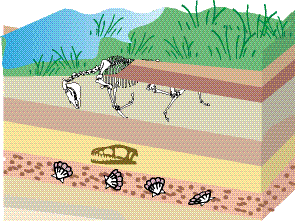
Analyze the seashell found in the white layer.  Which statement is true of the rock layer that contains this fossil?
a)
It could also contain a fossil from the bottom layer.
b)
It is older than the layers below it.
c)
It is younger than the layers above it.
d)
It is older than the layers above it.
20.

Look at the diagram, what layer did animal E first show up in?

a)

Layer #4

b)

Layer #5

c)

Layer #6

d)

Layer #8

21.

Which layer(s) supports that the land was covered by water?

a)
Layer E
b)
Layers A and B
c)
Layer C
d)
Layer D
22.

Which layer(s) support that the land was exposed to air?

a)

D, F, G

b)
A, D, F
c)
B, C, F
d)
A, B, F
23.
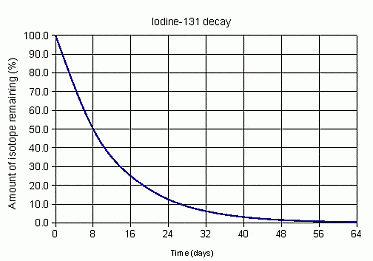
What is the half-life of iodine-131?
a)
32 days
b)
8 days
c)
16 days
d)
24 days
24.

The % of the parent isotope remaining after 1 Half Life.

a)

50%

b)

25%

c)

12.5%

d)

6.25%

25.

The % of the parent isotope remaining after 2 Half Lives.

a)

50%

b)

25%

c)

12.5%

d)

6.25%

26.

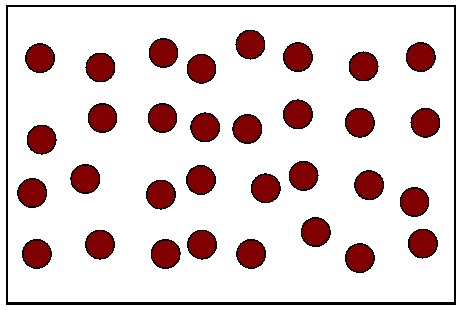
The diagram shows 32 atoms

32 of the Red are the parent isotope

0 of the atoms are daughter isotopes

How many half-lives have occurred?

a)

0

b)

1

c)

2

d)

3

27.

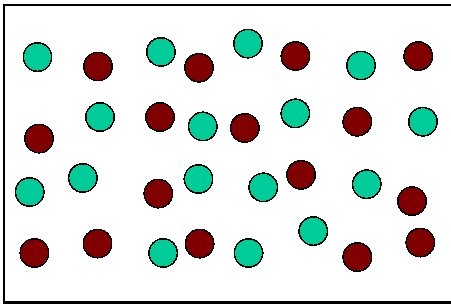
The diagram shows 32 atoms.

16 of the Red are parent isotopes

16 of the Green are daughter isotopes

How many half-lives have occurred?

a)

0

b)

1

c)

2

d)

3

28.

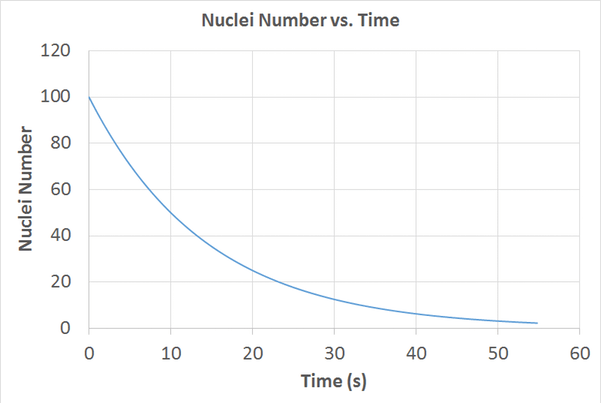
What is the Half life of this isotope?

a)

5 seconds

b)

10 seconds

c)

15 seconds

d)

20 seconds

29.

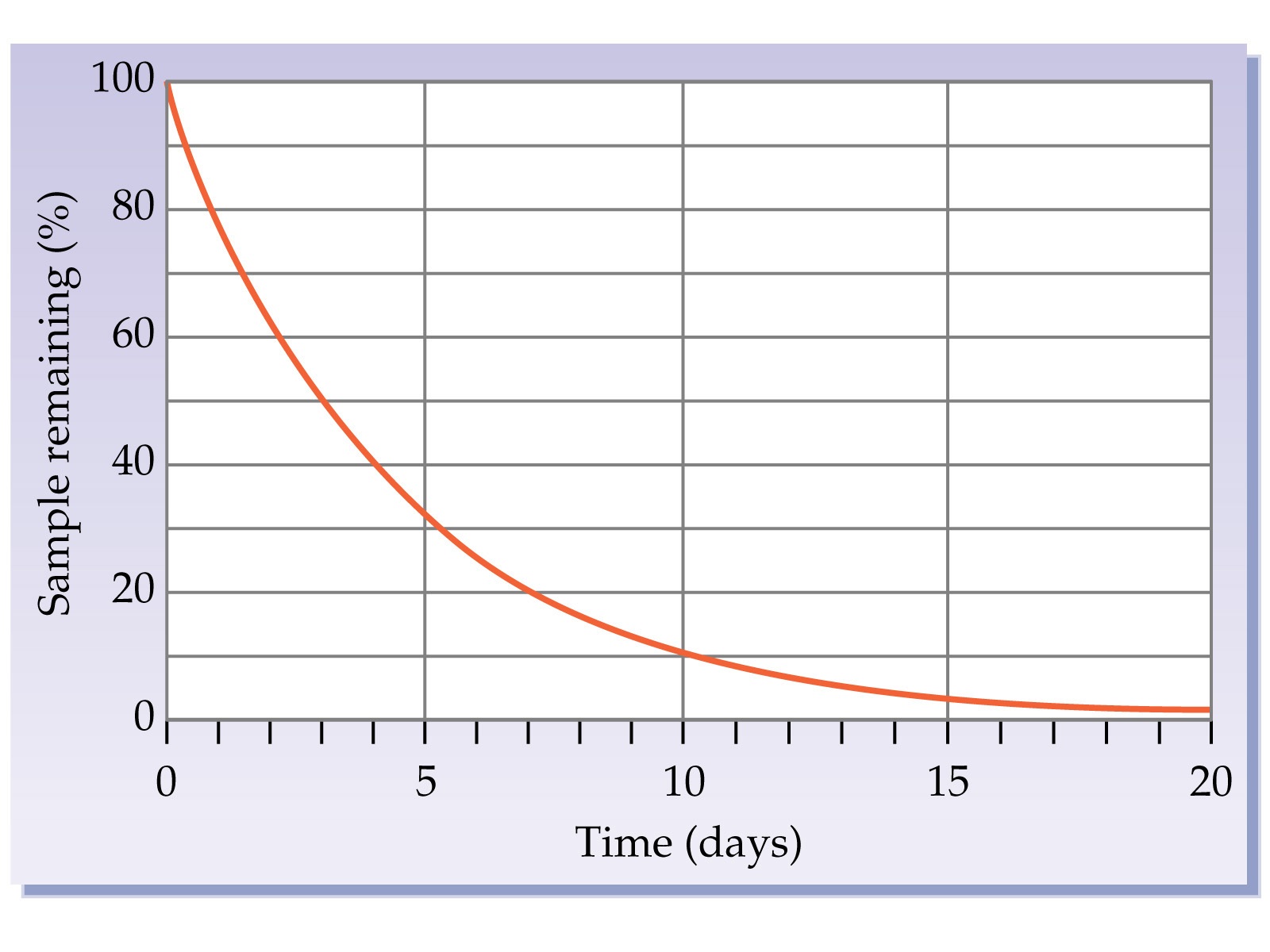
What is the Half Life of this isotope?

a)

3 days

b)

5 days

c)

8 days

d)

10 days

30.
Scientists use radioactive decay to measure...
a)
relative time
b)
absolute time
c)
half-lives
d)
time of day
31.
How does absolute age differ from relative age?
a)
only absolute dating indicates which rock is older than another
b)
only absolute dating finds the age in years
c)
only relative dating finds the age in years
32.
Radiometric dating is possible because the rates of decay of radioactive isotopes _____.
a)
change over time
b)
change from place to place
c)
are constant
d)
vary widely
33.

Which of the following can be learned by using the fossil record?

a)

When organisms changed or evolved

b)

when organisms appeared on Earth

c)

when organisms became extinct

d)

All the above

34.
Which fossil makes the best index fossil?
a)
Fossil 1
b)
Fossil 2
c)
Fossil 3
d)
None follow all of the rules
35.
Index fossils CAN tell us the age of a rock layer.
a)
True
b)
False
36.

What is the best reason that fossil #4 is NOT a good index fossil?

a)

It is not widespread

b)

it is not short-lived (in numerous layers)

c)

It is in half of the outcrops

37.

Which of the follow is INCORRECT about an index fossil?

a)

The fossil must have lived only during a short part of the Earth's history.

b)

Many fossils of the organism must be found in the rock layers.

c)

The fossil must be found over a wide area of the Earth and be unique.

d)

The fossil must only be found in one area.

38.

What

type

of structure?

a)

Homologous

b)

Analogous

c)

Embryological

d)

Vestigial

39.

What

type

of structure?

a)

Homologous

b)

Analogous

c)

Embryological

d)

Vestigial

40.

What

type

of structure?

a)

Homologous

b)

Analogous

c)

Embryological

d)

Vestigial

41.

What

type

of structure?

a)

Homologous

b)

Analogous

c)

Embryological

d)

Vestigial

42.

What

type

of structure?

a)

Homologous

b)

Analogous

c)

Embryological

d)

Vestigial

43.

What

type

of structure?

a)

Homologous

b)

Analogous

c)

Embryological

d)

Vestigial

44.

What

type

of structure?

a)

Homologous

b)

Analogous

c)

Embryological

d)

Vestigial

45.

What

type

of structure?

a)

Homologous

b)

Analogous

c)

Embryological

d)

Vestigial

46.

What

type

of structure?

a)

Homologous

b)

Analogous

c)

Embryological

d)

Vestigial

47.

What

type

of structure?

a)

Homologous

b)

Analogous

c)

Embryological

d)

Vestigial

48.

What

type

of structure?

a)

Homologous

b)

Analogous

c)

Embryological

d)

Vestigial

49.
According to the law of superposition, the oldest fossils are found 
a)
At the top of the rock layers
b)
Near the bottom of the rock layers
c)
In the middle of the rock layers
d)
Somewhat near the surface
50.
Which rock layer contains the newest fossils?
a)
F
b)
E
c)
B
d)
C
51.
Two organisms that are closely related would have
a)
very similar DNA sequence
b)
exactly the same DNA sequences
c)
no proteins in common
d)
completely different DNA sequence
52.

 A period of time in history or a person's life, typically one marked by notable events or particular characteristics

a)

Ancestor

b)

Eocene

c)

Epoch

d)

Primates

53.

The combination of genes a person has, represented by letters, is their...

a)

Genotype

b)

Phenotype

c)

Chromosome

d)

Punnett Square

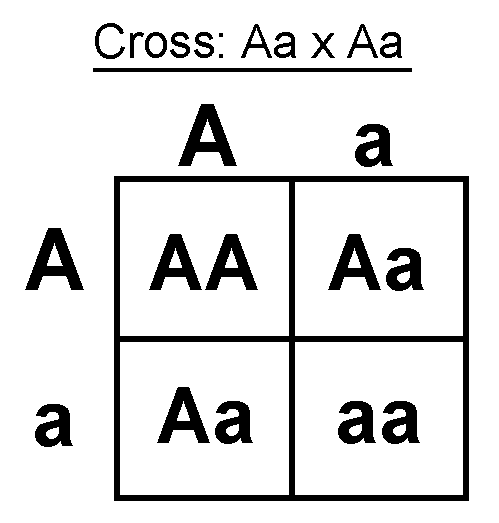
54.
What is the phenotype of the offspring? (A-Brown hair; a-blond hair) 
a)
50 % Brown Hair and 50% Blond Hair 
b)
25 % Brown Hair and 75% Blond Hair 
c)
75 % Brown Hair and 25% Blond Hair 
d)
0% Brown Hair and 100% Blond Hair 
55.

What belongs in the last box?

a)

RR

b)

Rr

c)

rr

d)

ff

56.
T - tall and t = short
In the punnett square below, what belongs in the missing square
a)
tt
b)
Tt
c)
Bb
d)
TT
57.
Which letter represents the wave crest?
a)
A
b)
B
c)
C
d)
D
58.

the measurement from one wave's crest to another crest or it's trough to another trough

a)

crest

b)

trough

c)

amplitude

d)

wavelength

59.
a)
Frequency
b)
Amplitude
c)
Wavelength
d)
Trough
60.
a)
Trough
b)
Crest
c)
Amplitude
d)
Wavelength
61.

What do waves carry and transfer?

a)

Nothing

b)

Only Sound

c)

Only sunlight

d)

Energy

62.

What is #3 called?

a)

amplitude

b)

wavelength

c)

crest

d)

trough