
 Worksheets
Science Final Exam Review with waves
Total questions: 84
Worksheet time: 46mins
The dependent variable is the variable that is purposely changed by the scientist.
True
False
There can only be one independent variable in a valid experiment.
True
False
The temperature does not change during a phase change.
True
False
Kinetic energy is stored energy.
True
False
Newton’s First Law of Motion is also known as the Law of Inertia.
True
False
What is the definition of Length?
Distance between 2 points
Amount of matter in an object
Measurement of temperature
Time taken to travel
What is the tool used to measure Mass?
Triple beam balance
Thermometer
Barometer
Measuring cylinder
What is the base unit for Volume of a Liquid?
Liter
Gram
Meter
Second
What is the tool used to measure the Volume of a regular solid?
Metric ruler
Thermometer
Spring balance
Stopwatch
What is the base unit for Temperature?
Degrees Celsius
Meter
Kilogram
Second
What was the problem being investigated?
The cause of a specific phenomenon
The solution to a known issue
The effectiveness of a new method
The impact of a variable on results
The hypothesis was:
A possible explanation or prediction that can be tested.
A list of materials used in the experiment.
The final results of the experiment.
A summary of the data collected.
The independent/manipulated variable is:
the variable that is changed in an experiment
the variable that is measured in an experiment
the variable that stays the same in an experiment
the result of the experiment
What is the dependent/responding variable?
The variable that is changed on purpose
The variable that is measured or observed
The variable that stays the same
The variable that is not used in the experiment
Which of the following lists 3 constants/controlled variables in this experiment?
Type of equipment, amount of substance, temperature
Type of experiment, number of trials, hypothesis
Research question, conclusion, data analysis
Observation, inference, prediction
What is the density of a cube that has a side of 3.0 cm and a mass of 15.0 grams?
0.6 g/cm³
1.5 g/cm³
5.0 g/cm³
0.2 g/cm³
What is the density of a liquid that has a mass of 25.0 grams and a volume of 2 mL. Would a ping pong ball with a density of 0.5 g/mL float or sink in that liquid?
12.5 g/mL; The ping pong ball would float.
0.08 g/mL; The ping pong ball would sink.
50 g/mL; The ping pong ball would float.
2.5 g/mL; The ping pong ball would sink.

Which liquid has the greatest density?
red
blue
green
yellow
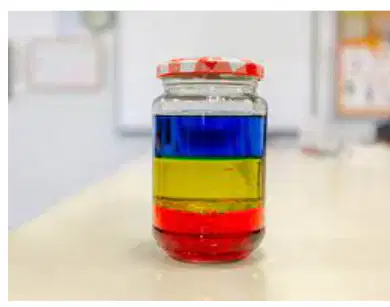
Which liquid is the least dense?
blue
red
green
yellow
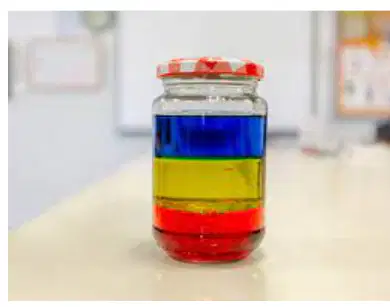
3 liquids were placed in a jar and layered as shown in the picture. If the density of the yellow layer is 2.0 g/mL where will a paperclip with a density of 1.2 g/mL land when dropped in?
floating on or in the blue layer
floating on or in the yellow layer
floating on or in the red layer
suspended between the yellow and red layers
Complete the chart: State of Matter | Volume | Shape | Arrangement of particles
Solid: Definite, Definite, Tightly packed; Liquid: Definite, Indefinite, Loosely packed; Gas: Indefinite, Indefinite, Very loosely packed
Solid: Indefinite, Definite, Loosely packed; Liquid: Definite, Definite, Tightly packed; Gas: Indefinite, Indefinite, Tightly packed
Solid: Definite, Indefinite, Very loosely packed; Liquid: Indefinite, Definite, Tightly packed; Gas: Definite, Indefinite, Loosely packed
Solid: Indefinite, Indefinite, Tightly packed; Liquid: Indefinite, Definite, Loosely packed; Gas: Definite, Definite, Very loosely packed
Fill in the blank: The shape of a liquid is ________.
indefinite
definite
circular
square
Fill in the blank: The volume of a liquid is ________.
definite
infinite
variable
unknown
Fill in the blank: The description of a liquid is: ________.
Not packed as tightly, particles can slide past each other
Tightly packed, particles vibrate in place
Particles are far apart and move freely
Particles are arranged in a fixed, repeating pattern
Fill in the blank: The volume of a gas is ________.
indefinite
definite
fixed
constant
Fill in the blank: The description of a gas is: ________.
Spread to fill container and bounce all over
Stay in a fixed shape and do not move
Form a rigid structure and vibrate in place
Take the shape of the container but do not fill it completely
The process of Sublimation is ________.
Solid to gas
Gas to liquid
Liquid to solid
Gas to solid
The process of Sublimation is (Endothermic or Exothermic): ________.
endothermic
exothermic
neutral
condensing
Determine if the following are physical or chemical properties: a. Brown ________
Physical
Chemical
Biological
Mechanical
Determine if the following are physical or chemical properties: b. Rough ________
Physical
Chemical
Biological
Nuclear
Determine if the following are physical or chemical properties: c. flammable
Chemical
Physical
Mechanical
Thermal
Determine if the following are physical or chemical properties: d. floats in water
Physical
Chemical
Biological
Nuclear
Determine if the following are physical or chemical properties: e. solid ________
Physical
Chemical
Biological
Nuclear
Determine if the following are physical or chemical properties: f. rusting ________
Chemical
Physical
Mechanical
Thermal
Determine if the following is a physical or chemical change: Alka-seltzer fizzing in water
Chemical
Physical
Melting
Freezing
Crushing chalk into smaller pieces is a ________ change.
Physical
Chemical
Biological
Nuclear
Ice melting is a ________ change.
Physical
Chemical
Biological
Nuclear
Making Kool-Aid is a ________ change.
Physical
Chemical
Nuclear
Biological
Fireworks exploding is a ________ change.
Chemical
Physical
Mechanical
Electrical
What type of substance is each chemical: element, compound, homogeneous mixture, or heterogeneous mixture?
Element
Compound
Homogeneous mixture
Heterogeneous mixture
negative charge
Electron
Proton
Neutron
Nucleus
positive charge
Proton
Electron
Neutron
Photon
neutral charge
Neutron
Proton
Electron
Photon
location of electrons
Electron shells/energy levels
Protons
Neutrons
Atomic mass
What is the common name of..... Group 1 Elements _____ Group 17 Elements _____ Group 18 Elements _____
Group 1 Elements: Alkali Metals Group 17 Elements: Halogens Group 18 Elements: Noble Gases
Group 1 Elements: Transition Metals Group 17 Elements: Noble Gases Group 18 Elements: Halogens
Group 1 Elements: Alkaline Earth Metals Group 17 Elements: Halogens Group 18 Elements: Transition Metals
Group 1 Elements: Halogens Group 17 Elements: Alkali Metals Group 18 Elements: Alkaline Earth Metals
List three properties of metals.
Shiny, Malleable, Good conductors of electricity
Dull, Brittle, Poor conductors of electricity
Transparent, Soft, Insulators
Non-magnetic, Non-ductile, Poor conductors of heat
List three properties of nonmetals.
Brittle, Dull, Poor conductors
Malleable, Shiny, Good conductors
Ductile, Lustrous, High density
Sonorous, Magnetic, High melting point
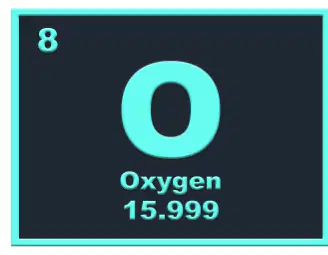
Use the diagram to answer the following questions: a. Element name: ____
Oxygen
Nitrogen
Hydrogen
Carbon
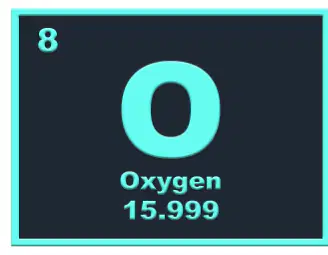
Element symbol: ____O________
O
C
N
S
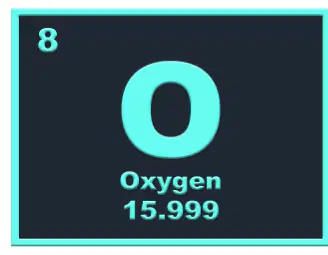
Atomic Number: _____
8
6
12
16
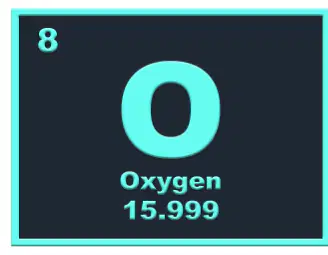
Use the diagram to answer the following questions: d. # of protons: ____
8
6
10
12

Use the diagram to answer the following questions: e. # of electrons: ____
8
6
10
12
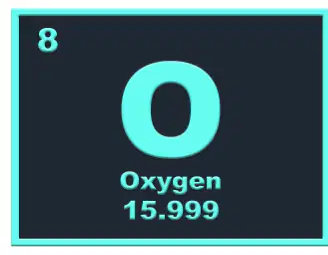
# of neutrons: ____
8
6
10
12
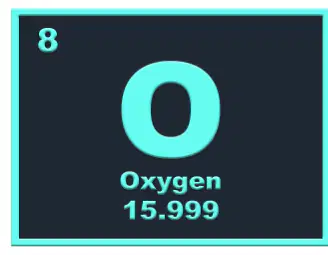
What period & group is this element found in: Period __2__ Group 16
Period 2, Group 16
Period 3, Group 15
Period 1, Group 17
Period 2, Group 15
The Law of Conservation of Matter states that:
Matter cannot be created or destroyed.
Matter can be created but not destroyed.
Matter can be destroyed but not created.
Matter is always changing into energy.
Calculate the speed of a car that traveled 500 m in 30 seconds?
Speed = 16.7 m/s
Speed = 12.5 m/s
Speed = 20 m/s
Speed = 10 m/s
A motorcycle is moving at a constant speed of 42 km/hr and travels for 2.5 hours. How far did the motorcycle travel?
D = 105 km
D = 84 km
D = 120 km
D = 96 km
A plane starts from rest and reaches a speed of 500 km/hour in 0.5 hours. What is the acceleration of the airplane?
1000 km/hr/hr
250 km/hr/hr
500 km/hr/hr
750 km/hr/hr
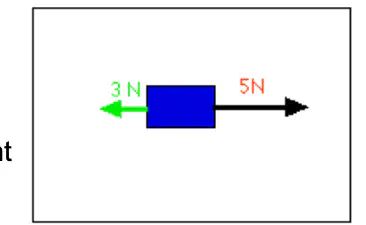
What is the total force acting on this system?
2N right
4N left
0N
1N right
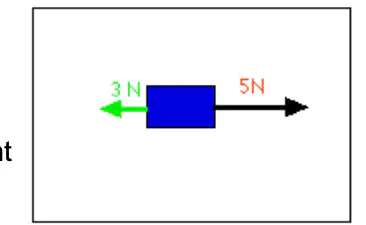
Are the forces balanced or unbalanced? (highlight your choice)
balanced
unbalanced
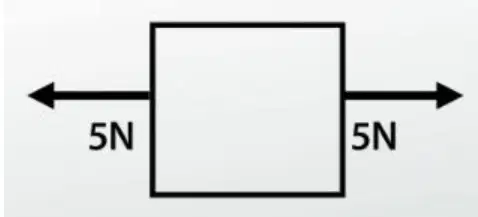
What is the total force acting on this system?
0 N
5 N
10 N
-5 N

Are the forces balanced or unbalanced? (highlight your choice)
balanced
unbalanced
What is the description of Fluid Friction?
Friction that occurs in air or liquid
Friction that occurs between two solids
Friction that occurs only in vacuum
Friction that occurs only at high temperatures
What is the description of Sliding Friction?
Friction that occurs when two surfaces slide past each other
Friction that occurs when an object is at rest
Friction that occurs in fluids like air or water
Friction that occurs only at high temperatures
What two factors determine the gravitational pull an object feels?
mass and distance
temperature and volume
speed and direction
color and shape
What is the acceleration due to gravity?
9.8 m/s/s
5.0 m/s/s
15.0 m/s/s
20.0 m/s/s
Newton’s Law: Law 1 (Law of Inertia) - Definition: An object in motion stays in motion and an object at rest stays at rest - Example:
When a car stops short the groceries on the back seat fly forward and fall.
A ball rolling on the ground speeds up without any force.
A book on a table suddenly starts moving by itself.
A stationary car starts moving without being pushed.
Newton’s 2nd Law - Definition: When a force acts on an object, the object will accelerate proportionally to the force and in the same direction.
When you increase the force you apply on the pedals of the bike, the bike accelerates more.
A stationary object remains at rest unless acted upon by a force.
For every action, there is an equal and opposite reaction.
The mass of an object does not affect its acceleration.
Newton’s Law: Newton’s 3rd Law - Definition: For every action there is an equal but opposite reaction - Example:
The ball hits the bat and the bat hits the ball in the opposite direction with the same force.
A car accelerates because of the friction between the tires and the road.
A book resting on a table remains at rest.
A ball rolling on the ground eventually comes to a stop due to friction.
The Law of Conservation of Energy states that:
Energy can be created and destroyed.
Energy can be created but not destroyed.
Energy cannot be created or destroyed, only transformed.
Energy is always lost in every process.
How much force will it take to accelerate a 1000.0 kg car at a rate of 27.2 m/sec²?
27,200 N
2,720 N
272,000 N
7,200 N
How much work is needed to lift a box weighing 120.0 Newtons 6.0 meters upward?
720.0 J
20.0 J
200.0 J
7200.0 J
32. Machines make work easier by: ________ and ________
increasing the force that can be applied; change the direction of the force
decreasing the force that can be applied; increasing the distance moved
reducing the amount of work done; increasing the speed of work
making work more complicated; reducing efficiency
Amy uses 35.0 N of force to lift a box 10.0 meters off the ground. How much work did she do? Work = Force x Distance W= (35.0 N)(10.0 m) ________
350.0 J
35.0 J
3.5 J
3500.0 J
How much power did Amy use if she was able to lift the box in 5 seconds? Power = work/time Power = 350.0 J/5 sec
70 Watts
35 Watts
100 Watts
17.5 Watts
Match the Simple Machine to its Example:
Inclined Plane
Ramp, slide
Screw
Corkscrew, light bulb
Lever
Seesaw, baseball bat
Pulley
Blinds chord, flagpole hoist
Wheel and Axle
Ferris Wheel
What is the mechanical advantage of this lever if the length of the effort arm is 8 cm and the length of the resistance arm is 4 cm? Use the formula: IMA Lever = Length of Effort (input) Arm / Length of Resistance (output) Arm
2
0.5
4
8
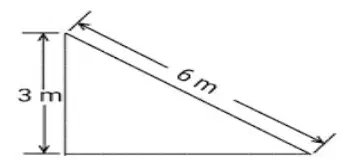
What is the mechanical advantage of this inclined plane? Use this formula: IMA Inclined Plane = Length of Incline (input) / Height of Incline (output)
2
1
4
0.5
What color absorbs the most heat? What color clothing should be worn if you want to stay cool on a hot summer day?
Black absorbs the most heat; wear white clothing to stay cool.
White absorbs the most heat; wear black clothing to stay cool.
Red absorbs the most heat; wear blue clothing to stay cool.
Blue absorbs the most heat; wear red clothing to stay cool.

The part of the scientific method that can be tested by doing an experiment.
data
research
hypothesis
conclusion


A series of steps used by scientists to solve a problem or answer a question.
scientific method
recipe
data collection
metric system

Ms. Schreuder wants to see how different surfaces affect how high a tennis ball can bounce. What is the independent variable that she will make different on purpose?
the different surfaces
using the same ball

Dilcia wants to know how drinking milk affects how tall a Monica grows. Which is the independent variable?
Monica's growth
drinking milk

