
 Worksheets
Introduction to Kinesiology and Body Mechanics
Total questions: 32
Worksheet time: 33mins
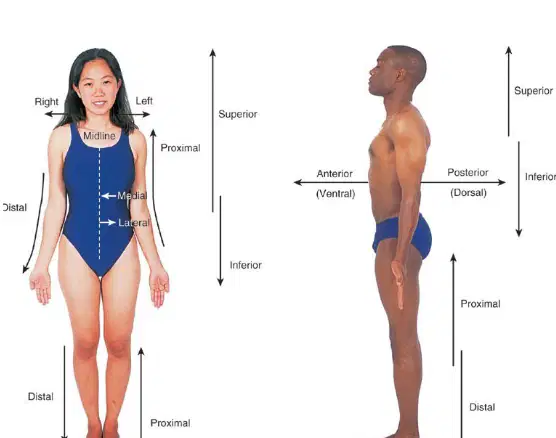
Which of the following best describes the anatomical position?
Standing upright, facing forward, arms at the sides with palms facing forward
Sitting with legs crossed and hands on knees
Lying down with arms above the head
Standing on one leg with arms raised
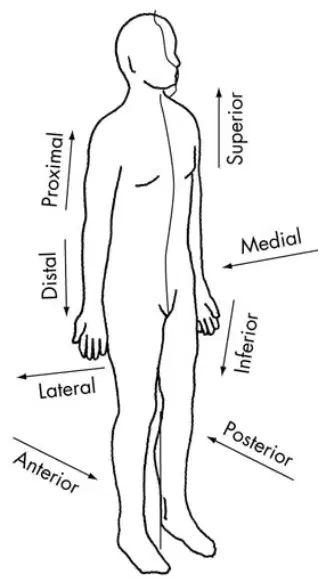
If a doctor says a wound is "distal" to the elbow, what does this mean?
The wound is closer to the shoulder than the elbow
The wound is farther from the trunk of the body than the elbow
The wound is on the opposite side of the body from the elbow
The wound is above the elbow
If a doctor is examining a patient’s arm, which major division of the body are they focusing on?
Axial body
Appendicular segments
Trunk
Neck
Which type of motion involves turning a body part around its long axis?
Rotation
AB-duction
Inversion
Plantar Flexion
What is the difference between AB-duction and AD-duction?
AB-duction moves a limb away from the midline, while AD-duction moves it toward the midline.
AB-duction rotates a limb, while AD-duction flexes it.
AB-duction inverts a limb, while AD-duction everts it.
AB-duction extends a limb, while AD-duction flexes it.
Which motion describes turning the palm upward?
Supination
Pronation
Inversion
Lateral Flexion
If a person points their toes downward, which type of motion are they performing?
Plantar Flexion
Dorsi Flexion
Lateral Flexion
Rotation
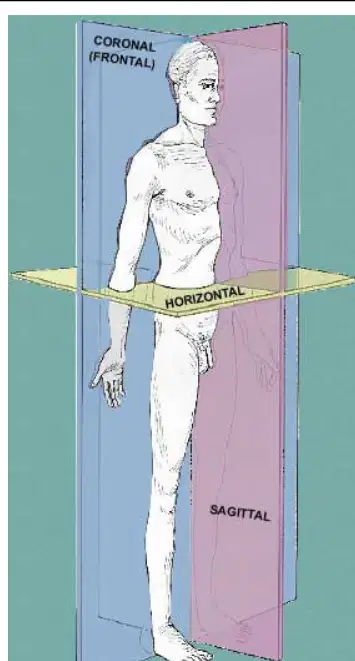
Which of the following is NOT one of the cardinal planes of motion?
Frontal Plane
Sagittal Plane
Transverse Plane
Oblique Plane
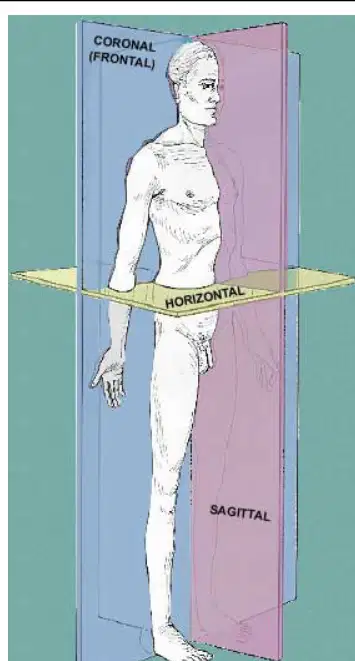
What is the relationship between motion and the cardinal planes of motion?
Motion is perpendicular to the plane
Motion is parallel to the plane
Motion is diagonal to the plane
Motion is circular around the plane
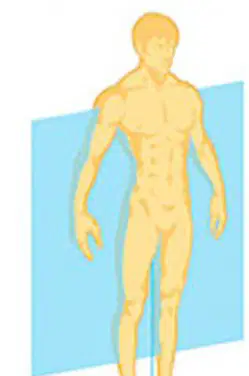
Which anatomical plane divides the body into front and back halves?
Frontal (Coronal) plane
Sagittal plane
Transverse plane
Oblique plane
Which of the following is NOT a movement associated with the transverse/horizontal plane?
Pronation
Supination
Rotation
Flexion
Which of the following movements occur around the frontal/lateral/coronal axis?
Flexion and Extension
Abduction and Adduction
Rotation and Circumduction
Pronation and Supination
Which type of joints are the suture joints in the skull?
Cartilaginous
Synovial
Fibrous
Cranial
Turning your hand over to receive money is an example of what type of movement?an example of
pronation
abduction
supination
adduction
A ligamentous connection, such as that between the bones of the lower leg, is called a
syndesmosis
synchondrosis
synostosis
symphysis
gomphosis
A slightly movable joint is a(n) (a)

A
Condylar
B
Saddle Joint
C
Ball-and-socket joint
Which is NOT a function of synovial fluid?
Lubricates the articulating cartilage.
Acts as a shock absorber.
Nourishes the chondrocytes.
Keeps the bones from being pulled apart.
Medial rotation is rotation TOWARDS the midline.
True
False


When kicking a football the knee
Flexes
Extends
Abducts
Adducts
An example of a Saddle joint is in the
Knee
Hip
Thumb
Vertebral column

