
 Worksheets
Microbiology Ch. 14/15
Total questions: 90
Worksheet time: 45mins
Which of the following definitions is incorrect?
Acute - a short-lasting primary infection
Primary infection - an initial illness
Inapparent - infection characteristic of a carrier state
Secondary infection - a long-lasting illness
Chronic - a disease that develops slowly and lasts for months
Gastroenteritis acquired from roast beef is an example of
Vector.
Direct contact.
Droplet transmission.
Fomite.
Vehicle transmission.
Which one of the following is NOT a zoonosis?
Cat-scratch disease
Rabies
All of these are zoonoses.
Tapeworm
Hantavirus pulmonary syndrome
One effect of washing regularly with antibacterial agents is the removal of normal microbiota. This can result in
Fewer diseases.
Increased susceptibility to disease.
Body odor.
No bacterial growth because washing removes their food source.
Normal microbiota returning immediately.
Which of the following can contribute to postoperative infections?
Errors in aseptic technique
Using syringes more than once
Antibiotic resistance
Normal microbiota on the operating room staff
All of these
Koch observed Bacillus anthracis multiplying in the blood of cattle. What is this condition called?
Systemic infection
Bacteremia
Local infection
Septicemia
Focal infection
Plague transmitted by a flea is an example of
Droplet transmission.
Vehicle transmission.
Vector.
Fomite.
Direct contact.
A sexually transmitted disease is an example of
Droplet transmission.
Vehicle transmission.
Fomite.
Vector.
Direct contact.
A needlestick is an example of
Droplet transmission.
Vector.
Direct contact.
Vehicle transmission.
Fomite.
Which of the following is NOT a reservoir of infection?
A healthy person
All of these can be reservoirs of infection.
A hospital
A sick person
A sick animal
Which of the following is NOT a communicable diseases?
Tuberculosis
Typhoid fever
AIDS
Tetanus
Malaria
Which of the following is a fomite?
A hypodermic needle
Droplets from a sneeze
Insects
Water
Pus
Which of the following statements about biological transmission is false?
The pathogen may require the vector as a host.
The pathogen may be injected by the bite of the vector.
Houseflies are an important vector.
The pathogen reproduces in the vector.
The pathogen may enter the host in the vector's feces.
A nosocomial infection is
Acquired during the course of hospitalization.
Always caused by medical personnel.
Only a result of surgery.
Always caused by pathogenic bacteria.
Always present but is inapparent at the time of hospitalization.
Which one of the following statements is false?
The M in MRSA stands for mannitol.
USA300 accounts for most community-acquired MRSA.
Antimicrobial therapy for hemodialysis-associated infections increases antibiotic resistance.
S. aureus is differentiated from other mannitol+ cocci by the coagulase test.
USA100 accounts for most hospital-acquired MRSA.
Which of the following definitions is incorrect?
Epidemic - fraction of the population having a disease at a specified time
Incidence - number of new cases of a disease
Endemic - a disease that is constantly present in a population
Sporadic - a disease that affects a population occasionally
Pandemic - a disease that affects a large number of people in the world in a short time
Which of these infections can cause septicemia?
Focal infection
Bacteremia
Systemic infection
Septicemia
Local infection
Influenza transmitted by an unprotected sneeze is an example of
Vector.
Vehicle transmission.
Droplet transmission.
Fomite.
Direct contact.
Which one of the following does NOT contribute to the incidence of nosocomial infections?
Lack of handwashing
Lapse in aseptic techniques
Lack of insect control
Formation of biofilms
Gram-negative cell walls
Which of the following pairs is mismatched?
All of these are correctly matched.
Syphilis - direct contact
Influenza - droplet infection
Malaria - vector
Salmonellosis - vehicle transmission
Symptoms of disease differ from signs of disease in that symptoms
Are specific for a particular disease.
Always occur as part of a syndrome.
Are changes observed by the physician.
Are changes felt by the patient.
None of these.
Mechanical transmission differs from biological transmission in that mechanical transmission
Requires direct contact.
Involves fomites.
Doesn't require an arthropod.
Doesn't involve specific diseases.
Doesn't work with noncommunicable diseases.
Which of the following statements is true?
At least one member must benefit in a symbiotic relationship.
Symbiosis refers to different organisms living together and benefiting from each other.
A parasite is not in symbiosis with its host.
Symbiosis refers to different organisms living together.
Members of a symbiotic relationship cannot live without each other.
Which of the following statements about M protein is false?
It is heat- and acid-resistant.
It is a protein.
It is found on fimbriae.
It is found on Streptococcus pyogenes.
It is readily digested by phagocytes.
Which of the following does NOT contribute to a pathogen's invasiveness?
Ligands
Capsule
Hyaluronidase
Toxins
Cell wall
The most frequently used portal of entry for pathogens is the
Skin.
All are used equally.
Mucous membranes of the respiratory tract.
Mucous membranes of the gastrointestinal tract.
Parenteral route.
Most pathogens that gain access through the skin
Can penetrate intact skin.
Enter through hair follicles and sweat ducts.
Must adhere first while their invasive factors allow them to penetrate.
Just infect the skin itself.
Must be injected.
Which of the following statements about staphylococcal enterotoxin is false?
It is produced by Staphylococcus aureus growing in the host's intestines.
It causes vomiting.
It is a superantigen.
It causes diarrhea.
It is an exotoxin.
Botulism is caused by a proteinaceous exotoxin; therefore it can easily be prevented by
Preventing fecal contamination of food.
Filtering food.
Administering antibiotics to patients.
Not eating canned food.
Boiling food prior to consumption.
Which of the following does NOT contribute to the symptoms of a fungal disease?
Capsules
Allergic response of the host
Toxins
Metabolic products
Cell walls
Nonpathogenic Vibrio cholerae can acquire the cholera toxin gene by
Conjugation.
Infecting a pathogenic Vibrio cholerae.
Transformation.
Phagocytosis.
Transduction.
A needlestick is an example of which portal of entry?
Skin
All of these
None of these
Mucous membranes
Parenteral route
Which of the following diseases is NOT usually contracted by the respiratory route?
Pneumonia
All of these are usually contracted by the respiratory route.
Tuberculosis
Whooping cough
Infectious hepatitis
Which of the following is NOT a cytopathic effect of viruses?
Inclusion bodies forming in the cytoplasm or nucleus
Cell death
Toxin production
Increased cell growth
Host cells fusing to form multinucleated syncytia
Pseudomonas aeruginosa produces a two-part exotoxin. The most likely pathologic effect of this toxin is
Flaccid paralysis.
The bacteria will be able to grow in phagocytes.
Inhibition of protein synthesis.
Tetani or lockjaw.
A red rash.
Which of the following cytopathic effects is cytocidal?
Giant cells
Inclusion bodies
Antigenic changes
Transformation
Release of enzymes from lysosomes
Which of the following is NOT a membrane-disrupting toxin?
Streptolysin O
A-B toxin
Streptolysin S
Hemolysin
Leukocidin
Which of the following is NOT used by bacteria for attachment to a host?
Fimbriae
M protein
Capsules
A-B toxin
Ligands
In response to the presence of endotoxin, phagocytes secrete tumor necrosis factor. This causes
A decrease in blood pressure.
The disease to subside.
A fever.
An increase in red blood cells.
A gram-negative infection.
Endotoxins in sterile injectable drugs could cause
No damage, because they are sterile.
Infection.
Septic shock symptoms.
Nerve damage.
Giant cell formation.
Which of the following statements about exotoxins is generally false?
They are more potent than endotoxins.
They are not destroyed by heat.
They are composed of proteins.
They are produced by gram-positive bacteria.
They have specific methods of action.
Symptoms of protozoan and helminthic diseases are due to
All of these.
None of these.
Tissue damage due to growth of the parasite on the tissues.
Waste products excreted by the parasite.
Products released from damaged tissues.
Septic shock due to gram-positive bacteria is caused by
Membrane-disrupting toxins.
Erythrogenic toxin.
A-B toxins.
Lipid A.
Superantigens.
Poliovirus is ingested and gains access to tissues by which portal of entry?
Skin
Parenteral
Mucous membranes
None of these
All of these
Thirty-two people in San Francisco who ate jackfish caught at Midway Island developed malaise, nausea, blurred vision, breathing difficulty, and numbness from 3 to 6 hours after eating. The most likely cause of this food intoxication is
Cholera toxin.
Aflatoxin.
Staphylococcal enterotoxin.
Ciguatera.
A mycotoxin.
Patients developed inflammation a few hours following eye surgery. Instruments and solutions were sterile, and the Limulus assay was positive. The patients inflammation was due to
Exotoxin.
Viral infection.
Cant tell.
Endotoxin.
Bacterial infection.
Siderophores are bacterial proteins that compete with animal
Transferrin.
Red blood cells.
White blood cells.
Antibodies.
Receptors.
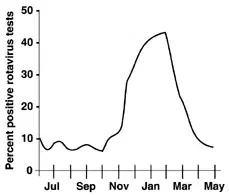
In Figure 14.2, what is the endemic level of rotavirus infections?
The month of January
Approximately 10%
0%
Approximately 20%
35%
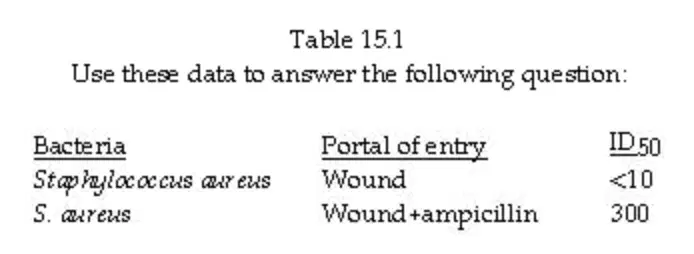
The administration of ampicillin before surgery
Has no effect on risk of infection.
Replaces tetracycline.
Can't tell.
Increases the risk of staphylococcal infection.
Decreases the risk of staphylococcal infection.
A cold transmitted by a facial tissue is an example of
Vehicle transmission.
Droplet transmission.
Fomite.
Vector.
Direct contact.
Legionellosis transmitted by a grocery store mist machine is an example of
Direct contact.
Vector.
Fomite.
Vehicle transmission.
Droplet transmission.
Which type of infection can be caused by septicemia?
Local infection
Viremia
Focal infection
Systemic infection
Bacteremia
Situation 14.1
During a 6-month period, 239 cases of pneumonia occurred in a town of 300 people. A clinical case was defined as fever ≥39°C lasting >2 days with three or more symptoms (i.e., chills, sweats, severe headache, cough, aching muscles/joints, fatigue, or feeling ill). A laboratory-confirmed case was defined as a positive result for antibodies against Coxiella burnetii. Before the outbreak, 2000 sheep were kept northwest of the town. Of the 20 sheep tested from the flock, 15 were positive for C. burnetii antibodies. Wind blew from the northwest, and rainfall was 0.5 cm compared with 7 to 10 cm during each of the previous 3 years.
In Situation 14.1, the etiologic agent of the disease is
Wind.
Pneumonia.
Coxiella burnetii.
Sheep.
Soil.
The yeast Candida albicans does not normally cause disease because of
Other fungi.
Parasitic bacteria.
Symbiotic bacteria.
Antagonistic bacteria.
Commensal bacteria.
Pseudomonas bacteria colonized the bile duct of a patient following his liver transplant surgery. This is an example of a
Latent infection.
None of these.
Sporadic disease.
Nosocomial infection.
Communicable disease.
A commensal bacterium
May be an opportunistic pathogen.
Does not receive any benefit from its host.
Does not infect its host.
Is beneficial to its host.
Is beneficial to its host and Does not infect its host only.
Haemophilus bacteria require heme protein produced by Staphylococcus bacteria. This is an example of
Antagonism.
Synergism.
Competitive exclusion.
Parasitism.
Commensalism.
Which of the following statements about nosocomial infections is false?
They are caused by normal microbiota.
They are caused by drug-resistant bacteria.
They are caused by opportunists.
They occur in compromised patients.
The patient was infected before hospitalization.
Which of the following diseases is NOT spread by droplet infection?
Tuberculosis
Botulism
Measles
Common cold
Diphtheria
Which one of the following is NOT an example of microbial antagonism?
Bacteria occupying host receptors
Bacteriocin production
Bacteria producing vitamin K
Acid production by bacteria
Bacteria causing disease
The major significance of Koch's work was that
Microorganisms cause disease.
Microorganisms can be cultured.
Microorganisms are the result of disease.
Diseases can be transmitted from one animal to another.
Microorganisms are present in a diseased animal.
Antibiotics can lead to septic shock if used to treat
Gram-positive bacterial infections.
Protozoan infections.
Viral infections.
Helminth infestations.
Gram-negative bacterial infections.
The mechanism by which gram-negative bacteria can cross the blood-brain barrier?
Producing fimbriae
Inducing endocytosis
Inducing TNF
All of these
Producing toxins
Which of the following CANNOT be used for adherence?
Lipoproteins
Capsules
Glycoproteins
Cell membrane mannose
Fimbriae
Which of the following organisms does NOT produce an exotoxin?
Staphylococcus aureus
Clostridium botulinum
Clostridium tetani
Salmonella typhi
Corynebacterium diphtheriae
Which of the following does NOT contribute to the virulence of a pathogen?
Numbers of microorganisms that gain access to a host
Toxins
Enzymes
All of these contribute to a pathogen's virulence.
Cell wall
Cytopathic effects are changes in host cells due to
Fungal infections.
Bacterial infections.
Helminthic infections.
Protozoan infections.
Viral infections.
Gram-negative septic shock results from the following events. What is the second step?
Fever occurs.
Body temperature is reset in the hypothalamus.
IL-1 is released.
Phagocytes ingest gram-negative bacteria.
LPS is released from gram-negative bacteria.
Injectable drugs are tested for endotoxins by
Filtering out the cells.
The Limulus amoebocyte lysate test.
Counting the viable bacteria.
Looking for turbidity.
Culturing bacteria.
Bacteria that cause periodontal disease have adhesins for receptors on streptococci that colonize on teeth. This indicates that
Bacteria that cause periodontal disease adhere to gums and teeth.
Bacteria that cause periodontal disease adhere to teeth.
Streptococci get bacterial infections.
Streptococci cause periodontal disease.
Streptococcal colonization is necessary for periodontal disease.
Which organism most easily causes an infection?




Can't tell
Which is a method of avoiding phagocytosis?
Inducing TNF
Producing toxins
Inducing endocytosis
Producing fimbriae
Producing iron-binding proteins
The ID50 is a
Measure of pathogenicity.
Dose that will kill some of the test population.
Dose that will kill 50% of the test population.
Dose that will cause an infection in 50% of the test population.
Dose that will cause an infection in some of the test population.
Koch's postulates don't apply to all diseases because
Not all diseases are caused by microorganisms.
Some microorganisms can't be observed.
Some microorganisms can't be cultured in laboratory media.
Some microorganisms don't cause the same disease in laboratory animals.
Some microorganisms cause different symptoms under different conditions.
Transient microbiota differ from normal microbiota because transient microbiota
Cause diseases.
Are acquired by direct contact.
Are found in a certain location on the host.
Are present for a relatively short time.
Never cause disease.
The most likely mode of transmission of pneumonic plague between humans is
Vehicle transmission.
Droplet transmission.
Direct contact.
Vector.
Fomite.
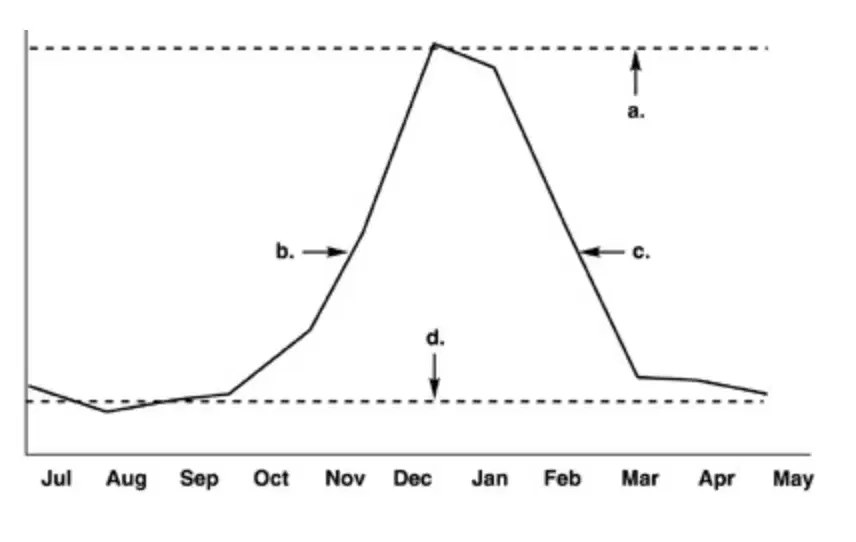
Figure 14.1 shows the incidence of influenza during a typical year. Which letter on the graph indicates the endemic level?
a
b
c
d
Situation 14.1
During a 6-month period, 239 cases of pneumonia occurred in a town of 300 people. A clinical case was defined as fever ≥ 39°C lasting >2 days with three or more symptoms (i.e., chills, sweats, severe headache, cough, aching muscles/joints, fatigue, or feeling ill). A laboratory-confirmed case was defined as a positive result for antibodies against Coxiella burnetii. Before the outbreak, 2000 sheep were kept northwest of the town. Of the 20 sheep tested from the flock, 15 were positive forC. burnetii antibodies. Wind blew from the northwest, and rainfall was 0.5 cm compared with 7 to 10 cm during each of the previous 3 years.
Situation 14.1 is an example of
Human reservoirs.
A vector.
A focal infection.
A nonliving reservoir.
A zoonosis.
The science that deals with when diseases occur and how they are transmitted is called
Morbidity and mortality.
Communicable disease.
Epidemiology.
Ecology.
Public health.
Emergence of infectious diseases can be due to all of the following EXCEPT
Microbes trying to cause disease.
Travel.
Digging up soil.
Climatic changes.
Antibiotic resistance.
Situation 14.1
During a 6-month period, 239 cases of pneumonia occurred in a town of 300 people. A clinical case was defined as fever ≥39°C lasting >2 days with three or more symptoms (i.e., chills, sweats, severe headache, cough, aching muscles/joints, fatigue, or feeling ill). A laboratory-confirmed case was defined as a positive result for antibodies against Coxiella burnetii. Before the outbreak, 2000 sheep were kept northwest of the town. Of the 20 sheep tested from the flock, 15 were positive for C. burnetii antibodies. Wind blew from the northwest, and rainfall was 0.5 cm compared with 7 to 10 cm during each of the previous 3 years.
In Situation 14.1, the method of transmission of this disease was
Vehicle.
Indirect contact.
Droplet.
Vector-borne.
Direct contact.
A cell wall can increase a bacterium's virulence because cell wall lipid A
Is toxic.
Resists phagocytosis.
All bacteria have a cell wall and all are not pathogenic; therefore, cell walls do not contribute to virulence.
Helps the bacterium attach.
Destroys host tissues.
Which of the following statements is false?
Kinase destroys fibrin clots.
Coagulase destroys blood clots.
Leukocidins destroy neutrophils.
Hyaluronidase breaks down substances between cells.
Hemolysins lyse red blood cells.
Which of the following organisms causes the most severe disease?



Can't tell

Endotoxins are
Associated with gram-positive bacteria.
A-B toxins.
Specific in their method of action.
Excreted from the cell.
Part of the gram-negative cell wall.
Lysogenic bacteriophages contribute to bacterial virulence because bacteriophages
Carry plasmids.
Produce toxins.
Give new gene sequences to the host bacteria.
Kill human cells.
Kill the bacteria causing release of endotoxins.
Which of the following is NOT considered entry via the parenteral route?
Hair follicle
Injection
Bite
Surgery
Skin cut
Which of the following is NOT a method of avoiding host antibodies?
Antigenic change
IgA protease
Inducing endocytosis
Membrane-disrupting toxins
Invasins
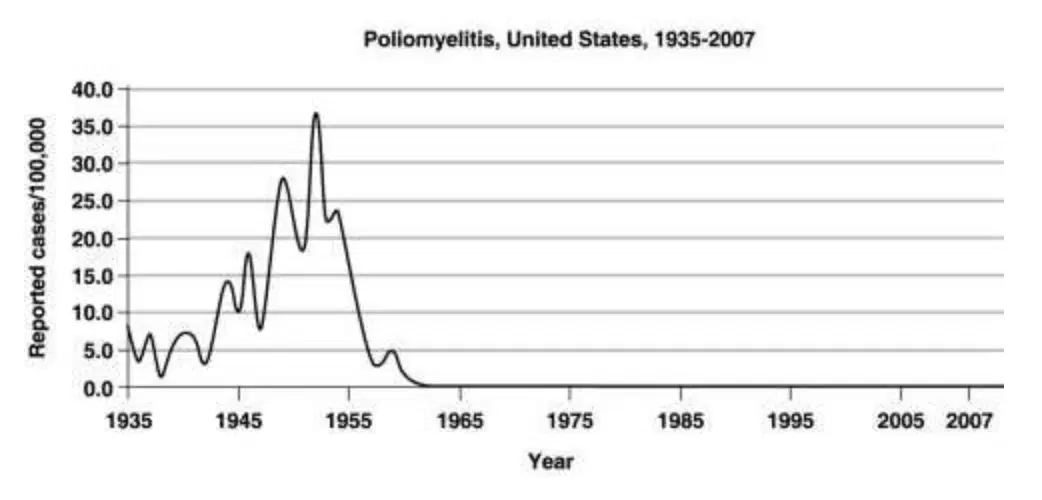
The graph in Figure 14.3 shows the incidence of polio in the United States. The period between 1945 and 1955 indicates
A pandemic.
An epidemic level.
A sporadic infection.
A communicable disease.
An endemic level.
Cholera toxin polypeptide A binds to surface gangliosides on target cells. If the gangliosides were removed,
Polypeptide A would enter the cells.
Polypeptide B would not be able to enter the cells.
Polypeptide A would bind to target cells.
Vibrio would bind to target cells.
Vibrio would not produce cholera toxin.

