
 Worksheets
The Animal Body & Principles of Regulation Review Game
Total questions: 94
Worksheet time: 47mins
Which of these is not part of loose connective tissue?
collagen
elastin
reticulin
chondroitin
adipose cells
Which of these neuron structures is usually the longest?
cell body
dendrite
axon
In adult vertebrates,which of these is not one of the four principle kinds of primary tissues?
epithelial
connective
supportive
muscle
nerve
In humans, which of these structures is not made of cartilage?
tip of the nose
outer ear
intervertebral disks of the backbone
knee cap
larynx
Homeostasis is maintained using negative feedback loops. Changing conditions are detected in which part of a negative feedback loop?
response
effector
sensor
integrating center
stimulus
For most enzymes, the Q10 value is around
0.2
2
5
10
20
Which of these methods of heat transfer is not relevant to biological systems?
radiation
conduction
convection
evaporation
reflection
Animals that allow their body temperature to conform to the environment are termed
heterotherms
homeotherms
isotherms
poikilotherms
endotherms
Mammalian thermoregulation depends on monitoring of blood temperature by the
hypothalamus
peripheral blood vessels
adrenal medulla
anterior pituitary gland
thyroid
Bone cells can remain alive even though the extracellular matrix becomes hardened with crystals of calcium phosphate. This type of cell is also called a(n)
osteocyte
erythrocyte
leukocyte
fibrocyte
chrondrocyte
Which of the following is not one of the levels of organization in the vertebrate body?
cells
bones
tissues
organs
organ systems
Which of the following is not one of the principal kinds of tissues in vertebrates?
Connective
epithelial
cartilage
muscle
nerve
Which of the following are the fundamental embryonic tissues called the "germ layers"?
tissues, organs, and organ systems
mesoderm, muscle, and tissue
ectoderm, endoderm, and exoskeleton
mesoderm, endoderm, and ectoderm
mesoderm, exoderm, and hydroderm
Epithelial tissues perform all of the following functions except they
produce glands that secrete materials.
protect from dehydration or mechanical damage
provide a selectively permeable barrier
provide a structural framework for other tissues
provide sensory surfaces
Which of the following defines homeostasis?
The ability of the body or a cell to seek and maintain stability within its internal environment
A chemical reaction within a living organism that makes energy available for its use
A system that sends immediate and specific information as electrical impulses
The kidneys, ureters, urethra and urinary bladder make up the:
Kidney System in invertebrates.
Nervous System in aquatic sponges
Excretory System which regulates body fluids
Diabetes is a disease in which the blood glucose level can get very high. What is NOT functioning properly in a person with diabetes?
thermoregulation
nervous system
blood system
negative feedback mechanism
The chemicals made in one organ that travel to other parts of the body to control certain activities are called -
glands
glucose
insulin
hormones
Epithelial cells with a flattened, irregular shape and tapered edges are known as ____________ cells
columnar
protoderm
squamous
stratified
tile
Which epithelial tissue has more than one layer of flattened cells?
simple squamous
stratified squamous
transitional
simple columnar
A single layer of tall, skinny epithelial cells would be best described as
simple cuboidal epithelium
simple columnar epithelium
simple squamous epithelium
stratified columnar epithelium

The tough protein that gives hair, nails, and the outer layers of skin its strength is
keratin
melanin
chromatin
dermatin


The glands of vertebrates are derived from ____________ epithelium.
invaginated
simple stratified
stratified squamous
simple columnar
squamous keratinized
If the connection between the gland and the epithelial membrane is maintained as a duct, the gland is called a(n) ___________ gland.
exocrine
endocrine
lymph
gonadal
muscular
Which of the following would not provide protection to the epidermis?
keratinized epithelium
simple squamous epithelium
stratified squamous epithelium
layers of dead squamous cells
Which of the following epithelial tissues would be likely found in the kidney tubules?
cuboidal
squamous
cuboidal and squamous
columnar
pseudostratified columnar
Which of the following epithelial tissues secretes mucous and is dense with cilia?
cuboidal
squamous
cuboidal and squamous
columnar
pseudostratified columnar
The tissue type that produces tough coverings that package organs is
loose connective tissue
dense irregular connective tissue
collagen
dense regular connective tissue
adipose
Which of the following is considered a similarity between all connective tissues?
all originate as embryonic mesoderm
all contain abundant organic extracellular matrix
all contain inorganic matrix
all contain mast cells
Which connective tissue has a matrix that is fluid?
bone
blood
cartilage
dense connective tissue
loose connective tissue
All of the following statements about bone and its structure are correct except
bone is an organic extracellular matrix of collagen fibers and calcium phosphate crystals.
bone tissue is not living since it contains calcium phosphate crystals.
bone tissue is a bone tissue serves as a reservoir for calcium and phosphate ions form of connective tissue.
bone tissue is a special form of connective tissue.
bone marrow is a site for blood cell formations.
In mammals and some reptiles, the coelom is divided into two cavities. These cavities are called the
thoracic cavity and the peritoneal cavity.
thoracic and the pleural cavities.
thoracic and the cardiac cavities.
peritoneal and the pleural cavities.
peritoneal and the cardiac cavities.
Which of the muscle types have intercellular connections which allow coordinated contractions between them?
just cardiac muscle
just smooth muscle
cardiac and smooth muscle
cardiac and skeletal muscle
cardiac, smooth, and skeletal muscle
Which of the following systems are not directly involved in communication and integration sense and respond to the environment?
the nervous system
the immune system
the sensory system
the endocrine system
Which of the following systems are not directly involved with regulation and maintenance of the body's chemistry?
he digestive system
the circulatory system
the respiratory system
the urinary system
the endocrine system
Which of the following systems is most likely to function as a defense system?
the integumentary system
the musculoskeletal system
he endocrine system
the sensory system
the nervous system
If the set point of the hypothalamus were to suddenly rise to 40C (as in the induction phase of a fever), what would the initial response of the body be?
glands release sweat
muscles contract, shiver
nothing
body temperature drops
blood vessels dilate
The characteristic that makes the muscle cells unique is the relative abundance and organization of
collagen fibers
gelatinous mass
actin and myosin fibers
keratin fibers
fibroblast cells
The muscles that are attached to the bones by tendons, and when they contract cause the bones to move at their joints, are called
smooth muscles
skeletal muscles
cardiac muscles
cartilage tissues
adipose tissues
Which of the following are also known as striated muscles?
skeletal and smooth
just cardiac
just skeletal
skeletal and cardiac
skeletal, smooth, and cardiac
The cells that are specialized to produce and conduct electrochemical impulses are called
neurons
dendrites
axons
fibroblasts
epithelial cells
Bone cells are called
dendrites
erythrocytes
chondrocytes
osteocytes
fibroblasts
Which muscle contraction is involuntary?
cardiac
smooth
cardiac and smooth
skeletal
cardiac, smooth, and skeletal
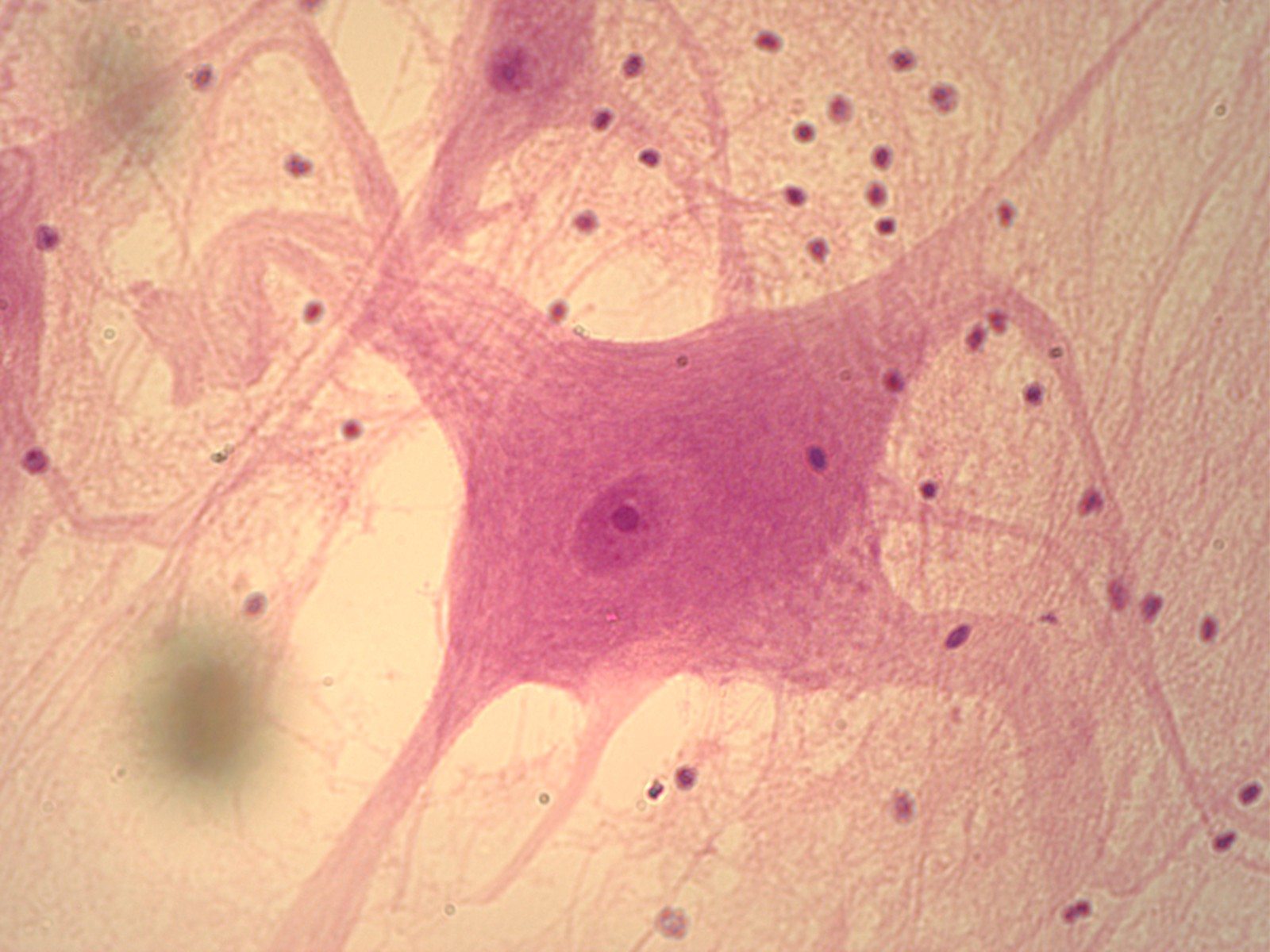
The nucleus of a neuron is contained in the
axon branches
companion cell.
cell body
dendrites
myelin sheath
Epithelial membranes are not very thick because
epithelial tissues cannot support other cells growing on top of the tissue.
epithelial tissues are nourished by blood vessels in adjacent tissues, thus diffusion is limited to thin tissues.
epithelial tissues can only reach a certain level of thickness because of their pre-programmed cell growth.
epithelial tissues that are much greater than a few cell layers in thickness collapse because of drying conditions caused by the environment.
epithelial tissues are not able to grow past several cell layers because of an interrupted cell cycle which occurs after several complete cell cycles.
The type of cells that line the lungs and blood vessels are
simple squamous epithelium
simple cuboidal epithelium.
simple columnar epithelium
stratified squamous epithelium.
keratinized squamous epithelium
Loose connective tissues contain all of the following types of cells or fibers except
macrophages
mast cells
adipose cells
collagen fibers
chondrocytes
Cartilage is composed of
glycoproteins and calcium phosphate.
glycoproteins and collagen fibers.
collagen fibers and osteocytes
osteocytes and glycoproteins
osteocytes and calcium phosphate
Myelin sheaths are found along
axons
dendrites
neuroglias
cell bodies
ganglia
Your professor asks you to explain the difference between a tendon and a ligaments. Which choice will you use as your answer?
Tendons secure muscles to muscles and ligaments secure bones to other bones.
Both tendons and ligaments essentially have the same function, it just depends on what area of the body that is being referenced.
Tendons secure muscles to bones and ligaments secure muscles to other muscles.
Tendons are just enlarged ligaments.
Tendons secure muscles to bones and ligaments secure bones to other bones.
Which of these is not a method used by ectothermic vertebrates to affect body temperature?
countercurrent heat exchange
basking in the sun
changing heart rate
dilation or contraction of blood vessels
increasing metabolic rate
Which of these thermoregulation processes can be sustained for the longest period of time?
shivering
torpor
nonshivering thermogenesis
hibernation
fever
Which of these factors would have the least effect on heat transfer processes in animals?
surface area of the body
difference between body temperature and ambient temperature
internal insulation such as blubber
external insulation such as feathers or fur
bone density
Which of these animals has the highest metabolic rate per unit body mass?
shrew
mouse
cat
human
elephant

A peripheral nerve ending, specialized for response to particular types of stimuli; molecule that binds specifically with other molecules
Control Center
Receptor
Effector

Organ, gland or muscle capable of being activated by nerve endings
Control Center
Receptor
Effector

(a) feedback mechanisms is feedback that chases the stimulus to decline or end

(a) feedback mechanics are feedback that tends to cause a variable to change in the same direction as the initial change; enhances the stimulus
Which component of the homeostatic system detects change?
Effector
Control Center
Stimulus
Receptor
Which is an example of an effector?
Pancreas detecting an increase in blood glucose.
Drop in blood oxygen.
Salivary glands increasing their release of saliva.
Regulating blood pressure when you go from laying down to standing.
This name means that there are multiple layers of cells
Simple
Stratified
Columnar
Pseudostratified

Name the tissue
Pseudostratified
Simple columnar
Transitional
Stratified Squamous
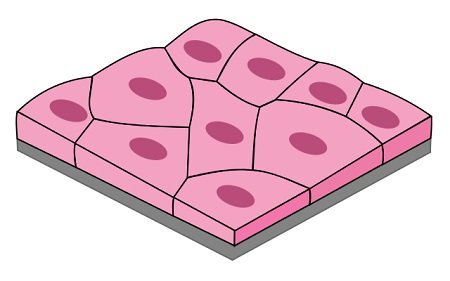
Name the type of epithelium
simple cuboidal
simple squamous
simple columnar
stratified squamous
A form of connective tissue in which the cells are specialized for the synthesis and storage of energy-rich reserves of fat, or lipid.
Hyaline cartilage
Adipose tissue
Connective tissue
Areolar tissue
What type of muscle is/are voluntary?
smooth and cardiac
smooth
skeletal and smooth
skeletal
Which of these connects bone to bone?
tendon
ligament

