
 Worksheets
Group-2_LIAO 2025
Total questions: 90
Worksheet time: 45mins
Passive Sensors take energy which Sun emits.
Yes
No
Geostationary orbit (GEO).
Low stationary orbit (LSO).
High Earth orbit (HEO).
Low Earth orbit (LEO).
Low Earth orbit (LEO).
Low stationary orbit (LSO).
Geostationary orbit (GEO).
Polar Earth orbit (PEO).
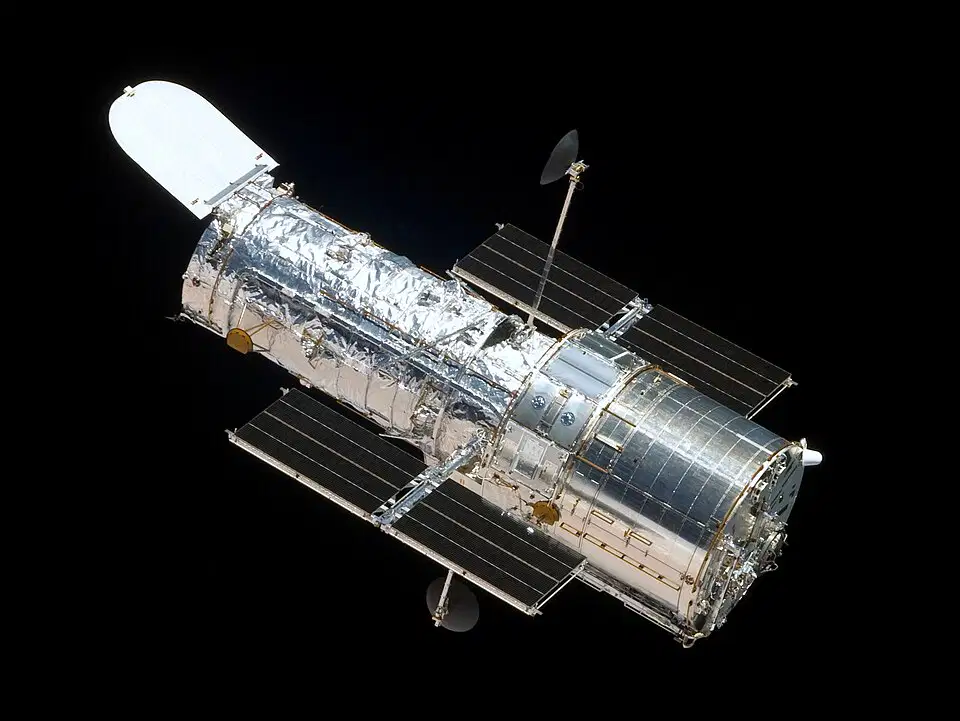
Hubble Space Telescope is which kind of Satellite?
Astronomical satellite
Navigational Satellite
Earth Sensing Satellite
Space Satellite
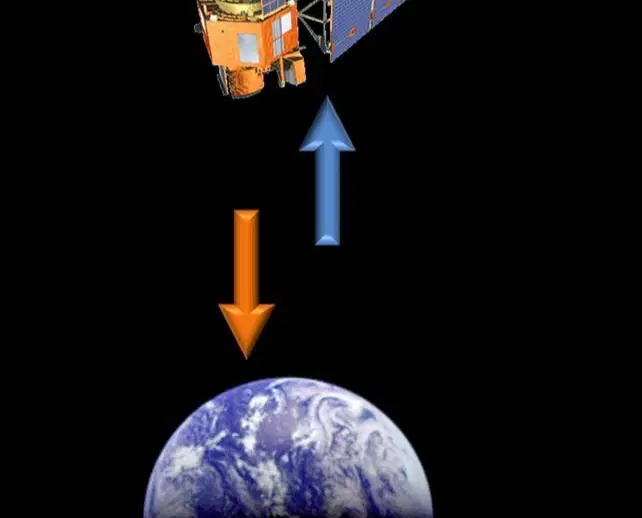
Which type of sensing this image depicts?
Remote
Active
Passive
None of these
What is the key characteristic of horizontal motion in projectile motion?
Variable velocity
Upward acceleration
Circular motion
Constant velocity
What is the optimal angle of release for maximum range in projectile motion?
90 degrees
30 degrees
45 degrees
60 degrees
Describe the shape of the path followed by a projectile.
Circle
Parabola
Square
Hyperbola
What does the aeroshell do?
Prevents burning
Helps in safe landing
Helps in breathing
No role

What was the date of the first moon landing?
July 4, 1985
July 20, 1969
August 1, 1950
June 4, 1973

If a meteoroid enters Earth’s atmosphere and starts burning, it is called _______
Meteorite
Meteor
Asteroid
Comet
What is the name of the space telescope that was designed to search for exoplanets? And in what year was it launched?
Kepler in 1999
Exodetector in 2009
Kepler in 2009
Hubble in 1999

Since 2018, Kepler space telescope's position is taken by
Hubble Space Telescope
James Webb Telescope
Venera
TESS
Which is an ideal location for settlement
Mare Crisium
Tycho Crater
Coopernicus Crater
Shakelton Crater
The series of Lunar Missions are called?
Apollo Missions
Apollo 11 missions
Lunar Mission
Chandrayaan
True or False: The winds on Mars sometimes create dust storms that can cover the entire planet.
True
False
How long did Mangalyaan take to reach Mars after its launch in 2013?
What is the name of the helicopter that flew on Mars with the Perseverance rover?
According to General Relativity, what happens to light as it passes close to a massive object like a star?
What does General Relativity state about gravity?
Gravity is caused by the Moon
Gravity is caused by the curvature of space-time
Gravity is caused by the rotation of the Earth
Gravity is a force as described by Newtonian physics
Measured by stationary observers only.
Observed when objects travel near the speed of light.
Observed when objects move backward in time.
Observed when any object moves.
What percent of the Universe is made of DARK MATTER and DARK ENERGY?
95%
15%
10%
5%
Who found out that galaxies are moving away from us and the universe is expanding?
Arno Penzias
Edwin Hubble
Henrietta Swan Leavitt
Robert Wilson
What is Dark Matter made up of?
Atoms, Electrons, Neutrons
Neutrinos, WIMPS ,MACHOS
Both of these
Not known
Who was Fritz Zwicky?
Russian Astronomer
American Astronomer
Canadian Astronomer
None of these
An individual with scientific research knowledge who aims to spread scientific knowledge in simplified manner is known as
Engineer
Science Communicator
Astronaut
Astronomer
An individual who examines and validates the accuracy of the data is known as
Research Analyst
Research Scientist
Pharmacist
Chemist
Engineers who work on every aspect of aircraft and spacecraft designing are known as
Bioengineers
Chemical Engineers
Mechanical Engineers
Aerospace Engineers
Astrology is consider a pseudo-science.
TRUE
FALSE

Who is the father of modern Astrology?
Tycho Brahe
Galileo Galile
Holster
Alan Leo
The solar calendar is based upon the Earth rotating around the moon.
True
False
The path of the Sun around the Earth is known as (a)
What is the Russian word for an astronaut?
Cheburashka
Luntik
Cosmonaut
Astronaut

Why was America worried about Russia's satellite launch?
If Russia could launch a satelite into space they could send a nuclear missile at the US
the satellite was really a nuclear bomb
Russian spies had stolen American satellite secrets
Russia would use the satellite to spy on America
The Space Race began in _____.
1999
1925
1955
2001
The private organisation to make the first reusable rocket was_______.
Blue Origin
SpaceX
NASA
iSpace
The Kepler telescope has discovered how many planets?
2056
3765
2740
2000
Gagarin traveled in a spacecraft named
VOSTOK I
Apollo 11
Sputnik I
Explorer 1

The United States launched its own artificial satellite, _______ into space in 1958.
Explorer I
Sputnik
India will become the _______ country to achieve human spaceflight capabilities with Gaganyaan.
Fourth
Third
Second
First
What is the expected duration of the Gaganyaan mission?
1 day
10 days
3-7 days
2 weeks
Which of the following was supported by the Space Race?
Computer Technology
Pharmacology
Zoology
Spaceship Detailing
An electron has which type of charge?
Positive
Negative
Neutral
None of the above
What is the name of a well-known meteor shower that peaks in August each year?
Pleiades
Autumn Shower
Parsi Shower
Perseids
What is the main challenge of eating food in space?
Food floats away due to microgravity
Food tastes better in space
Food becomes too hot to eat
Food spoils faster in space
Coming back from space:
It's great, they immediately return to their lives
It's difficult, they are so weak they have to exercise more
They cannot go back to space again ever, it's too dangerous
They immediately start preparing for their next missions in space

How does exercising in space compare to exercising on Earth?
Astronauts have to use less equipment to add resistance in space.
Astronauts have to exercise for a longer period of time each day to stay strong.
Astronauts have to work out for less time to get the desired results.
Astronauts do not need to exercise while in space.
Why do astronauts experience taste changes in space?
Because of the food packaging.
Due to fluid shifts in the body.
Due to the lack of sunlight.
Because of the space suits.
Over long periods in space, muscle mass and bone density can decrease by ____ Percent.
10
15
20
25
What is the name of the space telescope that was designed to search for exoplanets? And in what year was it launched?
Kepler in 1999
Exodetector in 2009
Kepler in 2009
Hubble in 1999

Jovian and Neptunian are __________ type of exoplanets.
Terrestrial
Gas giants
Both
None of the above
Techniques used by satellites to image the Earth.
Remote Sensing
Virtualization
Sampling
Virtual machine
Our sun is known as a middle-aged, stable star. Also known as a ____________________.
Gas Giant
Nebula
Pulsar
Main Sequence Star


Identify the name of the scientist.
Isaac Newton
Stephen Hawkins
Aristotle
Albert Einstein
Name the smallest black hole.
Miniature black hole
Super massive black hole
Stellar black hole
None of these

Which of the following list the correct order of the life cycle of most massive stars?
Nebula --> protostar --> main sequence --> red supergiant --> supernova --> blackhole
Nebula --> protostar --> main sequence --> red giant --> planetary nebula --> white dwarf --> black dwarf
Nebula --> protostar --> main sequence --> supernova --> red giant --> blackhole
Nebula --> protostar --> blackhole --> red supergiant --> supernova --> main sequence


Which moon phases is this?
Waxing Gibbous
Waning Crescent
Waxing Crescent
Waning Gibbous

What is this moon phase called?
First Quarter
Last Quarter
Waxing Half
Waning Half
The distance that light travels in one year is called:
A light year
A light ray
An astronomical unit
AU

Objects appear to shift location based on the angle its being viewed.
Heliocentric
Geocentric
Parallax

Which item best describes the “Goldilocks Zone”?
The uninhabitable zone within a solar system.
The habitable zone within a solar system.
The area on a planet that may support life.
The area in a biosphere that can support life.
Value of 'g' is measured in
Cm/sec^2
m/hr^2
m/sec^2
Km/hr^2
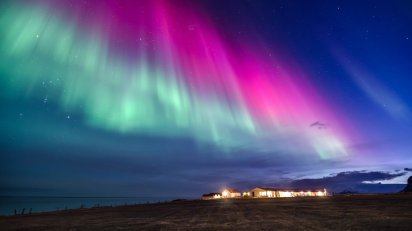
From which of these countries won't you be able to see the aurora borealis?
Alaska
Canda
Iceland
Australia
Which element is primarily responsible for the green color in auroras?
Oxygen
Nitrogen
Helium
Hydrogen
What layer of the atmosphere do auroras take place?
Exosphere
Thermosphere
Troposphere
Ozone Layer
What acts as a shield against solar wind on Earth?
Earth's atmosphere
Earth's oceans
Earth's magnetosphere
Earth's crust

How many times does the ISS orbit the Earth in one day?
1
20
16
5

At what speed does the ISS travel through space?
120 km/h
12 km/h
1 000 km/h
27 700 km/h
What is the shape of the Van Allen Belts?
What are the Van Allen Belts primarily composed of?
Earth is like a giant magnet due to........
Its liquid iron core
The wind patterns of Coriolis Effect
The alignment of the continents
None of these
The angular difference between the true meridian and the magnetic meridian is called ______.
Deviation
Variation
Error
True course
Which space agency collaborated with ISRO on the NISAR mission?
What is the name of the Indian mission to study the Sun?

Which space telescope was launched in 2021 and is revolutionizing our view of the universe?

