
 Worksheets
Ob Practice 1
Total questions: 71
Worksheet time: 36mins
Hydatidiform Mole is defined as:
An abnormal growth of trophoblastic tissue in the uterus resulting from abnormal fertilization.
A benign tumor of the ovary.
A type of uterine fibroid.
A malignant tumor of the cervix.
Tocolytic drugs are defined as:
Drugs that suppress premature labor
Drugs that induce labor
Drugs that treat hypertension
Drugs that relieve pain
PROM/PPROM is defined as:
Premature rupture of membranes/preterm premature rupture of membranes
Postmature rupture of membranes/preterm postmature rupture of membranes
Partial rupture of membranes/partial preterm rupture of membranes
Persistent rupture of membranes/persistent preterm rupture of membranes
Which type of abortion is characterized by spotting, cervical os remains closed, and mild cramping?
Threatened
Inevitable
Incomplete
Septic
Which type of abortion involves moderate to heavy bleeding, mild to severe cramping, and cervical dilation?
Missed
Inevitable
Complete
Septic
Which type of abortion may present with moderate to heavy bleeding, mild to severe cramping, and passage of tissue?
Incomplete
Complete
Threatened
Missed
Which type of abortion is described as slight bleeding, mild cramping, all tissue is passed and cervix closed?
Complete
Incomplete
Septic
Inevitable
Which type of abortion is characterized by the fetus having died but POC remain in the uterus for days, weeks, or months, usually with no bleeding or cramping, and cervix remains closed?
Missed
Threatened
Septic
Complete
Which type of abortion is associated with fever, abdominal pain, and malodorous vaginal bleeding?
Septic
Incomplete
Inevitable
Threatened
Which medication is given to contract the uterus after a dilation and curettage procedure?
Pitocin
Aspirin
Metformin
Diazepam
Which medication is used to open the cervix and contract the uterus, and may cause cramping, nausea, vomiting, and diarrhea?
Misoprostol (Cytotec)
Ibuprofen (Advil)
Metformin (Glucophage)
Loratadine (Claritin)
Which of the following is a risk factor for ectopic pregnancy?
Past surgery on the fallopian tubes
High blood pressure
Diabetes
Asthma
Which of the following is a risk factor for ectopic pregnancy?
Prior STI or other tubal infection
Heart disease
Obesity
Migraine
Which of the following is a risk factor for ectopic pregnancy?
Smoking
Allergies
Anemia
Arthritis
What are the three most classic diagnostic symptoms of ectopic pregnancy before rupture?
Abdominal pain, delayed menses, abnormal vaginal bleeding
Fever, cough, night sweats
Headache, blurred vision, dizziness
Chest pain, palpitations, shortness of breath
Ectopic pregnancy is diagnosed with which of the following methods?
Blood pressure measurement
Transvaginal ultrasound and HCG level
MRI scan
X-ray
Which medication is given intramuscularly to dissolve an ectopic pregnancy?
Methotrexate
Misoprostol
Oxytocin
Mifepristone
How long does it usually take for methotrexate to dissolve an ectopic pregnancy?
2-3 weeks (but may take 6-8 weeks)
1-2 days
6-12 months
12-24 hours
What are the two surgical options for managing an ectopic pregnancy in the fallopian tube?
Salpingectomy or salpingostomy
Hysterectomy or oophorectomy
Myomectomy or endometrial ablation
Tubal ligation or uterine artery embolization
Fill in the blank: Hydatidiform mole is a benign proliferative growth in which chorionic villi grow into _________
grape-like clusters
solid nodules
fibrous bands
cystic spaces
Fill in the blank: Hydatidiform mole is possibly caused by abnormal fertilization without a _________.
viable fetus
placenta
zygote
ovum
Fill in the blank: A characteristic finding on transvaginal ultrasound in hydatidiform mole is a ________ pattern.
snowstorm
honeycomb
ground-glass
cobblestone
Fill in the blank: Hydatidiform mole is associated with a high level of ________.
HCG
FSH
LH
Progesterone
Fill in the blank: Management of molar pregnancy usually requires ______.
D+C
Hysterectomy
Chemotherapy
Observation
Fill in the blank: In molar pregnancy management, monitor HCG until normal for 3 weeks, then monthly for ______ months.
6-12
3-6
1-3
12-18
Fill in the blank: Follow up after molar pregnancy lasts for at least ______ to monitor for gestational trophoblastic disease (more invasive mole).
a year
a month
six weeks
three days
Fill in the blank: ________ is a hypertensive disorder that is a common cause of indicated preterm birth.
Preeclampsia
Gestational diabetes
Placenta previa
Hyperemesis gravidarum
Physiological changes that occur in pregnancy include:
Increased blood volume and cardiac output
Decreased metabolic rate
Reduced renal blood flow
Lowered hormone levels
Fill in the blank: Pregnancy tests (serum and urine) are based on the recognition of _______.
hCG
LH
FSH
TSH
Fill in the blank: The placenta acts as an endocrine organ and secretes ________.
Progesterone
Insulin
Adrenaline
Thyroxine
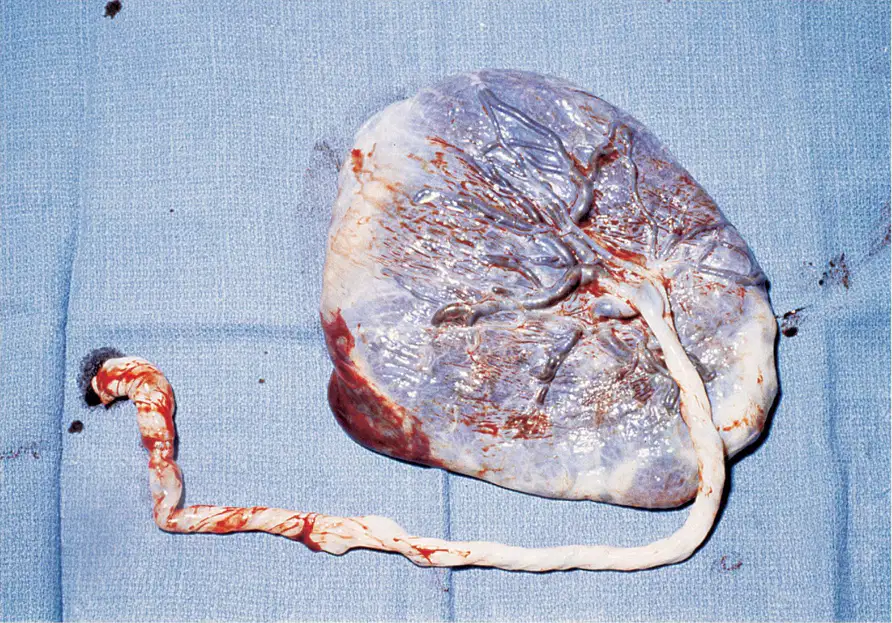
Look at the image below. Which side of the placenta is shown in the image?
Maternal side (Dirty Duncan)
Fetal side (Shiny Shultz)
Lateral side
Inferior side
What surrounds the umbilical cord?
Wharton's jelly
Amniotic fluid
Placental villi
Chorionic plate
What is the function of Wharton's jelly in the umbilical cord?
Provides sensory innervation
Protects blood vessels and prevents compression of the cord
Supplies oxygen directly to the embryo
Forms the circulatory pathway to the embryo
One of the functions of amniotic fluid is to provide ______ for protection.
cushions
heat
nutrients
oxygen
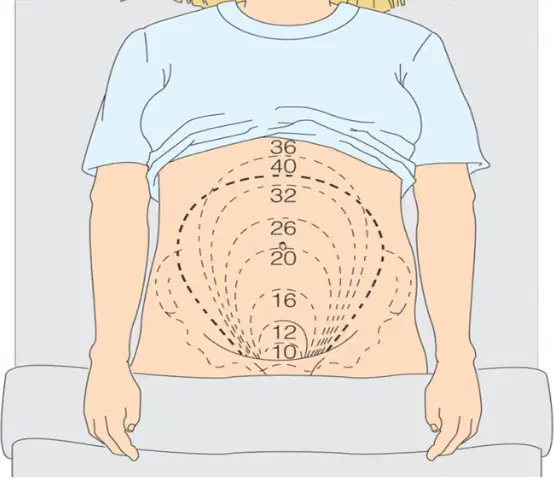
What does the term 'fundal height' refer to in pregnancy?
The distance from the top of the uterus to the pubic bone
The distance from the top of the uterus to the top of the mother's head
The distance from the baby's head to the mother's feet
The distance from the mother's navel to her back
What is ptyalism? (Fill in the blank: Ptyalism is excessive ________.)
salivation
urination
perspiration
defecation
Fill in the blank: Increased blood volume (40-45% increase) and heart rate are examples of physiologic changes. Fluid often results in ______ of the extremities.
edema
atrophy
cyanosis
calcification
What is the main focus of Level 1: Primary Prevention in STI prevention?
Preventing problems before they occur (Immunizations)
Treating existing infections to prevent complications
Providing counseling for those already infected
Monitoring and reporting STI cases
What is the main focus of Level 2: Secondary Prevention in STI prevention?
Early detection (Screening for STIs)
Providing vaccination against STIs
Promoting abstinence and safe sex practices
Offering rehabilitation for STI complications
What is the main focus of Level 3: Tertiary Prevention in STI prevention?
Treatment and prevention of worsening disease (Education on medications for HIV)
Screening and early detection of STIs
Promotion of safe sexual practices to prevent STIs
Vaccination against common STIs
What can happen if you stop taking antibiotics when you feel better?
You will recover faster
It contributes to antibiotic resistance
It has no effect
It prevents yeast infections
Fill in the blank: Antibiotics may cause ______ infections because they can wipe out normal flora in GI and GU tracts.
yeast
viral
parasitic
bacterial
Consuming products with active acidophilus cultures, such as some yogurts, milks, and cheeses, can help prevent what side effect of antibiotics?
Yeast infections
Headaches
High blood pressure
Joint pain
Which of the following is a bacterial STI?
Chlamydia
Influenza
HIV
Chickenpox
Which of the following is a bacterial STI?
Gonorrhea
Measles
Herpes
Hepatitis B
Which of the following is a bacterial STI?
Syphilis
Mumps
HPV
Rubella
What is the most frequently reported sexually transmitted infection (STI)?
Gonorrhea
Chlamydia
Syphilis
Herpes
Fill in the blank: Infections caused by Chlamydia are often ______ and highly destructive.
silent
painful
obvious
short-lived
What is the recommended management for Chlamydia during pregnancy?
Penicillin
Azithromycin 1g orally in a single dose
Tetracycline
Amoxicillin
At what week should pregnant women be rescreened for Chlamydia if they tested positive for any STIs at the first visit or are high-risk?
12 weeks
24 weeks
36 weeks
40 weeks
What is the causative agent of Syphilis?
Neisseria gonorrhoeae
Treponema pallidum
Chlamydia trachomatis
Herpes simplex virus
Symptoms of Syphilis differ based on the ______ of the disease.
stage
treatment
location
severity
Which tests are used for the initial screening of Syphilis?
ELISA and Western Blot
VDRL and RPR
PCR and Culture
Rapid Antigen Test
According to ACOG (The American College of Obstetricians and Gynecologists), every pregnant woman is tested for which of the following early in pregnancy?
Chlamydia, gonorrhea, and syphilis
HIV and hepatitis
Diabetes and hypertension
Influenza and measles
Which types of HPV are most commonly associated with the development of cancer?
Types 1 and 2
Types 6 and 11
Types 16 and 18
Types 31 and 33
Which of the following is a symptom of HPV?
Postcoital bleeding
Abdominal pain
Vomiting
Dizziness
What causes macrosomia?
Maternal hyperglycemia
Which is a risk factors for gestational diabetes?
Previous Cesarian
Advanced age
What color is a normal cervix at 12 weeks of pregnancy?
When should a pregnant patient be tested for Group B Strep?
Morning sickness leads to which electrolyte imbalance?
A patient is predicted to have a premature delivery, which medication should be given to help with possible respiratory issues in the infant?
What is the action of terbutaline in pregnancy?
What does GTPAL stand for?
What is a sentinel event?
What is the most common type of yeast infection?
describe a patient with candidiasis
What is first line treatment for gonorrhea?
What is first line treatment for syphillis?
Which supplement helps with iron absorption?
What is first line treatment for genital herpes?
Acyclovir, Valacyclovir
Acetominophen
Metronidazole

