
 Worksheets
Alcohol Awareness Worksheet
Total questions: 65
Worksheet time: 33mins
A person is legally impaired at which BAC level?
0.02%
0.08%
0.15%
0.05%
Teens who drink, buy alcohol, or use fake identification in your state can face which of the following penalties?
Automatic acceptance into college
No penalties at all
Fines, community service, license suspension, and possible jail time
Only a verbal warning from police
One factor that contributes to the way alcohol affects different people is:
Shoe size
Body weight
Favorite drink
Eye color
Males typically feel the effects of alcohol more slowly than females because:
they metabolize alcohol faster than females.
they have a lower tolerance to alcohol.
they drink alcohol less frequently than females.
they generally have a higher percentage of body water, which dilutes alcohol more effectively.
Select the option that lists two phrases you could use to say no if someone offers you alcohol.
(a)
The attitudes of your family members and friends toward alcohol can influence your own views about alcohol use. Which of the following best explains this influence?
Family and friends' attitudes can shape your own perspective on alcohol use.
Personal attitudes are never influenced by others' views on alcohol.
Only friends' attitudes matter, not family members'.
Attitudes toward alcohol are always formed independently of social influences.
Alcohol is not measured by the amount of liquid in one drink because:
The size of the glass determines the alcohol content.
All drinks have the same amount of alcohol regardless of type.
Different types of drinks contain varying concentrations of alcohol.
Alcohol evaporates quickly in all drinks.
Binge drinking is different from moderate drinking because:
Binge drinking involves consuming a large amount of alcohol in a short period, while moderate drinking means consuming alcohol in low to moderate amounts.
Binge drinking is recommended for good health, while moderate drinking is not.
Binge drinking is safer than moderate drinking.
Binge drinking means drinking only water, while moderate drinking means drinking alcohol.
Define: alcohol poisoning
A dangerous condition that results when a person drinks excessive amounts of alcohol in a short period of time, leading to potentially life-threatening symptoms.
A mild headache caused by drinking alcohol.
A condition where alcohol makes a person sleepy.
A situation where a person becomes more energetic after drinking alcohol.
Alcohol is sometimes used by people to cope with negative feelings or mental health conditions. What is a healthier strategy that could be used instead?
Seeking support from a mental health professional
Ignoring the problem
Isolating oneself from others
Drinking more alcohol
Define: Alcoholics Anonymous (AA)
A type of alcoholic beverage.
A support group for people who want to stop drinking alcohol.
A medical treatment for alcohol poisoning.
A government agency regulating alcohol sales.
More alcohol-related deaths than usual occur on holidays. Which of the following is a likely reason for this connection?
Lower social gatherings during holidays
Increased alcohol consumption during holidays.
Which of the following is a possible symptom of a fetal alcohol spectrum disorder?
heart conditions
decreased muscle tone and poor coordination
delayed development
All of the above.
Define: depressant
A mineral found in bones.
A substance that increases heart rate and alertness.
A substance that slows down the central nervous system.
A type of vitamin essential for growth.
One symptom of a hangover caused by excessive alcohol use is:
Lowered heart rate
Increased energy
Improved concentration
Dehydration
The stages of substance use and what each stage might look like for someone using alcohol are:
Dependence is the first stage, followed by experimentation and then addiction.
Experimentation, regular use, risky use, dependence, and addiction, with each stage showing increasing frequency and negative consequences.
Name two support groups for people who have a family member with an AUD.
Mothers Against Drunk Driving and Alcoholics Anonymous
Narcotics Anonymous and Gamblers Anonymous
Overeaters Anonymous and SMART Recovery
Al-Anon and Alateen
Consuming how many drinks qualifies as binge drinking?
1 drink
2 drinks
10 drinks
5 or more drinks
How does alcohol affect the body, especially the brain?
It improves memory and concentration.
It can impair brain function and damage organs over time.
It has no effect on the body or brain.
It increases physical strength permanently.
Eating shortly before or while consuming alcohol impacts alcohol’s effect on a person by:
Increasing the intoxicating effects of alcohol
Slowing the absorption of alcohol into the bloodstream
Preventing any effect of alcohol
Causing alcohol to be metabolized faster
Define: alcohol
A type of carbohydrate found in fruits and vegetables.
A stimulant drug found in coffee and tea that increases alertness.
A protein found in meat and dairy products.
A depressant drug found in beverages such as beer, wine, and liquor that affects the central nervous system.
Alcohol can lessen inhibitions. Which of the following is an example of a behavior that might change as a result?
Becoming more talkative and outgoing
Improving memory and concentration
Feeling more tired and sleepy
Becoming less coordinated and balanced
Define: blood alcohol concentration (BAC)
The rate at which the body metabolizes food.
The number of red blood cells in a person's body.
The percentage of alcohol in a person's bloodstream.
The amount of sugar in a person's blood.
One area of the brain affected by alcohol consumption is the cerebellum. Alcohol’s immediate effects on this part of the brain include impaired coordination and balance. Which area of the brain is affected and what is one immediate effect?
Medulla; increased alertness
Occipital lobe; enhanced vision
Frontal lobe; improved memory
Cerebellum; impaired coordination and balance
Alcohol use increases a person’s risk of being in an accident because:
it improves focus and alertness.
it increases physical strength.
it impairs judgment and slows reaction time.
it enhances coordination and balance.
How can alcohol, a liquid, dehydrate the body?
Alcohol increases urine production, leading to dehydration.
Alcohol directly absorbs water from the bloodstream.
Alcohol adds water to the body, preventing dehydration.
Alcohol turns into a solid in the body, causing dehydration.
The active chemical compound in alcohol is:
Propanol
Methanol
Butanol
Ethanol
Define: alcohol use disorder (AUD)
A medical condition characterized by an inability to control alcohol use despite negative consequences.
A disorder that only affects teenagers.
A temporary feeling of happiness after consuming alcohol.
A condition where a person is allergic to alcohol.
A disease of the liver marked by degeneration of cells, inflammation, and fibrous thickening of tissue, often caused by chronic alcohol abuse.
cirrhosis
hepatitis
jaundice
pancreatitis
A substance that slows down the central nervous system.
depressant
stimulant
hallucinogen
anabolic steroid
The percentage of alcohol in a person's bloodstream.
Blood Alcohol Concentration (BAC)
Blood Pressure Level
Blood Sugar Content
Blood Oxygen Saturation
Alcohol increases urine production, leading to dehydration.
True
False
What is the active chemical compound in alcohol?
Methanol
Isopropanol
Acetone
Ethanol
A medical condition characterized by an inability to control alcohol use despite negative consequences.
Alcoholism
Alcohol poisoning
Cirrhosis
Withdrawal
Alcohol is classified as which type of drug?
Stimulant
Depressant
Hallucinogen
Narcotic
Which celebrity died due to alcohol-related reasons and had a history of using alcohol and other drugs?
Dwayne Johnson
Ariana Grande
Taylor Swift
Amy Winehouse
Define: cirrhosis
A genetic disorder characterized by the inability to metabolize phenylalanine.
A viral infection that affects the lungs and causes difficulty in breathing.
A liver disease often caused by chronic alcohol abuse, resulting in scarring and impaired liver function.
Consuming how many drinks qualifies as binge drinking?
Typically 5 or more drinks for males, 4 or more drinks for females in about 2 hours.
Any amount of alcohol consumed in a week.
One drink per day for a month.
Ten or more drinks in a single day.
Alcohol affected the person physically, mentally and emotionally, and socially in which of the following ways?
It impacted their body, mind, emotions, and social interactions.
It only affected their physical health.
It improved their mental and emotional well-being.
It had no effect on their social life.
A zero-tolerance policy in relation to underage drinking and driving means:
Only repeat offenders are punished for underage drinking and driving.
Any detectable amount of alcohol in drivers under 21 is illegal.
Underage drivers are allowed to drink if accompanied by an adult.
Underage drivers can have up to 0.08% BAC.
Define: alcohol use disorder (AUD)
A medical condition characterized by an impaired ability to stop or control alcohol use despite negative social, occupational, or health consequences.
A condition where a person is allergic to alcohol.
A temporary feeling of euphoria after consuming alcohol.
Which of the following best describes what arguments you would make for your assigned side?
Ignoring the assigned side and arguing the opposite
Only listing facts without taking a side
Making arguments unrelated to the topic
Presenting points that support your assigned position
Teens who drink alcohol might be more likely to have conflicts with their parents or guardians because:
they are more likely to do well in school
alcohol makes them more agreeable
alcohol can impair judgment and increase risky behaviors
they have more free time than other teens
Which of the following is a key component to include in a news report about your own DUI incident?
Exclude any quotes from the arresting officer.
Describe all of the facts about the incident, including your BAC.
Focus solely on the weather conditions during the incident.
Only mention your name and the date of the incident.
More alcohol-related deaths than usual occur on holidays. Which of the following is a healthy decision you can make on holidays to avoid the risk factors associated with heavy drinking, binge drinking, and alcohol use disorder?
Plan safe transportation if you drink alcohol
Encourage friends to binge drink with you
Drink as much as possible to celebrate
Your family history can influence your risk of developing AUD. How does having a family history of AUD affect your risk?
It guarantees you will develop AUD.
It increases your risk of developing AUD.
It has no effect on your risk of AUD.
It decreases your risk of developing AUD.
Identify two support groups for people who have a family member with an AUD.
Mothers Against Drunk Driving and Alcoholics Anonymous
SMART Recovery and Celebrate Recovery
Narcotics Anonymous and Gamblers Anonymous
Al-Anon and Alateen
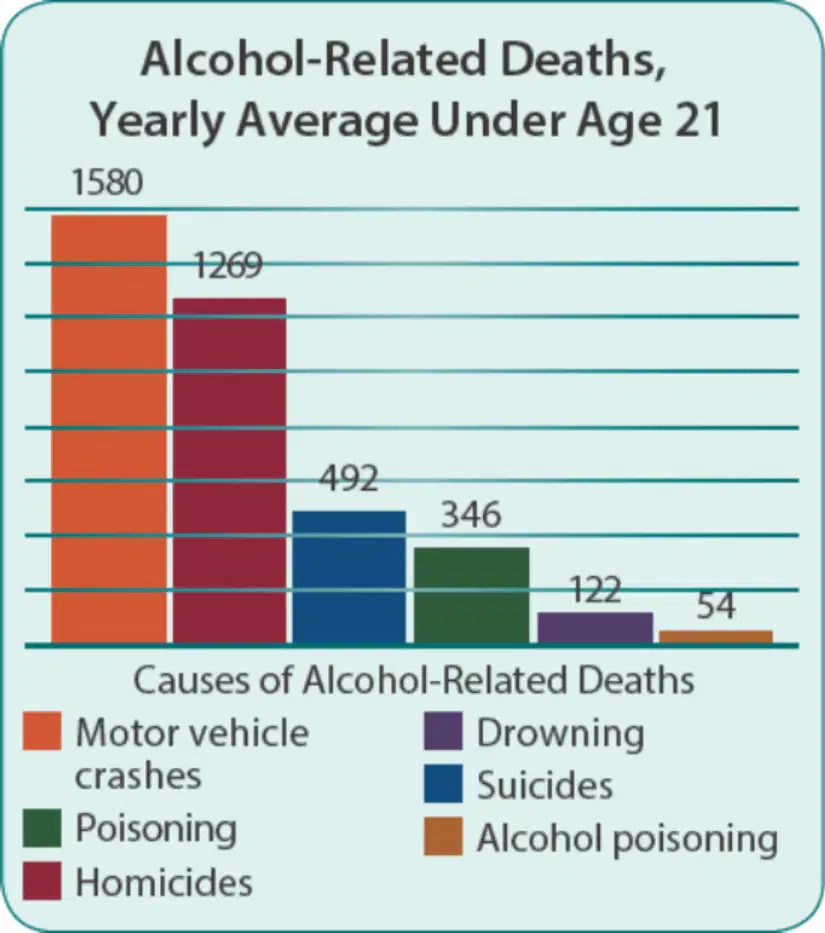
What was the total number of alcohol-related deaths among people under age 21 in this study? Round to the nearest hundred.
6000
4400
5100
3200
Define: inhibition
A physical reaction to extreme cold, such as shivering.
A feeling that makes one self-conscious and unable to act in a relaxed and natural way, often reduced by alcohol consumption.
A sudden burst of energy experienced after drinking coffee.
A state of deep sleep characterized by rapid eye movement.
The attitudes of your family members and friends toward alcohol can influence your own views about alcohol use. Which of the following best describes this influence?
Attitudes toward alcohol have no impact on personal choices.
Your views about alcohol are never influenced by others.
Family and friends' attitudes can shape your own views about alcohol use.
Only friends' attitudes matter, not family.
In the US, companies are not allowed to advertise tobacco products on TV, radio stations, or billboards, but such advertising is allowed for alcoholic beverages. What is a likely reason for this difference in policy?
Alcohol is more addictive than tobacco.
Tobacco companies do not want to advertise on TV.
Alcohol advertising is banned in all countries.
Tobacco is considered more harmful to public health than alcohol.
What type of drug is alcohol?
hormone
depressant
stimulant
vasopressin
Alcohol addiction can have which of the following effects on a person’s family, friends, and community?
It can cause emotional, financial, and social problems for those around the addicted person.
It always leads to improved relationships and community support.
It has no impact on family, friends, or community.
It guarantees better health for everyone involved.
Which of the following is an example of a SMART goal that can help you stay alcohol free until you are 21 years old?
I will try to be a better person every day.
I will avoid all parties until I am 21.
I want to have fun with my friends whenever possible.
I will maintain a 3.5 GPA throughout high school so I can get into my preferred college, and I know drinking alcohol could interfere with my studies.
A medical condition characterized by an impaired ability to stop or control alcohol use despite negative social, occupational, or health consequences. Fill in the blank: _________.
Alcohol Use Disorder (AUD)
Diabetes Mellitus
Hypertension
Asthma
Presenting points that support your assigned position. Fill in the blank: _________.
Arguing
Summarizing
Listening
Questioning
Alcohol can impair judgment and increase risky behaviors. Fill in the blank: _________.
True
False
Sometimes
Never
Describe all of the facts about the incident, including your BAC. Fill in the blank: _________.
Report the incident fully
Leave out important details
Make up information
Ignore the BAC requirement
Plan safe transportation if you drink alcohol. Fill in the blank: _________.
Designate a driver or use public transportation
Drive yourself home quickly
Ignore the need for a plan
Rely on a friend who has also been drinking
It increases your risk of developing AUD. Fill in the blank: _________.
Drinking alcohol
Exercising regularly
Eating vegetables
Getting enough sleep
Al-Anon and Alateen. Fill in the blank: These are _________
Support groups for families and friends of alcoholics
Types of alcoholic beverages
Rehabilitation centers for alcoholics
Government agencies for alcohol regulation
A feeling that makes one self-conscious and unable to act in a relaxed and natural way, often reduced by alcohol consumption. Fill in the blank: _________.
Inhibition
Elation
Curiosity
Excitement
Tobacco is considered more harmful to public health than alcohol. Fill in the blank: _________.
True
False
Maybe
Not sure
Fill in the blank: Alcohol is classified as a _________?
Depressant
Stimulant
Vitamin
Mineral
It can cause emotional, financial, and social problems for those around the addicted person. Fill in the blank: _________.
Alcohol addiction
Vitamin deficiency
Seasonal allergies
Physical exercise

