
 Worksheets
all about plant
Total questions: 104
Worksheet time: 1hrs 9mins


these plants have a system of tubes to carry water and nutrients from the roots to the leaves
mosses
vascular
non-vascular
tropisms

these plants are non-vascular and seedless
mosses
ferns
conifers
flowering plants
ALL plants are
eukaryotic
prokaryotic
unicellular
mutlicellular
Mosses are non-vascular, which means they do not have
tissue
blood
chloroplast
tubes

Plants are called __________ because they can make their own food (choose all that apply)
heterotrophs
autotrophs
consumers
producers
Mosses and ferns are seedless so they reproduce by
cones
flowers
spores
pollen

This group of plants is vascular and seedless. They reproduce with spores under their fronds.
mosses
ferns
gymnosperms
angiosperms

This group of plants is vascular and has seeds in flowers or fruits.
mosses
ferns
gymnosperms
angiosperms
Plants NEED these to DO photosynthesis
water
oxygen
carbon dioxide
glucose
Seedless vascular plants have real roots, stems and leaves.
True
False
Vascular plants
produce seeds
are seedless
are leafless

This group of plants is vascular and has seeds in cones. The name means "naked seeds."
mosses
ferns
gymnosperms
angiosperms
This group of plants is vascular and has seeds in flowers or fruits.
mosses
ferns
gymnosperms
angiosperms

Flowering plants need pollinators. Pollination is important for what process?
photosynthesis
reproduction
respiration
tropisms
Tulips, daisies, sunflowers, apple trees, maple trees
mosses
ferns
gymnosperms
angiosperms
spruce, hemlock, fir, and pine trees
mosses
ferns
gymnosperms
angiosperms
Angiosperms have
flowers
naked seeds
cones
seed coats
Sieve tubes and companion cells are present in
Xylem
Phloem
Cork
Cambium
Xylem and phloem are examples of
Epidermal tissue
Simple tissue
Protective tissue
Complex tissue
Which of the following is a waxy substance that covers epidermal surfaces of plants?
Thorn
Lignin
Cutin
Sclereids
Which of the following is a complex tissue that transports water, minerals, and sugars to different parts of the plant?
Dermal tissue
Ground tissue
Permanent tissue
Vascular tissue
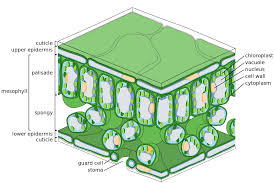
what is the function of cuticle?
protects the underlying tissues
transport water
transport mineral and nutrients
reduce loss of water through transpiration

what is the function of xylem tissue?
transports water and minerals salt
control the opening and closing of stoma
carry out photosynthesis
provide support for young plant

what is the function of phloem tissue?
transport water and minerals
support plants
photosynthesis process occur
transport organic nutrients

where lateral meristem or cambium can be found?
between xylem and phloem tissue
epidermis
between ground tissue
stem and root
What type of vascular tissue is responsible for transporting the sugars made in photosynthesis from the leaves to the roots?
Cuticle
Phloem
Stomata
Xylem
What is the function of xylem tissue?
Transports water and minerals salt
Control the opening and closing of stoma
Carry out photosynthesis
Provide support for young plant
Sieve tubes and companion cells are present in
(a)
The upward conduction of water and minerals by
phloem
cambium
xylem
epidermis
The only dead cells in phloem
companion
sieve
phloem fibres
phloem parenchyma
Which of the following is a type of bryophytes?
Conifers
Ferns
Angiosperms
Mosses
Which of the following is a type of bryophyte?
Pine
Moss
Seaweed
Fern
Which of the following is a type of pteridophyte?
Fern
Pine
Moss
Tulip
What is the main reproductive structure in bryophytes?
Stem
Gametophyte
Roots
Sporophyte
What is the main reproductive structure in pteridophytes?
sporangium
stamen
ovary
petal
Which of the following is true about the life cycles of bryophytes and pteridophytes?
Bryophytes have a dominant gametophyte stage, while pteridophytes have a dominant sporophyte stage.
Bryophytes and pteridophytes do not have distinct life cycles.
Bryophytes and pteridophytes have the same life cycle.
Bryophytes have a dominant sporophyte stage, while pteridophytes have a dominant gametophyte stage.
The haploid form of the life cycle of a plant, characterized by ‘alternation of generation’ is called
seed
embryo
sporophyte
gametophyte
Mosses and liverworts are called non-vascular plant because
they lack motile sperm
they lack seed
they lack vascular tissue
they lack true roots, stems and leaves

Which of the following statements is false?
Ferns are considered advanced over mosses because ferns have roots.
Ferns are seedless plants.
Ferns lack lignified vascular tissues.
The sporophyte generation of ferns is the dominant phase in their life cycle.
Pteridophytes are otherwise called
Nonvascular cryptogams
Vascular plants
Seedless vascular plants
None of these
All of the following are spore bearing vascular plants except:
club mosses
ferns
horsetails
rhizomes
A frond on a fern is known as a
leaf
root
stem
cone
Rhizomes are
leaves
roots
stems
cones

In this life cycle number 1 indicates:
The sporophyte
The gametophyte
Dipolid structures
Gametes

In this life cycle number 4 is the:
Gametophyte
Sporophyte
Gametes
Zygote

Which parts of this life cycle would be ASEXUAL reproduction
2, 3 and 4
6 and 7
1 and 6
just 4

Insects help in...
pollination.
fertilization.

Pollination occurs when pollen lands on the __________.
stigma.
style.

Pollen goes down towards the ovary through the ___________.
stigma.
style.

Pilstil is made up of...
stigma, style and ovary.
stigma, pollen and ovary.
style, ovules and ovary.

The pistil is the...
female reproductive organ.
female reproductive cell.


Which is the process of making new offspring?
respiration
circulation
adaptation
reproduction
The ovule develops into...
Flesh fruit
Seed
Female organ
Part of flowers
Pollination refers to-
Transfer of pollen grains from anther to ovary
Transfer of pollen grains from anther to ovules
Transfer of pollen grains from anther to stigma
Reproduction through spore formation takes place in -
Fern
Yeast
Algae
The process by which plants give rise to new plants without seeds is called-
Sexual reproduction
Asexual reproduction
Budding
Fusion of gametes form a fertilized egg which is also known as-
Seed
Zygote
Embryo
Which one of the following is NOT a type of asexual reproduction?
Budding
Pollination
Fragmentation
Male reproductive part of a flower is -
Spores
Pistil
Stamen

How are angsana seeds dispersed?
By wind
By animal
By splitting
By water
Why are angsana seeds able to be dispersed by wind?
It is light and has wing-like structure
It is juicy and edible
It has a fibrous husk that makes it float
It has dry pods that split open

How are coconut seeds dispersed?
By wind
By animal
By splitting
By water

Why are coconut seeds able to be dispersed by water?
It is light and has wing-like structure
It is juicy and edible
It has a fibrous husk that makes it float
It has dry pods that split open

How are shorea seeds dispersed?
By wind
By animal
By splitting
By water

How are bur seeds dispersed?
By wind
By animal
By splitting
By water

How are grape seeds dispersed?
By wind
By animal
By splitting
By water

