
 Worksheets
chapter 102.4-102.8
Total questions: 75
Worksheet time: 38mins
which area of science involves the study of the organs and systems of the body
myology
histology
anatomy
physiology
what is another name for histology
osteology
physiology
gross anatomy
microscopic anatomy
what three basic parts are found in most human cells
muscle, cytoplasm, cell membrane
nucleus, cytoplasm, cell membrane
muscle, protoplasm, cell membrane
nucleus, cytoplasm, connective tissue
most cell activity takes place in the
nucleus
stomach
cytoplasm
cell membrane
what is the name of the gel-like substance containing water, salt and nutrients that cells are composed of
cytoplasm
anabolism
protoplasm
metabolism
the process of building up larger molecules from small ones is
anabolism
catabolism
physiology
cell division
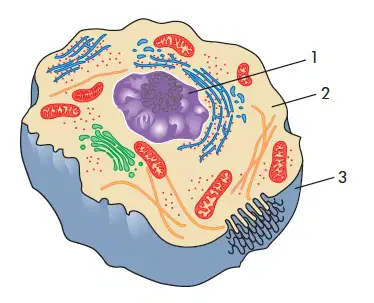
what does number 1 on this illustration of the cell indicate
tissue
nucleus
cytoplasm
cell membrane
what is the function of epithelial tissue
coordinate body functions
contract to produce motion
support, protect and hold the body together
cover and protect body surfaces and internal organs
which type of tissue coordinates body functions in addition to carrying messages to and from the brain and spinal cord
nerve
muscular
epithelial
connective
a separate body structure composed of two or more different tissues is an
organ
muscular
epithelial
connective
the purpose of the heart is to
digest food
circulate blood
control all body functions
supply the blood with oxygen
the stomach and which other organ are responsible for digesting food
brain
liver
kidneys
intestines
the organs responsible for removing toxic by products of digestion is the
liver
stomach
kidneys
intestines
organs that eliminate water and waste products are the
lungs
liver
stomach
kidneys
which of the following systems provides the framework and shape of the body
nervous
skeletal
muscular
endocrine
the point at which two or more bones are joined together is called a
joint
tendon
synapse
ligament
which system is the physical foundation of the body
skeletal system
muscular system
endocrine system
circulatory system
what is the technical name for bone
os
osteo
vomer
humerus
of the eight bones that compose the cranium, how many are affected by scalp massage
2
4
6
8
the bone the extends from the top of the eyes to the top of the head and forms the forehead is called the
frontal bone
parietal bone
temporal bone
occipital bone
the bone located behind the eyes and nose that connects all the bones of the cranium is known as the
frontal bone
ethmoid bone
occipital bone
sphenoid bone
the zygomatic bones are the two bones that form the
upper jaw
bridge of the nose
upper cheek and the bottom of the eye socket
front part of the inner, bottom wall of the eye socket
the smallest two bones of the facial skeleton that form the front part of the inner, bottom wall eye socket are called
nasal
maxillae
lacrimal
mandible
the seven bones that form the top part of the spinal column and are often manipulated in extended scalp massage are called the
thorax
scapula
sternum
cervical vertebra
the large, flat bone extending from the middle of the back upward to the joint where it attaches to the clavicle is called the
rib
scapula
sternum
humerus
the bone located on the little-finger side of the lower arm is the
ulna
hyoid
sternum
humerus
the 5 long, thin bones that form the palm of the hand are the
carpals
maxillae
phalanges
metacarpals
the thumb has how many phalanges
2
3
4
5
the outer and narrower of the 2 lower leg bones, extending from the knee to the ankle, is known as the
femur
fibula
patella
metatarsals
the 14 bones of the foot that form the digits are known as the
tarsals
patellas
phalanges
metatarsals
myology is the study of the structure, function and diseases of the
cells
organs
muscles
skeleton
muscle makes up approximately what percentage of the body's weight
10%-20%
20%-30%
40%-50%
60%-70%
the muscles that respond to commands regulated by will are referred to as
cardiac
striated
involuntary
non-straited
which of the following is NOT a part of the muscle
tibia
belly
origin
insertion
the midsection of the muscle is called the
belly
origin
cardiac
insertion
what term means "in front of"
anterior
inferior
superior
posterior
the frontalis and occipitalis muscles are joined by a tendon called the
procerus
auricular
aponeurosis
mentalis auricularis
which muscle is responsible for drawing down the brow and wrinkling the area across the bridge of the nose
risorius
mentalis
procerus
corrugator
the muscle that circles the mouth and is responsible for contracting, puckering and wrinkling the lips, as in kissing or whistling, is known as
caninus
mentalis
orbicularis oris
quadratus labii inferiors
the risorius is located at the corner of the mouth and draws the mouth up and out as in expression of
distaste
grinning
sarcasm
whistling
the muscle located between the jaws and cheek that is responsible for compressing the cheek to release air outwardly, as in blowing is called the
caninus
masseter
buccinator
temporalis
the muscle located above and in front of the ear that preforms both opening and closing the jaws in chewing is called
caninus
masseter
buccinator
temporalis
which muscle is used when nodding yes or no
platysma
trapezius
temporalis
sternocleidomastoid
the muscles located under the arm that helps in lifting the arm and in breathing is called
biceps
deltoid
serratus anterior
pectoralis major
the body system responsible for circulation of the blood including the heart arteries veins and capillaries is called the
nervous system
lymph-vascular system
cardiovascular system
integumentary system
when a salon professional preforms a massage treatment, what system is directly influenced and stimulated
digestive
excretory
endocrine
circulatory
the upper chambers of the heart include the
extensor
left ventricle
right ventricle
left and right atrium
what is the sticky salty fluid that circulates through the body bringing nourishment and oxygen to all parts of the body
blood
lymph
platelets
thrombocytes
what is another name for red blood cells
plasma
leukocytes
hemoglobin
erythrocytes
thick walled vessels that carry oxygenated blood from the heart to various tissues of the body are
veins
arteries
capillaries
lymph vessels
which blood vessels carry blood containing carbon dioxide from the capillaries back to the heart and lungs
veins
arteries
platelets
ventricles
which of the following are small vessels that take nutrients and oxygen from the arteries to the cells
veins
ventricles
capillaries
varicose veins
which arteries supply blood to the face head and neck
internal jugulars
external jugulars
posterior auriculares
common carotid arteries
the chin and lower lip are supplied with blood by which artery
angular
parietal
submental
superior labial
which artery supplies the side of the nose with blood
frontal
angular
superior labial
middle temporal
which of the following arteries supplies blood to the little finger side of the forearm
ulnar
radial
popliteal
anterior tibial
what is the artery called that supplies blood to the knee joint and muscles in the thigh and calf
popliteal
anterior tibial
dorsalis pedis
posterior tibial
what is the colorless liquid that travels through the lymph glands and vessels removing toxins along the way
blood
lymph
blood platelets
protein particles
a subsystem of the circulatory system responsible for releasing white blood cells to help develop immunity is known as the
nervous system
lymph-vascular system
cardiovascular system
integumentary system
which of the following list of components work in harmony to receive and interpret stimuli and send messages away from the nerve cell to the appropriate tissue muscles and organs
brain, spinal cord, nerves
brain, spinal cord ,and arteries
afferent, efferent, and mixed nerves
ophthalmic, maxillary and mandibular
which crucial part of the central nervous system is composed of long nerve fibers and originates in the base of the brain and extends to the base of the spine
spinal cord
facial nerve
trifacial nerve
trigeminal nerve
another name for a nerve cell is
neuron
dendrite
cytoplasm
axon terminal
motor nerves carry messages from the brain to the muscles and are called
sensory
afferent
efferent
receptor
the cranial nerve responsible for transmitting facial sensations to the brain is the
ulnar
facial
radial
trifacial
which of the following terms is the main nerve branch to the top one-third of the face
zygomatic
maxillary
ophthalmic
mandibular
which nerve extends to the lower eyelid, side of the nose, upper lip and mouth
mental
zygomatic
infraorbital
supraorbital
the posterior auricular, temporal and zygomatic are all branches of which nerve
buccal
facial
cervical
mandibular
which nerve extends to the muscle on the side of the neck
lesser occipital
greater occipital
greater auricular
cervical cutaneous
which nerve extends down the thumb side of the arm into the back of the hand
ulnar
radial
digital
median
the digestive, respiratory and circulatory systems are examples of the body systems operated by the
skeletal system
ophthalmic branch
voluntary nervous system
autonomic nervous system
which of the following is one of the primary functions of the respiratory system
intake of oxygen
elimination of urea
neutralization of ammonia
inhalation of carbon dioxide
what is the muscular organ that separates the chest cavity from the abdomen when breathing
lungs
pharynx
esophagus
diaphragm
hair growth, skin conditions and energy levels are all controlled by the
digestive system
excretory system
endocrine system
circulatory system
which system has the function of surrounding and protecting internal organs
skeletal system
endocrine system
circulatory system
respiratory system
long bones are found in the
legs
back
chest
skull

