
 Worksheets
Waves and Electromagnetic Radiation - Test Review
Total questions: 75
Worksheet time: 45mins
Aria is using a prism to separate white light into its different colors. She notices that the colors spread out in a rainbow pattern. Which of these statements describes what Aria observes about visible light? Choose the TWO that apply.
Red light has a longer distance between wave crests than blue light.
Yellow light has a shorter distance between wave crests than green light.
Blue light has a longer distance between wave crests than red light.
Blue light has a shorter distance between wave crests than orange light.
Orange light has a shorter distance between wave crests than violet light.
Sophia observes a rainbow after a rainstorm. What is the name of the process that causes light to bend when it moves from air to water?
absorption
amplification
reflection
refraction
Grace is using a prism to split sunlight into its different colors. She wants to know which color of visible light has the highest frequency. Which color should she choose?
Violet
Red
Yellow
Green
Arrange the following colors in order from highest to lowest frequency: Red, Yellow, Blue, Orange, Violet, Green, Indigo.
Violet, Indigo, Blue, Green, Yellow, Orange, Red
Red, Orange, Yellow, Green, Blue, Indigo, Violet
Blue, Green, Indigo, Violet, Red, Orange, Yellow
Yellow, Orange, Red, Green, Indigo, Blue, Violet
When Mark yells across a large empty hall, he hears his voice coming back to him. What causes this phenomenon?
The sound waves are absorbed by the walls.
The sound waves are reflected by the walls.
The sound waves travel faster in the hall.
The sound waves are scattered by the air.
David is at a swimming pool and notices how things look and sound different underwater compared to above the water. Describe how light and sound waves are affected when they move from air to water.
Both light and sound waves speed up when moving from air to water.
Light waves slow down and sound waves speed up when moving from air to water.
Light waves speed up and sound waves slow down when moving from air to water.
Both light and sound waves slow down when moving from air to water.
Electromagnetic waves are used in many technological devices. Which of the following is an example of how energy from electromagnetic waves is used in technology, and what wave property is important for that example?
Microwaves in microwave ovens; frequency is important for heating food.
Sound waves in radios; amplitude is important for tuning stations.
Water waves in hydroelectric dams; wavelength is important for generating electricity.
Seismic waves in GPS devices; speed is important for navigation.
Sam is designing a model of a longitudinal sound wave for her science classroom. Which of the following pieces of information should Sam include in his model? Choose the two statements that apply.
Sound must travel through a material (medium) to transfer energy.
Sound must travel through a vacuum to transfer energy.
Rarefaction and compression are properties of longitudinal waves.
Crests and troughs are properties of longitudinal waves.
What is the term for the distance a wave travels before repeating?
Frequency
Wavelength
Speed
Amplitude
Which property of a wave is defined as the distance a wave travels in a certain amount of time?
Frequency
Wavelength
Speed
Amplitude
Evelyn is standing by the shore, counting the number of waves that pass a rock in the water over a certain amount of time. What is the term for the number of waves that pass a given point in a certain amount of time?
Frequency
Wavelength
Speed
Amplitude
Which property of a wave is defined as half the vertical distance from the trough to the crest of a wave?
Frequency
Wavelength
Speed
Amplitude
How are light and sound waves affected when they move from air to water?
Their speed and direction may change due to the difference in medium.
They remain completely unchanged.
They disappear when entering water.
Only sound waves are affected, not light waves.
Which of the following is an example of how energy from electromagnetic waves is used in technology?
Microwaves heating food in a microwave oven.
Sound waves traveling through air.
Water waves moving in a pond.
Gravity pulling objects downward.
Why is wave property important when using electromagnetic waves in technology?
It determines how the wave interacts with materials and how it can be used for specific tasks.
It only affects the color of the wave.
It is not important for technological applications.
It only affects sound waves, not electromagnetic waves.
Ava is designing a model of a longitudinal sound wave for her science classroom. Which of the following pieces of information should Ava include in her model? Choose the two statements that apply.
Sound must travel through a material (medium) to transfer energy.
Sound must travel through a vacuum to transfer energy.
Rarefaction and compression are properties of longitudinal waves.
Crests and troughs are properties of longitudinal waves.
Emma is watching waves at the beach. She notices that the waves repeat after traveling a certain distance. Which wave property is described as "the distance a wave travels before repeating"?
Frequency
Wavelength
Speed
Amplitude
Which wave property is described as "the distance a wave travels in a certain amount of time"?
Frequency
Wavelength
Speed
Amplitude
Which wave property is described as "the number of waves that pass a given point in a certain amount of time"?
Frequency
Wavelength
Speed
Amplitude
Which wave property is described as "half the vertical distance from the trough to the crest of a wave"?
Frequency
Wavelength
Speed
Amplitude
There are many stories that exist of opera singers breaking wine glasses with their voices. The vocalist must match the ______ of their voice to the natural ______ of the glass. The louder the singer can go, the more ______ the vibrations have, and the better the chance of shattering the glass.
pitch; frequency; intensity
volume; mass; pitch
intensity; thickness; density
density; loudness; volume
Leonardo da Vinci had an interesting way of writing in his journal. He wrote in Italian, but with his letters flipped horizontally and his words running from right to left. If you were to pick up his journal, what would make it easier to read?
using a magnifying glass
looking at it upside down
starting from the end and going backwards
holding it up to a plane mirror
Monica was using different colored pieces of clear plastic for an art project. Her little brother came and scattered the plastic all over the photograph of the image she was using as a guide. As she was cleaning up, she noticed that the image appeared differently behind certain colors of plastic. Why was this?
Certain colors of light pass through, leaving everything else blank or invisible.
Only the color matching the plastic can pass through, leaving everything else shades of black.
Only the color matching the plastic can pass through, leaving everything else blank or invisible.
All colors except the one that matches the plastic can pass through, leaving that color black.
Hal researches how rainbows form. He learns that when light traveling through the air moves through water droplets, a rainbow forms. Which process names what happens when light is transmitted from air to water during the formation of a rainbow?
absorption
amplification
reflection
refraction
Nick wonders which colors have the highest and lowest frequencies. Which of the following shows the order from highest frequency to lowest frequency?
Violet, Blue, Green, Yellow, Orange, Red
Red, Orange, Yellow, Green, Blue, Violet
Green, Yellow, Orange, Red, Blue, Violet
Orange, Red, Violet, Blue, Green, Yellow
You visit the Echo Canyon in Utah with your family. When you shouts near the edge, you can hear an echo. Which statement describes why you hears an echo?
The sound was loud.
The sound waves travel in a vacuum.
The sound waves reflected off the canyon walls.
The sound waves bend as they travel into the canyon
Describe how light and sound waves are affected when they move from air to water.
Both light and sound waves travel faster in water than in air.
Light waves slow down and sound waves speed up in water compared to air.
Both light and sound waves travel at the same speed in air and water.
Light waves speed up and sound waves slow down in water compared to air.
Which of the following is an example of how energy from electromagnetic waves is used in technology?
Using microwaves to heat food in a microwave oven.
Using sound waves to see in the dark.
Using gravity to keep objects on the ground.
Using friction to slow down a moving car.
Which wave property is important for radio communication?
Frequency
Density
Temperature
Mass
Which two statements are correct about longitudinal sound waves?
Sound must travel through a material to transfer energy and rarefaction and compression are properties of longitudinal waves.
Sound must travel through a vacuum to transfer energy and crests and troughs are properties of longitudinal waves.
Sound must travel through a material to transfer energy and crests and troughs are properties of longitudinal waves.
Rarefaction and compression are properties of longitudinal waves and sound must travel through a vacuum to transfer energy.
Which wave property is defined as "the number of waves that pass a given point in a certain amount of time"?
Frequency
Wavelength
Speed
Amplitude
What is the definition of amplitude in a wave?
Half the vertical distance from the trough to the crest of a wave
The distance a wave travels before repeating
The distance a wave travels in a certain amount of time
The number of waves that pass a given point in a certain amount of time
Which wave property describes "the distance a wave travels before repeating"?
Wavelength
Frequency
Speed
Amplitude
If a wave travels a certain distance in a certain amount of time, which property does this describe?
Speed
Frequency
Amplitude
Wavelength

The areas on the wave where the amplitude is zero are called:
compressions
nodes
rarefactions
antinodes
The areas on the wave where the amplitude is the greatest are known as:
rarefactions
compressions
antinodes
nodes
In the light lab you observed the glass rod appeared to be broken into two parts and sometimes was not visiable. Which statement explains the observations of the glass rod?
Light waves are bouncing off of the rod.
Light waves are absorbed by the water in the glass.
Light waves are undergoing destructive interference.
Light waves are bending when they travel from one material to another.
Two boys are holding onto the ends of a long piece of string, and they move it up and down to make a wave. They begin to move the string faster and faster. When they move the string, the energy (remains the same / increases / decreases) and the frequency (decreases / increases / remains the same).
increases; increases
remains the same; decreases
decreases; remains the same
increases; decreases
Which color of visible light has the highest frequency?
Violet
Red
Green
Orange

crest
A
amplitude
C
wavelength
B
Trough
D
Label the following points
Amplitude
Wavelength
Crest
Trough
Where is the crest of the wave?
Put the correct label on the wave.
Compression
Rarefaction
Wavelength
Where is the wave experiencing rarefaction?
Match the following
A wave that moves perpendicular to the
displacement of the transmitting medium
Transverse wave
The material through which a wave travels
Medium
The movement of energy from one system
to another
Energy Transfer
The highest part of a wave
Crest
A wave that moves in the same direction
as the displacement of the transmitting medium
Longitudinal Wave
The distance between crest and crest, or trough and trough on a transverse wave.
Amplitude
Frequency
Wavelength
Speed
All waves carry ______________.
Sound
Light
Water
Energy


What type of wave is pictured?
Transverse wave
Longitudinal wave
Wave, what wave?
Slinky wave
Sound waves can travel through a vacuum because they don't require particles.
True
False
Sound waves are (a) waves.

What type of waves are these?
Transverse waves
Longitudinal waves
Water waves and light waves are both examples to ___
Longitudinal Wave
Transverse Wave
Frequency wave
Sound Wave
the bending of light
refraction
reflection
absorption
transparent
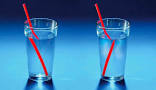
Which word best describes how light reacts when passing from air through water?
refraction
reflection
reconstroction
retraction


Students often use a hand lens to make small objects appear larger. A hand lens makes objects appear larger because the lens-
increases the light’s strength
changes the color of the light
bends light passing through it
converts light energy to heat
when light is stored inside of an object and turns into heat energy
absorbtion
refraction
reflection

We are able to see a mirrored image of the mountains on the water through...
refraction
reflection

reflection
refraction

reflection
refraction

What color is being reflected?
green
blue and yellow
red, orange, yellow, blue, indigo, violet
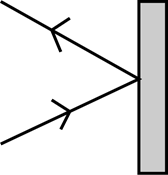
In the illustration, the light ray striking the object is-

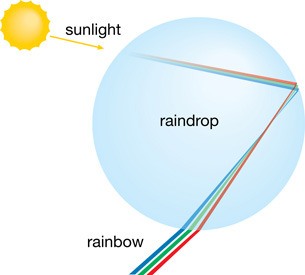

Why do we see grass as green?
Green light is absorbed
Green light is reflected

