
 Worksheets
sound and light magnetism and sources of energy
Total questions: 112
Worksheet time: 5hrs 31mins
This is what you get when sound waves are reflected, or bounce back, off of a hard surface.
Amplitude
Pitch
Volume
Echo
Sound travels as a ___________ wave.
longitudinal
transverse
water
slinky
If you see an object as orange,
it is absorbing orange light and reflecting all other colors.
it is reflecting all colors.
it is absorbing all colors.
it is reflecting orange light and absorbing all other colors.
How loud or soft people hear a sound is related to the _________ of the sound wave.
amplitude
longitude
echo
lens
Sound intensity is measured in units called ________ named after Alexander Graham Bell.
tones
hertz
amplitudes
decibels
Which waves have the greatest amount of energy?
gamma waves
radio waves
x-rays
infrared light
The wave of energy we can see is ___________
visible light
radio waves
microwaves
x-rays

Between waves B and D, which is louder?
Wave B
Wave D
What is the phenomenon called when light changes direction as it passes from one medium to another?
Reflection
Refraction
Diffraction
Dispersion
Which of the following is a characteristic of sound waves?
They can travel through a vacuum
They are transverse waves
They require a medium to travel
They are electromagnetic waves
What is the speed of light in a vacuum?
3×10⁸ m/s
1.5×10⁸ m/s
2.5×10⁸ m/s
3.5×10⁸ m/s
White light will refract into colors of the rainbow when it interacts with a:
Prism
Block of wood
Mirror
Metal table
What is the measure of how many waves pass a point in a certain amount of time?
frequency
wavelength
midpoint
crest and trough
The action of a wave bouncing off a surface is called __________________.
rarefaction
refraction
reflection
diffraction
A _____________________ is the distance between a point on one wave and the identical point of the next wave.
amplitude
wavelength
frequency
compression
When the frequency of a wave increases, what happens to the wavelength?
The wavelength is not directly affected by the frequency of a wave.
The wavelength increases.
The wavelength decreases.
More specific information is needed to form a conclusion about the wavelength.
Wave frequency is measured in the unit of
hertz.
pings.
clicks.
tones.
The bouncing back of a light ray after hitting a surface is known as...
diffraction
refraction
rebounding
reflection
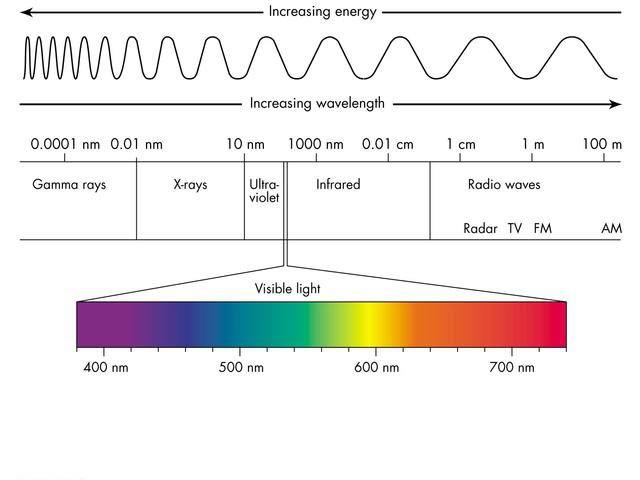
What is the correct order of the visible light spectrum?
Red, yellow, orange, blue, violet, indigo
Violet, purple, indigo, blue, green, yellow, orange
Green, yellow, blue, indigo, red, orange,
Red, orange, yellow, green, blue, indigo, violet
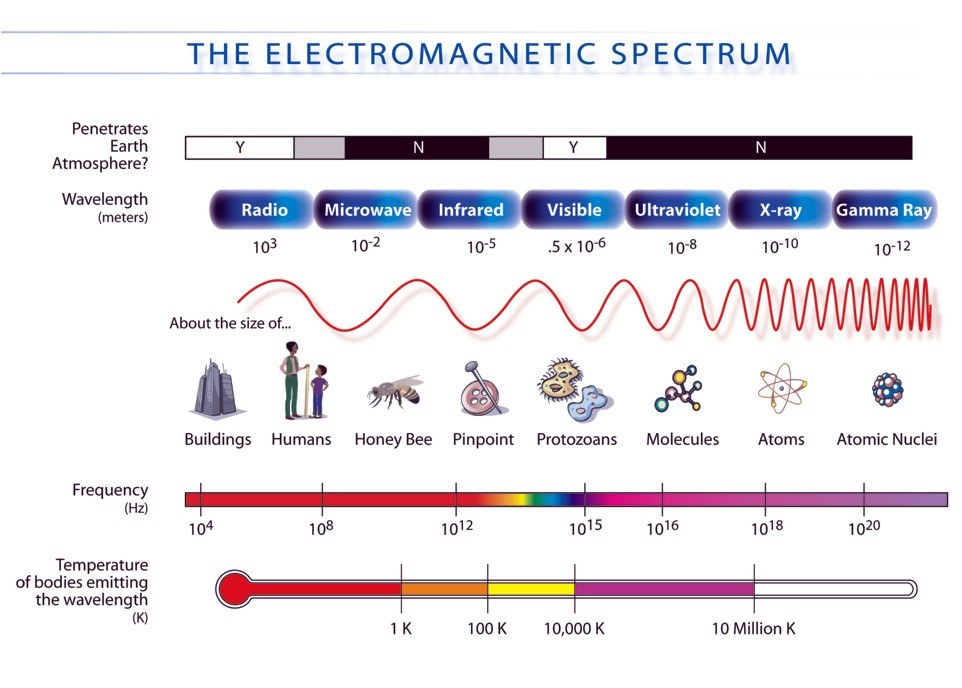
What wave has the longest wavelength and lowest energy?
Gamma rays
Infrared
Radio
Visible light

Does this wave have a high frequency or low frequency?
High
Low
Sound is caused by?
force
vibrations
instruments
medium
Which of the following phenomena explains why the sky appears blue?
Reflection of light
Refraction of light
Scattering of light
Diffraction of light
What is the speed of sound in air at room temperature (approximately 20°C)?
343 m/s
299,792 km/s
1,500 m/s
120 m/s
Which part of the electromagnetic spectrum has the shortest wavelength?
Infrared
Ultraviolet
Visible light
Radio waves

Which letter is an example of reflection?
A
B
C
The angle produced as a source of light bounces off a smooth surface is called ______.


Which type of behavior does light display when striking a transparent object?
scattering
reflection
transmission
absorption
What type of behavior does light display when striking an opaque object?
scattering
transmission
refraction
absorption

What type of behavior is represented by this diagram?
reflection
refraction
scattering
absorption

What behavior does this diagram represent?
reflection
scattering
absorption
transmission
The pitch of a sound corresponds to the
amplitude
frequency
crest

When you yell in a canyon, you hear an echo of your voice. Why is this?
The sound waves are absorbed by the walls of the mountains.
The sound waves are reflected by the walls of the mountians.
The sound waves are transmitted through the walls of the mountains.
Electromagnetic waves ________ a medium to travel through, while mechanical waves ___________ a medium.
do not need/need
need/do not need

Why do diamonds look so shiny?
They absorb light waves.
The reflect light waves.
Light is refracted as it passes through.

What kind of wave is this?
transverse
longitudinal
electromagnetic
Which is not a property of waves?
Amplitude
Mass
Frequency
Wavelength
The amplitude of a wave is _____.
the distance the wave moves in one second
the distance the wave moves in one time period of the wave
the maximum distance that the wave moves from its resting position
the distance equal to one wave length
A ____________________ is a disturbance that transfers energy from one place to another without transferring matter.
wave
trough
compression
rarefaction
What will happen if the north pole and the south pole of a magnet are near each other?
They will repel
They will attract
Nothing will happen
Where is the magnetic force the strongest around a magnet?
middle of the magnet
poles of the magnet
the whole piece of magnet
none of the above
What type of circuit works best for the lights in your house? Why?
A series circuit, they are simple, only one loop of wire
A parallel circuit, if one bulb breaks the others keep working
Any type of circuit works very well
None of the above
What is the voltage of a circuit?
the flow of electrons around a circuit
the amount of energy generated and passed around a circuit.
The energy/electricity user
What does the resistor do in a circuit?
controls the current of the circuit by making electricity harder to flow.
controls how much energy is generated from the battery.
none of the above
Choose a material that is an insulator of electricity.
water
copper
wood
aluminium
What causes static electricity?
When you have too many neutrons in an atom
Rubbing or friction
When protons leave your atoms and join onto other ones.
none of the above
Atoms that have a positive charge will be ATTRACTED to atoms with a ___________ charge.
positive
negative
neutral
Which of these forces works only by combining electric and magnetic forces?
Magnetic
Electric
Electromagnetism
This force occurs when ions/atoms create attractive and repulsive forces.
Magnetic
Electric
Electromagnetism
This force occurs when there is an attractive and repulsive force between two poles.
Magnetic
Electric
Electromagnetism
Electric charges that DO NOT move through a current are known as
Magnetic
Electric
Electromagnetism
Static Electricity
What makes an electromagnet stronger?
greater number of loops
smaller number of loops
decreasing the current
decreasing the voltage
An example of an electromagnet
water bottle
paper
motor
glass
current flowing through a wire is surrounded by a/an
force field
magnetic force
nothing
two type of charges in electric and magnetic forces are
north and south
east and west
positive and negative
beyonce
when electrons all spin in the same direction, they create an invisible force known as
electricity
magnetism
motor
electrons
this force is the attractive and repulsive force between two poles.
electric
magnetic
electromagnetic
this force occurs when ions/atoms create attractive and repulsive forces.
electric
magnetic
electromagnetic
When your hair stands on end, each strand repelling the other, you are experiencing
magnetism
ghosts
static electricity

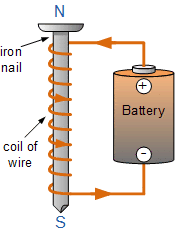
Which of the following is flowing through the electromagnet above?
electric current
magnetic current
magnetic energy
chemical energy

In order for the electromagnet above to lose its magnetism, which of the following must occur?
The wire of the circuit must be tightened.
The battery in the circuit must be switched for a different brand.
The electric current must stop flowing in the circuit.
No circuit is present.

What energy transformation occurs in this device?
electrical energy to mechanical energy
chemical energy to mechanical energy
mechanical energy to chemical energy
mechanical energy to electrical energy

How is the device above different from an electric motor?
Electric motors turn mechanical energy into electrical energy.
Electric motors turn electrical energy into mechanical energy.
Electric motors turn chemical energy into mechanical energy.
Electric motors turn mechanical energy into chemical energy.
The material in a light bulb (usually a thin wire) that glows when heated by an electric current.
Bulb
Filament
Flicker
Fillers
A series of loops that has been wound or gathered
Strings
Roller Coaster
Copper
Coils
A source of electricity with more than one cell.
Magnet
Circuit
Battery
D-Cell
What do you call an energy converting system that transforms electrical energy into mechanical movement?
Electric motor
Electric field
Electric generator
Electric plasma
Which equation can be used to calculate the resistance R of a resistor?
V = I / R
I = V x R
R = V x I
V = I x R

What is the voltage in an electric circuit?
The power of the electrons
The charge of the electrons
The energy of the electrons
A student uses a length of wire as a resistor. He makes a second resistor from the same material.
To be certain of making a second resistor of higher resistance, he should use a piece of wire that is:
longer and thicker.
longer and thinner.
shorter and thicker.
shorter and thinner.

A propeller-like piece that turns a metal shaft in an electric generator is called a:
Shaft
Turbine
Reservoir
Generator

Oil, coal, and natural gas are all forms of:
Fossil Energy
Nuclear Energy
Renewable Energy
Geothermal Power

Hydropower and solar, geothermal, tidal, and wind energy are all forms of:
Nuclear Energy
Fossil Energy
Renewable Energy
Global Warming

______ _____ use the stored chemical energy of ancient fossilized organisms that turn into oil, coal, and natural gas after millions of years of heat and pressure.
Nuclear Power
Solar Power
Geothermal Power
Fossil Fuels

An increase in the overall temperature of the Earth's atmosphere partially due to manmade causes is called:
Fossil Fuels
Nuclear Power
Global Warming
Geothermal Power
_______ _____ uses the energy contained in the nuclei of enriched uranium.
Nuclear Power
Fossil Fuels
Geothermal Power
Biomass Power

Fossil Fuels are considered ____________ _________ which means that sooner or later, fossil fuels will run out.
Renewable Resources
Nonrenewable Resources

A resource that can be replenished is known as a:
Renewable Resource
Nonrenewable
Resource

Running water from a river piles up high behind a dam, is let out (thanks to gravity) in a controlled stream, and the kinetic energy from the flowing water turns a turbine, which generates electrical energy. This is an example of what?
Tidal Power
Solar Power
Hydroelectricity
Geothermal Power

_____ _____ captures the energy from the sun's radiation.
Solar Power
Hydroelectricity
Wind Power
Biomass Power

The following diagram is an example of what type of energy?
Hydroelectricity
Solar Power
Geothermal Power
Tidal Power

The kinetic energy of wind is used to turn wind turbines, which generates electricity. This is known as:
Biomass Power
Tidal Power
Wind Power
Geothermal Power

_______ _____ uses the stored chemical energy of living things.
(plants, wood, and waste are the most common sources)
Wind Power
Biomass Power
Wind Power
Tidal Power
What is used to describe a resource that can be replenished naturally over time?
Energy Resources
Nonrenewable Resources
Fossil Fuels
Renewable Resources
What is the renewable source that produces energy from the sun?
Hydroelectric
Solar
Biomass
Geothermal
What is the renewable source that produces energy from the movement of flowing water?
Hydroelectric
Solar
Geothermal
Biomass
What energy resource produces energy from recently living organisms such as leaves or plants? These materials can be burned to release energy.
Geothermal
Solar
Biomass
Hydroelectric
What conversion of energy takes place in a generator for a hydroelectric dam or wind turbine?
Mechanical --> Sound
Electrical --> Mechanical
Electrical --> Sound
Mechanical --> Electrical
What is the renewable source of energy that comes from extreme heat within the Earth?
Solar
Hydroelectric
Geothermal
Biomass
Batteries store energy as ____________ energy.
motion
solar
chemical
electrical
What form of energy does the singing fish from the video use?
sound
motion
electrical
chemical
The electrical outlet in your home is connected to which of these?
a gas station
the sun
a dam
a power plant
________ energy always moves from hotter objects to cooler objects.
Chemical
Electrical
Mechanical
Radiant
Thermal (heat)
It is a liquid fossil fuel, used to produce gasoline.
coal
natural gas
oil
It is electricity produced from hydropower.
geothermal energy
hydroelectric energy
tidal energy
Plant or animal material used for energy production, or in various industrial processes as raw substance for a range of products.
geothermal energy
biomass
fossil fuel
Renewable energy in the movement of that much water.
tidal energy
geothermal energy
hydroelectric energy
Name two disadvantages to using fossil fuels.
pollution and non-renewable
renewable and clean energy

