
 Worksheets
Unit 1 - Layers of the Earth and Plate Tectonics
Total questions: 110
Worksheet time: 2hrs 10mins

Who is the scientist who proposed Continental Drift Theory?

Most geologists think that the movement of Earth's tectonic plates is caused by
the rotation of the Earth.
the Earth's magnetic field.
subduction.
convection currents.


When plates collide we get ________.
crumbles
volcanos
trenches
mountain ranges

Which layer of Earth flows slowly and causes the crust to move?
Crust
Mantle
Inner Core
Outer core

What is the correct order (starting from the surface) of Earth’s layers?
crust, outer core, inner core, mantle
mantle, outer core, inner core, crust
crust, mantle, outer core, inner core
outer core, inner core, crust, mantle

Subduction means.....
one plate goes under another plate
two plates slide past each other
two plate collide and form folded mountains

Sea-floor spreading explains how.....
new crust is created at a divergent boundary
volcanoes are formed on continents
deep sea trenches are formed
A long chain of undersea mountains
mid ocean ridge
sea floor spreading
oceanic plates
answer the 4 questions down below
tectonic plates that make up the continents
the process of one tectonic plate sliding beneath another
oceanic plates
tectonic plates that make up the ocean floor
transform boundaries
boundaries where tectonic plates slide past each other horizontally
convergent boundaries
boundaries where tectonic plates collide or come together
The crust is
Layer of molten metal.
Outermost layer of the Earth.
Made up of the lithosphere and asthenosphere.
Innermost layer of solid metal.
The inner core is
Layer of molten metal.
Outermost layer of the Earth.
Made up of the lithosphere and asthenosphere .
Innermost layer of solid metal.
The outer core is
Made up of the lithosphere and asthenosphere .
Solid material extending to Earth's core.
Layer of molten metal.
Outermost layer of the Earth.
What happens often at transform boundaries?
Rain
Hurricanes
Volcanic activity
Earthquakes
What is common at convergent boundaries?
Valleys
Canyons
Mountains
Rivers
The three types of plate boundaries are
Convergent, divergent, change
Divergent, allegiant, insurgent
Convergent, divergent, transform
Push, pull, slide
How fast the continents move?
3-4 inches per day
3-4 inches per week
3-4 inches per month
3-4 inches per year

Most geologists think that the movement of Earth’s plates is caused by _______
convection.
continental drift.
subduction.
conduction.
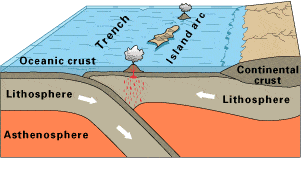
Observe this diagram of a plate boundary. One statement BEST describes what is happening. It is that
the oceanic crust is melting.
the denser oceanic crust is subducting under the less dense continental crust
volcanic islands are forming.
the tectonic plates are moving away from each other.
The movement of the tectonic plates is caused by
the rotation of the Earth.
convection currents in the Asthenosphere
the gravity of the iron-nickel core.
the Moho discontinuity.


What type of boundary is this?
convergent
divergent
transform

What type of boundary is this?
convergent
divergent
transform

What type of boundary is this?
convergent
divergent
transform

What type of event happens at a transform boundary?
subduction
plates
earthquakes
sea floor spreading

What is the process that continually adds new crust to the ocean floor along both sides of the mid-ocean ridge?
sudduction
sea floor spreading
earthquakes
continental drift

In sea floor spreading, molten material rises from the mantle and erupts
along the edge of the continents
at the mid ocean ridge
in deep ocean trenches
at the North and South Pole

The geological theory that states that pieces of Earth's plates are in constant, slow motion, driven by convection currents is the theory of
plate tectonics
asthenosphere
sea floor spreading
deep ocean trenches
Where is sea floor the oldest?
close to the mid ocean ridge
in the middle of the mid ocean ridge
far away from the mid ocean ridge
Where is sea floor the YOUNGEST?
near the mid ocean ridges
Far way from the mid ocean ridges
The Earth's lithosphere contains
The upper mantle
The oceanic crust
The continental crust
All are correct
Match the following plate boundaries with the correct description
Convergent
Destructive
Divergent
Constructive
Transform
Conservative
Match the plate boundary to its diagram.

Divergent

Convergent

Transform
Match the plate boundary to its definition.
Plates spread apart
Divergent
Plates come together
Convergent
Plates rub against each other
Transform
What is the only event associated with ALL plate boundaries?
Volcanoes
Earthquakes
Subduction
Deep Trenches

What two crustal features occur near every subduction zone?
Volcanoes and Trenches
Rift Valleys and Mid Ocean Ridges
Volcanoes and Rift Valleys
Mid Ocean Ridges and Trenches

The diagram shows a landform on Earth. How did the movement of Earth’s plates form the landform?
Two oceanic plates slid past each other.
Two continental plates collided.
One continental plate slid past an oceanic plate.
One continental plate subducted beneath an oceanic plate.

Use the diagram to answer the question. What results as the two oceanic plates converge?
formation of a deep sea trench and island volcanoes
earthquake activity and appearance of a transform fault
volcanic eruption along both oceanic plate edges
formation of a continental mountain range

What geologic feature/event would you most likely to find at a divergent boundary between two pieces of continental crust?
Mid-Ocean Ridge
Mountain
Rift Valley
Island Arc

What geologic feature/event would you most likely to find at a divergent boundary between two pieces of oceanic crust?
Rift Valley
Mid-Ocean Ridge
Island Arc
Flat land
A mid-ocean RIDGE is located at the boundary of two tectonic plates. Which diagram correctly models the relative plate motion on each side of a mid ocean ridge?


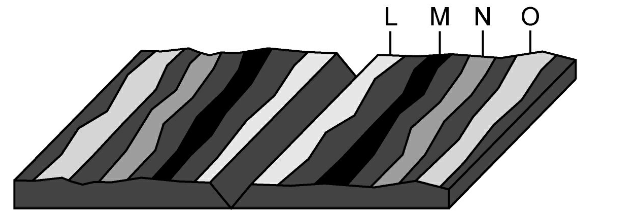
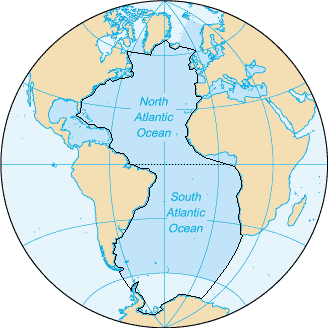
Towards the edges
Youngest seafloor is in the middle of the ocean

The letter B represents
Subduction zone
Trench
Oceanic crust
Island Volcano Arc

A trench is located at...
A
B
C
D

Oceanic crust is located at...
A
B
C
D

Location D shows
Oceanic crust
mid-ocean ridge
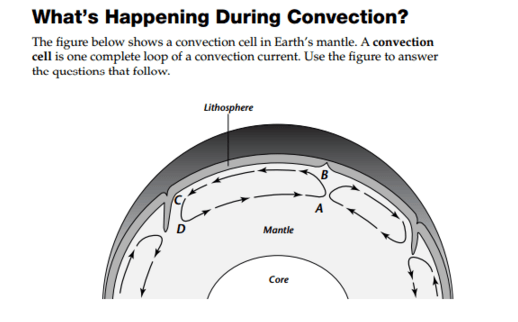
convection currents
Continental crust
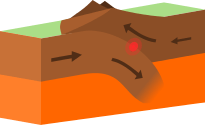
What type of plate boundary is this?
Plate
Divergent
Convergent
Transform

At which boundaries is old crust (rock) destroyed?
Divergent
Convergent (Oceanic/Continental)
Convergent (Oceanic/Oceanic)
Transform
Which plate boundaries will have the feature of trenches?
Convergent (Oceanic/Continental)
Convergent (Oceanic/Oceanic)
Convergent (Continental/Continental)
Transform

The Himalayan Mountains are an example of a real land feature that can be found at this type of boundary.
Convergent (Continental/Continental)
Transform
Convergent (Oceanic/Oceanic)
Divergent

Which definition below matches the concept of sea-floor spreading?
Mid-ocean ridges where oceanic plates pull apart and rising magma creates new oceanic crust.
The coastlines of South America and Africa fit together like pieces of a puzzle.
One plate of rock slides underneath another plate of rock and melts in the mantle.
A rock snaps under stress and pressure.

Which piece of evidence below was NOT used by Wegener to support the Theory of Continental Drift?
Human remains have been found in Europe and North America.
Matching plant and animal fossils found on different continents.
Matching rock formations found across oceans on different continents.
Africa shows evidence of glacial activity.

What evidence supports sea-floor spreading?
Rocks get older moving away from mid-ocean ridges.
Alternating bands or magnetized rocks.
Fossils have been found in South America.
The coastlines of South America and Africa fit together like puzzle pieces.

The Great Rift Valley in Africa is a real-world example of which of the following types of plate movement?
Plates pull apart.
Plates push together.
Plates slide alongside each other.
Plates dive underneath each other.
What is the name of the layer that contains the upper layer of the upper mantle and crust?
Asthenosphere
Mesosphere
Lithosphere
Transosphere


More dense matter is on the (a) because its molecules are (b) . This is why it is the most dense, and being the most dense is why it (c) to the (d) .
Convection happens because temperature changes density. Put the steps in order:
Mantle next to the core is heated
Molecules spread out
Mantle is less dense
Mantle rises
Mantle near the crust cools
Convection happens because temperature changes density. Put the steps in order:
Mantle near the crust cools
Molecules get closer together
Mantle is more dense
Mantle sinks
Mantle next to the core is heated
When molecules are (a) , they (b) and take up more space.
This makes the material (a) because now it is (b) dense than the rest of the rock around it.
Convection currents occur due to...
rotation of earth
differences in temperature and density
electrons moving
gravitational pull
Colder, more dense magma near the crust...
rises.
sinks.
Hotter, less dense magma near the core...
rises.
sinks.
Reorder the following from the TOP (1) to the CENTER (3) of the COMPOSITIONAL layers
Crust
Mantle
Core
What are the names of the two types of crust?
Oceanic
Mantle
Layered
Continental
Mountainous
Which type of crust is the thickest and the one we live on?
Oceanic
Mantle
Layered
Continental
Mountainous
The crust and upper mantle together are called what?
Atmosphere
Outersphere
Lithosphere
Asthenosphere
This liquid layer of magma is made of iron and nickel and creates earth's magnetic field and is up to 9000 degrees.
Crust
Mantle
Outer Core
Inner Core
Although the inner core is as hot as the sun, what causes this layer of the earth to be solid?
Enormous amounts of pressure
Iron can only be in a solid state
The electric field causes it to be solid
This layer is from another planet
How do scientists know what is below the crust?
They use satellites
They use sonar and radar
They use seismic waves
They use ocean waves and gravity
What evidence helps scientists show how sea floor spreading occurs?
Ocean Floor Material
Magnetic Stripes
The age of the ocean floor
All of the Above
The process of ___________ continually adds new crust to the ocean floor along both sides of the mid-ocean ridge.
plate tectonics
seafloor spreading
continental drift
convection
The process by which the ocean floor sinks beneath an deep-ocean trench and back into the mantle is known as
continental drift
subduction
conduction
convection

