
Font size
 Worksheets
Living Environment Regents - June '24
Total questions: 85
Worksheet time: 43mins
In an animal cell, all of the organelles work together to carry out
photosynthesis
diffusion
metabolic processes
information storage
A colony of 47,000 quaking aspen trees, all connected by one root system, is considered to be Earth’s most massive organism. When the trees are stressed, shoots are sent out from the roots and develop into new trees. Every new tree in this colony would contain
the same genetic information, because it is produced asexually
the same genetic information, because it is produced sexually
less genetic material, since it is produced from root cells
a different combination of genes, since it is produced from various roots
Scientists have found that different tissues in the prostate gland, a male reproductive organ, respond to different hormones. The tissues in the center area of the gland respond to testosterone and the tissues in the outer area of the gland respond to estrogen. The cells that make up these two regions of the prostate are different in that
cells in the center area produce more estrogen than cells in the outer area
cells in the outer area have many testosterone receptors
they contain different receptors on their cell membranes
they contain different DNA sequences for the production of hormones
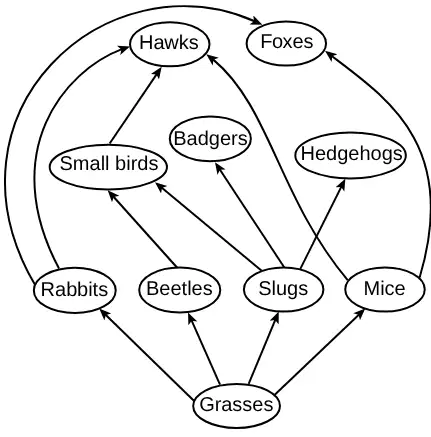
Energy transfers in a natural ecosystem are represented in the diagram below. Which statement about this ecosystem is correct?
A reduction in the number of species present would most likely upset the stability of this ecosystem.
This ecosystem would not be affected if decomposers did not perform their function.
This ecosystem lacks producer organisms.
There are most likely more foxes than rabbits in this ecosystem.
The process of differentiation occurs when
two different cells, a sperm cell and an egg cell, combine to produce a zygote
different zygotes are formed each time that an egg and sperm unite
different kinds of cells and tissues form during embryonic development
two different sexes are present among the offspring, after sexual reproduction
Which two human systems work together to provide glucose for the cells of the body?
nervous and reproductive systems
nervous and respiratory systems
circulatory and digestive systems
circulatory and respiratory systems
The chart below includes structures found in a multicellular organism. Which row contains the structures that would be most numerous?
organs
tissues
organelles
cells
Dioxin, a toxin associated with waste incineration and some plastics, has been found to directly disrupt normal gamete production in human females. Dioxin most likely affects the
testes and progesterone production
ovaries and estrogen production
DNA in the nuclei of sperm cells
pancreas and insulin production
A gene present only in a single plant species was found to regulate protein content. This gene could increase the protein content of other food crops in the developing world. The most likely method that scientists would use to incorporate this gene into a variety of food crops is
genetic engineering
selective breeding
sexual reproduction between the plants with this gene and those without it
deletion of the genes that limit protein production from each individual food crop plant
A decrease in predators within an ecosystem would lead to an increase in herbivores. The increase in herbivores would cause a decrease in
decomposers
prey
consumers
producers
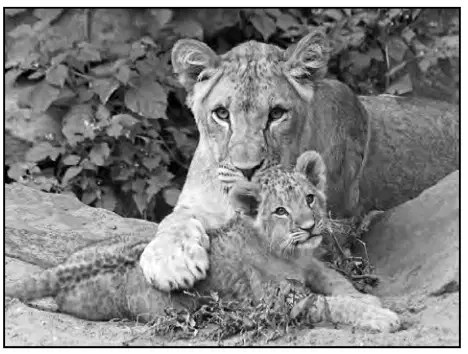
The lioness (female lion) and cub shown below have similar characteristics. In order for some of the genetic information in the lioness to be present in the cub, the genetic information from the mother must have been
copied and present in the egg cell of the lioness
combined with genetic information from another lioness
contained in half of the DNA found in the sperm cells of the father
able to make enzymes to produce all of the carbohydrates found in the mother
Which statement best describes a critical function of the placenta?
Meiosis occurs in the placenta, allowing for the development and release of eggs.
Blood from the mother and fetus mixes at the placenta, providing nutrients and oxygen.
The placenta filters out all harmful toxins and chemicals from the mother's blood, so that they cannot reach the fetus.
The exchange of oxygen and carbon dioxide occurs between the mother and developing fetus across the placenta.
Organisms maintain internal stability in a changing environment. To do this, they make a series of adjustments. The process of making these continual adjustments is referred to as
cellular respiration
active transport
natural selection
dynamic equilibrium
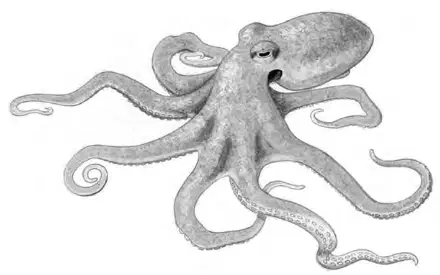
A species of octopus lives in the depths of the ocean where oxygen levels are low. These octopuses have specific proteins in their blood that allow for more efficient oxygen transport than in those that live in surface waters. Which statement best explains the presence of these proteins in the octopuses living deep in the ocean?
Migration to warmer and shallower ocean water favored the formation of the specific proteins.
Octopuses that had the specific proteins were able to survive and reproduce in the deep water environment and passed the trait on to future generations.
When some octopuses migrated to a deeper environment, they needed to produce new proteins so that their blood could carry more oxygen.
Mutations occurred in the body cells of the octopuses, which resulted in the specific proteins being produced and passed on to their offspring.
Tissue engineering is being developed as a technology that would use laboratory-grown tissues to replace diseased or damaged human body parts, such as hearts and kidneys. In order to build these new body parts, scientists would start by
assembling molecules directly into tissues that can make body systems
making organelles and using the organelles to develop organs
engineering body systems in order to develop organelles for transplant
growing cells to develop tissues and then growing these tissues to form an organ
People with cystic fibrosis have decreased levels of some digestive enzymes in their small intestines. It is essential that they take enzyme supplements in order to prevent malnutrition. These enzymes are an important part of the digestive process because they
break down foods so that nutrients can be absorbed and used
contain vitamins and other nutrients necessary for a healthy diet
allow the person to synthesize large, inorganic nutrient molecules
are the building blocks of carbohydrates and other nutrient molecules
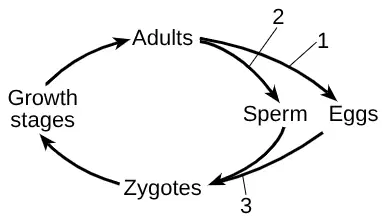
A reproductive cycle is illustrated below. Which statement about this reproductive cycle is correct?
Mutations that occur during processes 1 and 2 will not be passed on to offspring.
Exact copies of the parents are produced, which leads to a stable population.
Sorting and recombining of genes occurs, which leads to new genetic combinations.
The three processes result in offspring with half as much genetic information as the adults.
Kidney-transplant surgery places a healthy kidney from one person into the body of another. The body will often produce substances that work against this transplanted organ. The system most directly involved in attacking the transplanted kidney is the
excretory system
nervous system
circulatory system
immune system

An energy pyramid for a forest ecosystem is represented below. The four levels (A-D) represent different types of organisms in the ecosystem. Which numbered column in the chart below contains four terms that correctly identify the most likely types of organisms that could be found at each of the four levels in the pyramid?
D: carnivores, C: heterotrophs, B: producers, A: herbivores
D: carnivores, C: carnivores, B: herbivores, A: producers
D: heterotrophs, C: autotrophs, B: herbivores, A: producers
D: producers, C: carnivores, B: herbivores, A: heterotrophs
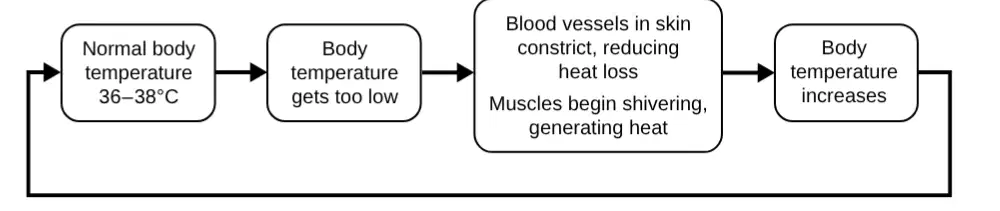
The diagram below shows information about human body temperature regulation. These events can be best described as an example of
a feedback mechanism that maintains homeostasis
a cycle that regulates cellular communication
an immune system response to increasing heart rate
a body system regulating hormone production
The World Wildlife Federation’s recent report indicated that there has been a 60% decline in the size of monitored wildlife populations in just over 40 years. The most likely factor contributing to this decline was
animals reproducing successfully
the destruction of many natural habitats
passing environmental protection laws
the introduction of native species into habitats
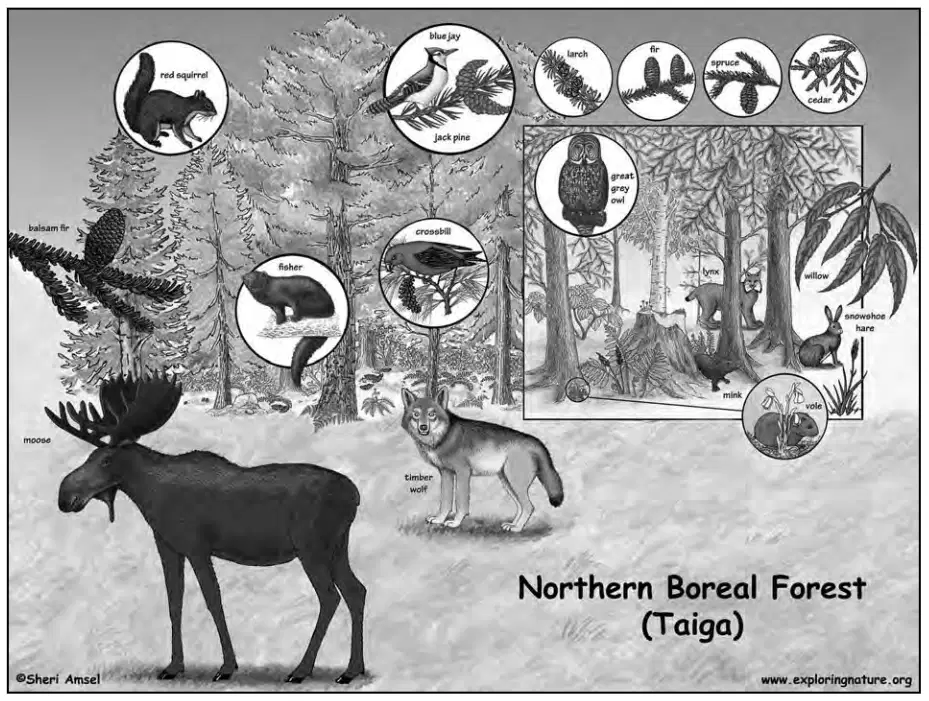
An Adirondack Mountain ecosystem is represented below. An abiotic factor in this ecosystem is the
pH of the soil where the trees grow
number of deer of reproductive age
different species of grass present
balance between predators and prey
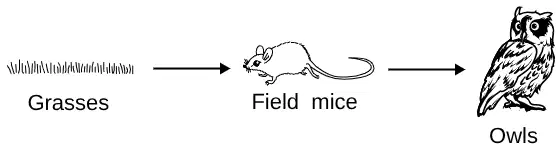
A student observed owls hunting mice in a field. Some chemicals from the waste products of the owls were made available to be absorbed by the roots of the grasses due to the action of
autotrophs
carnivores
herbivores
decomposers
Which two terms are opposite processes?
autotrophic nutrition and photosynthesis
asexual reproduction and cloning
digestion and synthesis
natural selection and evolution
Which human activity would most likely deplete finite resources?
recycling of aluminum and paper
protection of wildlife habitats
uncontrolled population growth
regulations that reduce industrial pollution
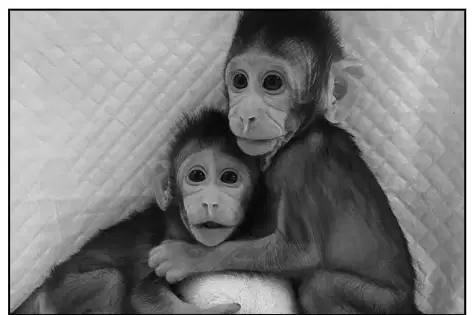
Macaques are a species of monkey. They normally reproduce sexually, but, in January 2018, scientists cloned two baby macaques from a single body cell. These monkeys are genetically
identical to each other, but different from the donor of the body cell
different from each other, but identical to the donor of the body cell
identical to each other and to the donor of the body cell
different from each other and from the donor of the body cell
Which event would most likely be the immediate result of significantly lowering the oxygen concentration in a freshwater lake?
a decrease in the number of fish
an increase in the number of plants
an increase in biodiversity
a decrease in water temperature
Scientists have modified papayas to be resistant to the papaya ringspot virus and to decrease the time that it takes for them to ripen. These modifications
may cause papayas to ripen too slowly, causing loss of revenue
are passed to any organism that eats them, making the organism resistant to the virus
are an example of using agricultural technologies to increase farm yields
could spread ringspot virus throughout the entire ecosystem
Vaccinated individuals are protected from disease because their bodies have been stimulated to
produce antibodies against specific pathogens
synthesize antigens against harmful microbes
make fewer white blood cells during infection
manufacture more enzymes to react to microbes
A species of predatory wasp is introduced to control an insect pest. A possible negative consequence of this action is that the new predatory wasp may
limit the population of the insect pest
prey on beneficial insects
disrupt mineral availability in the ecosystem
cause an increase in pesticide-resistant plants
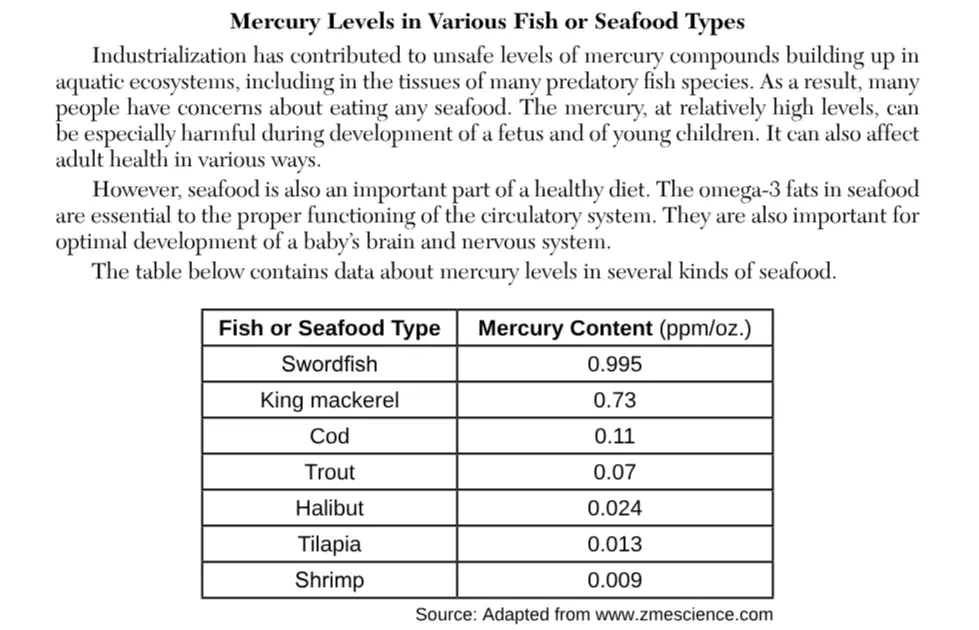
Based on the information given, which statement concerning the eating of fish and seafood is most accurate?
People should avoid eating seafood because the negative effects of the mercury in seafood are far worse than any benefits that eating seafood may provide. Even shrimp and tilapia contain high levels of mercury.
The normal development of a baby’s nervous system requires that the mother be more concerned with eating enough seafood and less concerned with the side effects of higher levels of mercury on the child.
Eating certain selected species of seafood can provide health benefits without the negative effects of high mercury intake.
It is important that pregnant women eat a regular diet of seafood, including swordfish, halibut, and cod.
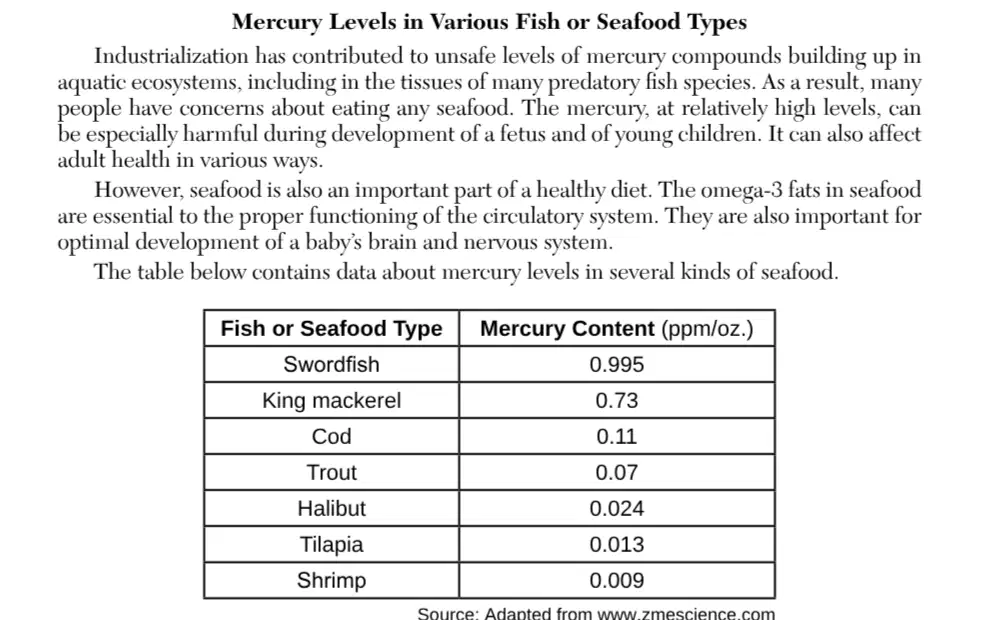
Which statement is best supported by the information provided about the levels of mercury present in seafood?
Human activities do not affect mercury levels in fish species.
Future generations can be affected by choices made by past and present generations.
Fish that consume plants have the highest levels of mercury compounds.
If people stop eating fish, then the mercury levels in fish will decrease.
Grasshopper mice feed on bark scorpions, but, unlike other mice, grasshopper mice are unaffected by the painful venom of the scorpion. Scientists have determined that these mice have one amino acid difference in their pain receptors, which causes the receptor to function differently and prevents feeling the pain associated with the scorpion venom. This change in protein function was originally caused by a change in
molecular bases located in the nucleus
fat molecules in the cell membrane
the amino acids in the DNA
the genes located in the protein
Certain organisms living deep in the ocean can obtain energy from inorganic compounds that flow out of volcanic vents. They can use this energy to synthesize energy-rich organic compounds. Which row in the chart below correctly pairs an organism that performs a similar function in land environments with the process involved?
small mammal | respiration
grasses | photosynthesis
small mammal | photosynthesis
grasses | respiration
Scientists are concerned about the decreasing numbers in the populations of Atlantic salmon along the east coast of North America due to overfishing and changes in their breeding environments. Some businesses have developed farm-raised populations of certain varieties of salmon. Large, farm-raised populations have a limited genetic diversity as compared to wild-caught salmon. Which row in the chart below correctly pairs possible effects of fish farming?
Loss of biodiversity among farmed fish | Increased sales of fish, a food source
Increased sales of fish, a food source | Limited genetic diversity in salmon population
Loss of biodiversity in wild fish | Decreased population size
Increased biodiversity | Increased population size
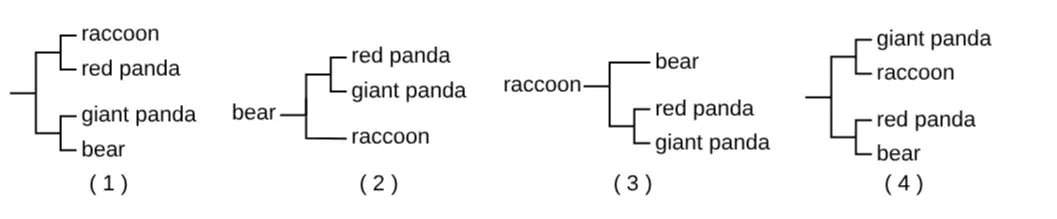
DNA studies have shown that bears and raccoons evolved from a common ancestor about 50 million years ago. Giant pandas evolved from a more recent ancestor that was related to bears. The red panda evolved from a more recent ancestor that was related to raccoons. Which evolutionary tree best represents these sequences of events?
[tree diagram]
[tree diagram]
[tree diagram]
[tree diagram]
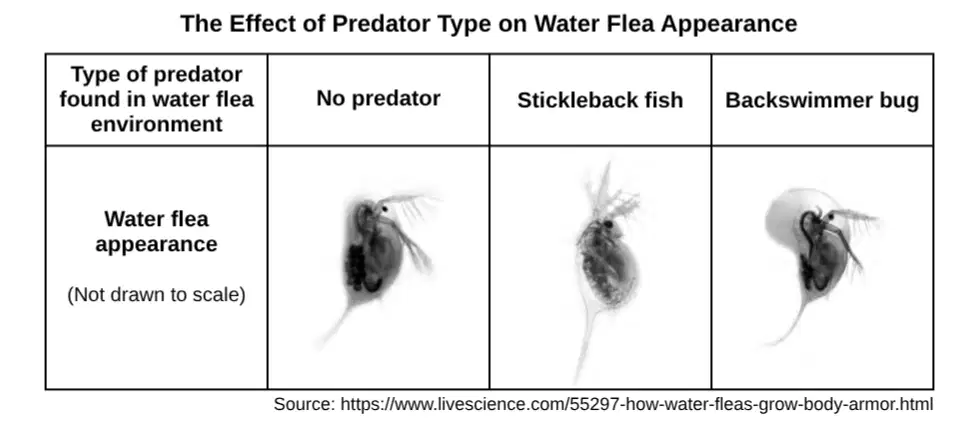
Researchers studying water fleas (tiny organisms that live in fresh water) have noticed that the appearance of the water flea follows a pattern, as seen in the table below. The Effect of Predator Type on Water Flea Appearance Type of predator found in water flea environment: No predator, Stickleback fish, Backswimmer bug Water flea appearance (Not drawn to scale) If all three water fleas are genetically identical, which statement best explains why the three water fleas have different appearances?
Random alterations of genes occur in water fleas when they eat different foods.
Predators in the water flea’s environment cause mutations in the water flea.
Genes are not involved in the appearance of these water fleas.
Water flea gene expression can be influenced by the type of predator present in their environment.
The discovery that humans can inherit mitochondria from their fathers illustrates the concept that
inquiry does not judge the reliability of sources
experiments without controls are not valid
scientific explanations are tentative and subject to change
advancements in technology usually make scientific theories invalid
The most likely explanation for why children who inherited mutated mitochondria suffer fatigue and muscle pain is that their mitochondria fail to
provide the antigens needed to fight the mutated DNA
regulate the transport of nutrients to the muscle cells
synthesize the starch needed by the muscles
release enough energy for cells to function properly
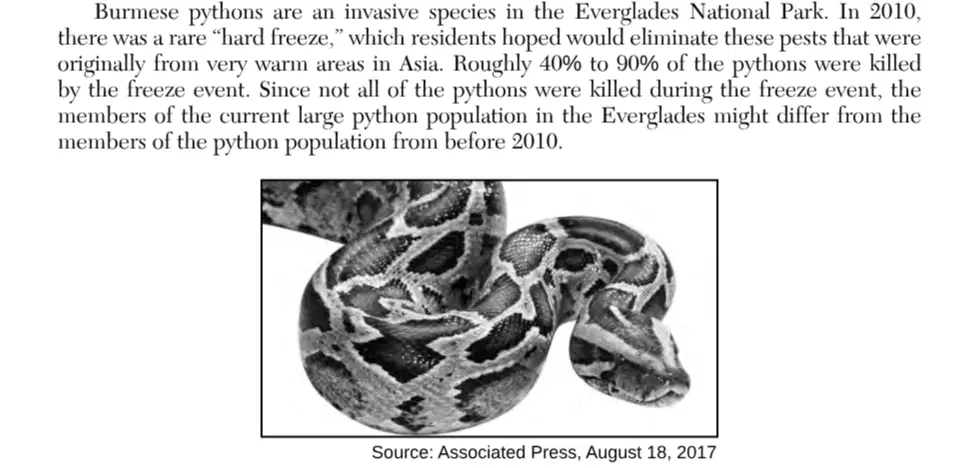
Which statement best describes a likely cause for the changes that might exist in the present python population?
The python species needed cold-tolerant genes, and they appeared in 2010 by rapid mutation.
The freeze event served as a selecting agent, and a higher percentage of the pythons existing today are cold-tolerant.
Many individual pythons were unable to reproduce during the freeze event and did not pass on their cold-tolerant genes.
There was no actual change in the population, and if a similar freeze event occurred again, 40-90% of the snakes would die.
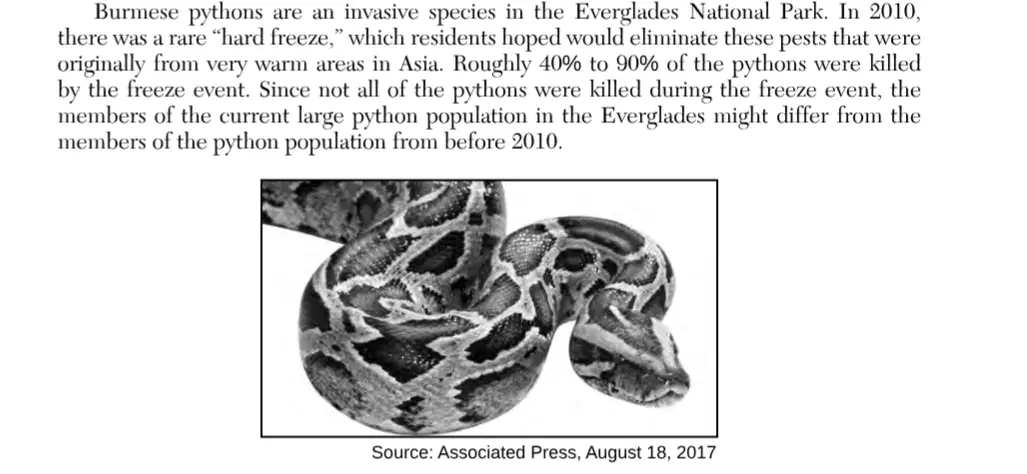
Burmese pythons are an invasive species in the Everglades National Park. In 2010, there was a rare “hard freeze,” which residents hoped would eliminate these pests that were originally from very warm areas in Asia. Roughly 40% to 90% of the pythons were killed by the freeze event. Since not all of the pythons were killed during the freeze event, the members of the current large python population in the Everglades might differ from the members of the python population from before 2010. Pythons in their native habitat often eat a large animal and then do not feed again for weeks. In the Florida Everglades, food sources are often small mammals and birds. The current large python population in Florida can be described as a species that
(1) will quickly die out because there are no appropriate food sources in their environment
(2) will develop new digestive organs as needed to succeed in the Florida Everglades
(3) has expanded only because small animals reproduce so quickly that they provide an unlimited food source
(4) has already successfully adapted to an unfamiliar environment through natural selection
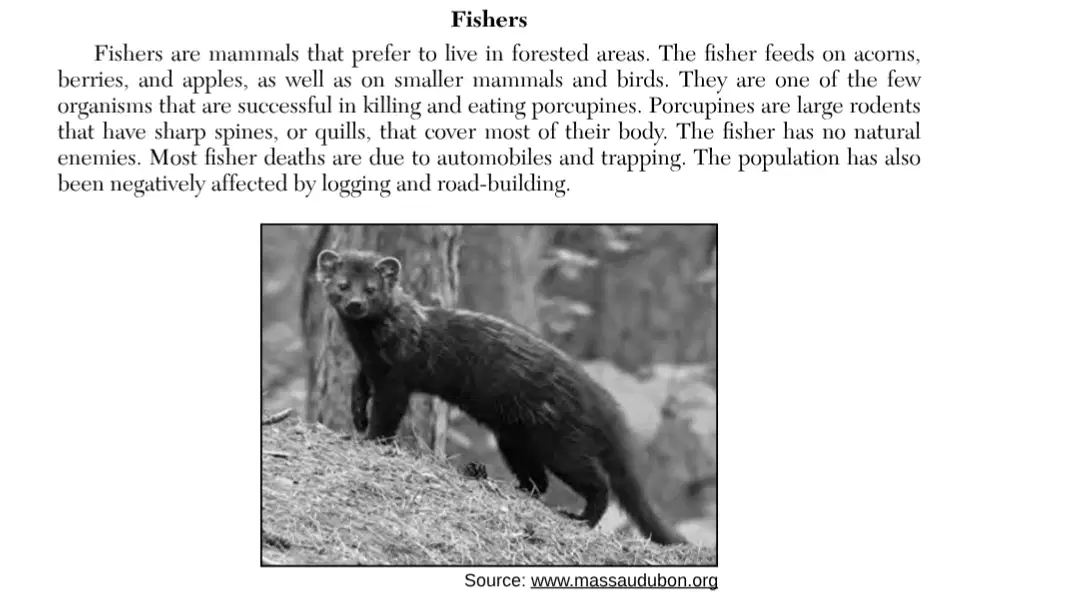
Recently, new regulations have been adopted that affect the trapping of fishers. Which action would probably result in an increase in the fisher population?
removing all regulations regarding fisher trapping
increasing the area where fisher trapping is allowed
changing the fisher trapping season from 46 to 30 days
decreasing the cost of the permit needed for fisher trapping

Humans have negatively affected the ecosystem that fishers occupy. An altered or changed ecosystem can
never recover or become stable again
usually recover gradually to a point of long-term stability
never recover unless there is a decrease in biodiversity
usually recover quickly into the same ecosystem as it was previously
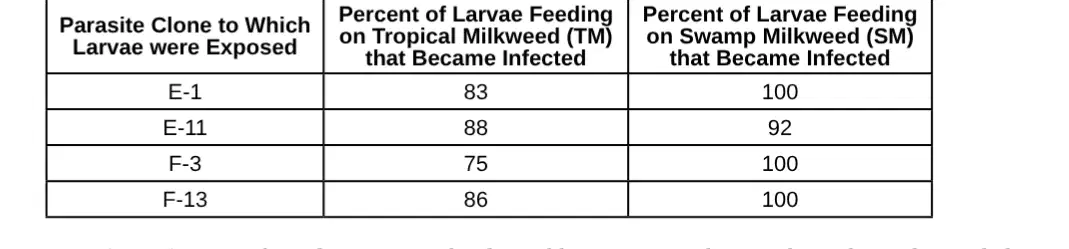
Mark an appropriate scale on the axis labeled 'Percent of Monarch Larvae Infected' using the information in the data table.
0% to 100% in increments of 10%
0% to 50% in increments of 5%
0% to 200% in increments of 20%
0% to 500% in increments of 50%

Which of the following best describes how to construct the bar graph using the data table and grid provided for larvae fed tropical milkweed (TM) and swamp milkweed (SM)?
Construct vertical bars for each parasite clone in the TM area shaded in black, and in the SM area shaded with diagonal lines.
Construct horizontal bars for each parasite clone in the TM area shaded in black, and in the SM area shaded with diagonal lines.
Construct vertical bars for each parasite clone in the TM area shaded with diagonal lines, and in the SM area shaded in black.
Construct vertical bars for each parasite clone in the TM and SM areas, both shaded in black.
46. The types of milkweed that the larvae were fed made a difference in whether or not the larvae became infected. Support your answer.
Yes, the types of milkweed affected whether the larvae became infected.
No, the types of milkweed had no effect on infection rates.
The types of milkweed only affected the growth of larvae, not infection.
The types of milkweed affected only adult butterflies, not larvae.
Which row in the chart below correctly identifies the average percent of infection of the larvae that ate tropical milkweed and the average percent of infection of the larvae that ate swamp milkweed?
(1) | 75 | 92
(2) | 88 | 100
(3) | 83 | 98
(4) | 98 | 83
If very few spores of parasite clone F-13 were placed on the milkweed leaves compared with the number of spores placed on leaves for the other three clones, the results of the experiment might have shown which of the following?
Lower infection rates for F-13 compared to the other clones
Higher infection rates for F-13 compared to the other clones
No difference in infection rates among all clones
Complete absence of infection in all clones
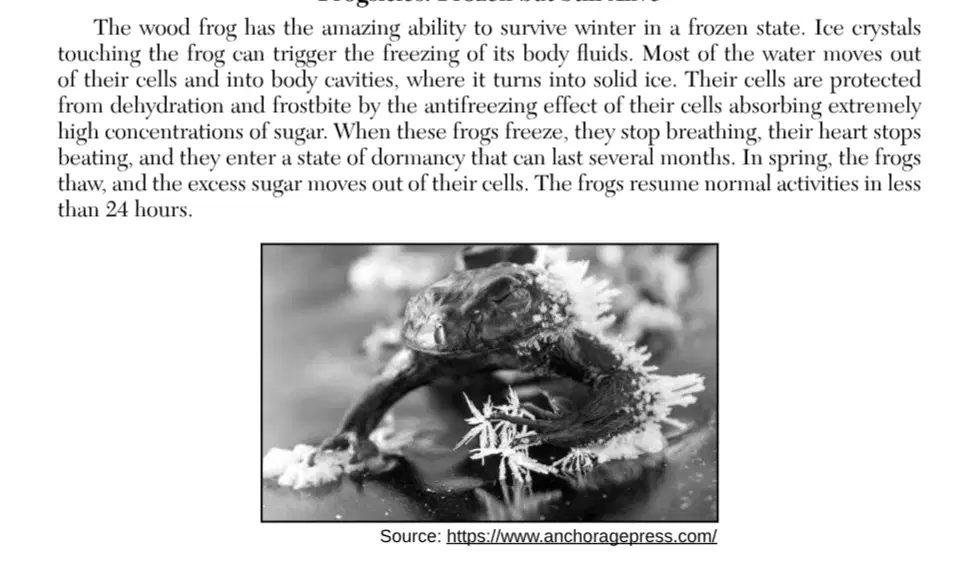
A wood frog’s body systems’ responses to ice crystals touching it in winter and to the conditions in the spring can best be explained by
the differentiation of mature body cells during development
a response of their cells to changing environmental conditions
the enzymatic breakdown of water as the frog freezes
a response of the immune system to excess sugar levels
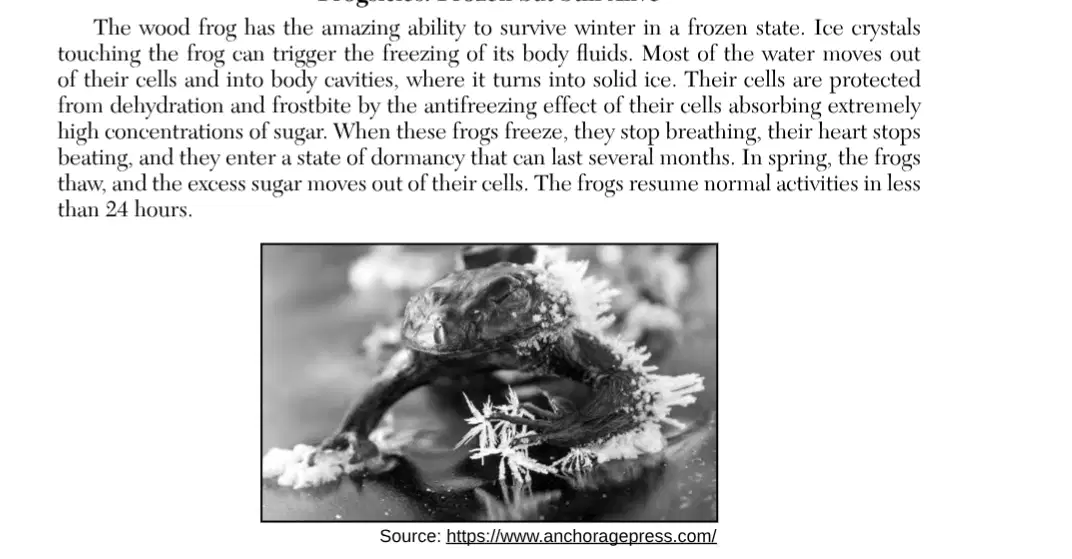
Which scientific question could lead to an investigation to help determine the stimulus that causes wood frogs to thaw in the spring?
Do the frogs thaw if the air temperature remains below freezing all winter?
Does the changing length of daylight or warming cause the frogs to thaw?
Do the frogs get hungry when they are frozen?
Does the weight of the frog change after they freeze?
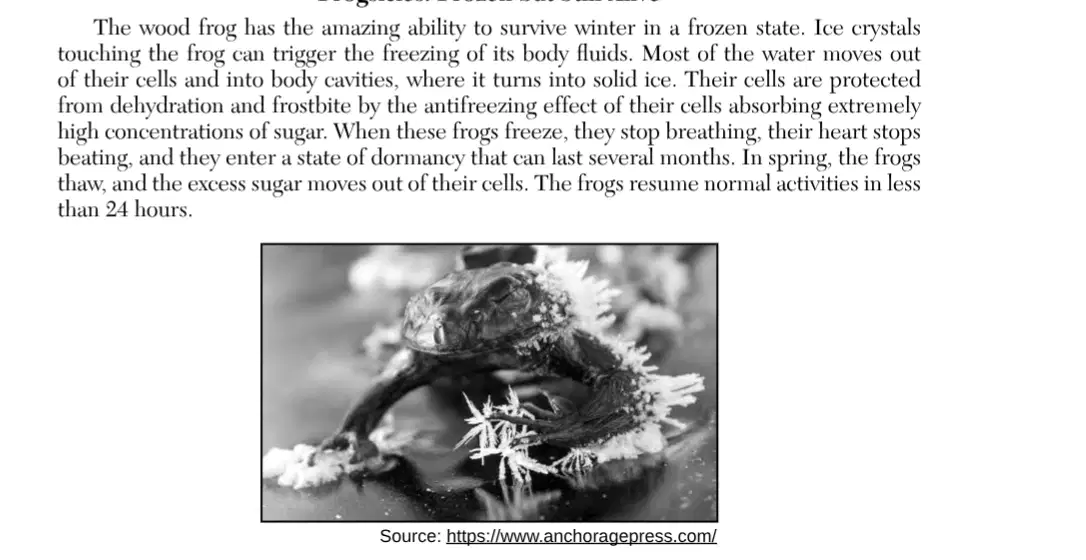
Identify one structure present in the cells of these frogs that plays a role in the rapid removal of water and the absorption of high concentrations of sugar. Justify your answer.
Aquaporins
Mitochondria
Ribosomes
Cell wall
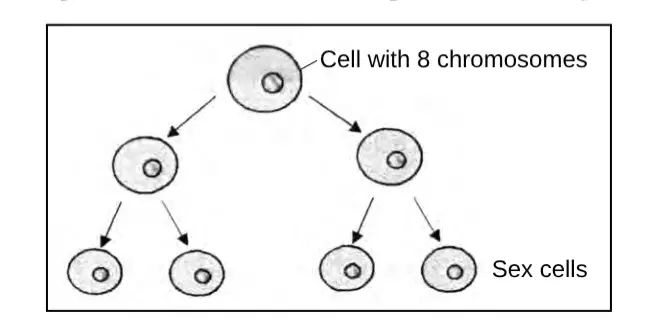
Based on the information in the diagram, how many chromosomes will be present in each of the sex cells of the fruit fly?
4 chromosomes
2 chromosomes
8 chromosomes
6 chromosomes
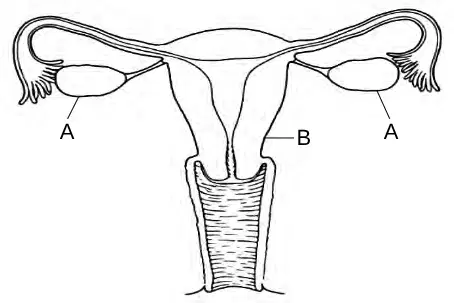
The model below represents the reproductive system of human females. The roles of structures A and B in the production of offspring are:
A produces eggs and B is where the fetus develops.
A produces sperm and B is where eggs are fertilized.
A is where the fetus develops and B produces eggs.
A produces hormones and B produces sperm.
54. The student repeats the experiment but places the test tubes in a hot water bath at 65°C for 15 minutes. What results would most likely be obtained, and why?
The enzymes would denature, resulting in little or no reaction because high temperatures disrupt enzyme structure.
The reaction rate would increase significantly because enzymes work best at high temperatures.
There would be no change in the results because enzymes are not affected by temperature.
The reaction would proceed faster at first, but then slow down due to substrate depletion.
The purpose of Test Tubes 3 and 4 in this experiment is to:
serve as controls to compare the effects of the experimental variable
measure the temperature change in the experiment
act as containers for the chemical reaction
provide additional samples for repeated trials
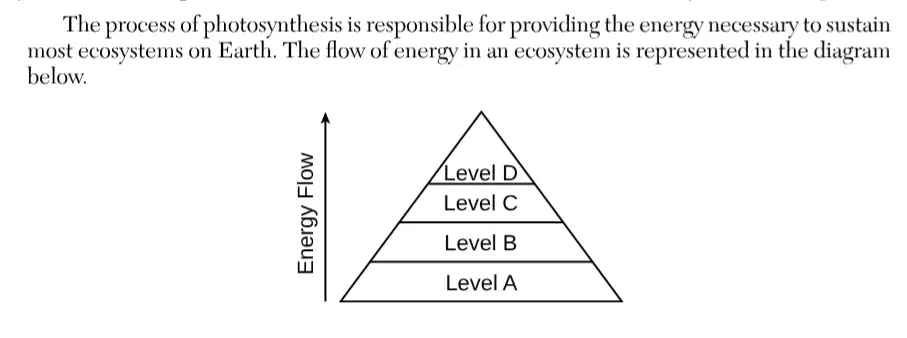
The source of energy for an ecosystem and the way it is transferred from one level to the next is:
The Sun provides energy, which is transferred through producers to consumers and then to decomposers.
Wind energy is captured by animals and passed to plants.
Water is the main energy source, moving from rivers to plants and then to animals.
Heat from the Earth's core is transferred directly to all organisms.
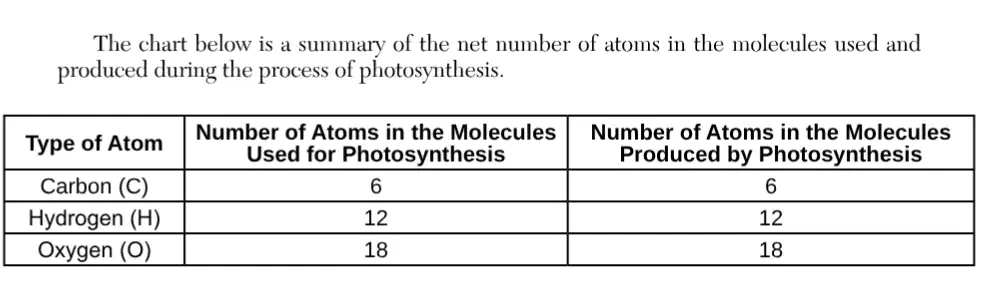
The chart below is a summary of the net number of atoms in the molecules used and produced during the process of photosynthesis. Which of the following provides evidence from the data to support the claim that there is no gain or loss of matter during photosynthesis?
The number of atoms in the reactants equals the number of atoms in the products.
The number of carbon atoms increases during photosynthesis.
Oxygen atoms are lost during the process.
Hydrogen atoms are gained during photosynthesis.
State one reason that the zebra mussels could successfully spread throughout the rivers and lakes in the U.S.
They can attach to boats and be transported to new locations.
They require very specific water conditions to survive.
They are only found in saltwater environments.
They cannot survive outside their native habitat.
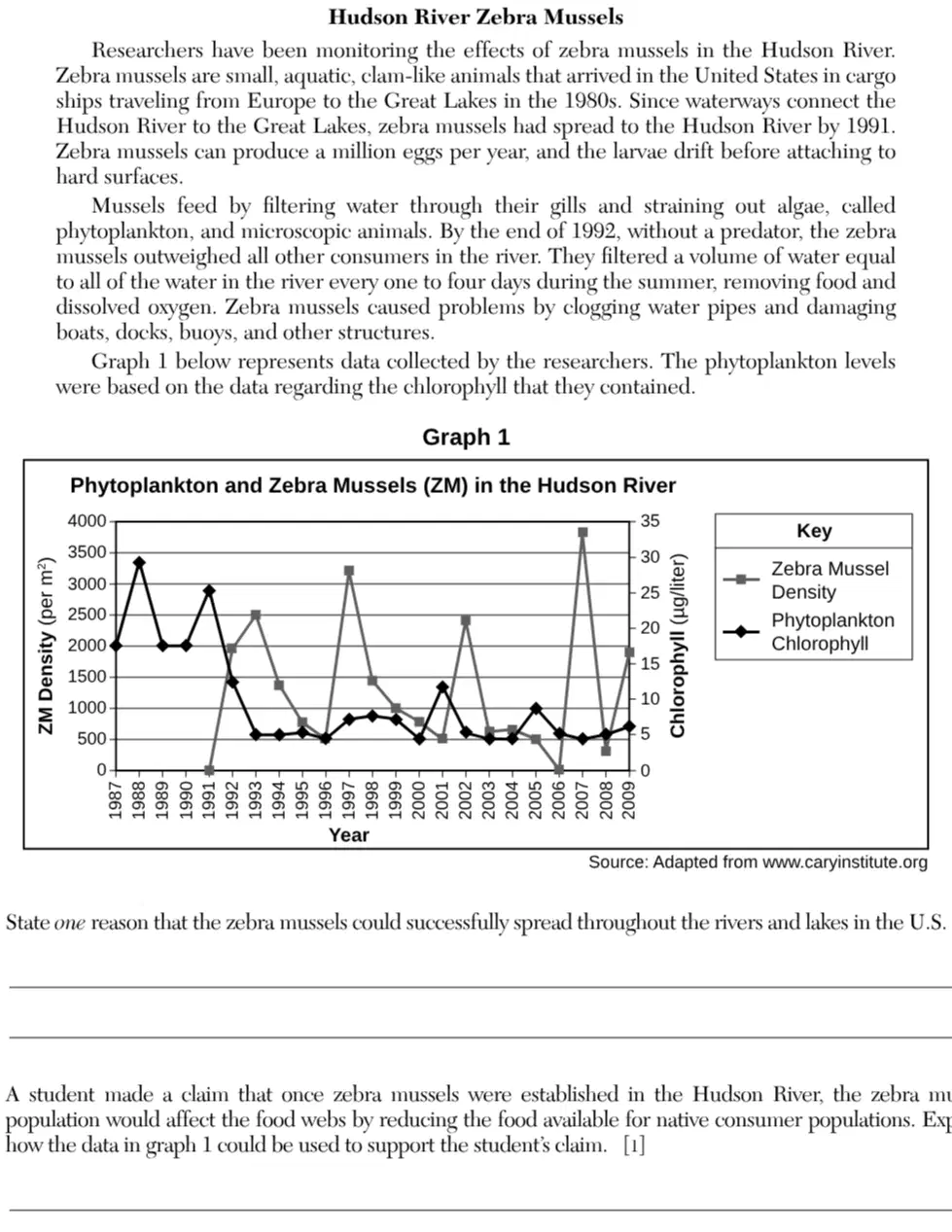
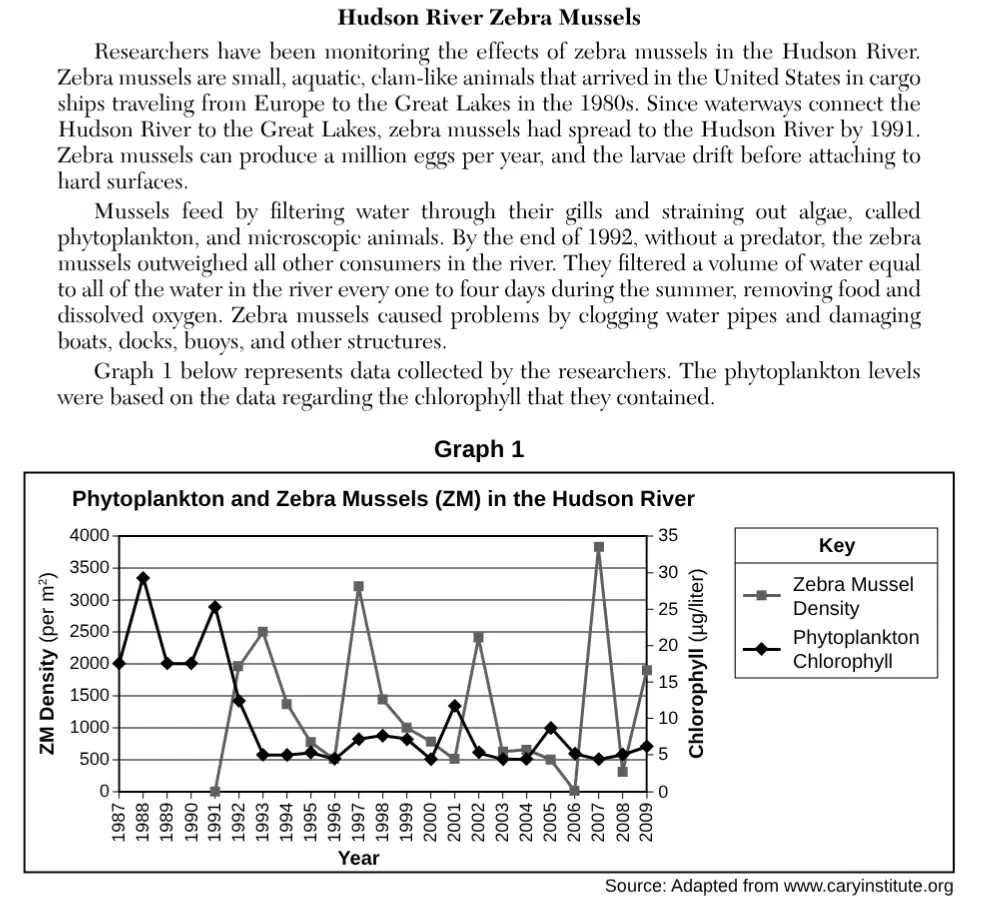
The data in graph 1 could be used to support the claim that once zebra mussels were established in the Hudson River, the zebra mussel population would affect the food webs by reducing the food available for native consumer populations. Which of the following best explains how the data supports this claim?
Graph 1 shows a decrease in native consumer populations after zebra mussels were established, indicating less food was available for them.
Graph 1 shows an increase in native consumer populations after zebra mussels were established, indicating more food was available for them.
Graph 1 shows no change in native consumer populations after zebra mussels were established, indicating food availability was unaffected.
Graph 1 shows a decrease in zebra mussel population, indicating they did not affect native consumer food sources.
Other than reducing the food available for native populations, one negative consequence of failing to keep zebra mussels out of the Great Lakes is:
Clogging water intake pipes
Increasing native fish populations
Decreasing water clarity
Raising water temperatures
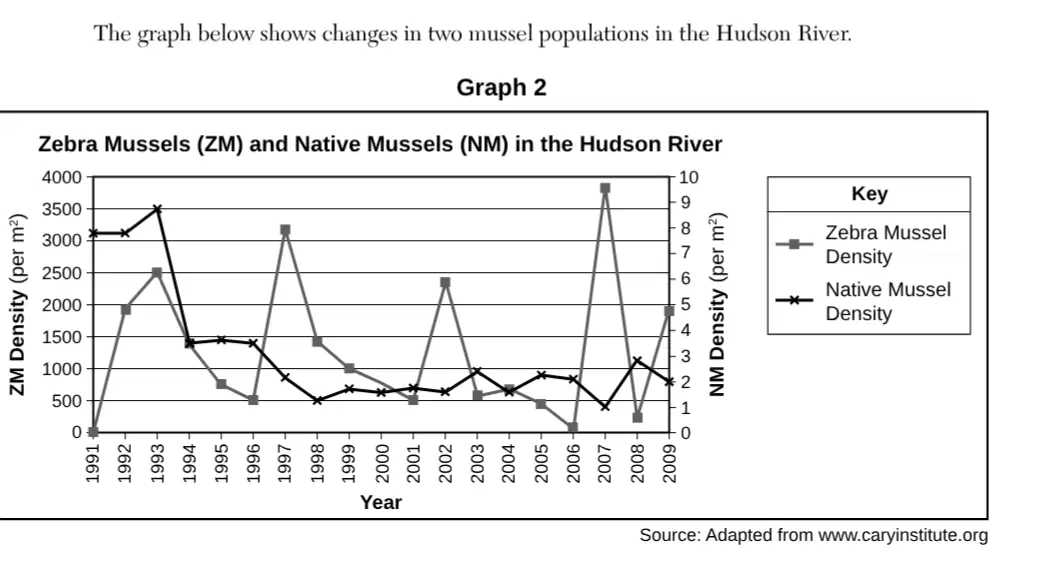
The native mussels and zebra mussels have similar ecological roles. Which of the following is one reason for the pattern represented by the data in Graph 2?
They compete for the same resources.
They live in different habitats.
They have different diets.
They reproduce at different times.
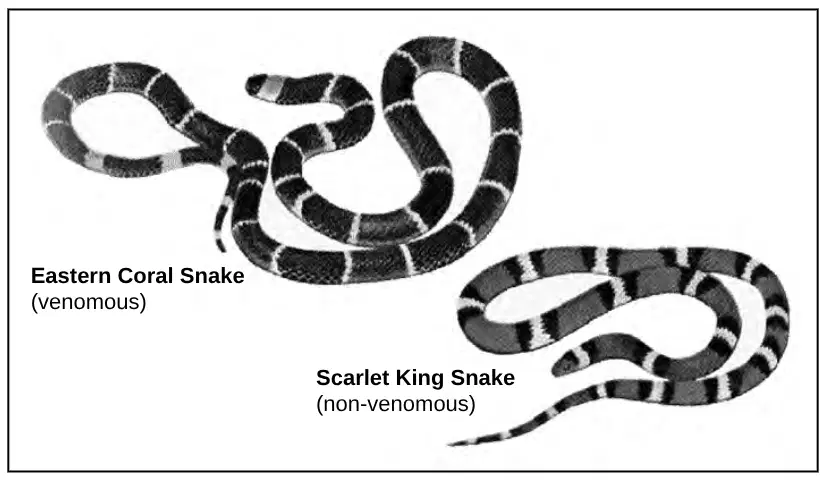
Mimicry is a benefit to the king snake species because:
it helps them avoid predators by resembling venomous snakes.
it allows them to find food more easily.
it helps them survive in colder climates.
it enables them to swim faster.
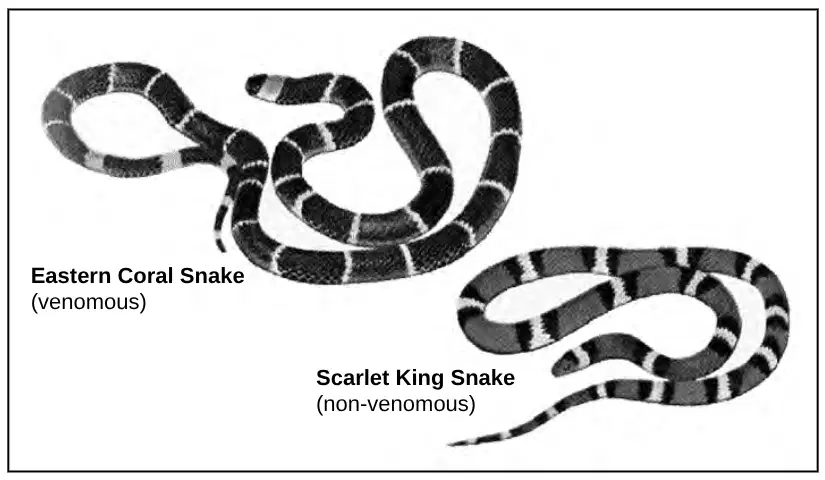
Predict how the population size of king snakes might change over time without coral snakes in the area where they live. Justify your answer.
The population size of king snakes would likely increase due to reduced competition and predation.
The population size of king snakes would likely decrease due to lack of food.
The population size of king snakes would remain unchanged regardless of coral snakes.
The population size of king snakes would fluctuate randomly with no clear trend.
One possible result of reintroducing mountain lions into the Adirondacks is:
an increase in predator-prey balance
a decrease in plant diversity
the extinction of all small mammals
a rise in average temperatures
Land development projects could reduce the deer population in the Adirondacks by:
destroying deer habitats and limiting their food sources.
increasing the number of predators in the area.
providing more shelter for deer to thrive.
improving water quality for deer.
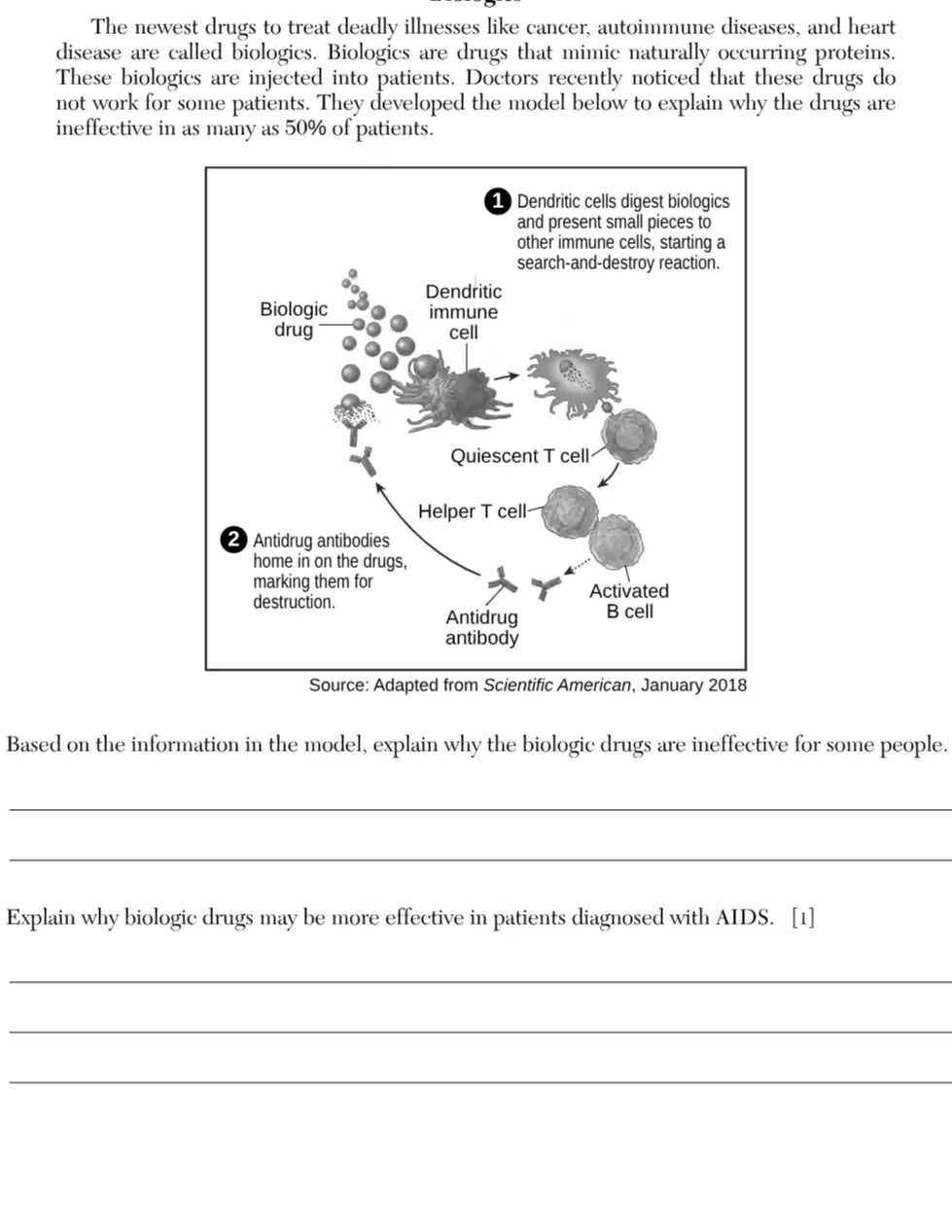
Based on the information in the model, biologic drugs are ineffective for some people because:
their immune systems do not respond to the drugs
the drugs are too expensive
the drugs are not approved for use
the drugs are only effective in children
Biologic drugs may be more effective in patients diagnosed with AIDS because:
they target specific components of the immune system.
they are less expensive than traditional drugs.
they cure AIDS completely.
they have no side effects.
A person would still have immunity to other pathogens after being exposed to these SVPs because:
the immune system retains memory of previous pathogens
SVPs destroy all immune cells
immunity is only specific to SVPs
exposure to SVPs erases all previous immunity
One possible reason why the rapid growth of algae in the Bay resulted in a decline in the number of complex underwater plants is:
Algae blocked sunlight needed by underwater plants.
Algae provided more oxygen for underwater plants.
Algae increased the nutrients for underwater plants.
Algae attracted more fish to the area.
One specific way in which the change from more complex plants to more algae could disrupt food webs in the Bay region is:
Algae provide less habitat and food variety for aquatic animals, reducing biodiversity.
Algae increase the oxygen levels, supporting more fish species.
Algae support more complex food webs than plants do.
Algae prevent any changes in the food web structure.
One type of evidence that researchers would look for to support the conclusion that nitrogen compounds were responsible for the algae growth is:
A correlation between increased nitrogen levels and increased algae growth
A decrease in algae growth when phosphorus is added
No change in algae growth when nitrogen is added
A correlation between increased potassium levels and increased algae growth
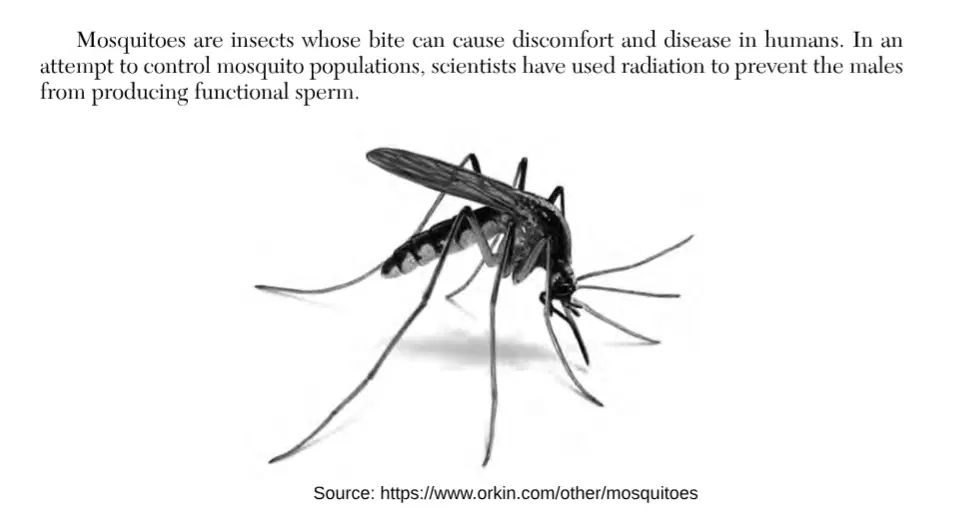
The mosquito population can be controlled as a result of this procedure because:
it reduces the number of mosquitoes able to reproduce.
it increases the food supply for mosquitoes.
it causes mosquitoes to migrate to new areas.
it makes mosquitoes immune to pesticides.
After exercising outside on a cold day, a student noticed that his fingers were not as cold as when he started. One possible explanation for this phenomenon would be that exercising
causes more sweat to be produced, which cools the body
increases the blood circulation, causing body parts to feel warmer
increases the breathing rate to remove waste products
decreases the amount of energy needed, so the fingers feel warmer
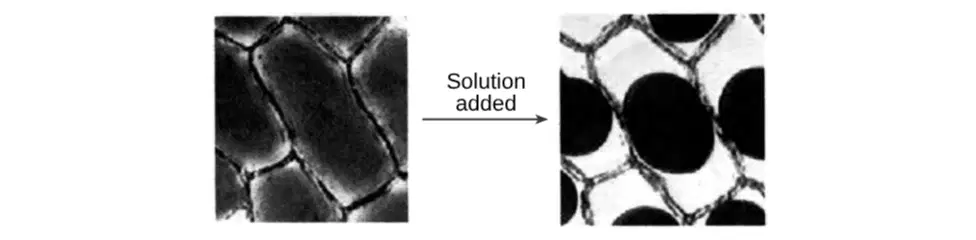
The diagram below represents changes in some red onion cells being observed with a compound microscope after a particular solution was added. Which statement best explains the changes observed?
Distilled water was added to the slide and diffusion caused water to move out of the onion cells.
Salt solution was added to the slide and active transport caused water to move out of the onion cells.
Distilled water was added to the slide and active transport caused water to move out of the onion cells.
Salt solution was added to the slide and diffusion caused water to move out of the onion cells.
A homeowner observed different types of birds feeding at bird feeders filled with an assortment of food. Competition arises most often when two birds have similar
enzymes
niches
habitats
ecosystems

The results of this type of DNA analysis are often used to help determine
if two organisms contain the same carbohydrate molecule
the number of DNA molecules in an organism
if the DNA codes for the synthesis of fat molecules in all cells of an organism
the evolutionary relationship between two organisms from different species

Identify the specific type of molecules performing the action of cutting the DNA samples.
Restriction enzymes
Ligases
Polymerases
Helicases
In the Making Connections lab, for trial 1, students squeezed a clothespin as many times as they could in a minute. State one specific biological reason why their muscle cells “got tired” during the second trial.
The muscle cells got tired because they ran out of oxygen and had to switch to anaerobic respiration, leading to the buildup of lactic acid.
The muscle cells got tired because they absorbed too much water and became swollen.
The muscle cells got tired because they received too many nerve signals and became overstimulated.
The muscle cells got tired because they produced excess carbon dioxide, which energized them.
The resting pulse rates for these students were not all the same because:
different students have different levels of fitness and health
all students have the same physical condition
resting pulse rate never changes among individuals
students measured their pulse rates incorrectly
Increased pulse rate as a result of exercising helps the body maintain homeostasis by:
delivering more oxygen and nutrients to cells
reducing the amount of oxygen in the blood
slowing down the removal of waste products
decreasing the body temperature
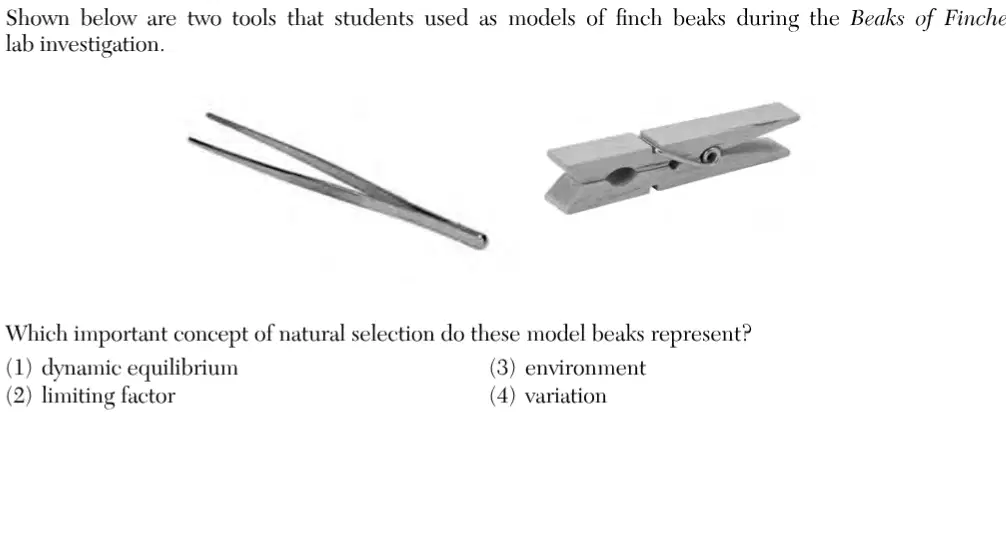
Which important concept of natural selection do these model beaks represent?
dynamic equilibrium
limiting factor
environment
variation
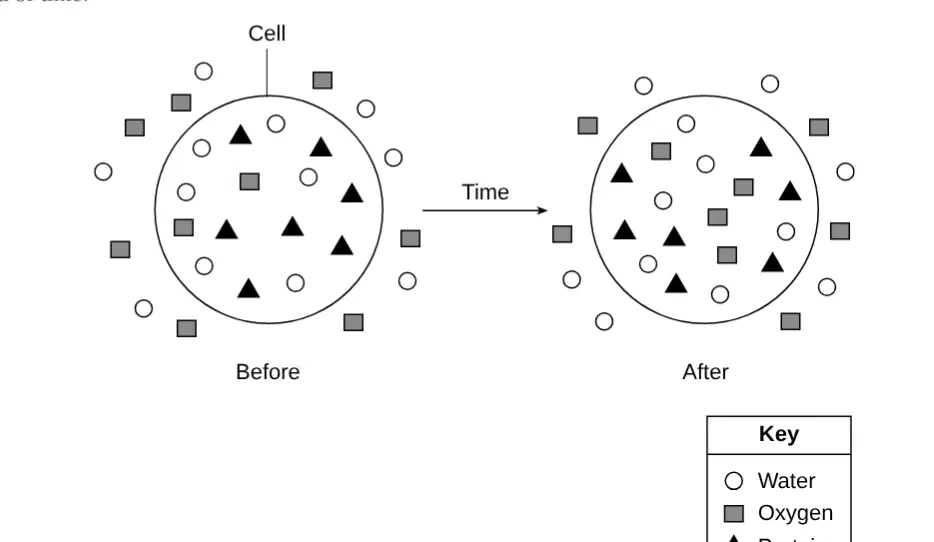
Base your answer to this question on the diagram below and on your knowledge of biology. The diagram shows the changes in distribution of certain molecules inside and outside of an artificial cell over a period of time. The change in the distribution of oxygen molecules was most likely due to
membrane receptors
active transport
synthesis
diffusion

State one possible reason why the proteins did not move out of the cell.
The cell membrane is impermeable to proteins.
Proteins are too small to leave the cell.
Proteins are actively transported out of the cell.
Proteins dissolve in the cell membrane easily.
Other than beak adaptations, which characteristic would help finches on an island compete successfully, and why would it make them successful?
Having strong legs for better movement and escaping predators, increasing survival chances.
Having brightly colored feathers to attract more mates, increasing competition.
Having a loud call to scare away other birds, reducing competition.
Having a large body size to intimidate other animals, gaining more territory.
One specific way that the newly arriving lizards might affect the population of lizards already present on the new island is:
They might compete with the existing lizards for food and resources.
They might cause the existing lizards to grow larger in size.
They might make the existing lizards immune to diseases.
They might cause the existing lizards to migrate to another island.

