
Font size
 Worksheets
biochem quiz
Total questions: 88
Worksheet time: 59mins
the most abundant substance in living system, making up to 70% or more of the weight of the most organism. It has the higher melting point, boiling point, and heat vaporization than most other solvents.
mineral
alcohol
carbohydrates
water
its an electrostatic attraction between the hydrogen atom of 1 water molecule and hydrogen of other is called
isomers
osmosis
hydrogen bond
hydrophobic bond
hydrogen bonds are relatively weak, those in liquid water have a?
hydrophilic
hydrophobic
hydrogen bond
bond dissociation energy
water is a
(a)
compounds that are easily dissolve in water are called?
water
hydrogen bonds
hydrophilic
hypertonic
Non polar solvents( chloroform, benzene), Polar biomolecules is not easy to dissolve in water are called
hydrophobic
amphitatic
ether
hypertonic
water movement across a semipermeable membrane, important in the life of the most cells?
(a)
solution of equal osmolarity
(a)
one with higher parts seen in touch sensitive plants?
non polar molecules
water
polar solvents
hypertonic
molecules that contain a hydrophobic head and hydrophilic tail?
hydrophophilic
amphitatic
hydrogens
oaisis
defined as the groups of atoms w/in a molecule that has a similar chemical properties
function group
functional group
chemical bond
water bonding
organic compound w/ a halogen attached to a carbon (Cl, F,Br, I)
(a)
organic compound w/a hydroxyl group attached to a carbon atom (OH)?
(a)
consists of an oxygen atom attached to 2 carbon (c-0-c)
(a)
contain of an nitrogen atom bonded to a hydrogen (c-N-H)
(a)
organic compound contain a sulfur bonded to a hydrogen and carbon (c-SH)
(a)
contains hydrogen atom directly bonded to H AND C (CHO)?
(a)
A carbonyl group between 2 carbons (c2=0)
(a)
contains OH group directly bonded to a carbonyl carbon(CO2H)
(a)
contains O-R group directly bonded to the carbonyl atom (C02)
(a)
carbonyl group linked by a single bond to a nitrogen atom and either a hydrogen or carbon atom (CN or CH)
(a)
-s-s- or CH3S-SCH3
(a)
-s- or ch3ch2Sch3
(a)
c-c
(a)
c=c
(a)
c=-c
(a)
c===c
(a)
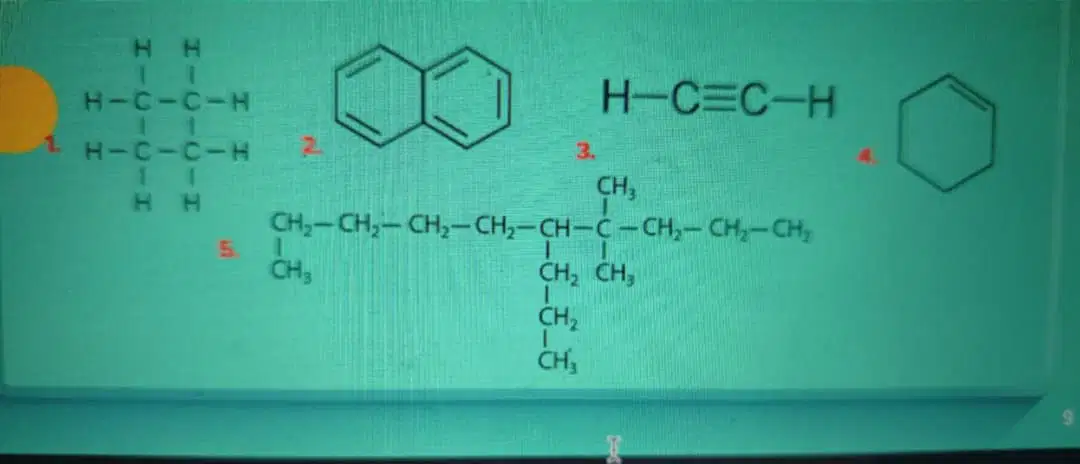
identified
(a)
capable of donating?
benzene
conjugate acid
acid
conjugate base
capable of accepting proton?
conjugate base
conjugate acid
base
acid
acid and its conjugate base or a base and its conjugate acid
conjugate acid base pair
conjugate base
conjugate acid of a base
conjugate acid base
species that remains when one proton has been removed from the acid
conjugate acid base
conjugate base of an acid
conjugate pair
acid base pair
result from the addition of a proton to a base
base acid conjugate
conjugate base to base pair
conjugate acid of a base
conjugate acid to acid pair
can act as an acid or a base
amphiteric
ampheteric
amphoteric
amphitiric
product of a molar concentrations of H+ and OH- at a particular temperature?
ion constant
product constant
ion constant of a product
ion product constant
assumed to ionize completely in water
bond strength
conjugate strength
strong acid/base
ph level
the weaker the bond the lesser energy is required to break it v/v
bond strength
buffers
conjugate stability
base strength
strong acids have weak conjugate bases?
bases
acid
ph and pOH
conjugate pair stability
the effect of it are depends on the amount of the acid and conjugate
ph and pOH
Ka and Kb
buffering capacity
bond strength
the formula for ph is -log( H3O+)
true
false
what is the formula for pOH
-log (OH-)
-log(ph^-10)
14-ph
10^-pOH
formula for H3O+ is 10^-ph
true
false
this formula (10^-ph) is use when you are looking for?
(a)
this formula is use when either ph or pOH is missing
pKw= ph
ph-pOH
pOH + ph
pKW= pH + pOH= 14 at 25C'
buferring formula is pH=pKa + log (A-)/(HA)
false
true
most abundant biomolecules on earth, it has the ability to exist in linear or ring structures?
carbon
energy drinks
carbohydrates
monosaccharides
what are the 3 classifications of carbohydrates
monosacharides, disaccharides, polysaccharides
energy drink, energy supplement, energy bar
ketone, aldose, fructose
sterroids, fats, anomers
write true or false based on the question:
the 5 function of carbohydrates are
1. source of energy
2. structural components
3. coenzyme components
4. nucleotide component
5. role in growth and development
(a)
simple sugars, 3 to 7 carbon atoms, aldehyde or ketone
disaccharides
polysaccharides
monosaccharides
steroids
molecules that have the same molecular formula but different structural formulas
isomers
monomers
anomers
structural isomers
it has the same molecular formula and same order of bonding, but diff. spatial arrangement
enantiomers
stereoisomers
diastereomers
epimers
part of stereoisomers that are non-superimposable mirror image of each other
stereoisomers
monomers
polymers
enantiomers
a pair of stereoisomers that are non superimposable and not mirror image from each other
epimers
anomers
diastereomer
stereisomers
diastereonomers contain more than 1 more chiral center but diff. from each other
anomers
epimers
enantiomers
diastereomers
epimers of a cyclic monosaccharides, differ only in. their configuration of the anomeric carbon
anomers
enimers
epimers
anantiomers
carbohydrates composed of 2 monosaccharides units that are joined by the glycosidic bond (e.g sucrose, maltose,& lactose)
glycosidic bonding
sucrose
altose
disaccharides
formed when one sugar reacts with the anomeric carbon
glycosidic bond
anomers
epimers
maltose
write true or false, types of glycosidic bond
(N glycosidic bond, Nitrogen connects 2 sugar units)
( O glycosidic bond, Oxygen connects 2 sugar units)
(S glycosidic bond, Sulfur atom connects)
(a)
it covers the bitterness of common drug compounds, table sugar, made of glucose and fructose, served as sweetener in food and beverages
sucrose
maltose
fructose
sacrose
composed of 2 glucose units
(a)
composed of glucose and galactose, in mammals lactose occurs in mammary tissue, human milk contains 7.5% and cow's milk contains 4.5%
fructose
milk
dairy
lactose
carbohydrates composed of tens of thousands of monosaccharides, most abundant carbohydrates in nature
starch
homopolysaccharides
lactose
polysaccharides
gimme the 3 most abundants polysaccharides
(a)
2 general types of polysaccharides
homopolysaccharides, and heteropolysaccharides
monosaccharides and disaccharides
storage form in plants, large polymer of glucose sub units, important source of carbohydrates
flour
whey
starch
casssava flour
2 composition of starch
altose and maltose
cellulose and glycogen
amylose and amylopectin
flour and water
diverse group of biomolecules that are insoluble in water and soluble in non polar solvents
acids
fats
vitamins
lipids
3 classifications of lipids
(a)
these are the 5 biological functions of lipids
structural components of molecule, storage and transport of membrane fuels, sense as thermal insulators in the subcutaneous tissues, serve as chemical messenger in the body, covering for nerve fibers
true
falsee
carboxylic acid, structural components of fats, oils and all other categories of lipids excepts steroids
fats acids
fatty acids
acids fats
omega acids
2 types of fatty acids
(a)
it has fatty acids and OH, preserved as energgy reserve and structural substance
simple lipids
omega fatty acids
triglycerides
waxes
2 types of simple lipids
(a)
mixtures of esters of long chain carboxylic acid with long chain alcohol, the function is to prevent water loss in plants and animals
lipids
gel
waxes
honey
composed of an alcohol, fatty acids, & an additional groups
simple lipids
compound lipids
phospholipids
glycolipids
3 types of compound lipids
(a)
composed of 2 fatty acids, amphiphatic molecule becuase of hydrophobis and hydrophilic
phospholipids
lipoproteins
derived lipids
compound lipids
composed of an alcohol, fatty acids, and carbohydrtaes. maitain membrane stability, acting as receptors, anchors for proteins
phospholipids
glycolipids
proteins
lipids
composed of lipids and proteins, water soluble protein-lipid complexes that transport non polar lipids through blood stream
phospholipids
polylipids
lipolipids
lipoproteins
formed from the hydrolysis or breakdown of simple and compound lipids
glycolipids
derived lipids
compound lipids
steroids
major types of derived lipids
(a)
composed of 3 ( 6 membered ring), and 1 (5 membered ring) joined together
whey
lipids
steroids
fat acids
group of vitamins dissolve in fat, stored in the body's liver and fatty livers
steroids
acids of fat
fatty acids
triglycerides
what are the 4 fat soluble vitamins
vitamins a,d,e,k
Vitamins b,c,d,e
Vitamins a,b,c,d,
vitamins b,c,d,e
vitamins k,b,c,a
this vitamins is important for the eye and cell growth
vit a
vit b-complex
vit c
vit K
This is good for calcium absorption and bone health
vit k
vit a
vit d
vit b complex
it acts as anti oxidant and protect cells from damage
vit k
vit c
vit e
vit a
this vitamins is good for blood clothing and bone health
vit a
vit b complex
vit k
vit c

