
 Worksheets
Semester 2 Quiz
Total questions: 50
Worksheet time: 38mins
A 12-year-old boy presents with rapid weight loss, polyuria, and fatigue. Blood glucose is 22 mmol/L , and ketones are present in urine. What is the most likely diagnosis?
Type 2 DM
Type 1 DM
MODY
LADA
Which autoantibody is most commonly associated with Type 1 DM?
Anti-insulin
GAD-65
Anti-thyroid peroxidase
Anti-phospholipid
What is the primary pathophysiological defect in Type 1 DM?
Insulin resistance
Autoimmune destruction of pancreatic β-cells
Amyloid deposition in islets
Genetic mutation in HNF1A
A 14-year-old girl with Type 1 DM presents with confusion and fruity-smelling breath. ABG shows pH 7.20, HCO₃⁻ 12 mEq/L, and glucose 28 mmol/L. What is the most urgent treatment?
Oral metformin
IV insulin + fluids
Glucagon injection
Sitagliptin
A 45-year-old woman with central obesity (BMI 32), hypertension (BP 150/95 mmHg), and fasting glucose 6.8 mmol/L meets criteria for metabolic syndrome. Which additional lab finding would confirm this diagnosis?
Triglycerides ≥1.7 mmol/L AND HDL <1.3 mmol/L
LDL >4.0 mmol/L AND HDL <1.3 mmol/L
Serum creatinine 120 µmol/L
TSH 5.5 mIU/L
A 50-year-old obese man (BMI 34) has an HbA1c of 8.5%. Which is the first-line pharmacotherapy?
Metformin
Glipizide
Insulin glargine
Empagliflozin
Which mechanism best explains insulin resistance in Type 2 DM?
Impaired insulin signaling in muscle/adipose tissue
Autoantibodies against β-cells
Viral destruction of islets
Excess glucagon secretion
A 60-year-old man with 15-year history of T2DM presents with unintentional weight loss (5 kg in 3 months) and HbA1c 9.8% despite maximal oral therapy. What is the next step?
Add a DPP-4 inhibitor
Start basal insulin
Switch to GLP-1 RA
Continue current regimen
Which oral hypoglycemic agent promotes weight loss and reduces cardiovascular risk?
Glibenclamide
SGLT2 inhibitors
Pioglitazone
Repaglinide
What is the target HbA1c for most Type 2 DM patients?
<6.0%
<7.0%
<8.5%
No target needed
A 58-year-old patient newly diagnosed with diabetes and hypertension has persistent albuminuria for a month and eGFR 55 mL/min/1.73m². What CKD stage is this?
Stage 2
Stage 3a
Stage 4
Cannot confirm CKD
Which electrolyte imbalance is most common in ESKD?
Hyperphosphatemia
Hypokalemia
Hypercalcemia
Hypomagnesemia
A 60-year-old woman with CKD has bone pain and a low serum phosphate of 6.8 mg/dL. What is the most likely cause of her symptoms?
Secondary hyperparathyroidism
Vitamin D toxicity
Hyperphosphatemia
Osteoarthritis
What is the primary cause of metabolic acidosis in ESKD?
Kidneys cannot excrete H⁺ or regenerate HCO₃⁻
Excessive ketone production
Lactic acidosis
Respiratory failure
Which intervention is part of primary prevention of CKD in diabetic patients?
Dialysis
BP control
Parathyroidectomy
Healthy diet
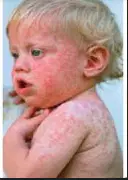
A 4-year-old boy is brought to the clinic with a 1-day history of a fine, pink maculopapular rash that began on his face and has spread to his trunk and extremities. On physical exam, you note significant posterior auricular and suboccipital lymphadenopathy. His mother reports he had a mild fever and runny nose a few days prior. The most likely aetiological agent for this rash is:
Human Herpesvirus 6
Varicella-Zoster Virus
Streptococcus pyogenes
Sarcoptes scabiei
Rubella Virus
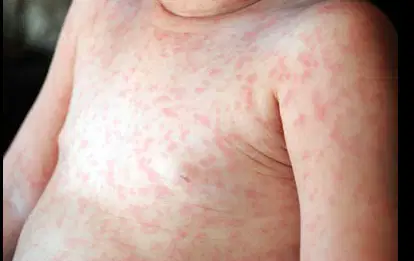
A 7-month-old infant is seen in the emergency department for a high fever (39.7°C) that has lasted for 3 days. Today, the fever resolved abruptly, and a faint, rose-pink macular rash appeared on the trunk and neck. The child is now acting playful and well. This classic presentation is most characteristic of:
Rubella
Roseola Infantum
Chickenpox
Pityriasis versicolor
Impetigo

A 5-year-old girl presents with clusters of intensely pruritic, erythematous papules and burrows in the web spaces between her fingers and on her flexor wrists. Her mother and younger brother have started to develop similar symptoms. The rash in this condition is a result of:
A systemic viral infection
A superficial bacterial infection
An overgrowth of dermal yeast
A hypersensitivity reaction to a mite
Invasion of keratinized skin by a dermatophyte
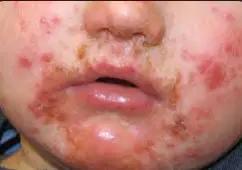
A 2-year-old boy in daycare has honey-colored, crusted erosions on his perioral area and nares. There is no associated fever or systemic symptoms. A Gram stain of the exudate would most likely reveal:
Gram-negative diplococci
Branching hyphae
Neutrophils with no organisms
Gram-positive rods
Gram-positive cocci in chains
Which finding is most consistent with Pityriasis versicolor as opposed to the other conditions?
A rash that follows the lines of skin cleavage.
A rash that is contagious to other children.
A rash that is tender to the touch.
A rash of hypopigmented macules that do not tan
A rash that appears only after a high fever subsides.
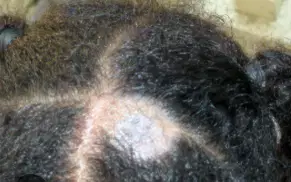
A child has an infection of the scalp causing patchy hair loss and scaling. This is most consistent with:
Impetigo
Scabies
Pityriasis versicolor
Seborrheic dermatitis
Tinea capitis
The primary mode of transmission for the measles virus is through:
Fecal-oral route
Blood and bodily fluids
Direct contact with skin lesions
Respiratory droplets and aerosols
Contaminated food or water
What is the most common fatal complication of measles globally?
Encephalitis
Subacute sclerosing panencephalitis
Pneumonia
Myocarditis
A 24-year-old man who had measles as a child presents with a several-month history of progressive personality changes, myoclonic jerks, and cognitive decline. This presentation is most consistent with:
Measles inclusion body encephalitis
Subacute sclerosing panencephalitis
Guillain-Barré syndrome
Post-infectious encephalomyelitis
Herpes simplex encephalitis
The period during which a patient with measles is considered contagious is:
From the onset of the rash until the rash fades
From 4 days before to 4 days after the rash appears
Only during the prodromal phase with cough and coryza
From 2 days before symptoms begin until the rash has disappeared
The exanthem stage
A 2-year-old, HIV-positive child contracts measles. Compared to an immunocompetent child, which of the following complications is he at a uniquely higher risk for developing?
Otitis media
Diarrhea
Giant cell pneumonia without a typical rash
Thrombocytopenia
Keratoconjunctivitis
A public health officer is managing a measles outbreak in a community. The single most effective long-term strategy to prevent future outbreaks is:
Stockpiling intravenous immunoglobulins
Mandatory isolation of all symptomatic cases
Achieving and maintaining high coverage with two doses of the MMR vaccine
Providing prophylactic antibiotics to all contacts
Widespread administration of vitamin A
The classic progression of the four stages of measles, in correct order, is:
Exanthem, Incubation, Prodrome, Recovery
Incubation, Exanthem, Prodrome, Recovery
Incubation, Prodrome, Exanthem, Recovery
Prodrome, Incubation, Exanthem, Recovery
Viremia, Prodrome, Exanthem, Convalescence
A 35-year-old migrant from sub-Saharan Africa presents to the emergency department with a high-grade fever, chills, and confusion. The clinical suspicion for malaria is high. The laboratory is preparing peripheral blood smears. What is the primary diagnostic advantage of a thick blood film over a thin blood film in this acute setting?
It allows for better visualization of the parasite's morphology and infected red blood cell appearance
It concentrates the parasites, increasing the sensitivity for detecting a low-level parasitemia.
It is faster to prepare and stain, providing a more rapid result.
It is more effective at distinguishing between the different Plasmodium species.
A key pathophysiological difference between Plasmodium falciparum and Plasmodium vivax is:
P. falciparum exclusively infects young reticulocytes, limiting its parasitemia.
P. falciparum-infected erythrocytes can cytoadhere to microvascular endothelium, causing sequestration and hypoxia.
P. vivax has a longer asexual replication cycle in the blood, leading to higher fever peaks.
P. vivax produces more hemozoin pigment, triggering a more potent inflammatory response.
A patient was successfully treated for malaria 6 months ago after returning to Fiji from the Solomon Islands and now presents with a new episode of febrile illness. Blood smears are suggestive for malaria. What is the most likely explanation for this?
Reinfection from a new mosquito bite
Development of drug resistance
Relapse from dormant hypnozoites in the liver
Relapse due to sub-therapeutic drug levels
A 29-year-old farmer presents with a 3-day history of sudden-onset high fever, headache, and intense pain in his calves. On examination, he is ill-appearing with a temperature of 39.5°C. You note marked conjunctival injection without purulent discharge and mild tenderness over his right upper quadrant. There is no rash, lymphadenopathy, or joint swelling.
A flavivirus, causing Dengue Fever
A parasite, causing Malaria
A spirochete, causing Leptospirosis
An alphavirus, causing Chikungunya
A 19-year-old man presents for evaluation. He reports a 3-day history of fever, muscle pains, and vomiting. Today, his fever has resolved, but he has developed significant abdominal pain. A physical exam is notable for a positive tourniquet test. He is suspected to have a dengue infection.
According to the WHO 2009 classification guidelines, how should this patient's dengue infection be categorized?
Dengue without Warning Signs
Severe Dengue
Dengue Hemorrhagic Fever
Dengue with Warning Signs
A 19-year-old university student presents to the clinic with a 3-day history of severe dysuria and a thick, yellowish urethral discharge. He is sexually active with multiple new partners and does not use condoms consistently. What is the most appropriate clinical syndrome and the corresponding most likely causative pathogens?
Genital Ulcer Syndrome; Treponema pallidum and Haemophilus ducreyi
Anorectal Syndrome; Neisseria gonorrhoeae and Chlamydia trachomatis
Urethral Discharge Syndrome; Neisseria gonorrhoeae and Chlamydia trachomatis
Parasitic Infestation; Phthirus pubis and Sarcoptes scabiei
A 25-year-old male presents with a 5-day history of multiple painful penile blisters that have ruptured into shallow ulcers, along with tender inguinal lymph nodes. He reports fever and body aches, beginning 10 days after unprotected sexual intercourse. Based on the most likely clinical diagnosis, which of the following pairs best matches the possible causative agents?
Neisseria gonorrhoeae and Chlamydia trachomatis
Treponema pallidum and Klebsiella granulomatis
Herpes Simplex Virus and Haemophilus ducreyi
Human Papillomavirus and Sarcoptes scabiei
A 21-year-old woman presents with a complaint of a profuse, thin, white/grey vaginal discharge with a strong "fishy" odor, worse after intercourse. She also experiences mild vulvovaginal itching. She is sexually active with one partner and they both have tested negative for STIs. She reports no dysuria or abdominal pain. She recently completed a course of antibiotics for a chest infection.
Candidal Vulvovaginitis; Budding yeasts and pseudohyphae
Bacterial Vaginosis; Clue cells on saline wet mount
Trichomoniasis; Motile flagellated protozoa on wet mount
Gonococcal Cervicitis; Gram-negative intracellular diplococci
A 29-year-old woman is seen for her first antenatal visit at 16 weeks. She feels perfectly healthy. Routine screening reveals she is positive for Hepatitis B Surface Antigen (HBsAg). She is surprised as she has never felt ill. Based on this finding, which of the following best describes the incubation period of the virus and the most likely clinical presentation of the infected newborn, if there is not treatment?
Incubation period of 2-4 weeks; the newborn would present with fever, vomiting, and a maculopapular rash within the first month of life.
Incubation period of 1-4 days; the newborn would present with lethargy, poor feeding, and seizures due to encephalitis.
Incubation period of 15-50 days; the newborn would often be asymptomatic at birth but is at high risk for developing chronic, asymptomatic infection.
Incubation period of 6-9 months; the newborn would present with jaundice and tender hepatomegaly around 4-6 months of age
A 3-day-old male infant is brought to the emergency department by his anxious parents. The baby was born at 39 weeks via an uncomplicated vaginal delivery. The parents report that yesterday, the baby's right eye became red and swollen, and today a profuse, purulent discharge has begun to drain from the eye, matting the eyelids shut. The mother, a 19-year-old, had unremarkable prenatal care but recalls her clinic records were lost and she is unsure if all her screenings were completed. Based on the timing and characteristics of this presentation, which of the following pairs of pathogens are the most likely causes?
Chlamydia trachomatis and Treponema pallidum
Herpes Simplex Virus and Human Papillomavirus
Neisseria gonorrhoeae and Chlamydia trachomatis
Staphylococcus aureus and Streptococcus pneumonia
A new, highly sensitive and specific rapid blood test for "Disease X" is developed. The test has a sensitivity of 95% and a specificity of 95%.
In Country A, the prevalence of Disease X is 1% in the general population. In Country B, due to different environmental factors, the prevalence is 25%.
If the rapid test is used for mass screening in both countries, which of the following statements is TRUE?
The test's sensitivity will be higher in Country B, leading to more cases being detected.
The test's specificity will be lower in Country A, leading to more false positives.
A positive test result is more likely to be a true positive in Country B than in Country A.
The positive predictive value will be the same in both countries because the test characteristics are unchanged.
A 45-year-old patient is newly diagnosed with cervical squamous cell carcinoma. During her history, she reports she has been a smoker for 25 years, had her first sexual intercourse at age 16, and has had five lifetime sexual partners. She has no history of HIV or other immunocompromising conditions.
Which of the following statements best explains the role of these risk factors in the pathogenesis of her cervical cancer?
The primary driver of her cancer is the early age of sexual debut and the number of sexual partners, which directly cause cellular mutations.
The long-term use of tobacco is the most significant risk factor, as its carcinogens directly transform cervical epithelial cells, making HPV infection a less important cofactor.
The combination of smoking and multiple sexual partners are independent, equally necessary factors that act synergistically to cause malignancy.
Persistent infection with a HPV is the necessary cause; the other factors increase the risk of acquiring HPV or by promoting viral persistence and progression
A 62-year-old woman is diagnosed with Stage IIB estrogen receptor-positive, HER2-negative invasive ductal carcinoma of the breast. The tumor is 3.5 cm in size and two ipsilateral axillary lymph nodes are involved on imaging. There is no evidence of distant metastasis. According to the fundamental principles of cancer management, what is the most appropriate initial treatment?
Systemic Chemotherapy
Definitive Surgery
Primary Radiotherapy
Hormonal Therapy
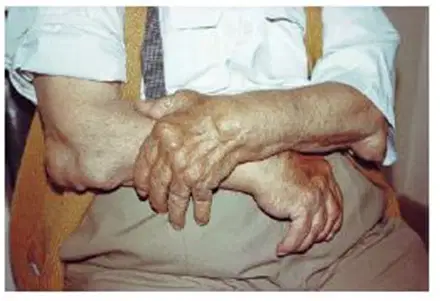
Which of the following options correctly identifies the disease based on the findings visible in the photograph?
Gout
Osteoarthritis
Systemic Lupus Erythematosus
Polymyositis
Rheumatoid Arthritis
An 80-year-old woman with known osteoarthritis presents to the clinic with a 1-day history of an acutely swollen, red, hot, and painfully immobile right knee. She has had progressive, achy pain in that knee for years, but this episode is sudden and far more severe. She has no history of trauma or a fall. Her vital signs show a low-grade fever. Based on her presentation and history, which of the following is the most likely diagnosis?
Gout
Rheumatoid Arthritis
Osteoarthritis flare
Pseudogout
Septic arthritis
A 25-year-old woman presents to her primary care physician with a 3-month history of profound fatigue, diffuse arthralgias, and a new rash on her face that worsens after being in the sun. On review of systems, she reports unintentional weight loss and occasional mouth sores. Her physical exam is notable for a raised, erythematous rash over her malar eminences and nasal bridge, sparing the nasolabial folds.
Based on this clinical presentation, which of the following is the most appropriate initial screening test for the suspected underlying condition?
Rheumatoid Factor (RF) and Anti-Cyclic Citrullinated Peptide (Anti-CCP) Antibodies
Anti-Smith (anti-Sm) and anti-dsDNA
Anti-Nuclear Antibody (ANA)
Anti-Ro (SS-A) and Anti-La (SS-B) Antibodies
ESR and CRP
Which of the following outlines the most accurate and comprehensive monitoring plan for side effects of a patient on a typical, non-biologic DMARD?
Baseline chest X-ray, followed by monthly renal function tests and annual dermatology skin checks.
Daily folic acid supplements, periodic monitoring of Full Blood Count, Liver Function Tests and an annual eye check up
Daily folic acid supplements, annual X-Rays, eye reviews and monitoring of ESR, CRP.
Baseline chest X-ray, monthly Vitamin B12 injections, annual vaccinations and folic acid supplementation
A patient with active rheumatoid arthritis is starting methotrexate today. The rheumatologist concurrently prescribes a course of oral prednisone. What is the primary rationale for prescribing prednisone at this time, and what is the intended treatment duration?
To provide a synergistic effect with the methotrexate; the patient will be on this dose permanently
To provide rapid symptom relief until the methotrexate takes effect; for a short, defined period
To prevent the common side effect of hepatotoxicity from methotrexate; for the entire duration of methotrexate therapy.
To treat a suspected underlying infection causing the flare; for a standard 10-day course.
Which of the following statements accurately distinguishes osteomalacia and osteopenia?
Osteopenia is a biochemical diagnosis of defective bone mineralization, while osteomalacia is a radiologic finding of reduced bone density.
Both osteopenia and osteomalacia are clinical diagnoses based on the presence of bone pain and pathologic fractures.
Osteopenia is a quantitative radiologic finding of low bone mass, while osteomalacia is a qualitative biochemical disorder of defective bone mineralization.
Osteomalacia is a precursor to osteoporosis, diagnosed radiologically, while osteopenia is a complication of vitamin D deficiency diagnosed by serum calcium levels.
A 68-year-old patient presents with a 3-year history of progressive, achy pain in both knees and the distal interphalangeal joints of her hands. The pain is worse with activity and relieved by rest. She reports brief morning stiffness lasting less than 10 minutes. Physical exam reveals bony enlargement of the affected finger joints but no warmth or erythema. She has no fever, weight loss, fatigue, or skin rashes.
Which of the following suggest this presentation could be osteoarthritis, rather than other inflammatory or autoimmune causes of arthritis?
It is relieved by rest and worsened by activity.
It is characterized by a symmetric synovitis of the large joints of the hands.
It mainly affected the large joints and distal interphalangeal joints
It is a localized joint disease without systemic constitutional symptoms.
A 55-year-old woman with a BMI of 38 presents with a 2-year history of progressive, activity-related pain in both knees. She has been diagnosed with osteoarthritis. She is frustrated with the chronic pain and states, "I would really prefer to get knee surgery to get rid of this for good please." Examination reveals crepitus and mild joint line tenderness, but no significant effusion or instability. X-rays confirm moderate medial compartment osteoarthritis.
What is the most appropriate initial advice regarding management for her case?
A total knee arthroplasty is the definitive treatment and is indicated for all patients with radiographic evidence of osteoarthritis to prevent further joint damage
A referral for surgery is appropriate. Given your age, the surgery may be high-risk, but it is the only way to effectively treat your condition along with pain relief medications for symptom control
Surgery is a last resort. You should focus on including a structured weight loss program, low-impact exercise and pain relief when needed
Surgery is not an option for you due to your weight. We can only offer pain medications to manage your symptoms and ask you to lose some weight before considering surgery
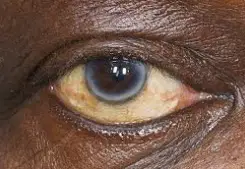
A 72 year old male presents to the health center for a check up. The image represents the eye examination findings. Identify the name of this finding.
Kayser-Fleischer Ring
Xanthelasma
Arcus Senilis
Pterygium
Xanthamata

