
Font size
 Worksheets
Unit 4 Body Organization
Total questions: 44
Worksheet time: 29mins


The little toe is _______ to the big toe.
Medial
Distal
Superior
Lateral
The auxiliary region is ______ to the hip
Medial
Distal
Superior
Lateral
The arm is ______ to the hand
Medial
Distal
Proximal
Lateral
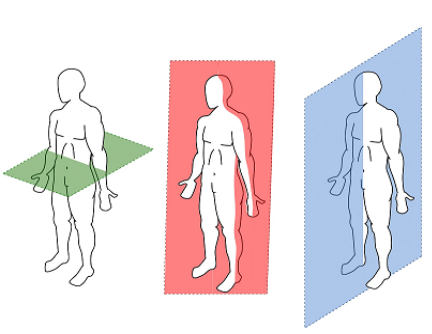
Divides the body into front and back portions.
Sagittal
Frontal
Transverse
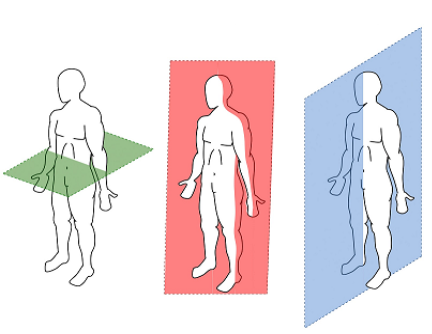
Divides the body into left and right portions.
Frontal
Transverse
Sagittal.

What body plane is this?
Transverse
Midsagittal
Coronal
Air
Away from the head.
Inferior
Lateral
Deep
Distal
Closer to the head.
Anterior
Proximal
Superior
Medial
The nose is ______ to the eyes.
Medial
Distal
Superior
Inferior
The face is on the _______ side of the body.
Posterior
Anterior
Ventral
Dorsal
toward the surface
superficial
deep
medial
lateral
away from the surface of the body
superficial
deep
medial
lateral
how many abdominal quadrants do you have?
1
2
3
4
which of the following has the same meaning as ventral
posterior
anterior
lateral
distal
The front of the body
dorsal
anterior
posterior
lateral

The elbow is ________________ to the fingers.
caudal
proximal
inferior
distal
Which abdominal region is above the hypogastric region?
lumbar
umbilical
hypochondriac
epigastric
Which abdominal are is on either side of the epigastric region?
hypogastric
iliac
umbilical
hypochondriac
Which connective tissue stores fat cells?
adipose
tendons
epidermis
ligaments
Select the answer with three (3) kinds of tissue.
Bone, Stomach, Muscle
Heart, Respiratory, Nerve Cell
Bone, Muscle, Nerve
Brain, Stomach, Heart

These are the muscles attached to your bones.
Skeletal
Smooth
Rough

These are the muscles found in your organs (like your stomach).
Skeletal
Smooth
Rough

This muscle tissue is only found in the heart.
Skeletal
Smooth
Cardiac

When similar cells group together it is called a tissue
true
false

Organs that work together are part of a(n) ________________________.
cells
tissue
organ system

What is a group of cells that are alike and work together?
a cell team
a tissue
a cell family
is the maintenance of a relatively stable INTERNAL environment
can occur only in plants
Which nutrient helps build muscles and repair tissues?
Fats
Water
Carbohydrates
Protein
This nutrient is used for long-term storge of energy and to help insulate the body.
water
clothing
fat
vitamin
An extremely strong base would have a pH of:
1
7
9
14
Healthy environments for life have a pH closest to:
1
3
7
10
Which blood cells carry oxygen throughout the body?
Red
White
Plasma
Platelets
What is the yellowish liquid that carries nutrients and proteins through the body?
Red
White
Plasma
Platelets
Which blood cells fight infection?
Red
White
Plasma
Platelets
Which blood cells that help you stop bleeding if you get a cut?
Red
White
Plasma
Platelets
Responsible for stopping bleeding in a vessel
RBCs
WBCs
Platelet
Responsible for the transportation of O2 and CO2
RBCs
WBCs
Platelet
What is the function of white blood cells?
carry oxygen
fight infection
carry nutrients
clot blood

