
 Worksheets
Mandible and orbits section (FINAL)
Total questions: 47
Worksheet time: 28mins
The vertical portion of the mandible is called
Gonion
Mental
Ramus
Angle
The long axis of each orbit is angled what degree to the MSP
45
37
30
90
The angle of the mandible is called
Mandangle
Inion
Gonion
Rami
Which projection elongates the rami
PA
SMV
AP
PA Axial
Radiologic positioning guidelines are based on dolichocephalic skull size and shape
True
False
When the AML is perpendicular to the IR, which part are we looking at without slongation?
Rami
Gonion
The goal is to place the desired portion of the mandible parallel with the IR
True
False
In an axiolateral of the ramus, the head is:
Rotated 30 degrees towards the IR
Rotated 45 degrees towards the IR
In a true lateral
In a true AP
The angle for the axiolateral projection is:
15 degrees
20 degrees
25 degrees
45 degrees
Which projection requires the IOML to be as parallel as possible to the IR plane
PA axial
SMV
AP axial
PA
PA axial orbits call for a caudal angulation of how many degrees
15
20
25
30
On a lateral orbit projection, the inner canthus should be adjacent and centered to the IR
True
False
"tear drop" is a sign of
Orbital cellulitis
Orbital roof fracture
Orbital floor fracture
Nasal fracture
In a Rheese’s view, the optic foramen should show up in the upper quadrant of the orbit
True
False
The long axis of each orbit is angled what degree to the MSP?
37
45
23
60
When performing a PA mandibular body, which line is perpendicular to the IR plane? (use abbreviations)
AML
OML
IOML
MML
A rhese view is primarily done to evaluate...
optic foramen
mandible
zygomatic arch
maxillary sinus
In an axiolateral oblique of the body, the head is...
rotated 30 degrees towards the IR
rotated 45 degrees towards the IR
perpendicular to the IR
parallel to the IR
The goal is to place the desired portion of the mandible perpendicular with the IR
True
False
Radiographic positioning guidelines are based on mesocephalic skull size and shape
True
False
When performing a lateral projection of the orbits, which line is perpendicular to the front IR edge? (use abbreviations)
IOML - IPL
OML - IPL
MSP - IPL
MML- IPL
What is the most lateral part of the mandible?
ramus
body
angle
condyle
In an axiolateral of the ramus, the head is...
In a true lateral
Tilted anteriorly
Rotated medially
Extended posteriorly
When the mandibular symphysis is extending almost to the anterior border of the face, what projection is this (abbreviation is OK)
SMV (Submentovertex)
PA (Posteroanterior)
Lateral
Waters
The angle of the mandible is also called _______.
gonion
zygomatic arch
mental foramen
coronoid process
Which projection requires the IOML to be as parallel as possible to the IR plane?
AP Axial
SMV
Orbits may be ordered for plastic foreign body screening before MRI procedures.
True
False
True or False:
True
False
Which line is placed perpendicular to the plane of the image receptor for the PA projection of the mandibular rami?
OML
IOML
AML
MML
Each orbit is composed of how many bones?
7
5
8
6
"tear drop" is a sign of...
orbital floor fracture
zygomatic arch fracture
mandibular fracture
nasal bone fracture
What is the largest and densest bone of the face?
mandible
maxilla
zygomatic bone
nasal bone
What projection of the orbits is done to rule out a blow out fracture?
waters
lateral
PA skull
submentovertex
The angle for the an axiolateral projection is...
15 to 20 degrees
30 to 35 degrees
45 to 50 degrees
5 to 10 degrees
Which projection elongates the rami?
PA Axial
AP Axial
Lateral
Towne
For a rhese method, the head, nose and cheek are touching the IR.
True
False
Which skull type is narrow from side to side, sort of like a banana?
Dolichocephalic
Mesocephalic
Brachycephalic
PA axial orbits call for a caudal angulation of how many degrees?
25 degrees
15 degrees
30 degrees
40 degrees

Where are the two fractures located? (blank) and (blank)
(a)
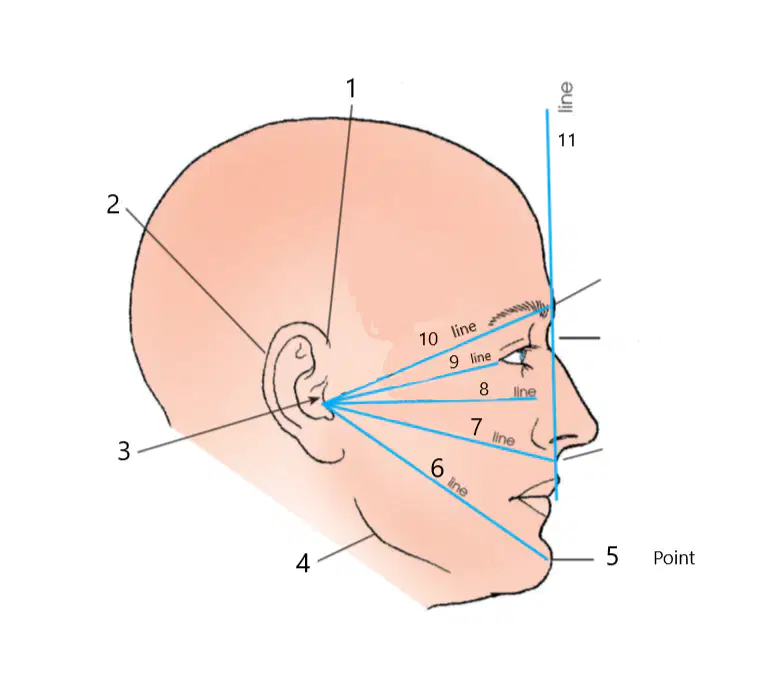
What is 9?
(a)
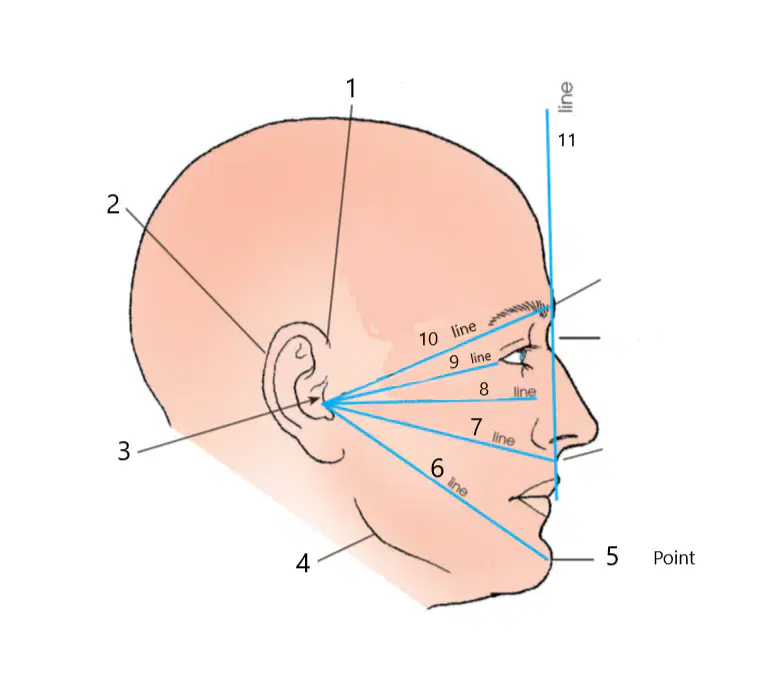
What is 3?
(a)
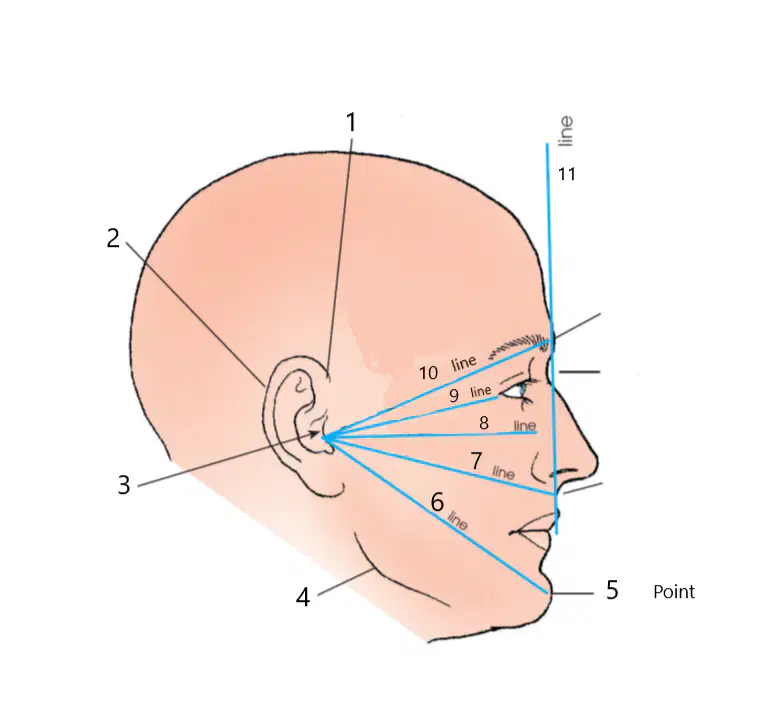
What is 8?
(a)
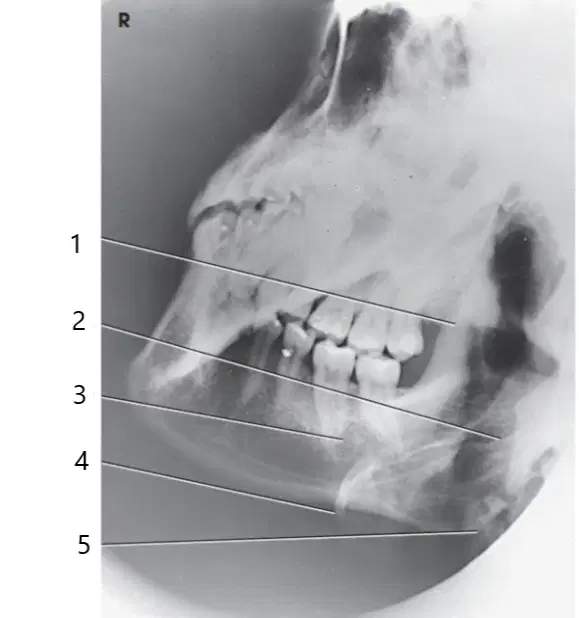
What is 1?
(a)
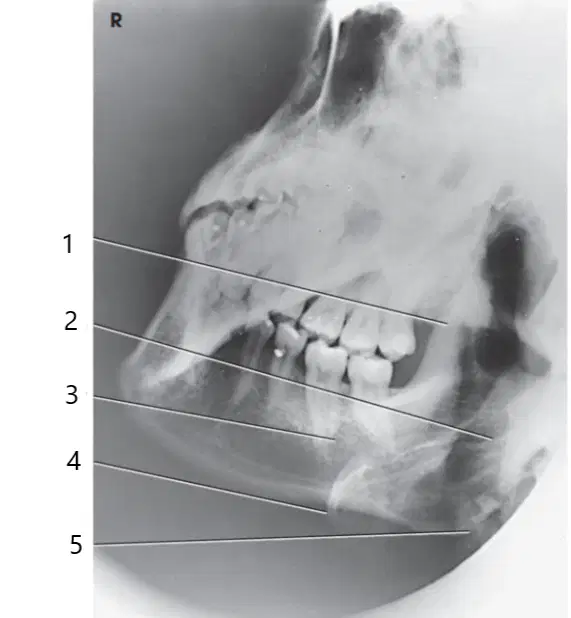
What is 2?
(a)
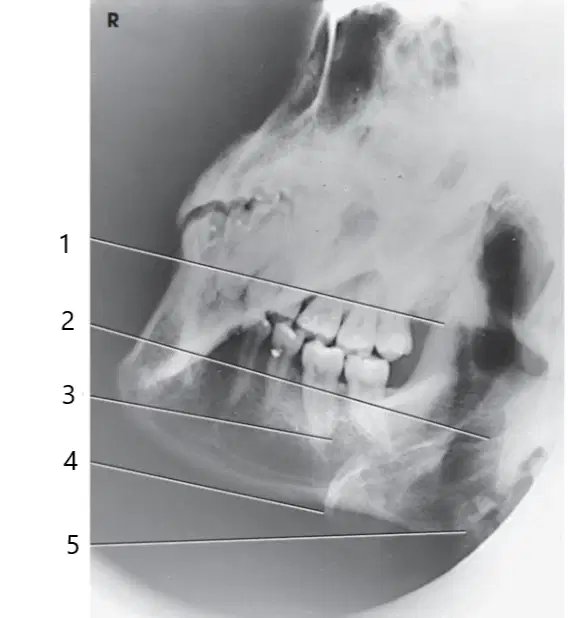
What is 3?
(a)
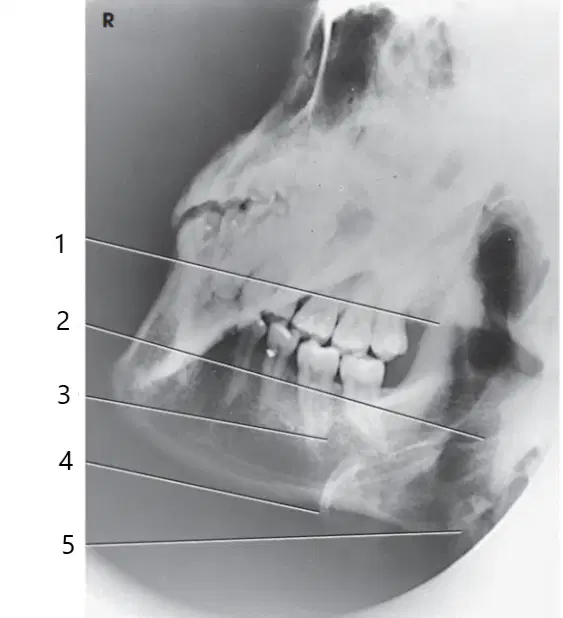
What is 4?
(a)
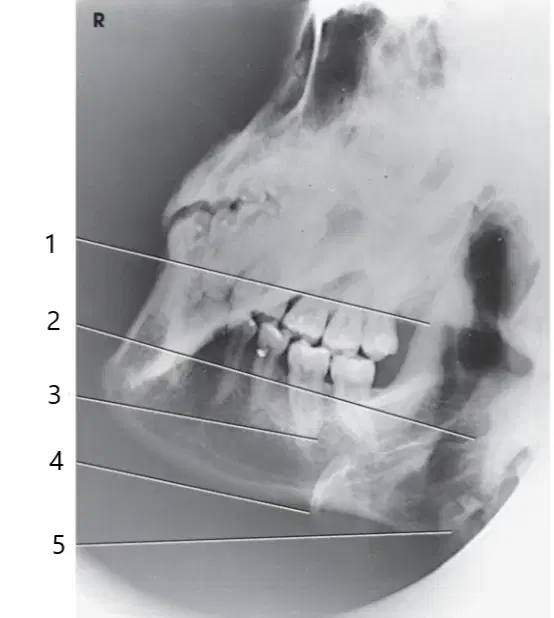
What is 5?
(a)

