
NEW
Font size
 Worksheets
Chapter 4: Preparing for Exercise
Total questions: 20
Worksheet time: 10mins
Alif is preparing for a long-distance run on a hot and humid day. According to the document, what is the primary physiological risk they face, and why?
Hypothermia, because sweating will cool the body down too much.
Hyperthermia, because high humidity prevents sweat from evaporating, causing the body to store heat.
Frostbite, because the extreme weather conditions can damage the skin.
Heat cramps, because they will not be wearing enough protective equipment.
What is the primary purpose of a cool-down after exercise?
To prepare the mind for the upcoming activity.
To increase the body's core temperature and heart rate.
To help the body clear lactic acid and lower the heart rate gradually.
To replace electrolytes lost during heat cramps.

A tennis player complains of painful muscle spasms in their calves after a match under the sun. Based on the document, what is the most likely cause and the first recommended action?
Heat stroke; immediately immerse them in an ice bath.
Heat cramps; provide fluids like water or diluted juice and use gentle stretching/massage.
Heat exhaustion; wrap them in blankets to stop shivering.
Hypothermia; give them a hot beverage to raise their core temperature.

What is the specific purpose of protective equipment?
To maximize fashion and team spirit.
To protect "at risk" areas of the body while allowing optimum sporting performance.
To restrict movement for safety and prevent over-flexibility.
To increase body temperature and improve warm-up efficiency.

While exercising in a cold, windy environment, a hiker notices their fingers are numb, appear white, and feel hard to the touch. Based on the document, what condition is this most indicative of?
Heat Exhaustion
Hypothermia
Frostbite
Hyperthermia

What is the main reason for ensuring sports clothing is breathable?
To allow for maximum flexibility during movement.
To prevent chafing by ensuring a proper fit.
To allow proper air circulation and prevent overheating.
To cater to the specific environment, like wearing a wetsuit.
During a workout, Aliyah's heart rate monitor shows an alarming irregular rhythm (ECG irregularity). What does the document list as the correct course of action?
Encourage them to push through it to strengthen their heart.
Immediately stop the exercise.
Start the cool-down process slowly.
Give them a sports drink to replace electrolytes.

What is the role of the hypothalamus in temperature regulation?
It acts as a thermostat to maintain body temperature near 37°C (98.6°F).
It produces sweat to cool the body down through evaporation.
It causes shivering to generate heat in the muscles.
It senses changes in environmental temperature through skin receptors.
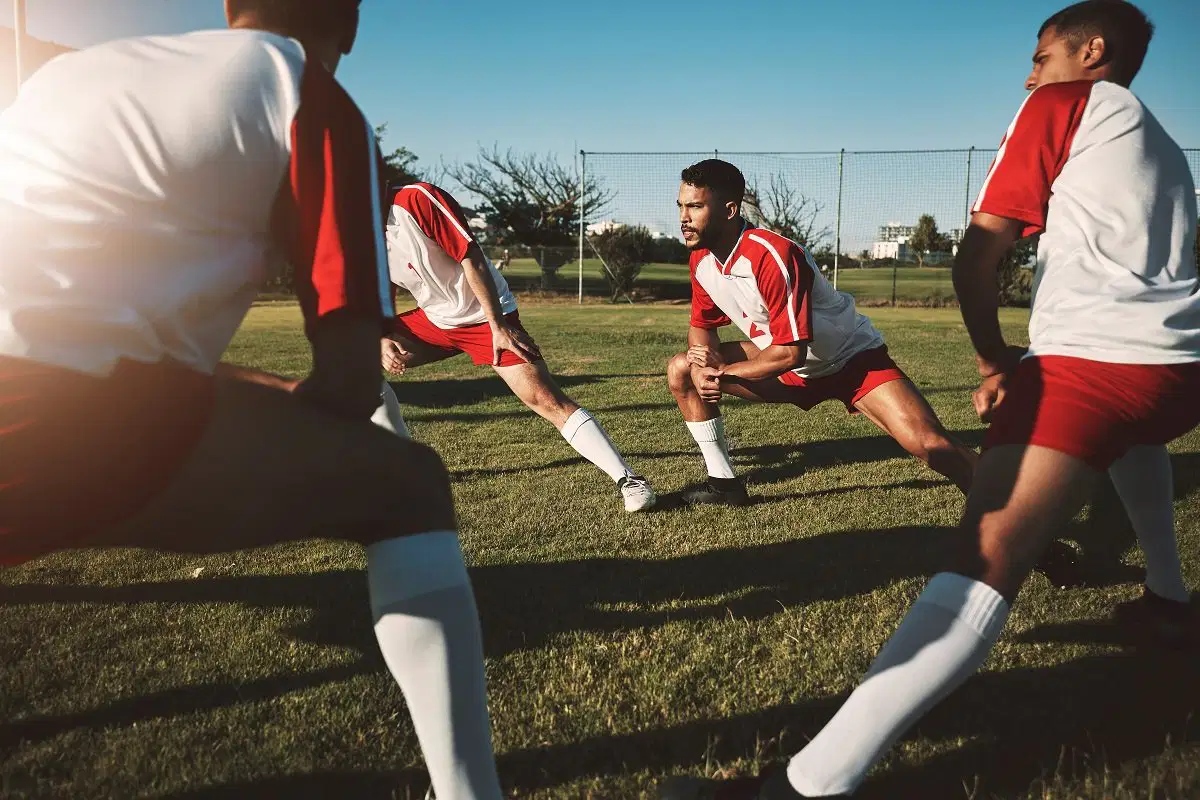
A footballer has just finished a high-intensity training session. To execute a proper cool-down as described in the document, what should they do?
Perform the same exercises as their warm-up (e.g., jogging) but at a low intensity.
Perform static stretching for 20 minutes to increase flexibility.
Sit down immediately to rest and lower their heart rate quickly.
Drink a highly caffeinated beverage to re-energize.

Heat stroke is a medical emergency. Which sign is specifically mentioned to differentiate it from other heat stress disorders?
Heavy sweating and cool, moist skin.
Shivering and an inability to concentrate.
Hot, dry, red skin and a lack of sweating.
Muscle cramps and lightheadedness.
A warm-up should always consist primarily of static stretching.
True
False
The primary function of a cool-down is to increase the body's core temperature.
True
False
If an athlete is experiencing heat exhaustion, the best first aid is to give them a high-sugar energy drink and encourage them to continue exercising at a lower intensity.
True
False
Sport footwear must be replaced once a year, regardless of how often it is used.
True
False
Vasoconstriction in the cold is a protective mechanism that increases the skin's insulating capacity but can lead to discomfort in the fingers and toes.
True
False
Hypothermia occurs when the body produces heat faster than it can lose it.
True
False
A valid reason to immediately stop an exercise session is if the client requests to stop.
True
False
For a sport like hockey, wearing a mouth guard is optional as it only slightly reduces the risk of minor injury.
True
False
The first stage of hyperthermia mentioned in the document is heat stroke.
True
False
Lactic acid buildup during activity is the reason for muscle soreness and stiffness the next day, which a proper cool-down can help mitigate.
True
False

