
Font size
 Worksheets
Unit 3/4-Cellular Respiration Study Questions-NOTES-Malone
Total questions: 145
Worksheet time: 1hrs 13mins
What is the primary purpose of cellular respiration in cells?
To produce glucose and oxygen
To convert glucose and oxygen into energy (ATP)
To break down proteins into amino acids
To store energy in the form of fat
How does understanding cellular respiration contribute to health and exercise?
It helps in the production of vitamins
It allows muscles to use oxygen and glucose to produce ATP for energy
It increases the storage of fat in muscles
It reduces the need for oxygen during exercise
Why is cellular respiration important in understanding diseases?
It helps in the production of antibodies
It is involved in many diseases, particularly metabolic disorders
It prevents the growth of all types of cancer cells
It eliminates the need for oxygen in cells
What is the relationship between cellular respiration and photosynthesis?
Both processes occur only in animals
Photosynthesis produces glucose and oxygen used in cellular respiration
Cellular respiration produces glucose and oxygen used in photosynthesis
Both processes are unrelated to energy production
How does cellular respiration serve as a foundation for further study in biology?
It is only relevant to basic biology and not advanced studies
It provides a foundation for understanding complex topics like cellular signaling and energy regulation
It is not related to any other biological processes
It only helps in understanding plant biology
What does ATP stand for in the context of cellular energy?
Adenosine Triphosphate
Adenine Triphosphate
Adenosine Diphosphate
Adenine Diphosphate
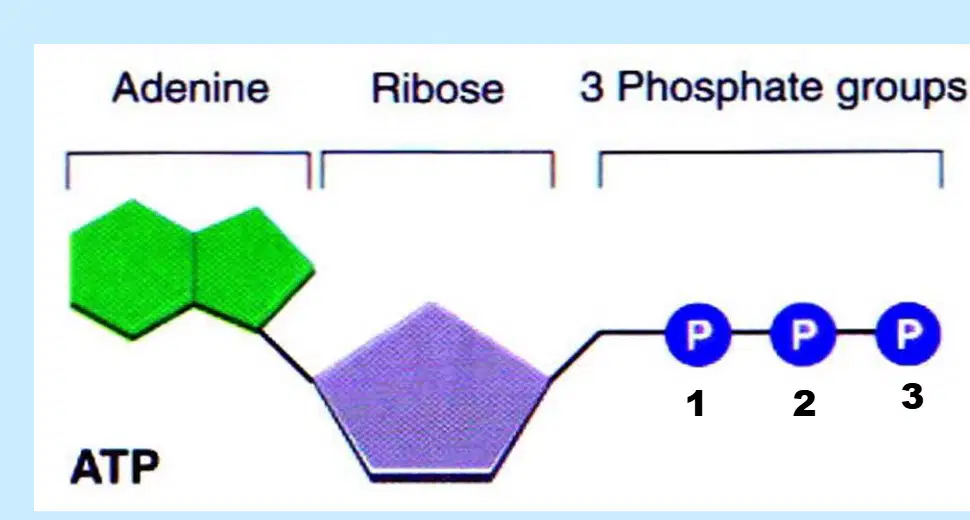
Which components make up the structure of ATP?
Adenine, Ribose, and three Phosphate groups
Adenine, Glucose, and two Phosphate groups
Ribose, Glucose, and three Phosphate groups
Adenine, Ribose, and two Phosphate groups
What is the primary focus of Learning Intention 1 in Unit 4: Cell Respiration?
Understanding the process of photosynthesis
Learning about the energy currency molecule ATP
Exploring the structure of DNA
Studying the function of enzymes
Which of the following is a success criterion related to ATP in Unit 4: Cell Respiration?
I can describe the process of glycolysis
I can explain the role of chlorophyll
I can describe the structure of ATP
I can identify the stages of mitosis
What is one of the success criteria for understanding the ADP-ATP cycle?
I can describe the process of fermentation
I can describe the ADP - ATP cycle
I can explain the Krebs cycle
I can identify the components of a cell membrane
Where is energy stored in an ATP molecule according to the success criteria?
In the ribose sugar
In the adenine base
In the phosphate bonds
In the nitrogenous base
Why do all life processes require a constant supply of energy?
To maintain body temperature
To carry out life processes
To store excess nutrients
To eliminate waste
Which of the following is NOT a complex molecule that cells need to build?
Proteins
Lipids
Vitamins
Nucleic Acids (DNA, RNA)
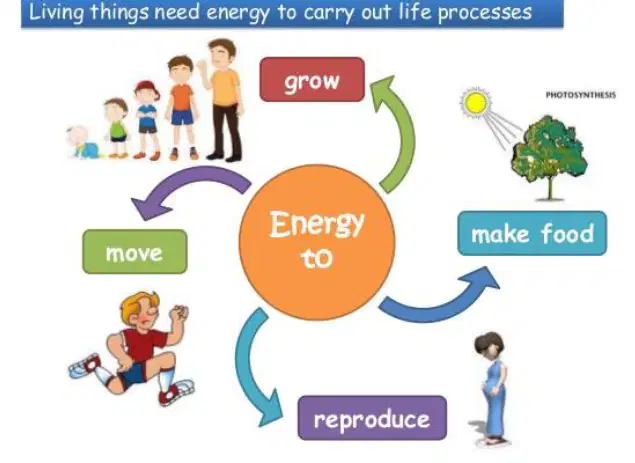
What is one of the reasons cells need energy?
To build simple sugars
To build complex molecules
To break down water
To produce light
Why do cells need energy for maintaining homeostasis?
To produce light
To maintain a stable internal environment
To create sound
To generate heat
What is an example of active transport in cells?
Diffusion
Osmosis
Endocytosis
Evaporation
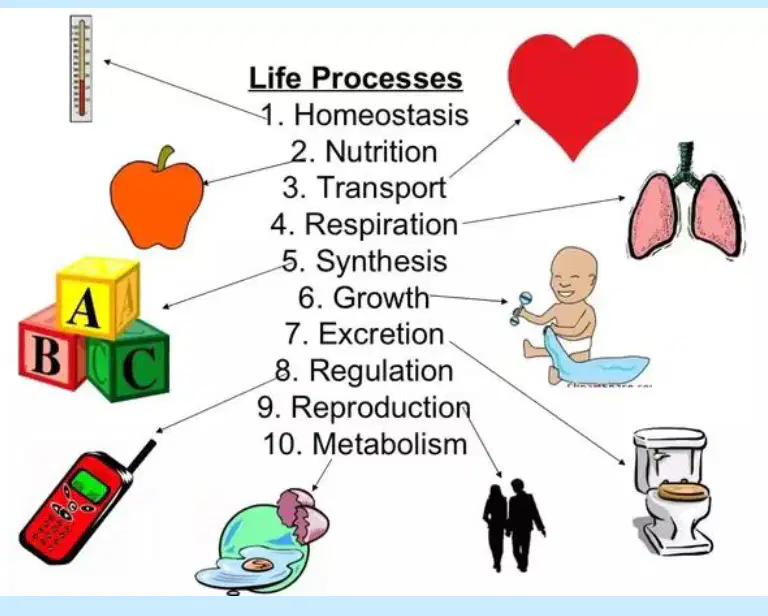
Which of the following is a life process that requires energy?
Photosynthesis
Homeostasis
Evaporation
Condensation
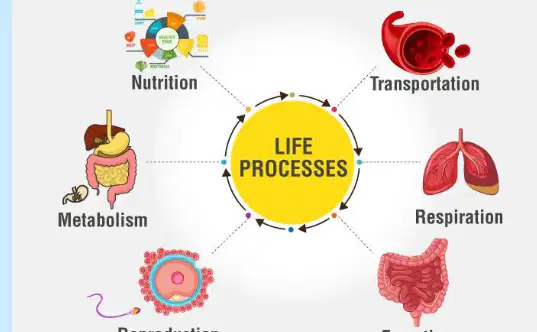
Why do cells need energy for movement and changes in cell shape?
To maintain homeostasis
To perform photosynthesis
For cell movement and changes in cell shape
To store genetic information
Which of the following is a reason why cells need energy for growth and reproduction?
To break down waste products
To facilitate cellular growth and reproduction
To transport oxygen
To produce sound
What is one of the processes that require energy in cells related to photosynthesis?
Cellular respiration
Protein synthesis
Photosynthesis & Cell Respiration
DNA replication
Cells require energy for all other chemical reactions. Which of the following is NOT a chemical reaction that requires energy?
Photosynthesis
Cellular respiration
DNA replication
Passive diffusion
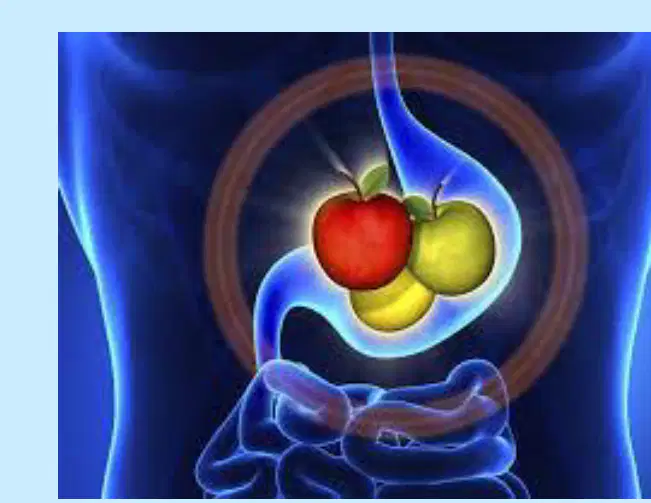
Where is energy stored in the food we eat?
In the chemical bonds of the food
In the water content of the food
In the color of the food
In the temperature of the food
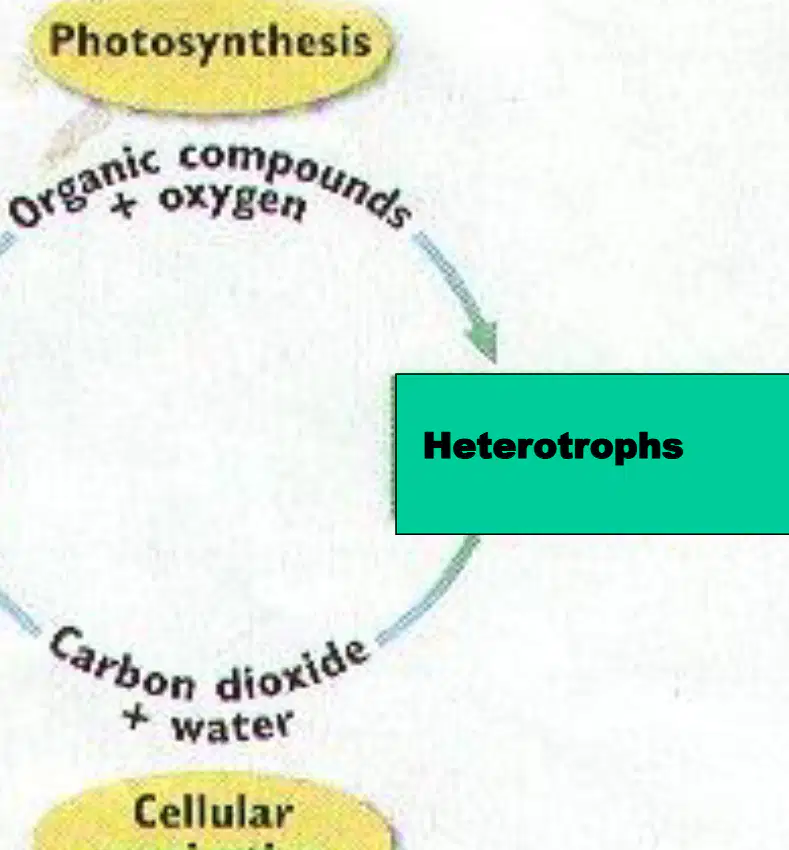
What process do autotrophs use to convert light energy into organic compounds and oxygen?
Cellular respiration
Photosynthesis
Fermentation
Glycolysis

Which of the following is a product of cellular respiration in heterotrophs?
Oxygen
Light energy
Carbon dioxide
Organic compounds
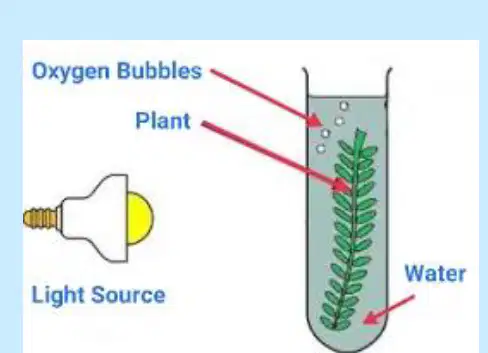
In the diagram, what is the role of the light source in the experiment with the plant in water?
To provide heat for the plant
To supply light energy for photosynthesis
To increase the water temperature
To produce carbon dioxide
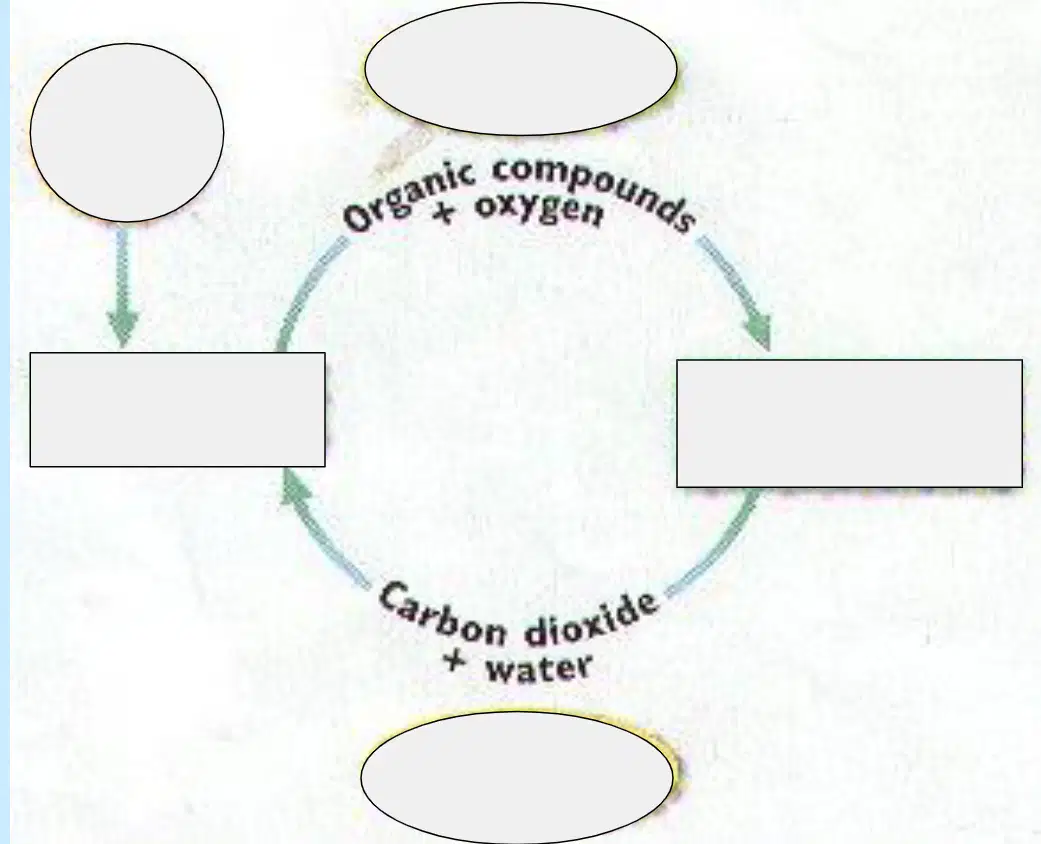
What process is represented by the conversion of carbon dioxide and water into organic compounds and oxygen in the diagram?
Photosynthesis
Cell Respiration
Fermentation
Glycolysis
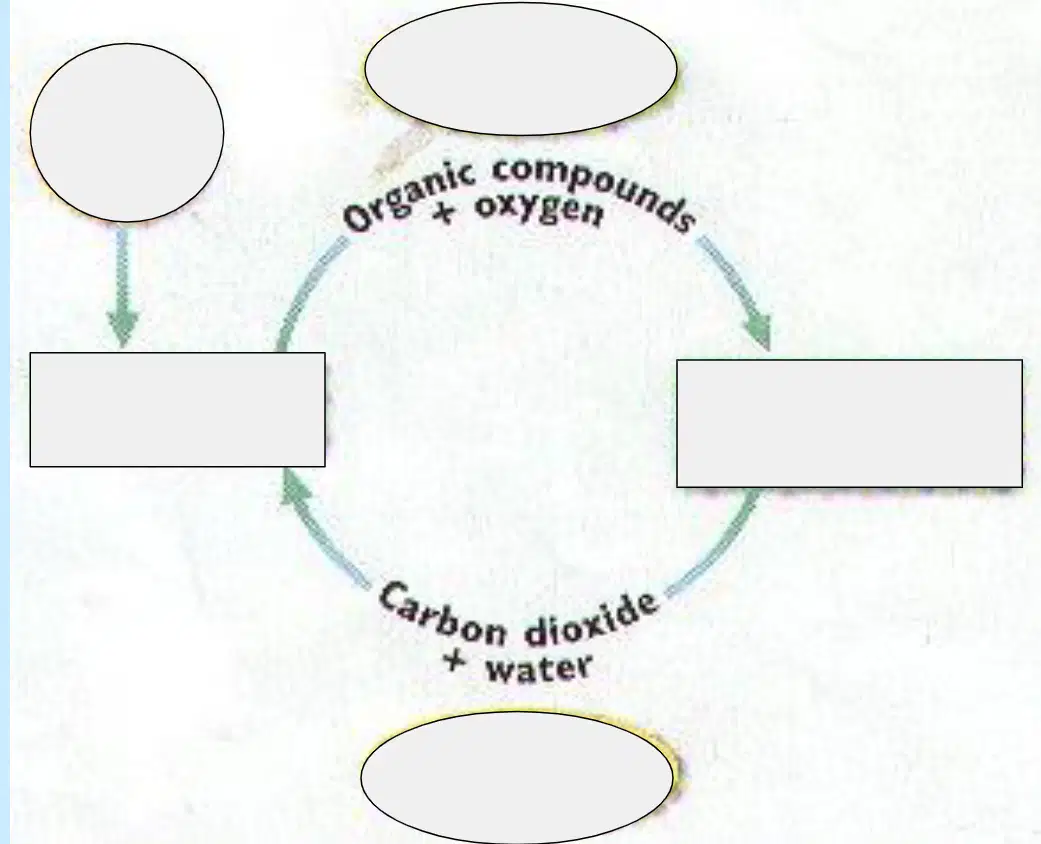
Which group of organisms is primarily responsible for the process of photosynthesis as shown in the diagram?
Heterotrophs
Autotrophs/Plants
Fungi
Animals

In the diagram, what is the role of light energy?
It is used in cell respiration.
It is used in photosynthesis.
It is used in fermentation.
It is used in glycolysis.

What process is responsible for converting organic compounds and oxygen into carbon dioxide and water in the diagram?
Photosynthesis
Cell Respiration
Fermentation
Glycolysis
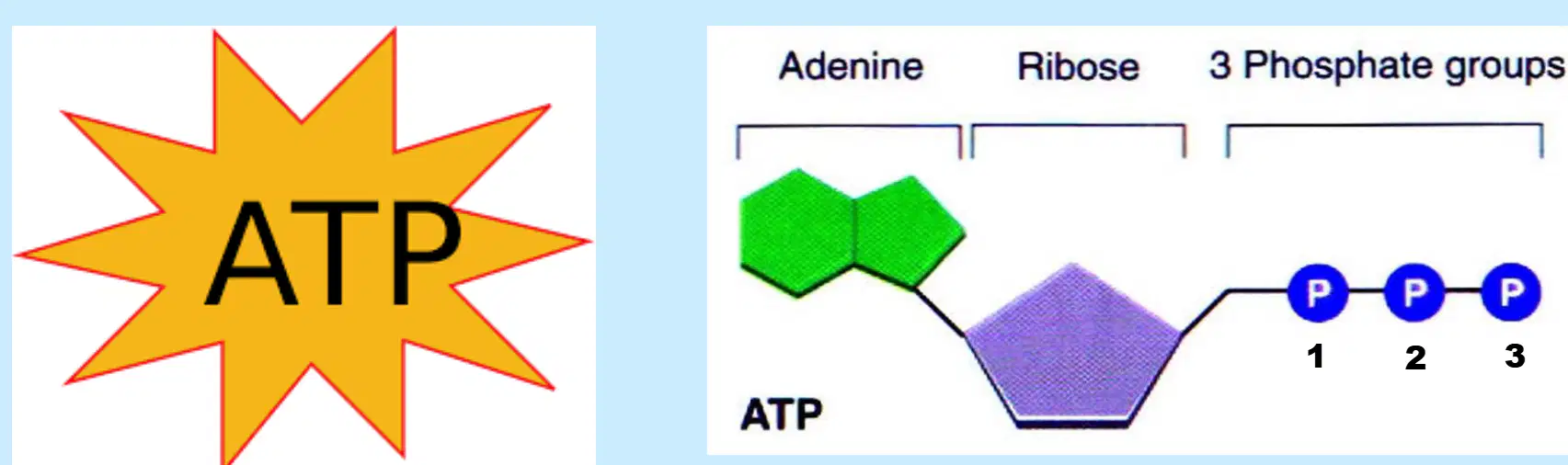
What are the main components of an ATP molecule?
Adenine, Ribose, and three Phosphate groups
Guanine, Deoxyribose, and two Phosphate groups
Cytosine, Ribose, and four Phosphate groups
Thymine, Ribose, and one Phosphate group
What is the primary function of ATP in a cell?
To store genetic information
To provide energy for cellular processes
To act as a structural component of cell membranes
To transport oxygen in the blood

What are the parts of an ATP molecule?
3 Phosphates, Ribose, Nitrogenous base (Adenine)
2 Phosphates, Glucose, Nitrogenous base (Thymine)
3 Phosphates, Deoxyribose, Nitrogenous base (Cytosine)
1 Phosphate, Ribose, Nitrogenous base (Guanine)

Where is ATP made?
In the nucleus
In the mitochondria
In the ribosomes
In the chloroplasts
What is the universal energy molecule of all living things?
DNA
RNA
ATP
Glucose
What process is responsible for the production of ATP in cells?
Photosynthesis
Cellular respiration
Fermentation
Glycolysis
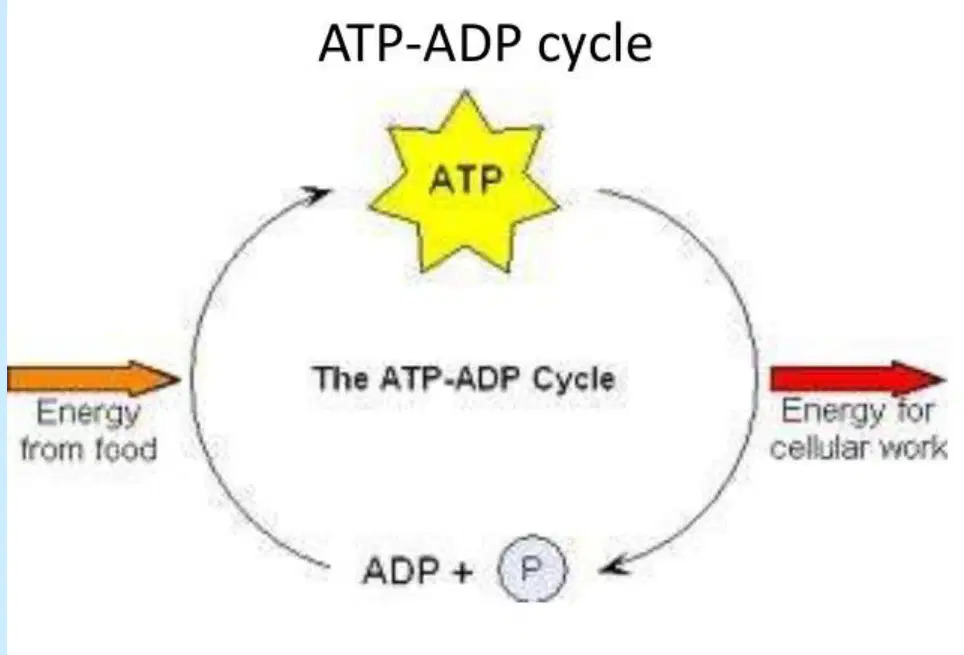
What is released or added to keep the ATP/ADP cycle going?
Oxygen
Phosphate group
Carbon dioxide
Water

What is the difference between ATP, ADP, and AMP in terms of energy content?
ATP has the most energy, ADP has less energy, and AMP has the least energy.
ATP has the least energy, ADP has more energy, and AMP has the most energy.
ATP and ADP have the same energy, while AMP has the least energy.
All three have the same energy content.
What is removed or added to keep the ATP/ADP cycle going?
A phosphate group
A water molecule
A glucose molecule
An oxygen molecule
What is the main difference between ATP and ADP in terms of energy?
ATP has more energy than ADP.
ADP has more energy than ATP.
Both have the same energy level.
Neither contains any energy.
How is ADP converted back to ATP?
By adding a phosphate group.
By removing a phosphate group.
By adding a glucose molecule.
By removing a glucose molecule.
What process continually converts ADP to ATP to meet the cell's energy needs?
Photosynthesis
Cellular respiration
Fermentation
Glycolysis
Where does the energy come from to convert ADP to ATP?
From sunlight
From water
From food (glucose) we eat
From oxygen

What does ATP stand for in the context of cellular energy?
Adenosine Triphosphate
Adenine Triphosphate
Adenosine Diphosphate
Adenine Diphosphate
In the ADP-ATP cycle, what is released when ATP is converted to ADP?
Water
Energy
Oxygen
Carbon Dioxide

Which component of ATP is responsible for storing and releasing energy?
Adenine
Ribose
Phosphate groups
Water
What happens to ATP when it loses a phosphate group?
It becomes AMP
It becomes ADP
It becomes a charged battery
It becomes a sugar molecule
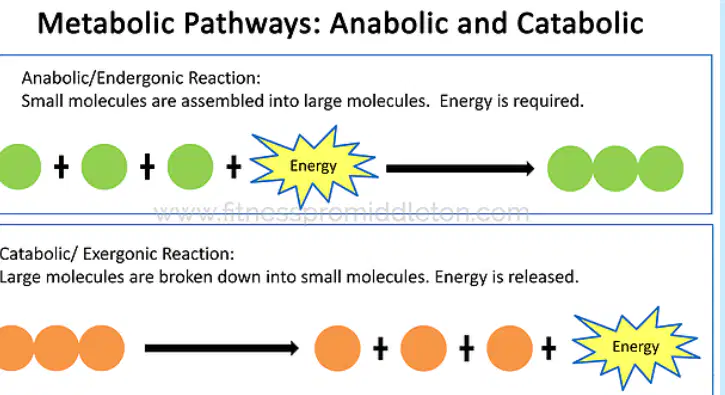
What type of reaction requires energy and involves the use of ATP?
Exergonic reaction
Endergonic reaction
Catabolic reaction
Photosynthetic reaction

Which type of reaction produces energy and results in the formation of ATP?
Endergonic reaction
Anabolic reaction
Exergonic reaction
Fermentation reaction
What is the role of mitochondria in the process of cellular respiration?
To store energy in the form of ATP
To break down glucose into pyruvate
To transport electrons across the cell membrane
To convert light energy into chemical energy
Which of the following processes is part of cellular respiration?
Photosynthesis
Glycolysis
Fermentation
Transcription
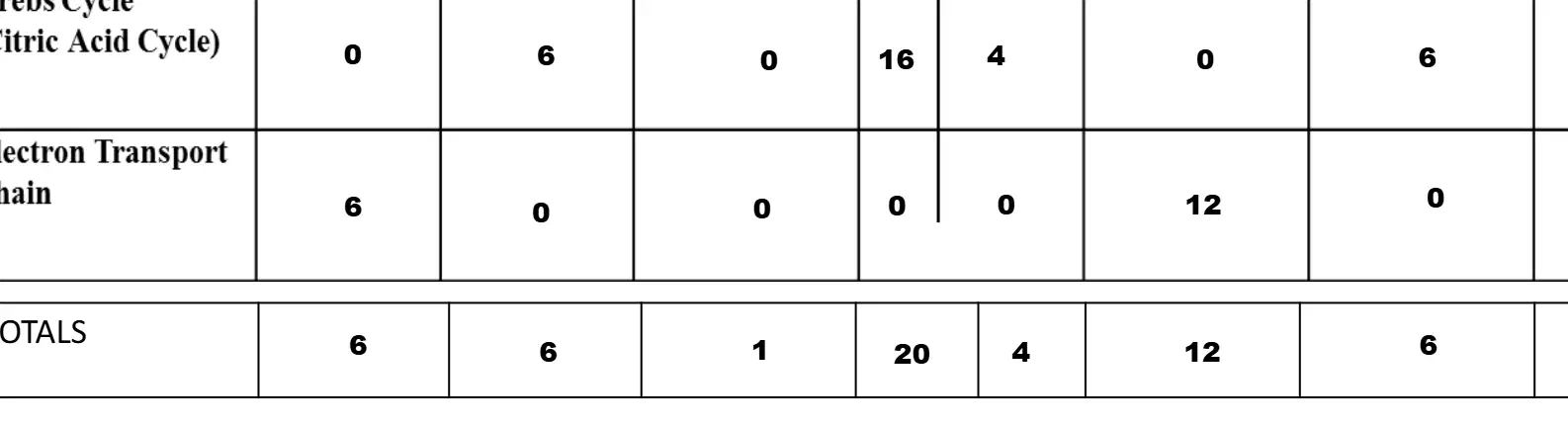
What are the main outputs of the Krebs Cycle in cellular respiration?
Oxygen and glucose
ATP, NADH, and FADH2
Water and carbon dioxide
Pyruvate and acetyl-CoA
In which part of the cell does the Electron Transport Chain occur?
Cytoplasm
Nucleus
Mitochondrial inner membrane
Golgi apparatus
What is the purpose of learning intention 3 in Unit 5: Photosynthesis & Cell Respiration?
To understand the structure of plant cells
To learn the purpose of the energy transfer in cellular respiration
To memorize the chemical formula of glucose
To study the anatomy of leaves
Which process is included in the success criteria for tracing the flow of energy in cellular respiration?
Photosynthesis
Glycolysis
Fermentation
Calvin Cycle
Which of the following is NOT part of the success criteria for tracing the flow of energy in cellular respiration?
The process of glycolysis
The process of the Krebs Cycle
The process of the Electron Transport Chain
The process of photosynthesis
What is the purpose of Cellular Respiration?
To convert chemical energy in food molecules to chemical energy stored in the bonds of ATP
To convert sunlight into chemical energy
To produce oxygen for the cell
To break down ATP into glucose
Where does Cellular Respiration occur?
In the chloroplasts
In the mitochondria
In the nucleus
In the ribosomes

What are the parts of Mitochondria?
Matrix, Cristae, Inner membrane, Outer membrane
Nucleus, Ribosome, Golgi apparatus, Lysosome
Cell wall, Chloroplast, Vacuole, Cytoplasm
Endoplasmic reticulum, Centriole, Nucleolus, Cytoskeleton
How are the foods we eat and Cellular Respiration connected?
Heterotrophs break down large food molecules into smaller ones like glucose, which is then used to make ATP during cell respiration.
Autotrophs break down large food molecules into smaller ones like glucose, which is then used to make ATP during cell respiration.
Heterotrophs use photosynthesis to create glucose, which is then used to make ATP during cell respiration.
Autotrophs use digestion to break down food molecules into glucose, which is then used to make ATP during cell respiration.
What is the fuel for Cellular Respiration?
Oxygen
Glucose
Carbon Dioxide
Water
What is the major source of energy for all organisms?
Protein
Lipids
Glucose
Nucleic Acids
What is ATP used for in the body?
To store genetic information
To power metabolic processes
To transport oxygen
To build cell walls
Which organelle is responsible for making ATP?
Nucleus
Ribosome
Mitochondria
Golgi apparatus
What is the chemical equation for cellular respiration?
C6H12O6 + 6O2 → 6H2O + 6CO2 + 38 ATP
C6H12O6 + 6O2 → 6CO2 + 6H2O + 38 ATP
C6H12O6 + 6O2 → 6H2O + 6CO2 + 36 ATP
C6H12O6 + 6O2 → 6CO2 + 6H2O + 36 ATP
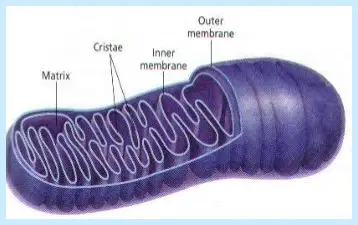
Where does cellular respiration occur?
In the chloroplast
In the mitochondria
In the nucleus
In the ribosome
Cellular respiration is broken down into what two parts?
Photosynthesis and Fermentation
Anaerobic processes and Aerobic processes
Glycolysis and Photosynthesis
Citric Acid Cycle and Fermentation
Which process occurs without oxygen in cellular respiration?
Citric Acid Cycle
Electron Transport Chain
Glycolysis
Photosynthesis
What is another name for the Citric Acid Cycle?
Calvin Cycle
Krebs Cycle
Electron Transport Chain
Glycolysis
Which of the following is part of the aerobic process in cellular respiration?
Glycolysis
Fermentation
Electron Transport Chain
Photosynthesis
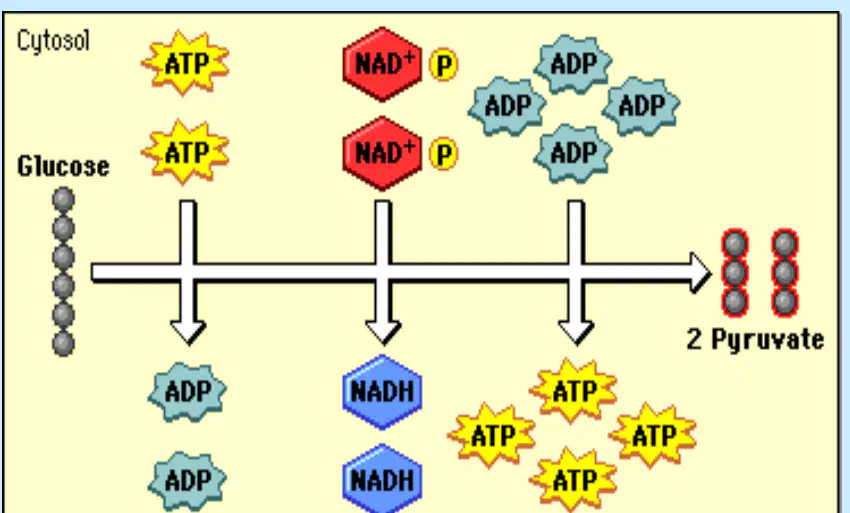
What is the name of the anaerobic phase of cellular respiration?
Glycolysis
Krebs Cycle
Electron Transport Chain
Photosynthesis
Where does glycolysis occur?
Mitochondria
Cytoplasm
Nucleus
Chloroplast
What does NAD do during glycolysis?
NAD is a coenzyme that traps hydrogen molecules which aids in the chemical breakdown of glucose
NAD is a protein that stores energy for later use
NAD is a lipid that forms cell membranes
NAD is a carbohydrate that provides structural support
How many ATP are produced during glycolysis?
2 ATP are produced, with a net gain of 2 ATP
4 ATP are produced, with a net gain of 2 ATP
6 ATP are produced, with a net gain of 4 ATP
8 ATP are produced, with a net gain of 6 ATP
What are the inputs of glycolysis?
Glucose and 2 ATP molecules
2 Pyruvates and 2 ATP molecules
Glucose and 2 Pyruvates
2 ATP molecules and 2 Pyruvates
What are the outputs of glycolysis?
Glucose and 2 ATP molecules
2 Pyruvates and 2 ATP molecules
Glucose and 2 Pyruvates
2 ATP molecules and 2 Pyruvates

What happens after glycolysis?
Pyruvic acid enters the mitochondria for the aerobic phase.
Glucose is converted into ATP directly.
Oxygen is released as a byproduct.
The cell undergoes mitosis.
What is the main topic covered on Day 3 of the learning material?
Cell Respiration
Photosynthesis
Protein Synthesis
DNA Replication
Which two processes are specifically mentioned in the learning material for Day 3?
Kreb's Cycle and Electron Transport Chain
Calvin Cycle and Light Reactions
Glycolysis and Fermentation
Transcription and Translation
What is needed for the aerobic phase of cellular respiration?
Carbon dioxide
Oxygen
Nitrogen
Hydrogen
Where does the aerobic phase of cellular respiration take place?
Cytoplasm
Nucleus
Mitochondria
Ribosome
What are aerobes?
Organisms that require carbon dioxide for respiration
Organisms that require nitrogen for respiration
Organisms that require oxygen for respiration
Organisms that require hydrogen for respiration
What are the two major aerobic reactions?
Krebs Cycle and Electron Transport Chain
Glycolysis and Fermentation
Photosynthesis and Respiration
Calvin Cycle and Light Reactions
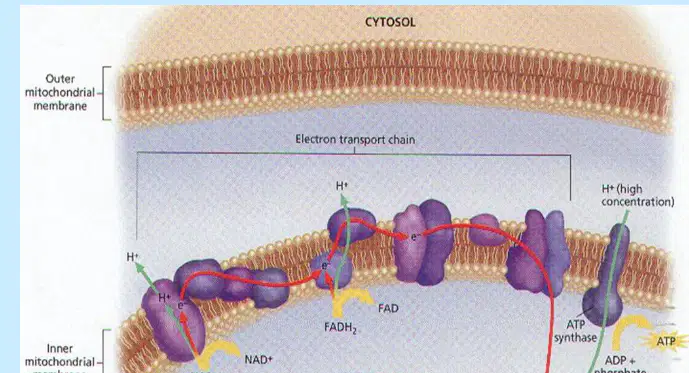
What is the Electron Transport Chain?
A series of chemical reactions that produce glucose.
A series of chemical reactions in which energy from electrons and hydrogen ions is transferred to form a large number of ATP molecules.
A process that breaks down proteins into amino acids.
A cycle that converts carbon dioxide into oxygen.
What do NAD and FAD transport?
Oxygen and carbon dioxide.
Energy electrons and hydrogen ions from glycolysis and the citric acid cycle.
Glucose and fructose.
Water and minerals.
What are the inputs of the Kreb's Cycle?
2 pyruvate molecules from Glycolysis
6 Carbon Dioxide molecules
2 ATP molecules
2 glucose molecules
What are the outputs of the Kreb's Cycle?
2 pyruvate molecules
6 Carbon Dioxide and 2 ATP molecules
2 glucose molecules
6 Oxygen molecules
What are the inputs and outputs of the Krebs cycle?
Inputs: 2 pyruvic acid molecules; Outputs: CO2 and 2 ATP
Inputs: Glucose; Outputs: Water and Oxygen
Inputs: Oxygen; Outputs: Glucose and Water
Inputs: NADH; Outputs: Pyruvic acid and ATP
Where does the Krebs cycle occur within the mitochondria?
In the matrix
In the inner membrane
In the outer membrane
In the intermembrane space
Which coenzymes are required for the Krebs cycle?
NAD, FAD, and Coenzyme-A
ATP, ADP, and AMP
NADH, FADH2, and Coenzyme-Q
Glucose, Oxygen, and Water
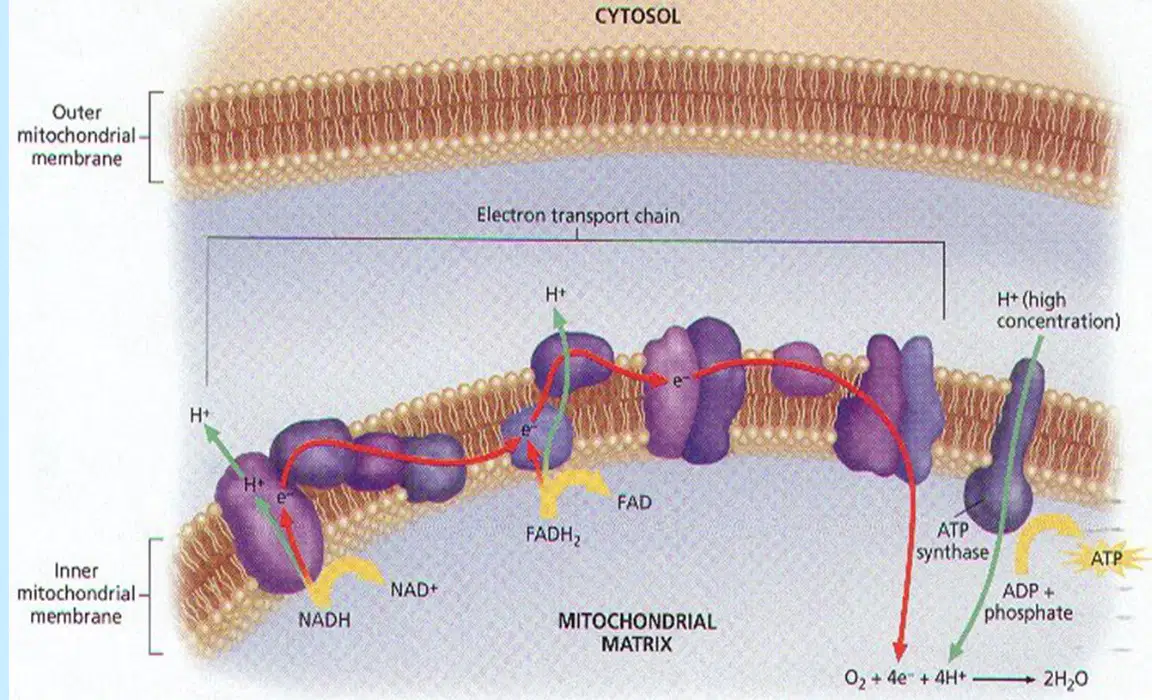
Where is the Electron Transport Chain located?
In the cytosol of the cell
In the cristae (inner membrane) of mitochondria
In the outer membrane of mitochondria
In the nucleus of the cell
What happens to the energy released during the Electron Transport Chain?
It is used to convert ADP and phosphate into ATP.
It is stored as fat in the body.
It is released as heat into the environment.
It is used to break down glucose into simpler molecules.
How many ATP molecules are produced during the Electron Transport Chain?
34 ATP molecules
30 ATP molecules
28 ATP molecules
36 ATP molecules
What is the final electron acceptor in the Electron Transport Chain?
Oxygen
Hydrogen
Carbon Dioxide
Nitrogen
How many ATP molecules are produced for each NAD trapping 2 hydrogen ions?
3 ATP
2 ATP
4 ATP
1 ATP
How many water molecules are formed when 24 hydrogen ions pair up with oxygen in the Electron Transport Chain?
12 water molecules
24 water molecules
6 water molecules
18 water molecules
What are the inputs of the Electron Transport Chain (ETC)?
10 NADH2, 2 FADH2, and 6 O2
12 H2O and 34 ATP
6 CO2 and 2 ATP
8 NADH and 4 FADH2
What are the outputs of the Electron Transport Chain (ETC)?
10 NADH2 and 2 FADH2
6 O2 and 34 ATP
12 H2O and 34 ATP
6 CO2 and 2 ATP
What is the overall chemical equation for cellular respiration?
C6H12O6 + 6O2 → 6CO2 + 6H2O + (energy)38 ATP
C6H12O6 + 6O2 → 6CO2 + 6H2O + (energy)2 ATP
C6H12O6 + 6O2 → 6CO2 + 6H2O + (energy)34 ATP
C6H12O6 + 6O2 → 6CO2 + 6H2O + (energy)4 ATP
How many ATP molecules are produced from one glucose molecule during cellular respiration?
38 ATP
2 ATP
34 ATP
4 ATP
Which of the following stages of cellular respiration produces the most ATP?
Electron transport chain
Glycolysis
Krebs cycle
Fermentation
What are the main products of cellular respiration?
Carbon dioxide and water
Oxygen and glucose
Water and glucose
Carbon dioxide and oxygen
What happens to most of the energy released by cellular respiration that is not used to make ATP?
It is released in the form of body heat
It is stored as fat
It is used to build proteins
It is converted into glucose
Which step in cellular respiration produces the most ATP?
Glycolysis
Krebs Cycle (Citric Acid Cycle)
Electron Transport Chain
Fermentation

How many molecules of CO2 are produced during the Krebs Cycle?
0
2
4
6
What is the overall net equation for cellular respiration?
C6H12O6 + 6O2 → 6H2O + 6CO2 + 38 ATP
C6H12O6 + 6O2 → 6CO2 + 6H2O + 32 ATP
C6H12O6 + 6O2 → 6H2O + 6CO2 + 36 ATP
C6H12O6 + 6O2 → 6CO2 + 6H2O + 40 ATP
During which step of cellular respiration is oxygen used?
Glycolysis
Krebs Cycle (Citric Acid Cycle)
Electron Transport Chain
Fermentation
What does anaerobic mean?
Requiring oxygen
Requiring sunlight
Not requiring oxygen
Not requiring water
What process allows cells to obtain energy when no oxygen is available at the end of glycolysis?
Photosynthesis
Fermentation
Aerobic respiration
Krebs cycle
Why is fermentation considered not an efficient process?
It produces a lot of energy
It requires oxygen
It produces only a little energy (ATP) without oxygen
It requires sunlight
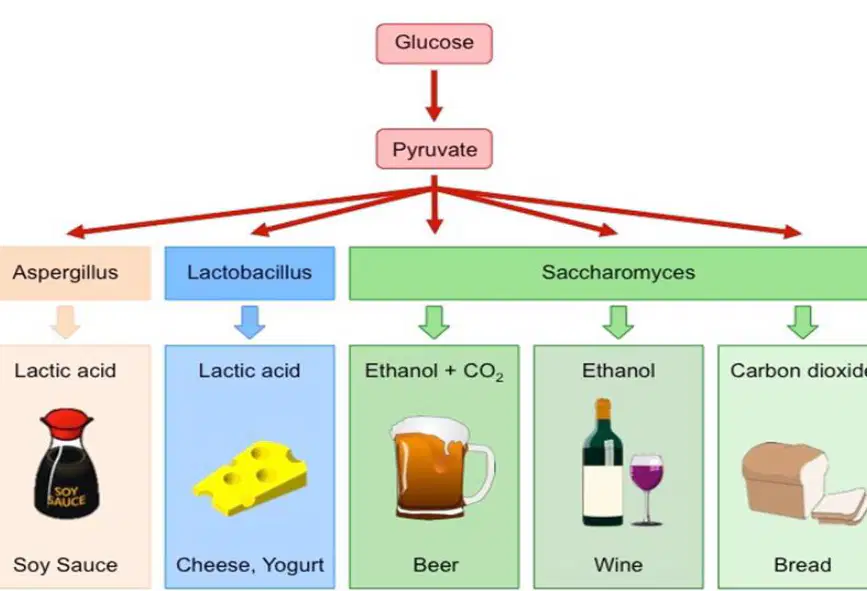
What are the two major types of fermentation?
Lactic Acid Fermentation and Alcoholic Fermentation
Acetic Acid Fermentation and Butyric Fermentation
Propionic Acid Fermentation and Mixed Acid Fermentation
Butanol Fermentation and Methanogenesis
Why do cells perform Lactic Acid Fermentation?
To produce more oxygen for aerobic respiration
To generate energy when oxygen is scarce
To store excess glucose
To increase muscle mass
What happens to pyruvic acid during Lactic Acid Fermentation?
It is converted into glucose
It is broken down into lactic acid
It is used to produce carbon dioxide
It is stored in the liver
What is a consequence of anaerobic respiration in muscle cells?
Increased oxygen levels
Muscle fatigue
Enhanced aerobic capacity
Decreased energy production
What is the initial substrate in the process of lactic acid fermentation?
Pyruvic acid
Lactic acid
Glucose
ATP
Which compound is produced directly from pyruvic acid during lactic acid fermentation?
Glucose
Lactic acid
ATP
Carbon dioxide
What is the chemical formula for glucose as used in lactic acid fermentation?
C3H4O3
CH3CHOHCOOH
C6H12O6
C2H5OH
How many ATP molecules are produced during lactic acid fermentation according to the given equation?
1 ATP
2 ATP
3 ATP
4 ATP
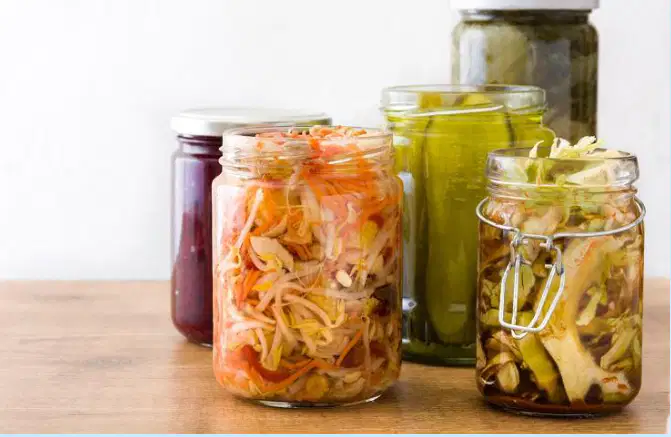
What foods are made using Lactic Acid Fermentation?
Bread and Butter
Yogurt and Sauerkraut
Cheese and Wine
Pickles and Jam
What causes the soreness felt in muscles during strenuous exercise?
Lactic acid buildup
Lack of oxygen
Excessive ATP production
Muscle fiber tearing
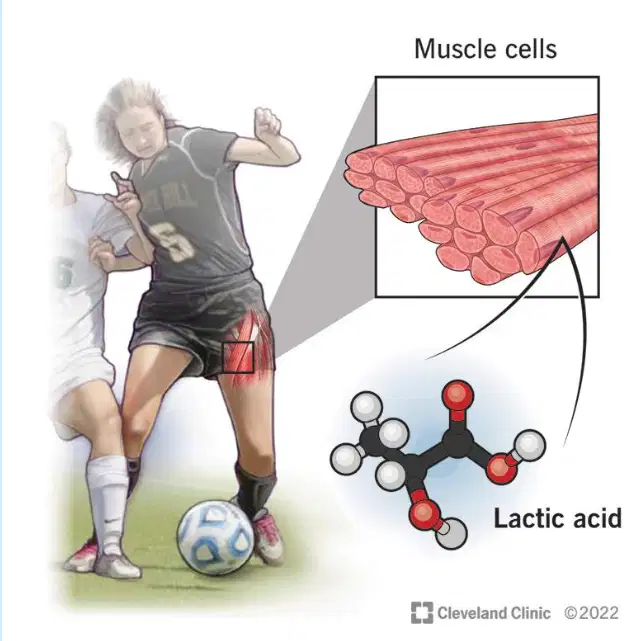
What happens to lactic acid once oxygen becomes available again?
It is converted into pyruvic acid
It remains in the muscles
It is expelled through sweat
It turns into glucose

What kinds of cells perform Alcoholic Fermentation?
Plant cells
Animal cells
Bacteria and fungi (yeast cells)
Virus cells
During alcoholic fermentation, what is pyruvic acid broken down into?
Lactic acid and oxygen
Alcohol, carbon dioxide, and a little energy
Water and glucose
Oxygen and ATP
How much ATP is produced during alcoholic fermentation?
0 ATP
1 ATP
2 ATP
4 ATP
What kinds of foods are made using Alcoholic Fermentation?
Bread and alcohol
Cheese and yogurt
Pasta and rice
Fruits and vegetables
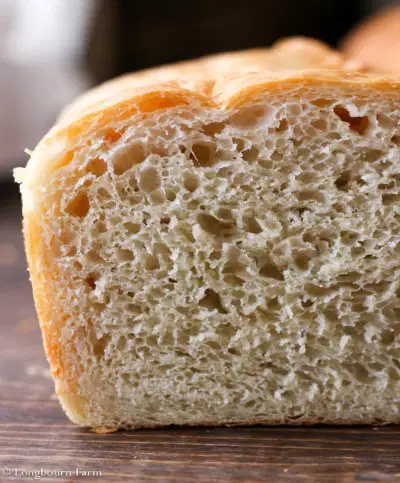
Why is alcoholic fermentation important to the baking industry?
It adds flavor to the bread
It helps the dough rise by releasing carbon dioxide
It preserves the bread for longer periods
It changes the color of the bread
What is the initial reactant in the process of alcoholic fermentation?
Pyruvic acid
Alcohol
Glucose
Carbon dioxide
Which compound is produced along with alcohol during alcoholic fermentation?
Oxygen
Carbon dioxide
Water
Lactic acid
What is the chemical formula for glucose as used in the alcoholic fermentation process?
C3H4O3
C2H5OH
C6H12O6
CO2
How many ATP molecules are produced in the overall reaction of alcoholic fermentation?
1 ATP
2 ATP
3 ATP
4 ATP
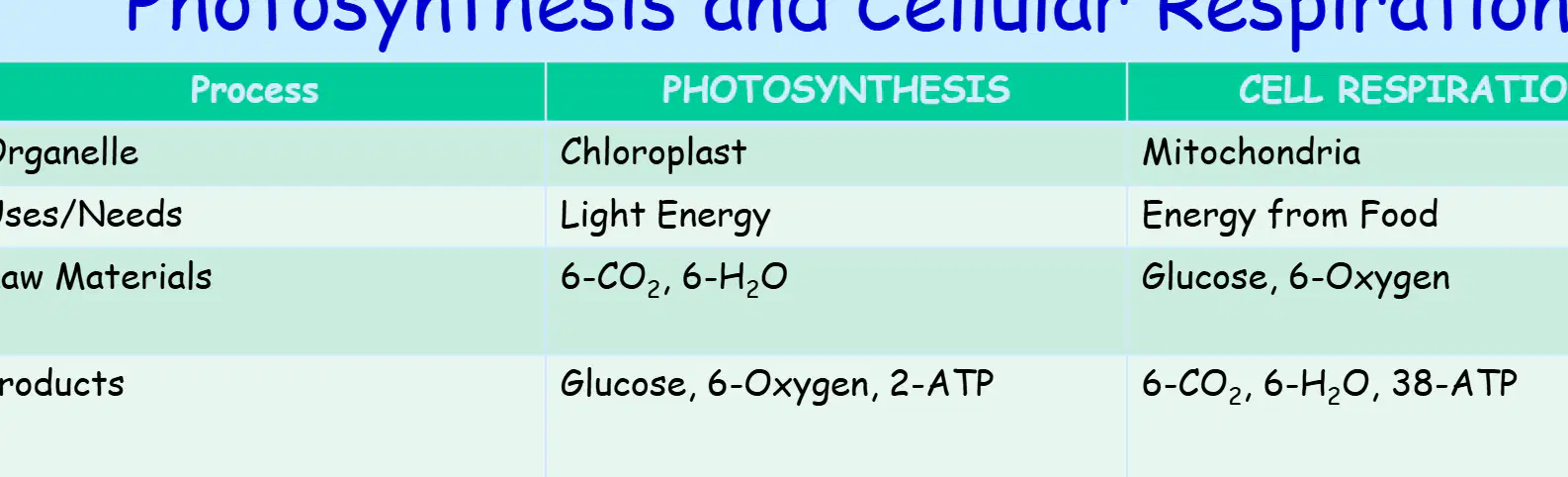
Which organelle is responsible for photosynthesis in plants?
Mitochondria
Chloroplast
Nucleus
Ribosome
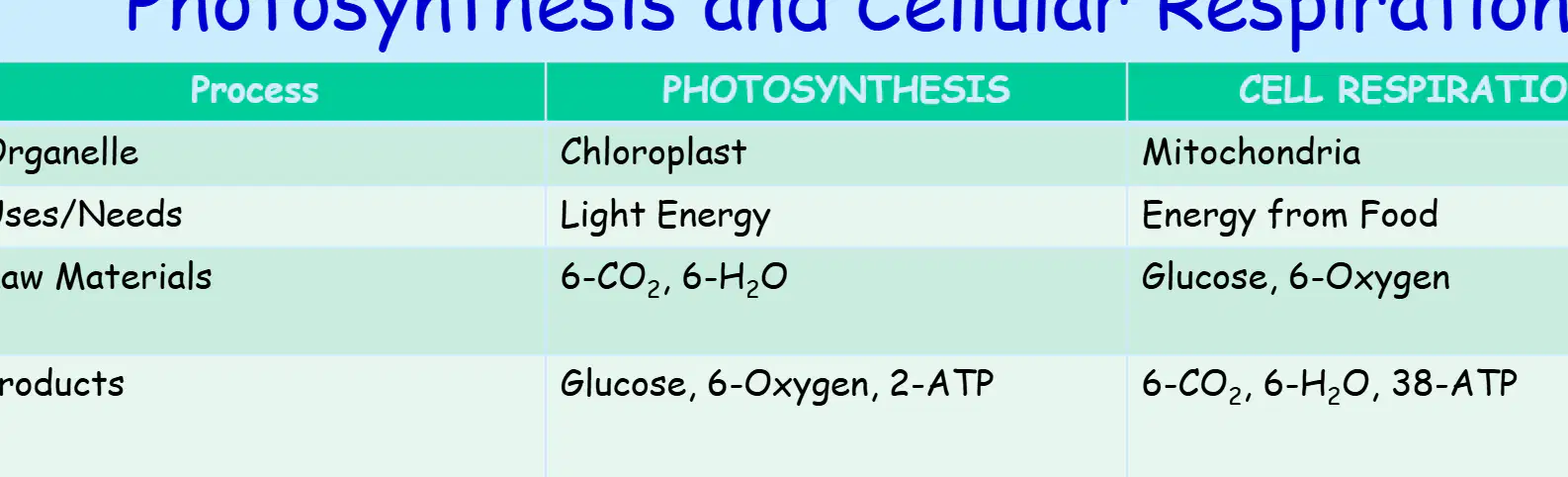
What is the main energy source used in photosynthesis?
Energy from food
Chemical energy
Light energy
Mechanical energy
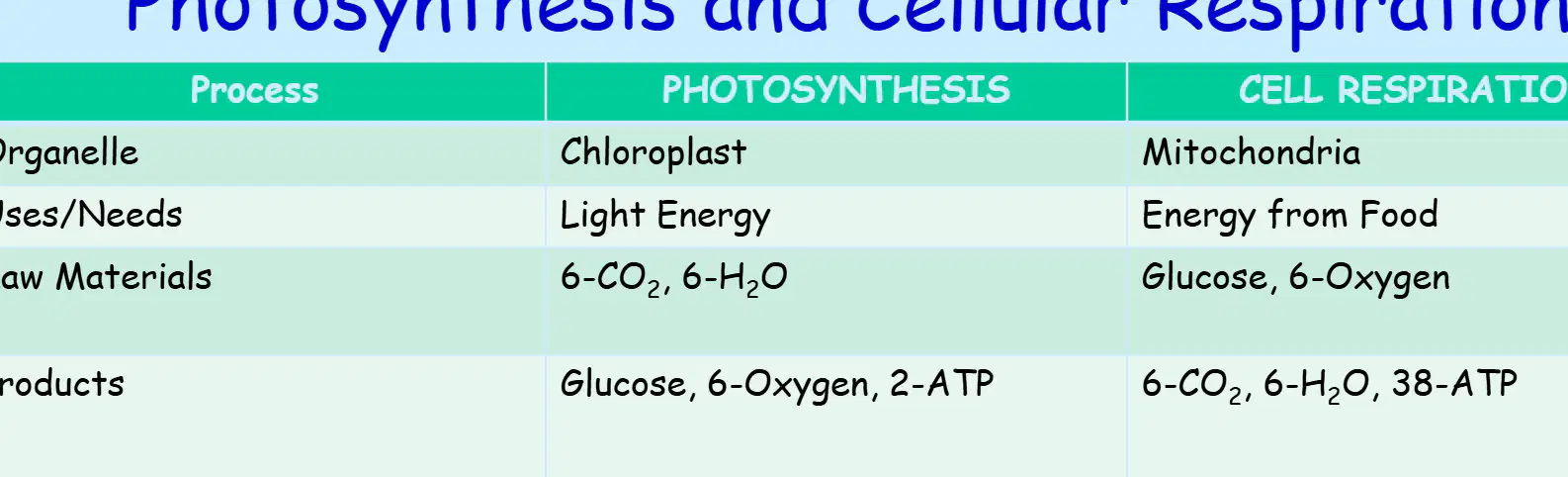
Which of the following is a product of cellular respiration?
Glucose
6-Oxygen
2-ATP
38-ATP
Which co-enzyme is needed for photosynthesis?
NAD
FAD
NADP
Co-enzyme A
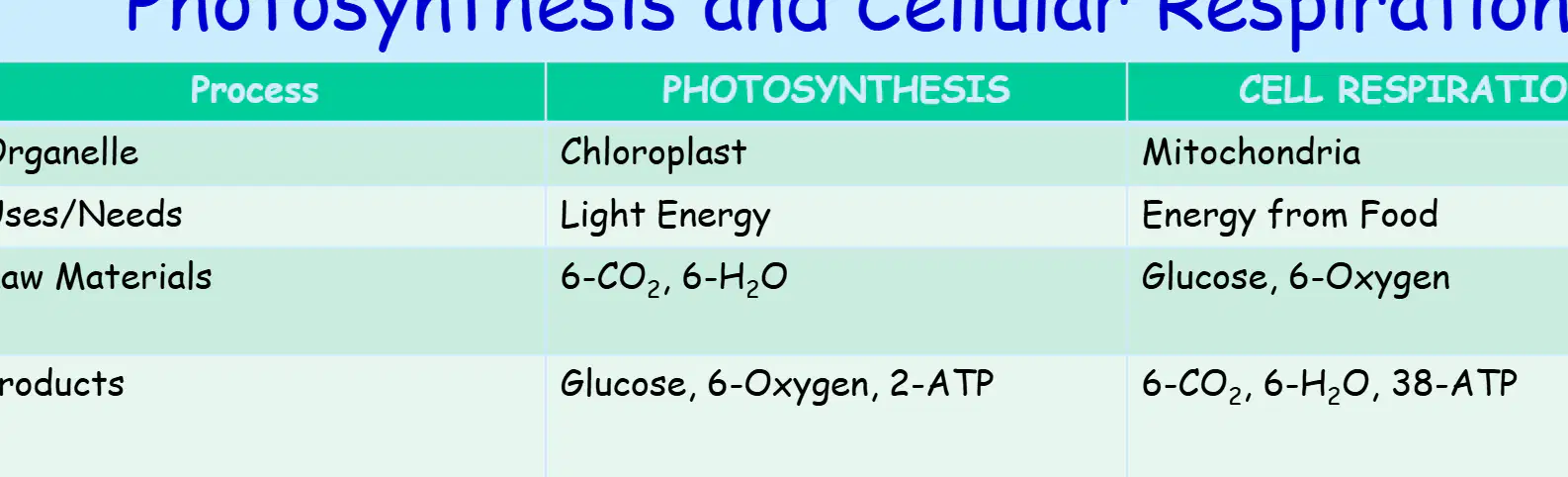
What are the raw materials required for cellular respiration?
6-CO2, 6-H2O
Glucose, 6-Oxygen
6-CO2, 6-Oxygen
Glucose, 6-H2O
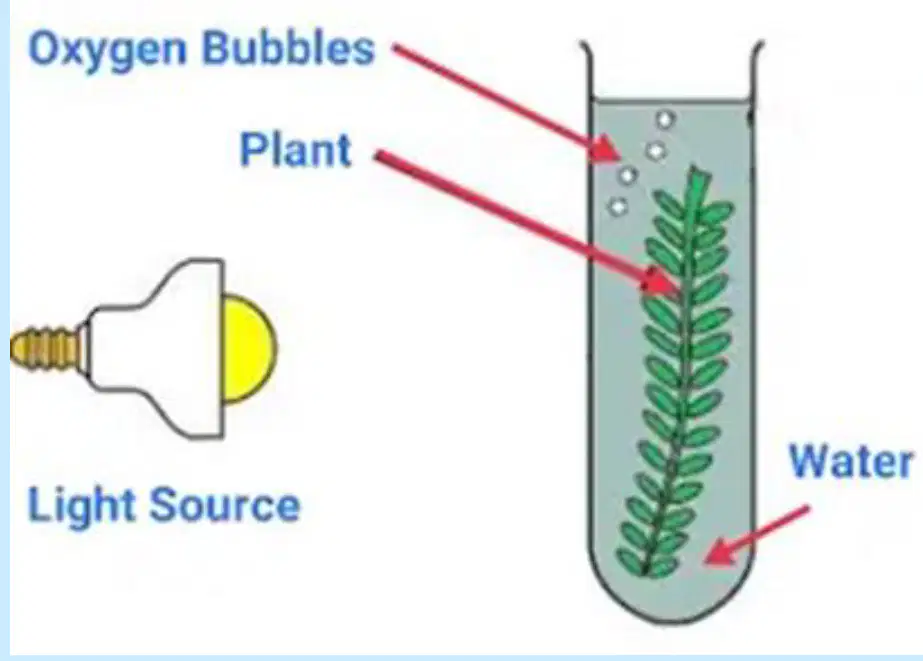
What are the bubbles made of during the process of photosynthesis in plants?
Carbon Dioxide
Oxygen
Nitrogen
Hydrogen
Which of the following cellular processes produces the most energy?
Anaerobic Respiration
Aerobic Respiration
Glycolysis
Fermentation
Where is the most energy produced?
In the cytoplasm during glycolysis.
In the mitochondria during glycolysis.
In the cytoplasm during the electron transport chain.
In the mitochondria during the electron transport chain.
How is energy made available to cells in order to perform all the necessary functions related to living organisms?
By adding a phosphate group to an ADP molecule.
By breaking off a phosphate group from an ADP molecule.
By adding a phosphate group to an ATP molecule.
By breaking off a phosphate group from an ATP molecule.
What is the initial substrate in the process of alcoholic fermentation?
Ethanol
Pyruvic Acid
Glucose
Carbon Dioxide
During alcoholic fermentation, what is the final product along with carbon dioxide?
Lactic Acid
Ethanol
Acetic Acid
Water
Which process converts glucose into pyruvic acids during alcoholic fermentation?
Photosynthesis
Glycolysis
Krebs Cycle
Electron Transport Chain
In the process of alcoholic fermentation, what is regenerated from NADH2?
ATP
NAD+
FADH2
Oxygen
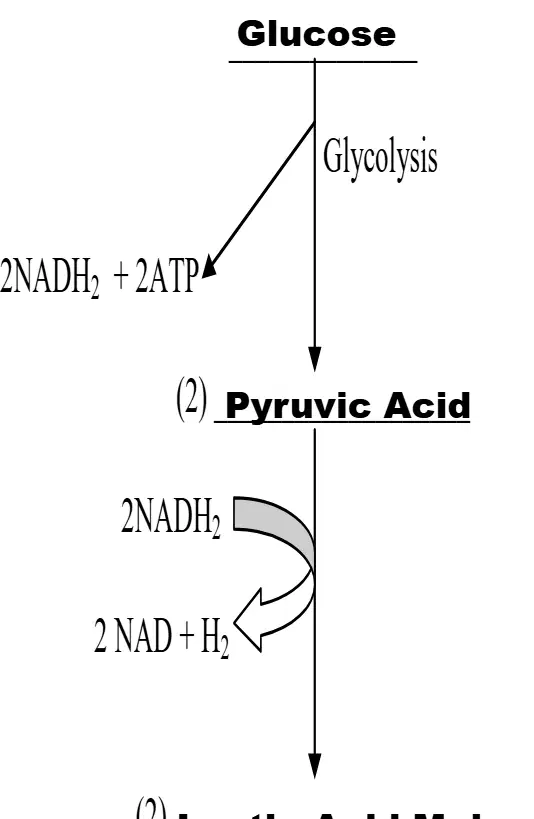
What is the initial substrate in the process of lactic acid fermentation?
Pyruvic Acid
Lactic Acid
Glucose
ATP
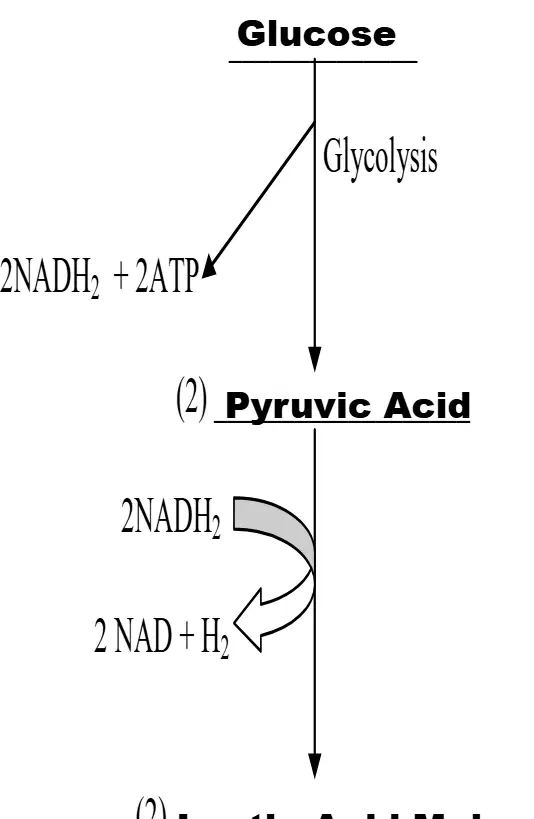
During lactic acid fermentation, what is pyruvic acid converted into?
Glucose
Lactic Acid
ATP
NADH
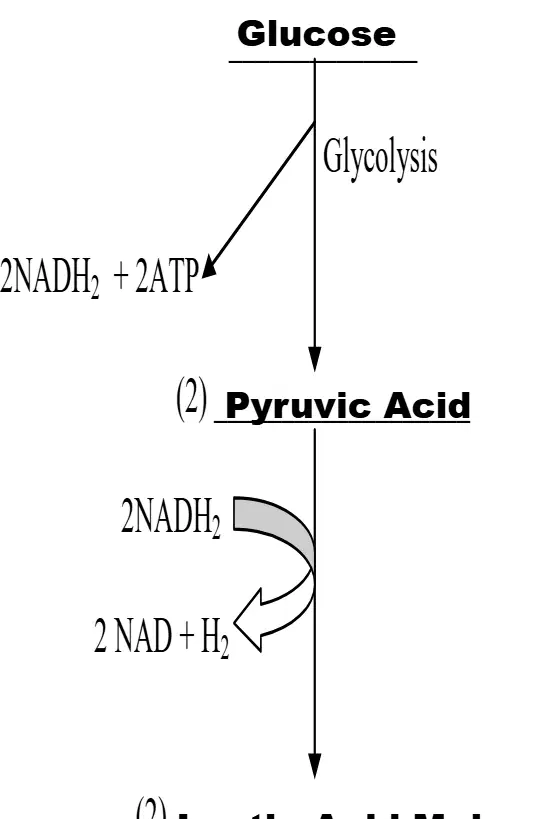
Which molecule is regenerated during the conversion of pyruvic acid to lactic acid?
ATP
Glucose
NAD
Pyruvic Acid

