
 Worksheets
Suspension and Steering Diagnosis
Total questions: 95
Worksheet time: 48mins
Describe the diagnosis of suspension and steering problems. (Fill in the blank)
The diagnosis of suspension and steering problems involves identifying issues in these systems through inspection and testing.
The diagnosis of suspension and steering problems is only done by replacing all parts.
The diagnosis of suspension and steering problems requires no inspection or testing.
The diagnosis of suspension and steering problems is not necessary for vehicle maintenance.
Diagnose problems related to suspension systems. (Fill in the blank)
Problems related to suspension systems are diagnosed by inspecting and testing the suspension components for faults.
Problems related to suspension systems are diagnosed by changing the engine oil.
Problems related to suspension systems are diagnosed by replacing the car battery.
Problems related to suspension systems are diagnosed by adjusting the tire pressure.
Diagnose problems related to steering systems. (Fill in the blank)
Problems related to steering systems are diagnosed by inspecting and testing the steering components for faults.
Problems related to steering systems are diagnosed by changing the engine oil regularly.
Problems related to steering systems are diagnosed by checking the tire pressure only.
Problems related to steering systems are diagnosed by replacing the battery.
Choose an appropriate repair method to correct suspension or steering problems. (Fill in the blank)
The appropriate repair method is chosen based on the diagnosis and involves servicing or replacing faulty suspension or steering components.
Ignore the problem and continue driving as usual.
Apply lubricant to all parts regardless of the issue.
Replace the entire vehicle instead of repairing the components.
The diagnosis of suspension and steering problems as outlined in the objective involves:
Inspecting components for wear, damage, and proper alignment.
Only checking tire pressure.
Ignoring unusual noises during operation.
Replacing all parts without inspection.
According to the Road Test Procedure, what is the best place to start when diagnosing suspension and steering problems?
The best place to start is by verifying the customer complaint with a road test.
Begin by replacing the suspension components immediately.
Start by aligning the wheels before any inspection.
Check the tire pressure and adjust it as the first step.
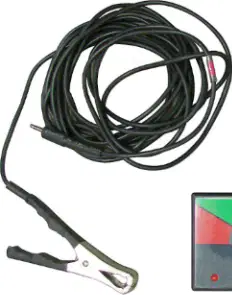
What is a chassis ear used for in the diagnosis of suspension problems?
A chassis ear is an electronic listening device used to locate suspension noises by attaching microphones to various suspension components and listening while the vehicle is driven.
A chassis ear is a tool used to measure tire pressure in suspension systems.
A chassis ear is a device for aligning the wheels during suspension repair.
A chassis ear is a visual inspection tool for checking suspension fluid levels.
Microphones used with a chassis ear can only be wired, not wireless.
True
False
Body roll is controlled by ________ bars. Excessive body roll could be the result of a broken stabilizer bar or worn or broken stabilizer links or bushings.
stabilizer
torsion
brake
shock
Vehicle bounce (spring oscillations) is controlled by which of the following?
Steering wheel
Shock absorbers or struts
Tires
Stabilizer bars
Vibrations and shimmy at speeds over 50 km/h are usually symptoms of ________ imbalance/tire runout problems or driveline imbalance.
wheel
brake
engine
steering
Oversteer is a term that describes a vehicle that responds too much to the turning of the steering wheel.
True
False
Understeer is when the front wheels are turned, but the vehicle does not turn.
True
False
If the tires squeal on turns at low speed, the most likely cause is ________.
incorrect turning radius
worn brake pads
low engine oil
faulty spark plugs

What does a bent spindle cause, as shown in Figure 2?
Even scrub radius
Uneven scrub radius
Flat tire
Broken spring
Fill in the blank: Alignment equipment has no provision for measuring _________
scrub radius
toe angle
camber angle
caster angle
You should attempt to straighten suspension components according to the passage.
True
False
The result of different steering axis inclination (SAI) on the right side of the suspension is:
Uneven tire wear
Improved fuel efficiency
Increased engine power
Reduced brake performance
What is bump steer?
The vehicle veering to one side when driven through dips or bumps due to unequal toe change
The vehicle accelerating rapidly
The vehicle braking suddenly
The vehicle making a loud noise
According to the passage, what is a common cause of bump steer?
Properly mounted steering linkage
Unequal toe change due to unlevel steering linkage
New tires
Clean suspension components
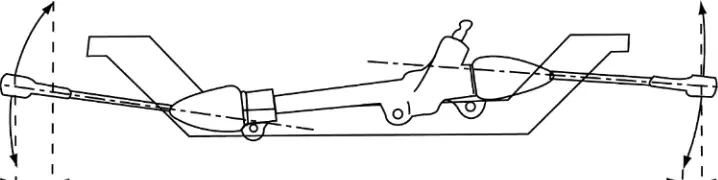
Refer to Figure 3 - Steering rack tilted, causing uneven toe change. What does the diagram illustrate about the steering linkage?
The steering linkage is level
The steering linkage is unlevel, causing the tie rods to operate through different arcs
The suspension is not affected
The wheels are not connected
Fill in the blank: Bump steer can be diagnosed with live toe readings on the ______ machine.
alignment
brake
engine
balancing
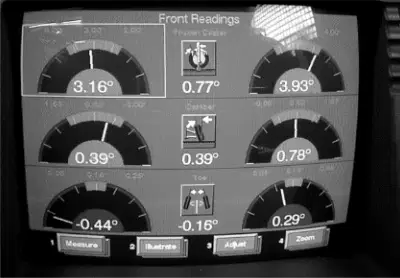
What does Figure 5 illustrate?
Figure 5 illustrates live toe readings on a vehicle with uneven toe change.
Figure 5 illustrates the brake fluid levels in a hydraulic system.
Figure 5 illustrates the air pressure distribution in tires.
Figure 5 illustrates the engine temperature fluctuations during operation.
Bump steer can also occur as a result of changes in the rear thrust angle during ______ and ______. Fill in the blanks.
jounce; rebound
acceleration; braking
cornering; idling
alignment; balancing
Which of the following can cause brake-induced pull?
Unequal tire pressure
Caliper or wheel cylinder seized in the un-applied position
Worn bushings
All of the above
If tire inflation pressures are unequal, the tire with the lowest pressure has a higher rolling resistance.
True
False
A tire can develop a conical or off-centre shape during the manufacturing process or during use. This conicity can result in a ______ condition. Fill in the blank.
tire pull
tire burst
tire slip
tire wobble
What is torque steer?
Torque steer is a symptom that occurs on front wheel drive vehicles with transverse-mounted engines, causing a pull only during acceleration due to unequal torque being transmitted to each front wheel.
Torque steer is a condition where the rear wheels lose traction during braking, causing the vehicle to skid sideways.
Torque steer refers to the vibration felt in the steering wheel when driving over rough terrain at high speeds.
Torque steer is the tendency of a vehicle to pull to one side due to uneven tire wear on the rear wheels.
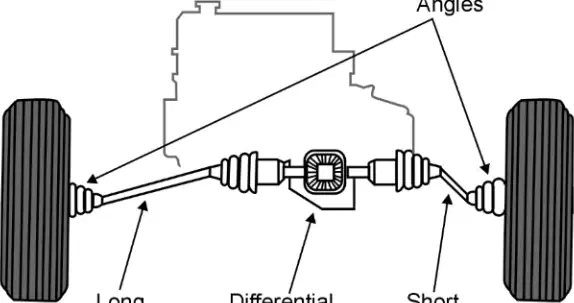
According to Figure 6, what happens when the differential is not centered in a front wheel drive vehicle?
The axle shafts may be of unequal length and unequal angles at the CV joints, resulting in unequal torque being transmitted to each front wheel during hard acceleration.
The vehicle will automatically switch to rear wheel drive mode.
The engine will overheat due to increased friction in the differential.
The steering wheel will become locked during sharp turns.
Steer torque must be equalized on both sides to lessen the effects of torque steer.
True
False
Which of the following may cause excessive torque steer?
Correctly aligned engine mounts
Worn or incorrectly aligned engine and transmission mounts
Properly functioning suspension components
None of the above
How can the effects of torque steer be lessened in front wheel drive vehicles?
By designing the engine position and suspension to provide equal torque to each wheel, such as using an intermediate shaft on the longer CV shaft to keep shaft length and CV joint angles the same.
By increasing the tire pressure on one side of the vehicle.
By using rear wheel drive instead of front wheel drive.
By reducing the engine power output significantly.
What does 'memory steer' mean in the context of vehicle steering?
Memory steer means that the vehicle tends to pull in the direction of the most recent turn.
Memory steer means the steering wheel vibrates at high speeds.
Memory steer means the vehicle automatically returns to center after a turn.
Memory steer means the steering becomes lighter as speed increases.
Which of the following is a common cause of memory steer?
Binding ball joints or upper strut bearings
Low tire pressure
Faulty brake pads
Dirty air filter
On parallelogram steering linkages, idler arms and pitman arms that are seized can cause memory steer.
True
False
To diagnose memory steer, what must you do to locate the binding part?
You need to disconnect components to locate the binding part.
You need to lubricate all moving parts to locate the binding part.
You need to replace the entire steering system to locate the binding part.
You need to tighten all bolts to locate the binding part.
Suspension components need to be checked for which of the following?
Looseness
Binding
Leaks
Cracks
Torn or damaged dust boots
What is the purpose of checking suspension components during a suspension inspection?
To diagnose problems related to suspension systems and ensure the appropriate parts are replaced.
To increase the vehicle's fuel efficiency.
To improve the car's paint quality.
To enhance the audio system performance.
Springs are inspected for which types of issues?
Physical damage (breakage)
Wear (sagging)
Leaks
Binding
Broken springs are identified with a visual inspection.
True
False
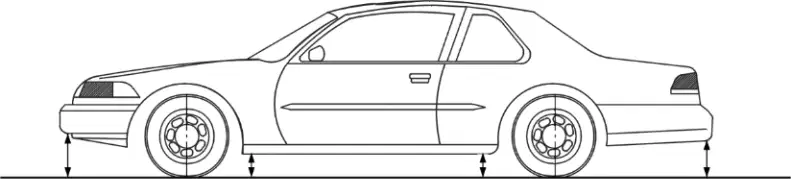
Where should curb height measurements be taken on a vehicle?
From a level floor surface to specified points on the body or frame, as shown in Figure 8.
From the top of the tire to the bottom of the wheel rim.
From the highest point of the roof to the ground.
From the center of the engine to the rear bumper.
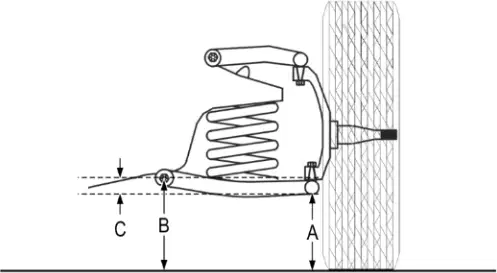
According to the passage, what is the purpose of measuring the difference between points A and B in Figure 9 when checking ride height at the suspension?
To check tire pressure
To ensure the difference is within manufacturer specifications
To measure tire size
To check for oil leaks
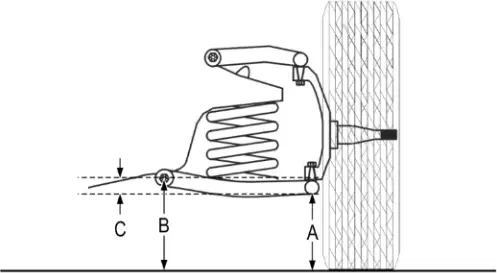
Fill in the blank: The difference between the measurements at A and B (shown as C) in Figure 9 must be within __________ specifications.
manufacturer
national
personal
seasonal
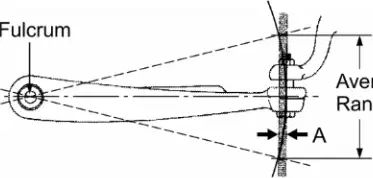
Incorrect ride height has a negative effect on suspension behaviour and tire wear because of the exaggerated lateral movement that results, as shown in Figure 10.
True
False
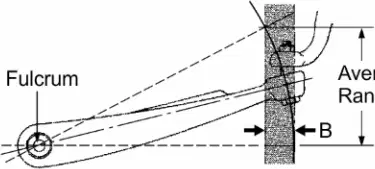
According to Figure 10, what is the effect of a sagged suspension on the control arm's lateral movement compared to normal suspension travel?
It increases lateral movement
It decreases lateral movement
It has no effect
It improves tire scuffing
What must ball joints be inspected for?
Ball joints must be inspected for signs of binding, damaged grease seals, and excessive movement.
Ball joints must be inspected for color changes and paint chipping.
Ball joints must be inspected for electrical conductivity.
Ball joints must be inspected for tire pressure and tread depth.
Load carrying ball joints are allowed a considerable amount of movement tolerance, while guiding ball joints typically do not allow any perceptible movement.
True
False
According to the note in the text, what should always be consulted for allowable movement in ball joints?
Always consult manufacturer’s specification for allowable movement.
Refer to general automotive guidelines for allowable movement.
Check with a local mechanic for allowable movement.
Use personal judgment for allowable movement.
Where should a support be placed to unload the ball joints when checking a suspension with springs acting on the lower control arm?
A support should be placed under the lower control arm, as near as possible to the ball joint.
A support should be placed under the upper control arm, away from the ball joint.
A support should be placed under the vehicle frame, far from the control arm.
A support should be placed directly under the wheel hub.
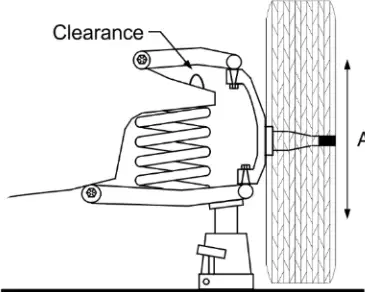
What are the two types of movement that must be checked for ball joints?
Axial (vertical) movement and radial (side to side) movement.
Rotational (circular) movement and linear (forward-backward) movement.
Oscillating (up-down) movement and twisting (rotational) movement.
Lateral (left-right) movement and compressive (inward) movement.
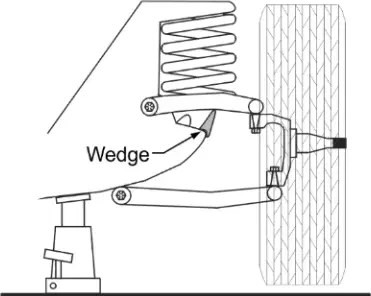
On suspensions with the spring mounted on the upper control arm as in Figure 12, where should you place the floor jack?
Under the rear axle
Under the front cross member or frame
Under the wheel
Under the lower control arm
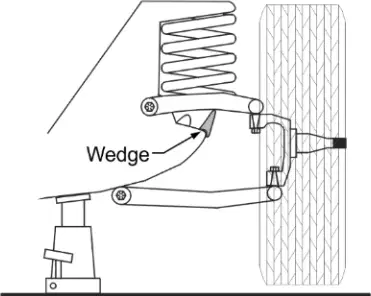
What is inserted between the upper control arm and the frame to support the spring load and hold the ball joint approximately in the normal travel position (ride height) as shown in Figure 12?
A wedge
A shim
A spacer
A bushing
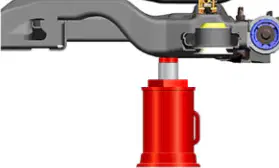
On a vehicle equipped with a McPherson strut suspension as in Figure 13, what needs to be jacked up on the frame in order to unload the ball joint?
The vehicle
The wheel only
The control arm only
The strut assembly
Both types of suspensions described require checking the ball joints for which types of movement?
Axial and radial
Radial and lateral
Axial and lateral
Radial and vertical
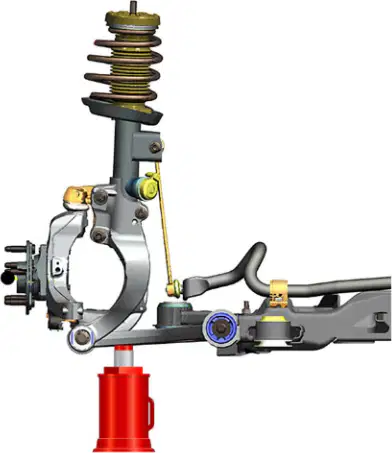
On the RevoKnuckle/Hiper Strut design, where must the vehicle be jacked up to unload the ball joints?
Under the lower control arm
Under the subframe
Under the strut tower
Under the engine oil pan
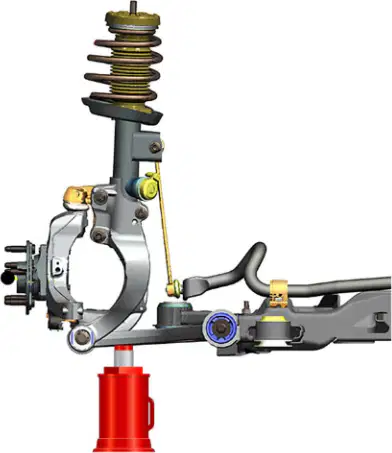
What must be checked for after jacking up the vehicle under the lower control arm on a Hiper strut design?
Tire pressure
Ball joint radial and lateral movement
Brake fluid level
Suspension spring tension
Ball joints may be equipped with ______ to simplify the inspection process.
wear indicators
grease fittings
dust boots
locking pins
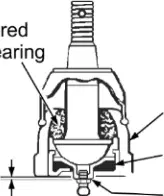
According to Figure 15, what happens to the wear indicator boss when the ball joint is worn out?
It protrudes from the housing
It becomes flush or receded in the housing
It changes color
It increases in size
Wear indicator ball joints must be checked with the vehicle weight on the ball joint.
True
False
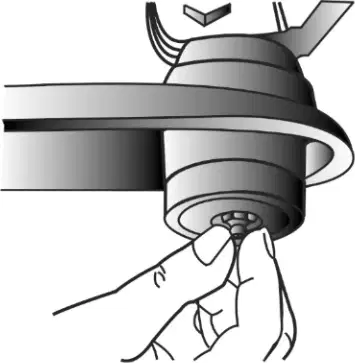
According to the passage, what does any movement of the grease fitting in Figure 16 indicate?
A properly functioning ball joint
A worn ball joint
A new suspension bushing
Excessive lubrication
Select two signs that suspension bushings should be checked for.
Unusual noises and uneven tire wear
Bright headlights and clean windows
Full fuel tank and new wiper blades
Cold air from the AC and working radio
Fill in the blank: Suspension bushings should be checked for ________, distortion, polished areas, and seized components.
severe weathering (some cracking is normal)
excessive lubrication
loose bolts
missing paint
Which of the following is NOT a sign of worn suspension bushings according to the passage?
Severe weathering
Distortion
Polished areas
Increased tire pressure
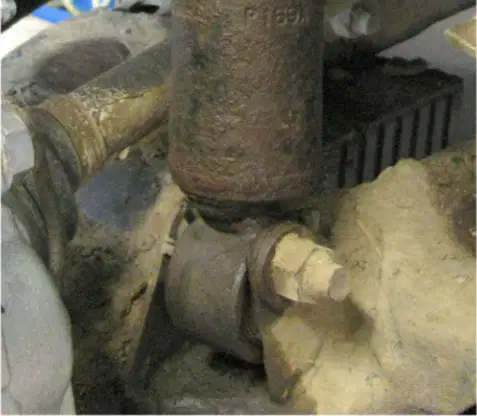
What does Figure 18 illustrate?
New strut bushing
Worn strut bushing
Broken shock absorber
New shock absorber
What is the purpose of the bounce test for shocks and struts?
To check if the shocks/struts are dampening effectively by observing how quickly the vehicle recovers after being jounced.
To measure tire pressure.
To check the alignment of the wheels.
To inspect the brake pads for wear.
According to the passage, if the shocks/struts are dampening effectively, the vehicle should recover within how many oscillations?
1.5 oscillations
3 oscillations
5 oscillations
2.5 oscillations
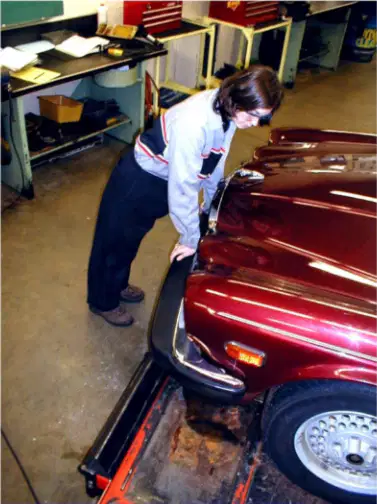
Figure 19 shows a person performing a bounce test on a vehicle. What is being checked during this test?
A) Tire pressure
B) Brake function
C) Action of the shock absorbers
D) Engine oil level
What is the main problem with the bounce test for shock absorbers as described in the passage?
It is too expensive
It does not take into account different vehicle designs
It is too time-consuming
It requires special equipment
According to the passage, what is the best way to test shock and strut operation?
By performing a bounce test
By analyzing the ride quality with a road test
By checking for oil leaks only
By replacing shocks regularly
Fill in the blank: If the fluid leaks out of a shock absorber, the shock must be _________.
replaced
repainted
tightened
ignored
One method of diagnosing a bent strut is:
Measuring the strut for straightness
Checking tire pressure
Inspecting the oil level
Testing the battery voltage
Physical inspection of computerized suspension systems includes checking the condition and leakage at _________.
compressed air components
electrical wiring harnesses
engine oil filters
dashboard displays
Which of the following is NOT a part of the physical inspection of computerized suspension systems?
Routing of hoses and wiring
Checking tire pressure
Condition and leakage at compressed air components
Connections at hoses, wiring, and electrical components
Electronic component and system function usually requires diagnostic procedures specific to the individual system outlined in manufacturer service information.
True
False
One item that should be checked during the physical inspection of computerized suspension systems is:
Wiring connections
Tire pressure
Engine oil level
Air conditioning refrigerant
According to the instructions for Steering Linkage Inspection, which of the following must be checked in all steering linkage components?
Looseness
Binding
Torn or damaged boots
All of the above
What is the term used for checking for looseness in steering linkage components by moving the steering wheel from side to side and feeling each pivot point for perceptible lateral movement between the parts?
Dry park check
Steering angle test
Wheel alignment check
Tie rod adjustment
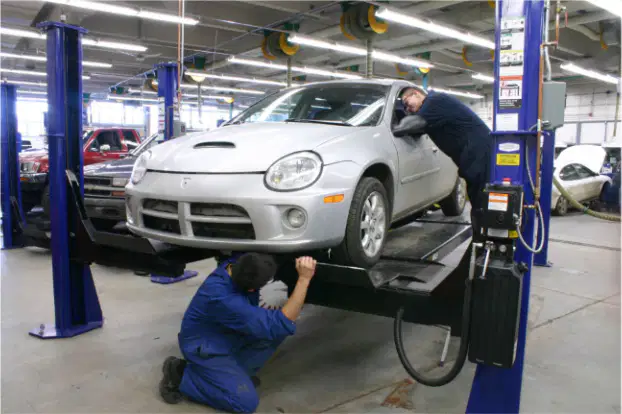
A pry bar should be used to check steering linkages for looseness.
True
False
Any perceptible looseness in tie rod ends indicates that ______ is necessary.
replacement
lubrication
adjustment
cleaning
Which of the following may require removal of the bellows to feel for lateral movement?
Outer tie-rod ends
Inner tie-rod ends on rack and pinion systems
Steering wheel
Boots
According to the passage, what type of movement should idler and pitman arms have?
No perceivable lateral movement
No perceivable vertical movement
Free movement in all directions
Only rotational movement
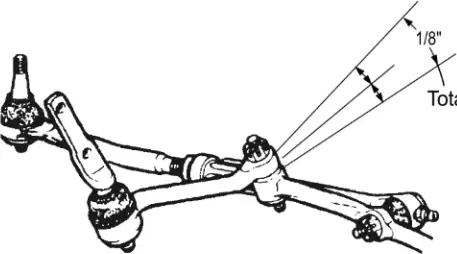
What is the normal vertical idler arm movement shown for some vehicles?
1/4 inch
1/8 inch
1/2 inch
1 inch
If the centre link is not parallel to the crossmember, the vehicle will have a ________ condition.
bump steer
oversteer
understeer
toe-out
Any lateral movement in the centre link requires replacement.
True
False
According to the passage, the idler arm may be adjustable up and down to level the ________.
centre link
steering wheel
tie rod
pitman arm
What is the main goal after completing Objective Four?
To identify car brands
To correct suspension or steering problems
To paint the vehicle
To replace tires
Suspension: The use of correct tools and procedures during disassembly and assembly of suspension systems is essential to the safety of the vehicle itself. Failing to use proper safety devices and procedures can be life threatening for the technician.
True
False
Ball Joints: Most ball joints are fitted to the steering knuckle assembly with a ______ stud and socket. Fill in the blank.
tapered
threaded
grooved
splined
DANGER: The ball joints may support extreme spring load. Never remove ball joint nuts until spring forces are completely ______. Fill in the blank.
controlled
loose
tightened
removed
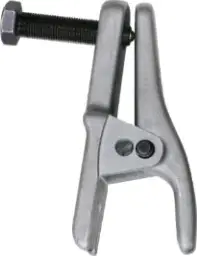
Figure 23 illustrates some of the proper tools required for breaking ball joints loose at their tapered studs. Which of the following is NOT recommended unless the ball joint is being replaced?
Ball joint separator tool
Wedge separation tool (pickle fork)
Steering knuckle
Dust boot

What is the primary use of a pickle fork in automotive repair?
To tighten bolts
To separate the ball joint and steering knuckle
To weld parts together
To polish metal surfaces
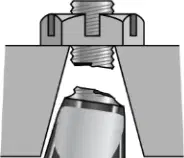
Damaged stud sockets result in improper fit of the stud to the socket, which allows _______ in the connection and can result in broken studs.
movement
corrosion
expansion
insulation
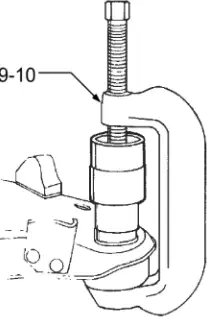
What tool is shown being used to remove a press fit ball joint?
Hammer
Ball joint press
Screwdriver
Wrench
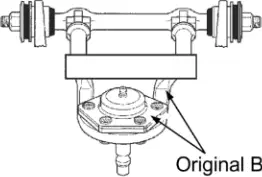
What should be done if ball joints are riveted to the control arms?
Leave the rivets in place
Replace the rivets with high-grade bolts and nuts
Weld the ball joint to the control arm
Remove the control arm entirely
According to the passage, on some vehicles, the ball joint is not replaceable separately from the control arm. What must be replaced in this case?
Only the ball joint
Only the control arm
The entire ball joint/control arm assembly
The spring clip

