
Font size
 Worksheets
Objectives
Total questions: 70
Worksheet time: 35mins
Anatomy and Physiology are defined as:
Anatomy is the study of body structure; Physiology is the study of body function.
Anatomy is the study of body function; Physiology is the study of body structure.
Anatomy and Physiology both study only body diseases.
Anatomy and Physiology are both the study of body chemistry.
The levels of structural organization that make up the human body are:
Cells, tissues, organs, organ systems, organism
Atoms, molecules, planets, galaxies, universe
Cells, atoms, molecules, tissues, planets
Organs, tissues, cells, atoms, molecules
The important life processes of the human body include which of the following?
Nutrition, respiration, transportation, excretion, reproduction
Only respiration and excretion
Digestion and movement only
Circulation and thinking only
Homeostasis is best defined as:
The maintenance of a stable internal environment in the body.
The process of breaking down food for energy.
The ability of an organism to move from one place to another.
The process of cell division and growth.
The components of a feedback system include:
Sensor, Controller, Actuator, Feedback path
Transistor, Diode, Resistor, Capacitor
Input, Output, Amplifier, Filter
Battery, Switch, Load, Fuse
Negative and positive feedback systems differ in their operation as follows:
Negative feedback systems counteract changes to maintain stability, while positive feedback systems amplify changes.
Negative feedback systems amplify changes, while positive feedback systems counteract changes.
Both negative and positive feedback systems always maintain stability.
Negative feedback systems and positive feedback systems operate identically.
Homeostatic imbalances are related to disorders because:
they disrupt the body's normal internal environment, leading to disease.
they always improve the body's health.
they have no effect on the body's functions.
they only occur during exercise.

Anatomy is the study of:
the structure of living organisms
the chemical processes in the body
the functions of organs
the spread of diseases
Physiology is:
the study of the functions and processes of living organisms
the study of rocks and minerals
the study of celestial bodies
the study of ancient civilizations
What is the study of the structure and relationship of these structures of the human body called?
(a)
What is the study of the functions of these structures called?
(a)
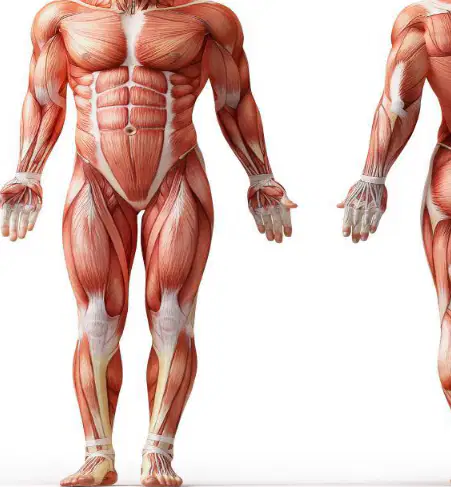
In the anatomic position, the body is (a) .

In the anatomic position, the face and the palms of the hands are (a) forward.

In the anatomic position, the lower limbs are close together with the (a) parallel.

What is the position called when the body is lying face DOWN?
(a)

What is the position called when the body is lying face UP?
(a)
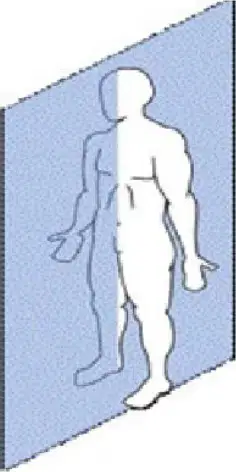
What is the function of the median sagittal (midsagittal/median) plane?
(a)

Which anatomical plane divides the body into anterior (front) and posterior (back) portions?
(a)

What is the name of the horizontal line that divides the body into superior (upper) and inferior (lower) portions?
(a)
What is the paramedian/parasagittal plane?
(a)
What is the oblique plane?
(a)

What directional term refers to 'toward the head' in human anatomy?
(a)

What directional term refers to 'toward the tail or lower part of the body' in human anatomy?
(a)
What directional term refers to 'toward the back' in human anatomy?
(a)
What directional term refers to 'toward the front' in human anatomy?
(a)
What directional term refers to 'toward the top or above' in human anatomy?
(a)
What directional term refers to 'toward the bottom or below' in human anatomy?
(a)

What directional term refers to 'closer to the point of attachment or origin' in human anatomy?
(a)

What directional term refers to 'farther from the point of attachment or origin' in human anatomy?
(a)
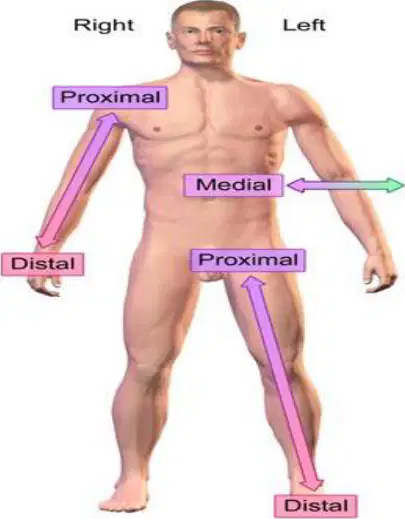
What directional term refers to 'toward the midline of the body' in human anatomy?
(a)

What directional term refers to 'away from the midline of the body' in human anatomy?
(a)

List the principal regions of the human body as shown in the diagram: ______, ______, ______, ______, ______.
(a)

The head consists of (a) and face.

What does the skull enclose?
(a)
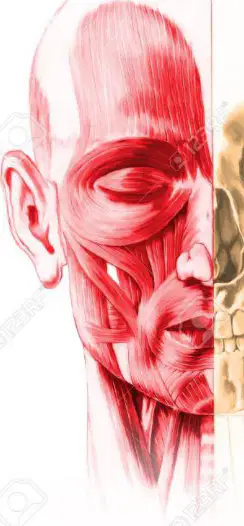
The front portion of the head that includes eyes, nose, mouth, forehead, cheeks, and chin is called the (a) .
The neck supports the head and connects it to the (a) .
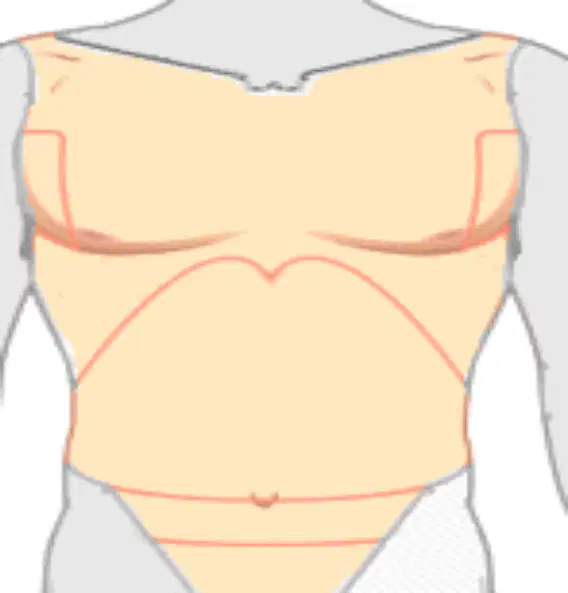
Based on the diagram and information provided, the trunk consists of the chest, abdomen, and (a) ?

The upper limb is (a) to the trunk.
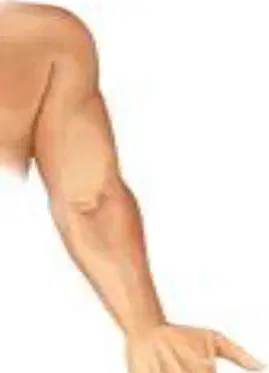
List all the parts that the upper limb consists of according to the image.
(a)

The lower limb is (a) to the trunk.
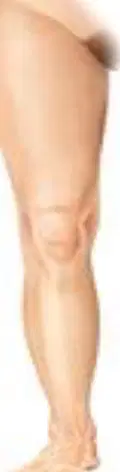
The groin is an area in the front surface marked by a (a) .
What are body cavities?
(a)

Name the cavity that protects the brain. (Refer to the diagram showing labeled body cavities in lateral and anterior views of the human body.)
(a)
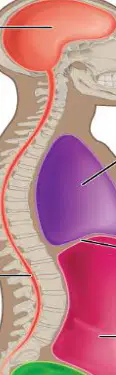
Which cavity runs along the back of the body and contains the spinal cord?
(a)

Which body cavity is both thoracic and abdominopelvic cavities together called?
(a)
What is the cranial cavity formed by?
(a)
What does the cranial cavity contain?
(a)

The vertebral canal is formed by the (a) .

The vertebral canal contains the (a) and the beginnings of the spinal nerves.
What is another name for the thoracic cavity?
(a)

The thoracic cavity is formed by the ribs, muscles of the chest, the sternum, and the thoracic portion of the (a) .
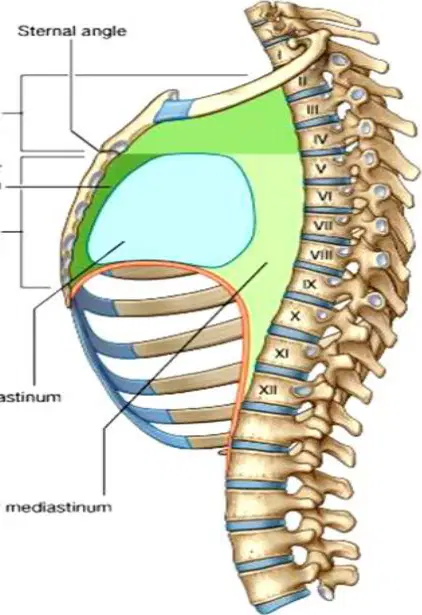
List the three cavities found within the thoracic cavity.
(a)

What is the pericardial cavity?
(a)

The pericardial cavity is a fluid filled space that surrounds the (a) .
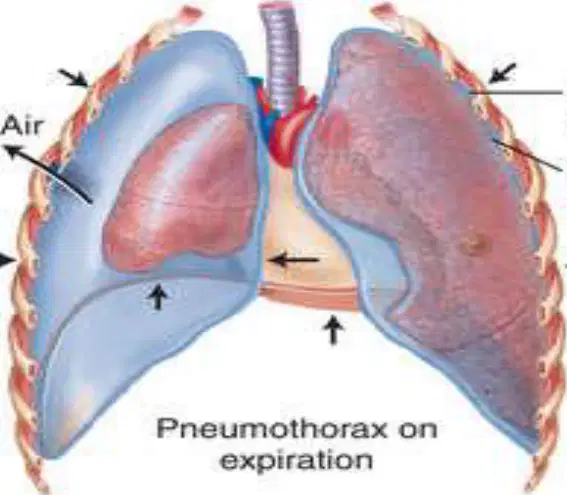
What is the pleural cavity? (Fill in the blank: The pleural cavity is a (a) filled space that surrounds each lung.)
What is the mediastinum?
(a)
The mediastinum is located between the lungs, extending from the sternum to the _______ and from the first rib to the _______.
(a)

Identify the anatomical structure labeled as 'Superior mediastinum' in the diagram.
(a)

Identify the anatomical structure labeled as 'Inferior mediastinum' in the diagram.
(a)

Identify the anatomical structure labeled as 'Anterior mediastinum' in the diagram.
(a)

Identify the anatomical structure labeled as 'Middle mediastinum' in the diagram.
(a)
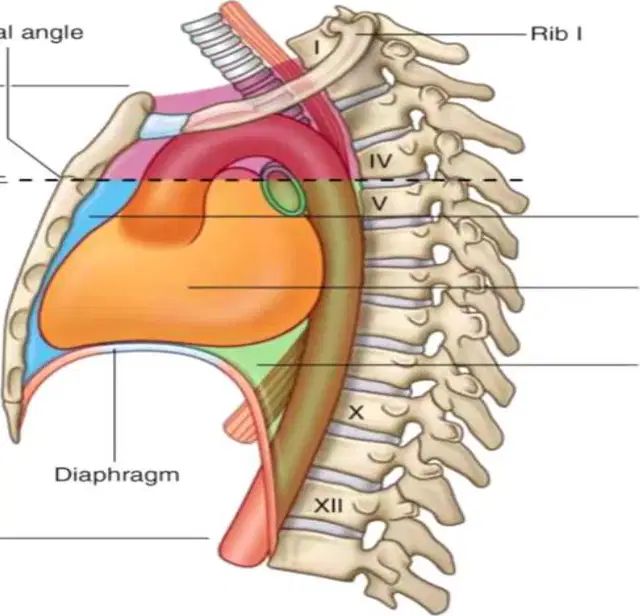
Identify the anatomical structure labeled as 'Posterior mediastinum' in the diagram.
(a)
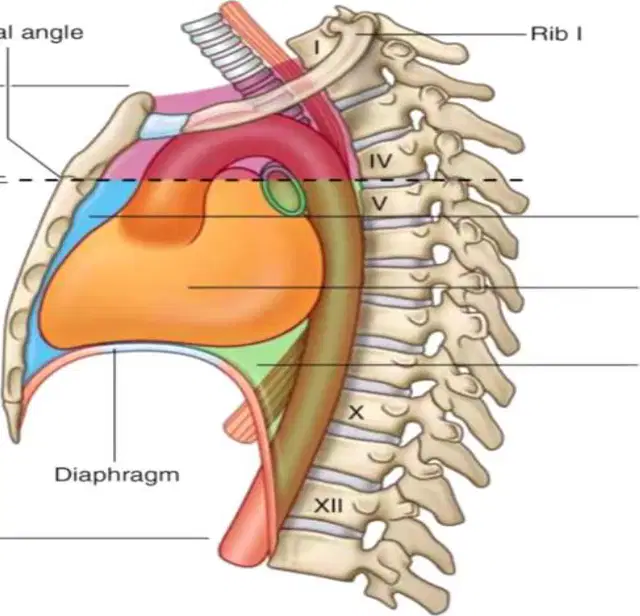
Identify the anatomical structure labeled as 'Sternal angle' in the diagram.
(a)

Identify the anatomical structure labeled as 'Rib I' in the diagram.
(a)
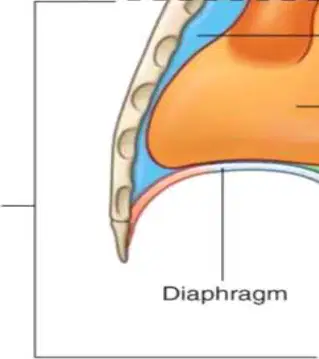
Identify the anatomical structure labeled as 'Diaphragm' in the diagram.
(a)
The abdominopelvic cavity extends from the (a) to the groin.
The abdominopelvic cavity is encircled by the abdominal muscular wall and the bones and muscles of the (a) .
The abdominopelvic cavity is subdivided into which two cavities?
(a)

In the diagram, the (a) separates the thoracic cavity from the abdominal cavity.
do you love sopeya?
yeyeyeyye foreal
absolutelyyyyyy
withoutttt a doubtttt
saurrrrrr muchhhhhh

