
 Worksheets
Physio Exam 1
Total questions: 70
Worksheet time: 1hrs 11mins
Which of the following lists correctly represents the levels of structural organization in the human body from simplest to most complex?
Cellular → Chemical → Tissue → Organ → System → Organismal
Chemical → Cellular → Tissue → Organ → System → Organismal
Chemical → Tissue → Cellular → Organ → System → Organismal
Tissue → Chemical → Organ → Cellular → System → Organismal

Which term describes when 'Levels fluctuate regularly but remain relatively stable over time
positive feedback
homeostasis
dynamic constancy
equilibrium
Anatomy considers questions like ____ and _____
Physiology considers questions like ___ and ___
(a)
Which term is defined as the body’s ability to constantly adjust to changing stimuli in order to maintain internal stability?
adaptation
dynamic constancy
homeostasis
feedback regulation
When a blood vessel is injured, platelets stick to the site and release chemicals that attract more platelets, which continue the process until a clot is formed.
Is this an example of positive feedback or negative feedback?
positive feedback
negative feedback
When blood glucose levels rise after eating, the pancreas releases insulin to lower glucose levels back to normal.
Is this an example of positive feedback or negative feedback?
positive feedback
negative feedback
Which term describes a control mechanism in which a change in a given direction causes a change in the opposite direction (counteracts initial change)?
positive feedback
negative feedback
Which term describes a control mechanism in which a change in a given direction causes a change in the same direction (amplifies initial change)?
positive feedback
negative feedback
Which is an example of the tissue level of structural organization?
glucose and amino acids
respiratory system, cardiovascular system, and nervous system
epithelium, muscle tissue, and nervous tissue
chondrocytes, osteocytes, and adipocytes
humans, koalas, Harambe
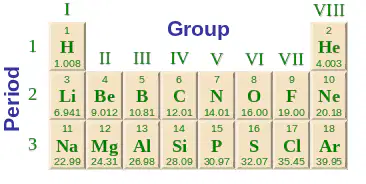
In the periodic table, what do elements in the same group (column) have in common?
atomic mass
number of valence electrons
number of protons
number of electron shells (energy levels)
In the periodic table, what do elements in the same period (row) have in common?
atomic mass
number of valence electrons
number of protons
number of electron shells (energy levels)
Which subatomic particle(s) determine an element's atomic number?
proton
neutron
electron
Which subatomic particle(s) provides reactivity to the atom so that bonds between atoms can occur?
proton
neutron
electron
Which subatomic particle(s) contribute to the atom's charge?
proton
neutron
electron
Which subatomic particle(s) contribute to the atomic mass?
proton
neutron
electron
Why is hydrogen considered unique compared to most other elements?
has no electrons in its ground state
lacks neutrons in its most common isotope
contains more protons than electrons
has two valence electrons in its outer shell
Noble gases (Group VIII) are unique compared to other elements. What property explains their chemical inertness (lack of reactivity)?
have one valence electron
have a full valence electron shell
easily gain electrons
lack neutrons
have an even number of protons
What is the definition of an element?
mixture of two or more substances physically combined
Two or more atoms chemically bonded together
substance that cannot be broken down into other substances by chemical reactions
substance that can be separated into other substances by chemical reactions
Which type of bond forms when the electronegativity difference between two atoms is less than 0.5, resulting in an equal sharing of electrons?
ionic bond
polar covalent bond
non-polar covalent bond
Which type of bond forms when the electronegativity difference between two atoms is between 0.6 and 1.9, resulting in an unequal sharing of electrons?
ionic bond
polar covalent bond
non-polar covalent bond
Which type of bond forms when the electronegativity difference between two atoms is more than 1.9, causing an atom to completely transfer an electron to the other?
ionic bond
polar covalent bond
non-polar covalent bond
weak attraction between partially positive and partially negative regions of a molecule
ionic bond
polar covalent bond
non-polar covalent bond
hydrogen bond
Which bond type is strongest, and which is weakest?
strongest: ionic
weakest: polar covalent
strongest: hydrogen
weakest: non-polar covalent
strongest: polar covalent
weakest: hydrogen
strongest: non-polar covalent
weakest: ionic
strongest: non-polar covalent
weakest: hydrogen

The image shows a CO2 molecule. How many valence electrons is each individual O atom sharing with the C atom? What kind of bond is it?
1 valence electron
single bond
2 valence electrons
double bond
3 valence electrons
triple bond
4 valence electrons
quadruple bond
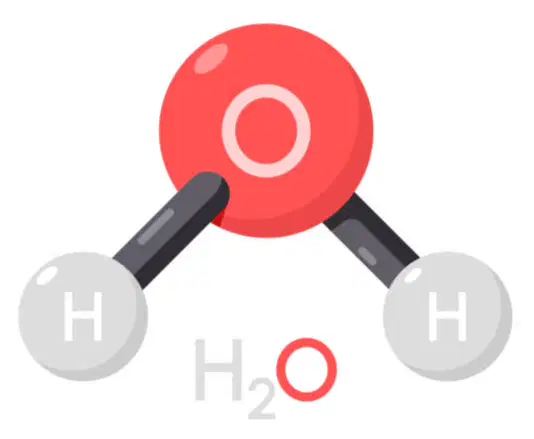
What type of bond is between O and H atoms in a water molecule?
ionic bond
polar covalent bond
non-polar covalent bond
What are some properties of inorganic molecules?
(select all that apply)
contains no carbon
can form salts
always with few atoms
contains carbon and hydrogen
cannot form salts
What are some properties of organic molecules?
(select all that apply)
contains no carbon
can form salts
often quite large with many atoms
contains carbon and hydrogen
cannot form salts
What is the importance of functional groups in organic molecules?
(select 2)
stability of the C–C backbone makes it hard for other atoms or molecules to interact with it
determines
characteristics and chemical reactivity
increase the molecule’s size without changing its properties
prevent the molecule from forming bonds with other atoms
remove carbon atoms from C–C backbone to increase reactivity
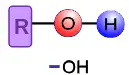
• Polar
• Found in building &
breaking reactions
• Sugar, alcohol
Hydroxyl Group
Phosphate Group
Carboxylic Acid or Carboxyl Group
Amine or Amino Group
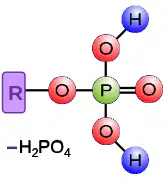
• Acidic & polar
• Form energetic bonds; link nucleotides
• DNA; ATP; Phospholipids
Hydroxyl Group
Phosphate Group
Carboxylic Acid or Carboxyl Group
Amine or Amino Group
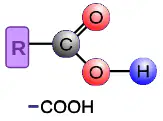
• Polar & acidic
• Peptide bonds
• Fats; amino acids
Hydroxyl Group
Phosphate Group
Carboxylic Acid or Carboxyl Group
Amine or Amino Group
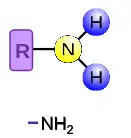
• Polar & basic
• Peptide bonds
• Amino acids; proteins
Hydroxyl Group
Phosphate Group
Carboxylic Acid or Carboxyl Group
Amine or Amino Group
What does the term amphipathic mean?
molecule that is completely hydrophobic
molecule that is completely hydrophilic
molecule that has both hydrophilic and hydrophobic regions
molecule that cannot interact with water at all
How does hydrolysis relate to monomers and polymers?
joins monomers together to form polymers by removing water
breaks polymers into monomers by adding water
makes polymers more stable without changing their structure
converts monomers into lipids for energy storage
How does dehydration synthesis relate to monomers and polymers?
joins monomers together to form polymers by removing water
breaks polymers into monomers by adding water
makes polymers more stable without changing their structure
converts monomers into lipids for energy storage
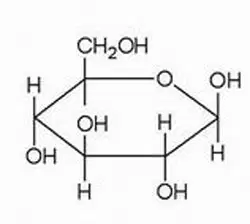
This molecule belongs in which biological molecule group?
carbohydrates
proteins
nucleic acids
lipids
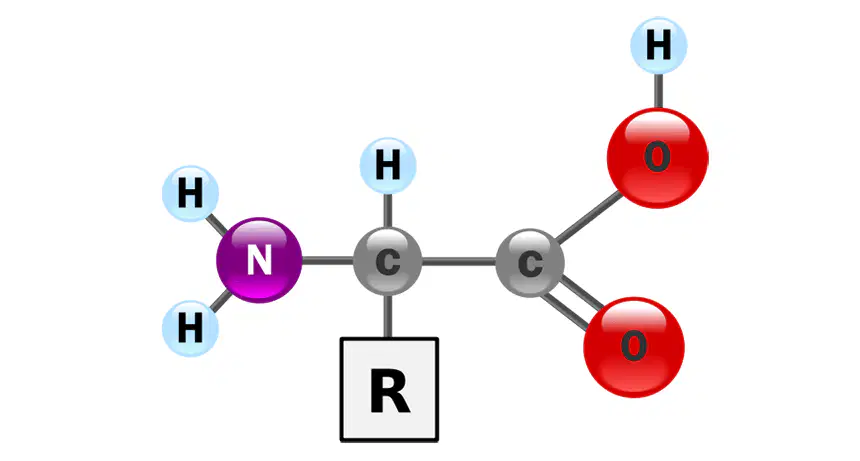
This molecule belongs in which biological molecule group?
carbohydrates
proteins
nucleic acids
lipids
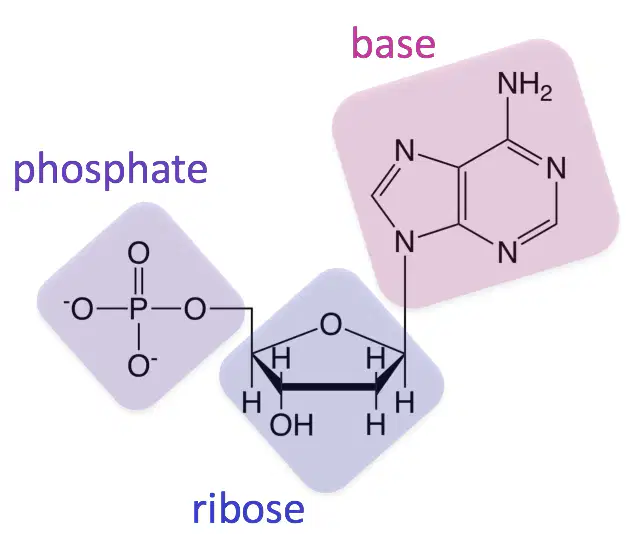
This molecule belongs in which biological molecule group?
carbohydrates
proteins
nucleic acids
lipids
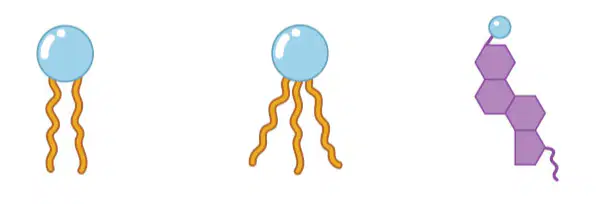
These molecules belong in which biological molecule group?
carbohydrates
proteins
nucleic acids
lipids
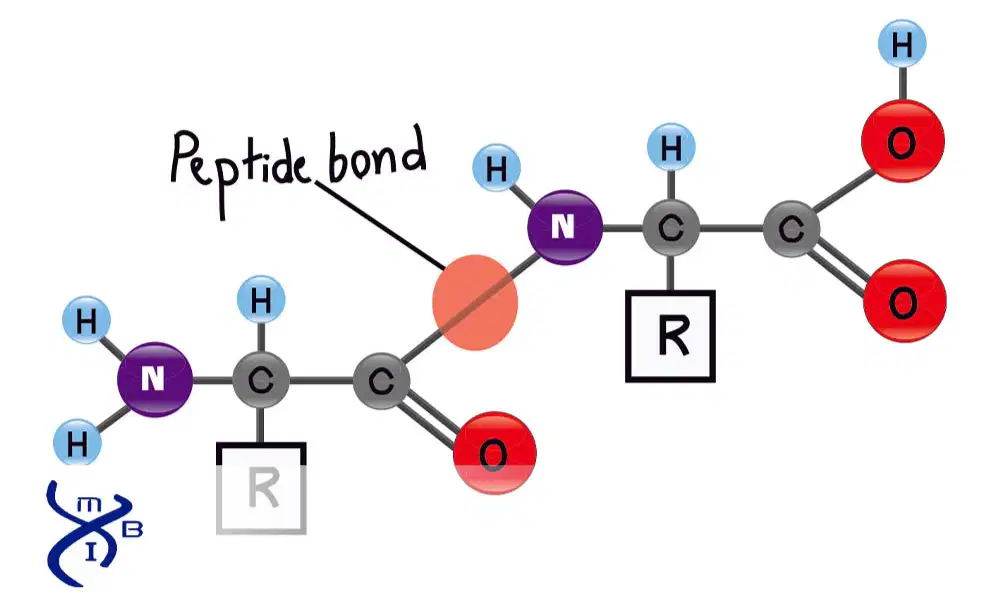
What is a peptide bond, and which functional groups are involved in forming it?
covalent bond joining amino acids via an amino group and a carboxyl group
hydrogen bond within a protein, formed between two hydroxyl groups
ionic bond between two fatty acids, formed between carboxyl groups
bond joining nucleotides, formed between phosphate and hydroxyl groups

Identify the protein level of structure:
the sequence of amino acids
primary
secondary
tertiary
quaternary
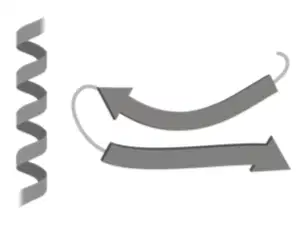
Identify the protein level of structure:
way the amino acid chain coils or folds
primary
secondary
tertiary
quaternary
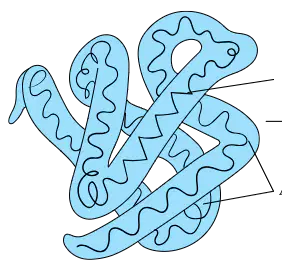
Identify the protein level of structure:
Overall 3D shape of a polypeptide
primary
secondary
tertiary
quaternary
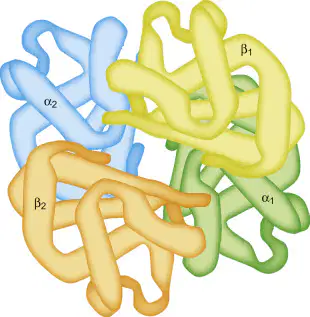
Identify the protein level of structure:
Consists of more than one polypeptide, not functional unless all subunits joined
primary
secondary
tertiary
quaternary
Why is carbon’s electronegativity of about 2.5 important for the stability of its bonds?
allows carbon to form non-polar covalent bonds with most elements
makes carbon unable to form covalent bonds
causes carbon to always form ionic bonds with other atoms
prevents carbon from bonding with atoms of similar electronegativity
Select all necessary components of an amino acid
amine group
carboxyl group
hydrogen atom
variable R group
What is the difference between essential and nonessential amino acids?
Essential amino acids can be made by body, while nonessential must come from diet
Essential amino acids must be obtained from diet, while nonessential can be made by body
Essential amino acids are used only for energy, while nonessential build proteins
Essential amino acids contain nitrogen, while nonessential do not
Why are enzymes important in biological systems?
provides energy for chemical reactions
slows down reactions to prevent cell damage
speeds up reactions by lowering the activation energy needed
changes the final products of chemical reactions
monomer = monosaccharide
polymer = polysaccharide
all are polar due to many hydroxyl groups
functions: energy storage and structure
carbohydrates
proteins
nucleic acids
lipids
monomer = amino acids (20 types)
polymer = polypeptide chain
functions: support, enzymes, transport, defense, hormones, motion
carbohydrates
proteins
nucleic acids
lipids
monomer = nucleotide
polymer = nucleic acid (DNA/RNA)
functions: genetic information center or assembly of proteins
carbohydrates
proteins
nucleic acids
lipids
grouping based on insolubility in water rather than specific repeating monomers
carbohydrates
proteins
nucleic acids
lipids

Why is cholesterol important in cell membranes?
increases membrane rigidity at all temperatures
prevents membranes from becoming too fluid in heat and too rigid in cold
acts as a channel for ions to pass through the membrane
provides energy for membrane transport
Which of the following are functions of the cell membrane? (Select all that apply)
Regulate passage of substances into and
out of cells
Detect messengers arriving at cell surface
Link adjacent cells together by cell junctions
Anchor cells to the extracellular matrix
Produce ATP for cellular energy
Why do animal cells need cholesterol in their membranes while plant cells generally do not?
plant cells have cell walls that provide structural support, so cholesterol is not needed
animal cells do not have membranes without cholesterol
plant cells contain more proteins that replace cholesterol’s function
animal cells lack phospholipids, so they require cholesterol
What is the main difference between integral and peripheral proteins in the cell membrane?
integral proteins are loosely attached to membrane surface, while peripheral proteins span entire membrane
integral proteins span membrane and can interact with both interior and exterior, while peripheral proteins are attached only to surface
integral proteins are only on outside of the membrane, while peripheral proteins are inside cell
integral proteins are made of lipids, while peripheral proteins are made of carbohydrates
Integral proteins can be divided into 2 categories based on function, transport and not transport. What are the not transport functions?
(select all that apply)
Intracellular joining
Enzymatic activity
Cell-cell recognition
Anchorage/Attachment
Signal transduction (cell communication)
What is the term for the movement of molecules from high to low concentration using an integral membrane protein without using energy?
active transport
simple diffusion
osmosis
facilitated diffusion
proteins that provide a passageway for molecules to move across the cell membrane without requiring energy
channel proteins
gated channel proteins
carrier proteins
pumps
channel proteins that open or close in response to specific signals, such as a chemical or electrical stimulus
channel proteins
gated channel proteins
carrier proteins
pumps
proteins that translocate the solute-binding site plus solute across membrane as protein changes shape (can be active or passive)
channel proteins
gated channel proteins
carrier proteins
pumps
A sodium-potassium pump in a neuron moves sodium ions out of the cell and potassium ions into the cell, both against their concentration gradients, using energy from ATP.
Which type of transport is this?
active transport
passive transport
Oxygen molecules move from the lungs into the blood across the respiratory membrane, traveling from an area of high concentration to low concentration without using energy.
Which type of transport is this?
active transport
passive transport
What is the main difference between primary and secondary active transport?
primary uses ATP directly, secondary uses an ion gradient
primary moves molecules down their gradient, secondary moves them up
primary occurs in prokaryotes, secondary in eukaryotes
primary does not require proteins, secondary does
What is the difference between symporter and antiporter?
symporter moves two molecules in same direction, while antiporter moves them in opposite directions
symporter moves molecules against their gradient, while an antiporter moves them down their gradient
symporter uses ATP directly, while an antiporter uses an ion gradient
symporter is passive, while an antiporter is active
Which term describes the process by which large molecules or particles are transported into or out of a cell using vesicles?
simple diffusion
facilitated diffusion
membrane-assisted transport
active transport
In phagocytosis, the cell engulfs ________, while in pinocytosis, the cell takes in ________.
large particles; liquids and small molecules
liquids and small molecules; large particles
ions; water
water; ions
All membrane assisted transport mechanisms require energy input
In endocytosis, the cell ________, while in exocytosis, the cell ________.
moves molecules passively; moves molecules actively
transports ions only; transports water only
releases substances using vesicles; takes in substances using vesicles
takes in substances using vesicles; releases substances using vesicles
What determines a cell membrane’s selective permeability?
type and presence of specific transport proteins in membrane
size of the cell
number of mitochondria in cell
concentration of cytoplasm
Transport proteins share several properties with enzymes. Which of the following is NOT an enzyme-like property of transport proteins?
have specific binding sites
can become saturated (all active sites occupied)
can be inhibited either at the active site or at
another site on the protein
catalyze a physical process – transporting a
molecule across a membrane
makes new products through chemical reactions

