
 Worksheets
9SCI - week 7 quiz (CVS LI 3, 4)
Total questions: 167
Worksheet time: 2hrs 55mins


What is the most muscular chamber of the heart?
left ventricle
left atrium
right atrium
right ventricle


Valve that blood is forced through from right ventricle into pulmonary arteries.
pulmonary semi lunar valve
aortic valve
mitral valve

Aorta
The largest arterial trunk that carries blood from the heart to be distributed by branch arteries through the body
a vessel that returns blood to the heart
a body structure that is temporarily closes a passage or orifice, or permits movement of fluid in only one direction.
An integrated group of cells with a common function, structure, or both
Artery
A valve in the heart that guards the opening between the left atrium and the left ventricle; prevents the blood in the ventricle from returning to the atrium. Alternative name is bicuspid valve.
A vein that is the largest vein in the human body and returns blood to the right atrium of the heart from bodily parts below the diaphragm.
The body structure that temporarily closes a passage or orifice, or permits movement of fluid in only one direction.
Any of the tubular, branching, muscular, and elastic-walled vessels that carry blood from the heart through the body.


Which number is the vena cava?
1
2
4
8

What does letter B represent?
aorta
vena cava
pulmonary vein
pulmonary artery

Which valve is letter X?
aortic (semi-lunar)
bicuspid
tricuspid
pulmonary (semi-lunar)
As the right ventricle contracts, the blood flows into the
Heart
Pulmonary artery
Atrium
Ventricle
The blood enters on the left side of the heart (from the lungs) through the ______________ and enters the left atrium. It then passes through the _____________to enter the left ventricle.
pulmonary artery, mitral valve
pulmonary vein, tricuspid valve
pulmonary artery, aortic valve
pulmonary vein, bicuspid valve
Blood flows in the following sequence in the heart: vena cava, right atrium, tricuspid valve, right ventricle, pulmonary semi-lunar valve, pulmonary artery, lungs, pulmonary vein, left atrium, bicuspid valve, left ventricle, aortic semi-lunar valve, aorta
True
False

Place the pathway of blood through the heart in the correct sequence.
L-K-H-B-G-E-C-F-A-I-E-D
I-J-D-C-F-A-H-B-G-E-K-L
A-B-J-C-D-E-F-K-L-G-H-I
I-J-E-D-C-F-A-B-G-H-K-L
The function of the valves is to...
Allow for the contraction of the heart.
Prevent back-flow.
Oxygenate the blood.
Supply the myocardium with oxygen.
Which of the following characteristics is NOT apply to arteries
have thick walls
carry blood under low pressure
lumen is narrow
carry oxygenated blood
Through which valve does deoxygenated blood flow from R.atrium to R.ventricle ?
Tricuspid
Aotric
Pulmonary
Mitral
....... prevent the backflow of blood from ( R.ventricle to R.atrium)
pulmonary vein
vena cava
left atrium
heart valve
How many main chambers does the heart have?
(a)

Identify the letter that represents the pulmonary vein
J
K
L
M
Function of the pulmonary circuit:
Transports deoxygenated blood from the R.ventricle to the lungs
Transports deoxygenated blood from the R.ventricle to the body
Transports oxygenated blood from the R.ventricle to the lungs
Transports oxygenated blood from the R.ventricle to the body
Which of the following statements are characteristics of veins?
have thick walls
carry oxygenated blood
lumen is wide
don't have lumen

What number represents pulmonary arteries ?
1
3
2
5

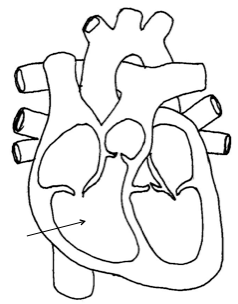
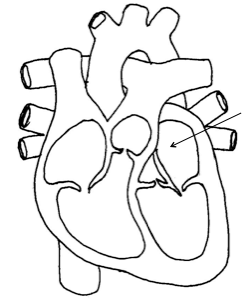
Identify the structure the arrow is pointing to
right atrium
right ventricle
left atrium
left ventricle
The most muscular chamber of the heart is the
left ventricle
left atrium
right atrium
right ventricle
The upper chambers of the heart are called______________.
atria
ventricles
septum
There are _____________chambers in the heart.
3
4
5
2
The ______________pump blood into the body.
left atrium
right atrium
left ventricles
right ventricle
What keeps blood from flowing backwards in the heart?
atrium
valves
artery
septum
The (a) divides the heart into left and right sides.
Upper chamber that collects oxygenated blood from the pulmonary veins and pumps it into the left ventricle
right atrium
right ventricle
left atrium
septum
Valve that prevents oxygenated blood from flowing backward from the left ventricle into the left atrium
tricuspid valve
bicuspid valve
semilunar valve
The upper chamber of the heart that receives deoxygenated blood from the body
right atrium
right ventricle
left atrium
septum
Most muscular chamber that pumps oxygenated blood to the entire body
right atrium
right ventricle
left atrium
left ventricle
Prevents blood from flowing backwards as it moves from the right atrium to the right ventricle
tricuspid valve
bicuspid valve
semilunar valve
septum
The right side of the heart contains...
Oxygenated Blood
De-oxygenated Blood
Both Oxygenated and De-oxygenated Blood
Water
How many valve(s) found in the heart?
1
2
3
4
Your heart is an involuntary muscle that is always working.
True
False
Which of the following is true about your heart?
Your heart may stop beating from time to time.
You have to think in order to keep your heart beating.
Your heart pushes blood through your body.
All of the above

Name X : (a) valve


Top chambers of the heart.
atria
ventricles
The blood is re-oxygenated at the...
Muscles
Lungs
Mouth
Oxygenated blood is in which side of the heart?
Right
Left
Deoxygenated blood is in which side of the heart?
Right
Left
The lower chambers of the heart are called...
Ventricles
Atria
Capillaries
Aorta
How many times does blood pass through the heart?
1
2
3
4
Blood vessels carrying blood back to the heart are...
Arteries
Veins
Capilaries
Blood vessels carrying blood away from the heart are called...
Capillaries
Veins
Arteries
Blood enters the heart from the body through the
Pulmonary vein
Pulmonary artery
Vena cava
Aorta
The chamber blood enters into the heart is the
bottom one
atrium
ventricle
Blood leaves the heart to the lungs through the
pulmonary artery
pulmonary vein
vena cava
aorta
The pulmonary artery os the only artery that
carries oxygenated blood
carries blood away from the lung
carries deoxygenated blood
carries blood back to the heart
The pulmonary vein
Carries deoxygenated blood
Carries blood away from the heart
carries blood back to the right side of the heart from the body
carries blood back to the left side of the heart from the lung
The vena cava
Carries deoxygenated blood
Carries blood away from the heart
carries blood back to the right side of the heart from the body
carries blood back to the left side of the heart from the lung
The pulmonary vein
Carries blood away from the heart to the body
Carries blood away from the heart to the lung
Carries blood from the body to the heart
Carries blood from the lungs to the heart
The vena cava
Carries blood away from the heart to the body
Carries blood away from the heart to the lung
Carries blood from the body to the heart
Carries blood from the lungs to the heart
The aorta
Carries blood away from the heart to the body
Carries blood away from the heart to the lung
Carries blood from the body to the heart
Carries blood from the lungs to the heart
The vena cava enters the
right atrium
right ventricle
left atrium
left ventricle
The pulmonary vein enters the
right atrium
right ventricle
left atrium
left ventricle
The pulmonary artery leaves the
right atrium
right ventricle
left atrium
left ventricle
The aorta leaves the
right atrium
right ventricle
left atrium
left ventricle
The flow of deoxygentated blood through the heart is
Vena Cava - right atrium - right ventricle - pulmonary artery
Vena Cava - right ventricle - right atrium - pulmonary artery
Pulmonary vein - left ventricle - left atrium - aorta
Pulmonary vein - left atrium - left ventricle - aorta
The flow of oxygentated blood through the heart is
Vena Cava - right atrium - right ventricle - pulmonary artery
Vena Cava - right ventricle - right atrium - pulmonary artery
Pulmonary vein - left ventricle - left atrium - aorta
Pulmonary vein - left atrium - left ventricle - aorta
Human blood vessels are
artries, capillaries, and atria
ventricles, atria and pulmonary veins
capillaries, artries, and veins
veins, artries, and aorta
The thickest and strongest blood vessel is the
vein
artery
capillary
both veins and capillaries
The blood vessel that has valves at intervals...
capillary
artery
vein
none of the above
Valves in veins
support them
protect them
prevent the backward movement inside them
provide them elesticity
which of the blood vessels do you think have greatest blood pressure
veins
capillaries
atria
arteries
These are one cell thick
arteries
capillaries
veins
Which blood vessels take blood TO the heart?
Veins
Arteries
Capillaries
Which blood vessels take blood AWAY from the heart?
Veins
Arteries
Capillaries
Which is the smallest of the 3 blood vessels?
Veins
Arteries
Capillaries

Which arteriole is dilated?
1
2
3

Which arteriole is constricted?
1
2
3
The redistribution of blood flow during exercise increases to the:
Kidneys
Liver
Brain
Muscles
The muscles contracting is important for returning the blood back to the heart against gravity in which vessels.
Arteries
Veins
Capillaries
Blood
Vessel responsible for transfer of oxygen and nutrient into the muscle and waste products out of the muscles.
Capillaries
Arteries
Blood
Arterioles
What is the function of capillaries?
Transports deoxygenated blood
Transport oxygenated blood
Site for exchange of materials
What is the function of veins?
Transport deoxygenated blood
Transport oxygenated blood
Site for exchange of materials
What are present in veins but absent in arteries?
smooth elastic tissues
muscular tissues
valves
How are capillaries adapted for their function?
Have partially permeable walls
One-cell thick walls
Presence of valves
Large lumen (passage)

Which of these blood vessels have small lumens? (Two answers)
Artery
Vein
Capillary


What shape are the Red Blood Cells under a microscope?
Columnar
Doughnut
Triangular
Irregular shaped
Which of the following is true about platelets?
Can seal blood vessel breaks
Smallest of the blood components
All of these are true.
What color is plasma when it is separated from the other components of blood?
red
blue
pale yellow
clear

I am the largest (in size) blood component and have a nucleus.
It is the human blood that carries oxygen.
erythrocytes
leucocytes
Platelets
dissolved substances
It is the human blood that initiate the clotting process.
erythrocytes
leucocytes
Platelets
dissolved substances
It is the human blood that has disk-shaped or biconcave.
erythrocytes
leucocytes
Platelets
dissolved substances
It is the human blood that is produce in bone marrow.
erythrocytes
leucocytes
Platelets
all of the above
It is the human blood that destroy invading organisms (phagocytosis).
erythrocytes
leucocytes
Platelets
all of the above
It is the human blood wherein the size is about 7 μm in diameter ( 1 μm = 1 micrometre = 10-6 metre).
erythrocytes
leucocytes
Platelets
all of the above
It is the human blood that produce antibodies.
erythrocytes
leucocytes
Platelets
all of the above
It is the human blood that has a relative number of about 150,000 to 400,000 per millilitre of blood.
erythrocytes
leucocytes
Platelets
all of the above
It is the human blood that has a relative size of very small which is about 2 to 4 μm in diameter.
erythrocytes
leucocytes
Platelets
all of the above
It is the human blood that has a relative number of about 5 million cells per millilitre of blood.
erythrocytes
leucocytes
Platelets
all of the above
I am the largest (in size) blood component and have a nucleus.
What happens when haemoglobin mixes with oxygen?
It is decomposed
It turns bright red
It produces energy
It makes antibodies
What are phagocytes?
A type of RBC
A special platelet
A dissolved substance
A type of WBC
What is the scientific name given to red blood cells in humans?
Phagocytes
Haemocytes
Lymphocytes
Erythrocytes
Oocytes

The given diagram demonstrates the average percentages of the main components of blood in a sample. What component is label A representing?
Phagocytes
Plasma
Water
Lymphocytes
Hemoglobin

Why does a red blood cell have a biconcave shape?
To decrease the surface area, therefore restricting the volume of oxygen lost from the cell
To provide a large surface area for the active transport of oxygen in and out of the cell
To increase the available surface area, so more oxygen can diffuse in and out of the cell
To increase the volume of the cell, so more genetic material can be carried around the body

