Wayground logo

Free Printable Worksheets

Font size

S
M
L
XL
Worksheets

Characteristics of Life, Viruses and The Cell Review

Total questions: 50

Worksheet time: 1hrs 13mins

Name
Class
Date
1.

___________a molecule that is present in all living cells and that contains the information that determines the traits a living thing inherits and needs to live.

a)

Cell

b)

Stimulus

c)

Homeostasis

d)

DNA

2.
When you step out into the cold, your body shivers in order to keep its temperature at 98.6F.
a)
All living things use energy
b)
All living things contain cells
c)
All living things maintain homeostasis
d)
All living things grow
3.
Green plants produce their own food through the process of photosynthesis.
a)
All living things use energy
b)
All living things contain cells
c)
All living things maintain homeostasis
d)
All living things grow
4.
Over three years, Tim's height has increased from 5'4" to 5'11".
a)
All living things contain cells
b)
All living things maintain homeostasis
c)
All living things use energy
d)
All living things grow
5.
The roots of a plant grow towards a source of ground water.
a)
All living things use energy
b)
All living things reproduce
c)
All living things respond to their environment
d)
All living things grow
6.
YOU are a multi-celled organism but an amoeba is a single celled organism.
a)
All living things have cells
b)
All living things grow
c)
All living things use energy
d)
All living things respond to their environment
7.

All viruses are different, but what are two parts that a virus must have?

a)

Genetic Information (DNA or RNA)

b)

a lipid membrane

c)

a nucleus

d)

a protein coat

8.

Which of these statements is true?

a)

A virus is unicellular, it has only one cell.

b)

A virus may sometimes be multicellular, have many cells.

c)

A virus has no cells

9.

Which statement is true?

a)

A virus has a nucleus, but no other organelles.

b)

A virus has a nucleus and ribosomes.

c)

A virus has no organelles, because it has no cells, and it is non-living.

10.

Once a virus gets into a cell, it

a)

Releases its DNA or RNA into the cell.

b)

It begins to create DNA or RNA in the cell.

c)

It destroys its own DNA and RNA in the cell.
11.
What is the basic structural and functional unit of all living things? 
a)
atom
b)
cell
c)
molecule
d)
human
12.
Which of the following scientists concluded that all animals are made of cells?
a)
Rudolf Virchow
b)
Matthais Schleiden
c)
Robert Hooke
d)
Theodor Schwann
13.

Which of the following scientists was the first to observe bacteria under a microscope?

a)

Anton van Leeuwenhoek

b)

Matthais Schleiden

c)

Robert Hooke

d)

Theodor Schwann

14.
Which is NOT part of the Cell Theory
a)
New cells are produced from existing cells
b)
All living things are composed of cells
c)
Only eukaryotic cells have a nucleus
d)
Cells are the basic unit of structure & function in living things
15.
Which scientist did NOT contribute to the cell theory?
a)
Anton Van Leeuwenhoek
b)

Robert Hooke
c)
Albert Einstein 
d)

Matthias Schleiden
16.

Robert Hooke named the small compartments that made up the cork __________after the rooms monks lived in.

a)

organelles

b)

membranes

c)

mocroscopes

d)

cells

17.
What was Schleiden convinced of? 
a)
All plants are made of cells
b)
All animals are made of cells
c)
All cells form spontaneously
d)
None of the above
18.
What part of a compound microscope do you put your eye up to to see the stage?
a)
Objective Lens
b)
Eyepiece (Ocular Lens)
c)
Arm
d)
Base
19.
Using a 4x objective lens and your 10x eyepiece, what is the TOTAL MAGNIFICATION of your image?
a)
4x
b)
400x
c)
14x
d)
40x
20.
The part of the microscope that you turn to change to a new objective lens.
a)
Stage
b)
Diaphragm
c)
Nosepiece
d)
Body Tube
21.
When carrying the microscope, what two parts must you always be holding it by?
a)
Arm and Stage
b)
Arm and Base
c)
Base and Stage
d)
Stage and Neck
22.
The entire circular area viewed when looking into the eyepiece of the microscope.
a)
Focus
b)
Objective
c)
Field of view
d)
Pointer
23.
To "zoom in", or make an image appear bigger.
a)
Focus
b)
Adjustment knob
c)
Stage
d)
Magnify
24.
The part of the microscope that the specimen slide rests on.
a)
Base
b)
Light source
c)
Stage
d)
Objective Lens
25.
The parts of the microscope with varying magnification, each attached to the nosepiece.
a)
Field of view
b)
Coarse adjustment knob
c)
Ocular lens
d)
Objective lens
26.
Which is true of prokaryotic and eukaryotic cells?
a)
Prokaryotic cells are larger than eukaryotic cells.
b)
Eukaryotic cells do not have nuclei, and prokaryotic cells do have nuclei.
c)
Prokaryotic cells lack membrane-bound organelles, and eukaryotic cells contain membrane-bound organelles.
d)
Eukaryotic cells are simpler than prokaryotic cells.
27.

Which do BOTH prokaryotes and eukaryotes contain?

a)

nucleus

b)

mitochondria

c)

ribosomes

d)

cell wall

28.

Which does only eukaryotic cells contain?

a)

nucleus

b)

DNA

c)

cell membrane

d)

ribosomes

29.

Prokaryotic cells do not have…….

a)

membrane bound organelles

b)

cell membrane

c)

DNA or RNA

d)

life

30.
Which of the following is not a characteristic of a Prokaryotic cell?
a)
unicellular
b)
floating DNA
c)
very small
d)
complex
31.

Bacteria is an example of a(n)

a)

prokaryotic cell.

b)

eukaryotic cell.

32.
Has cytoplasm
a)
Prokaryote
b)
Eukaryote
c)
both
33.
Has membrane bound organelles
a)
Prokaryote
b)
Eukaryote
c)
both
34.
more complex
a)
Prokaryote
b)
Eukaryote
c)
both
d)
both
35.
multicellular
a)
Prokaryote
b)
Eukaryote
c)
both
36.
Which type of cell?
a)
Prokaryote
b)
Eukaryote
37.
Directs all cell activities through the DNA located there.
a)
Lysosomes
b)
Nucleus
c)
ribosomes
d)
Mitochondria
38.
Where are proteins made?
a)
Golgi body
b)
Mitoichondria
c)
Chromosomes
d)
Ribosomes
39.
I am the outer most layer of an animal cell. What am I?
a)
cell wall
b)
nucleus
c)
cell membrane 
d)
cell skin
40.
What are tiny organelles that convert glucose into ATP?
a)
Ribosomes
b)
Vesicles
c)
Cytoskeleton
d)
Mitochondria
41.
A rigid layer that lies outside the cell's  membrane is...
a)
Cytoskeleton
b)
Cilia
c)
Cell Wall
d)
Flagella
42.
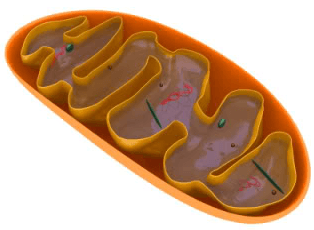
The site of photosynthesis
a)
ribosome
b)
mitochondria
c)
chloroplast
d)
nucleus
43.
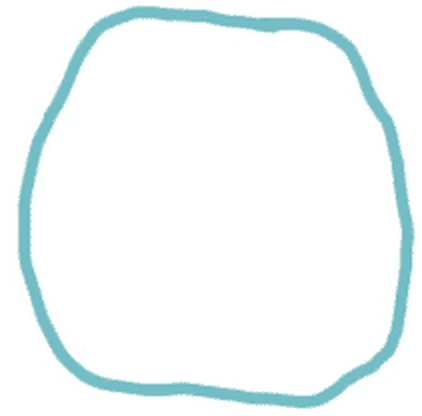
What kind of cell is this?
a)
Eukaryotic
b)
Prokaryotic
44.
Plants and animal cells are examples of ___ cells 
a)
prokaryotic cells 
b)
eukaryotic cells 
45.
All cells come from___________ cells.
a)
pregnant
b)
pre-existing
c)
paternal
d)
pin size
46.

The 3 parts of the Cell Theory are...?

a)

All living things are composed of cells

Cells are the basic units of structure and function in living things

All cells are produced from other cells

b)

All living things are composed of cells

Cells are the basic units of dance and vibes in living things

All cells are destroyed from other aliens

c)

All living things are composed of Jell-O

Cells are the basic units of structure and function in living things

All cells are produced from factories in Canada

d)

All living things are composed of cells

Cells do karate and practice eating whole pies in their free time

All cells are produced from other cells

47.

Which of the following organelles do plants have that animals to not? (Select all that apply)

a)

Cell wall

b)

Golgi Apparatus

c)

Endoplasmic Reticulum

d)

Chloroplasts

e)

Ribosomes

48.

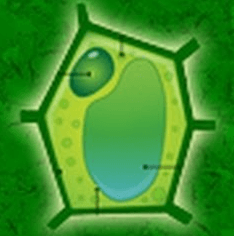
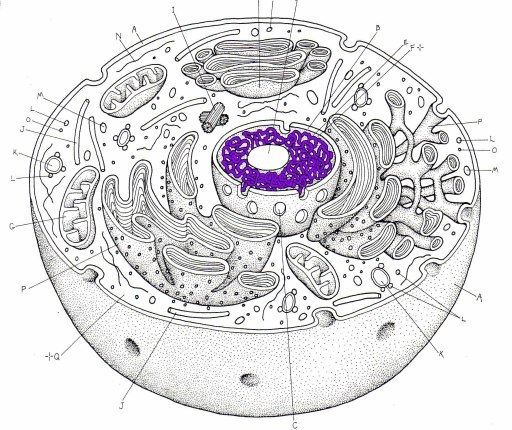
What type of cell is this?

a)

Plant

b)

Animal

c)

Prokaryote

49.
If you were some bad guy trying to sneak into an animal cell, who would be there to stop you?
a)
nucleus
b)
mitochondria
c)
cell membrane
d)
cell wall
50.

What theory that states that chloroplast and mitochondria evolved from ancient bacterial cells that were engulfed by other one celled organisms? (spelling counts)

(a)