
 Worksheets
Food Safety and Hygiene Quiz
Total questions: 20
Worksheet time: 10mins
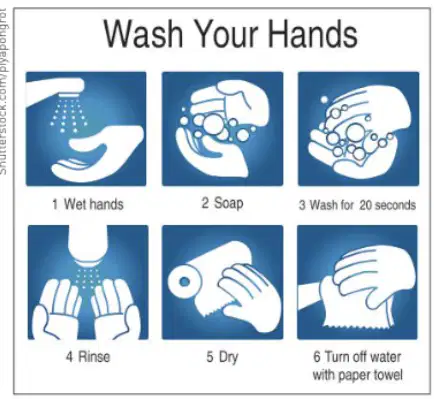
Which of the following is NOT a step in effective handwashing as shown in the diagram?
Wet hands
Apply soap
Wash for 5 seconds
Dry hands
According to the text, what should be done with food that is not safe for consumption?
It should be reused in new dishes.
It should be placed into lined bins and disposed of.
It should be given to customers at a discount.
It should be stored for later use.
Which of the following is NOT listed as a vulnerable customer group?
Babies and children
Elderly people
People with allergies
Athletes
What is the primary role of a food safety supervisor (FSS) in New South Wales food businesses?
To identify food safety hazards, monitor and control risks, implement safe food handling procedures, take corrective action, and train and supervise food handlers.
To cook food for customers.
To manage the business finances.
To advertise the business.
What is the main objective of appointing a Food Safety Supervisor (FSS) in food businesses?
To improve food safety across Australia by taking a preventative risk management approach
To increase food prices
To reduce the number of employees
To promote new food products
Who conducts regular inspections of retail food businesses in New South Wales?
Environmental Health Officer (EHO) employed by the local council
The business owner
The customers
The Australian Prime Minister
What can an Environmental Health Officer (EHO) do if a food business fails to comply with food safety requirements?
Order the business to stop preparing and selling food
Give the business a tax refund
Promote the business on social media
Change the business’s menu
Which Act governs the production and sale of food for human consumption in New South Wales?
Food Act 2003 (NSW) (as amended)
Food Regulation 2015 (NSW)
Australia New Zealand Food Standards (ANZFS) Code
FSANZ Act 1991
What is the main purpose of the Food Act 2003 (NSW)?
To protect the health of the public by preventing the sale of unsafe food
To increase food prices
To promote fast food chains
To regulate food advertising
According to the Food Regulation 2015 (NSW), what must packaging and labelling of food and appliances used to handle food ensure?
They must be clean and unbroken, and not made from certain materials
They must be colorful and attractive
They must be imported from overseas
They must be recyclable
Which of the following is NOT listed as a responsibility of the NSW Food Authority in the provided material?
Monitoring manufactured foods sold in New South Wales
Delivering quality, safe, and healthy food in New South Wales
Setting up international food trade agreements
Measuring and promoting food safety across all industries
When an EHO requests a food sample for analysis, how must the sample be handled?
It should be eaten immediately
It must be divided into three samples for different purposes
It should be thrown away after collection
It must be sent to the media
What is the purpose of the NSW Food Authority 'Name and Shame' list?
To reward the best food businesses
To publish lists of food businesses that have breached food safety laws
To advertise new restaurants
To provide recipes to the public
Why do EHOs prefer to help people comply with requirements rather than prosecute?
Because prosecution is always unsuccessful
Because their main goal is to enforce food laws through compliance, not punishment
Because they are not allowed to issue fines
Because they want to avoid paperwork
According to the 'Scores on Doors' rating guide, what score range is considered "Excellent"?
0-3
4-8
9-15
16-20
Which of the following is NOT a responsibility of a good food handler?
Leaving garbage uncollected
Ensuring utensils are adequately washed
Making sure food is protected from flies and dust
Wearing clean uniforms
What does the term "adulterated" mean in the context of food safety?
Tampered with or interfered with
Cooked at high temperatures
Stored in a refrigerator
Served with utensils
Which of the following could result from failure to observe food safety requirements? (Select the BEST answer)
Customer complaints and possible food poisoning cases
Increased food sales
Better 'Scores on Doors' results
Improved business reputation
Which of the following is a requirement for food premises to ensure food safety?
All floors, walls, ceilings, and light fittings are clean
Food is left uncovered
Utensils are not washed
Garbage is stored in the kitchen
What is the expected outcome of public visibility of 'Scores on Doors' ratings?
Greater levels of compliance and fewer incidences of food-borne illness
Higher food prices
More restaurant closures
Less competition among food businesses

