
Font size
 Worksheets
heat energy
Total questions: 80
Worksheet time: 48mins
By increasing the kinetic energy of particles, their .....................increases.
weight
temperature
volume
mass
Heat is transferred through solids by ..................... .
conduction and convection
radiation only
radiation and convection
conduction only
Heat is transferred through copper and iron by ..................... .
convection
radiation
conduction
all the above
Heat is transferred by convection through ....................... .
gases only
liquids only
gases and liquids
solids only
The freezer of the fridge is found at the top of the fridge, because the cold air ........................... .
falls down to be replaced by hot air
is a bad conductor of heat
is a good conductor of heat
none of the above
Heat transfers from a heater by ....................... .
conduction and radiation
radiation and convection
conduction and convection
radiation only
If you sit down under a lighted electric lamp, heat is transferred to you by ........................ .
convection only
radiation only
conduction only
convection and radiation
Heat transfer by radiation takes place through ......................... .
liquids only
gases only
material media and non-material ones
metals only
Heat is transferred through space by ...................... .
convection
conduction
radiation
conduction and convection
The transfer of heat which does not need any material medium is by .......................... .
conduction
convection
radiation
convection and radiation
If you sit down beside an electric heater, heat is transferred to you by ................... .
convection
radiation
conduction
convection and radiation
Heat is transferred by ....................., when you touch a hot metallic spoon.
convection and radiation
conduction and radiation
radiation
conduction
Heat is transferred by ....................., from heater to the air of the room.
convection and radiation
conduction and radiation
radiation
conduction
Heat is transferred by ....................., from the Sun to us.
convection and radiation
conduction and radiation
radiation
conduction
Temperature of objects increases by increasing its speed.
TRUE
FALSE
Temperature of particles increases when their potential energy increases.
TRUE
FALSE
By rubbing your hands together, heat energy is produced.
TRUE
FALSE
Heat energy is transferred from a cold object to a hot object.
TRUE
FALSE
Heat is transferred through different media by conduction and convection only.
TRUE
FALSE
The transfer of heat between two objects stops when their temperatures become equal.
TRUE
FALSE
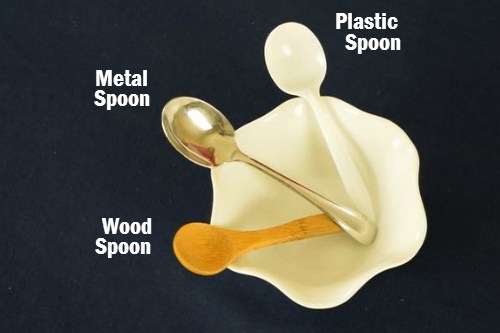
Which material will heat travel through the fastest?
Plastic
Wood
Metal

How do molecules react when heat energy is added to them?
They feel warmer but stay in place
They feel warmer and move slower.
They feel warmer and move faster
Molecules do not react with heat energy only solar energy
What is Conduction?
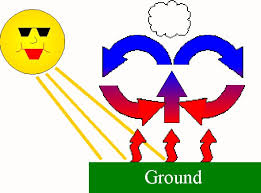
When heat is passed from particle to particle through an object.
When particles get heated, expand, and become less dense.
When heat transfers by waves through empty space.
What is Convection?
When heat is passed from particle to particle through an object.
When particles get heated, expand, and become less dense.
When heat transfers by waves through empty space.
What is Radiation?
When heat is passed from particle to particle through an object.
When particles get heated, expand, and become less dense.
When heat transfers by waves through empty space.
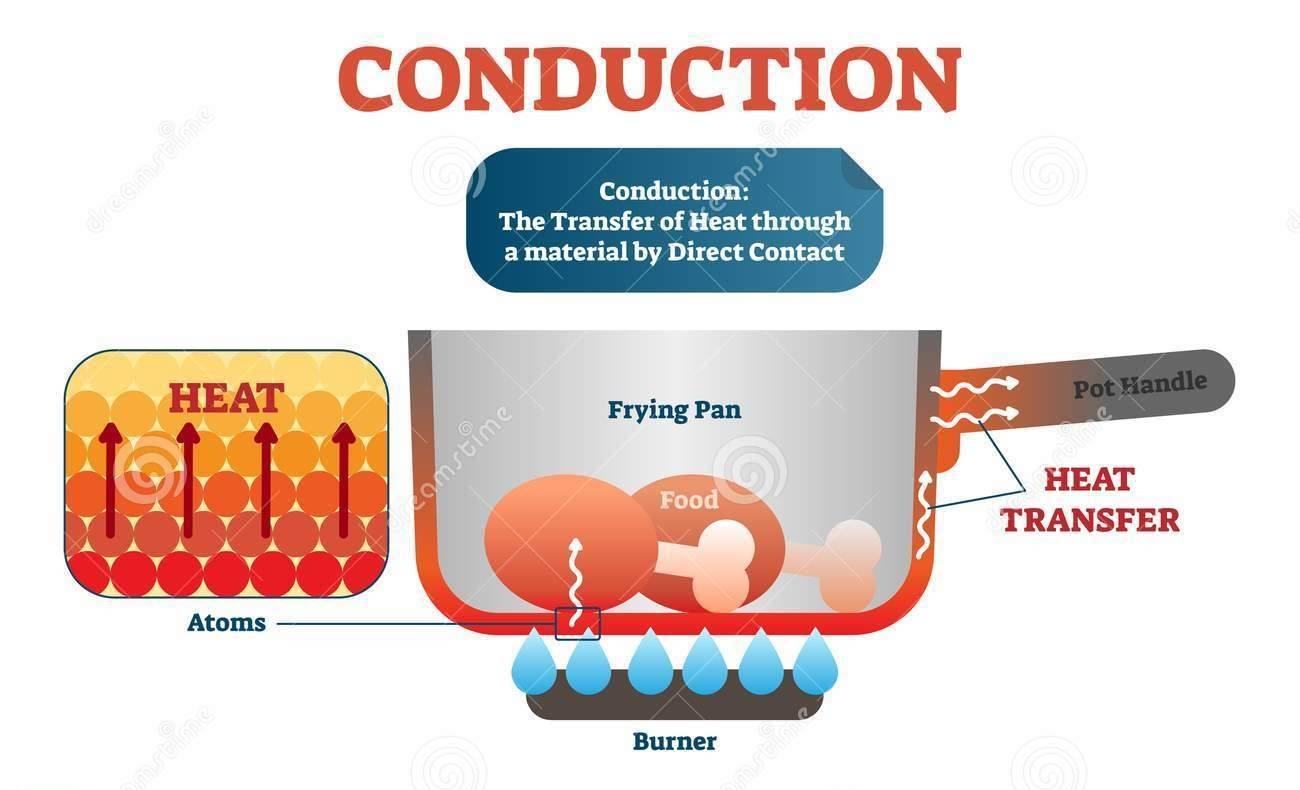
Which of the following is an example of heat transfer by Conduction?
Burning your fingers on a hot iron.
Heat from a heater warming up your whole house
Standing by a campfire and feeling the heat.
All of the above.
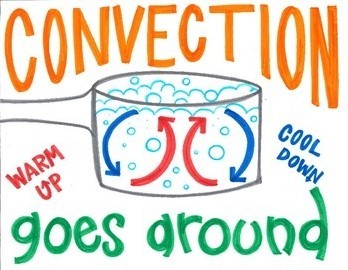
Which of the following is an example of heat transfer by Convection?
Burning your fingers on a hot iron.
Heat from a heater warming up your whole house
Standing by a campfire and feeling the heat.
All of the above.
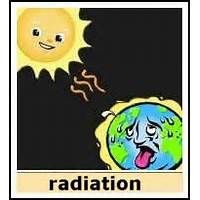
Which of the following is an example of heat transfer by Radiation?
Burning your fingers on a hot iron.
Heat from a heater warming up your whole house
Standing by a campfire and feeling the heat.
All of the above.

What is heat?
The temperature of hot objects
The energy transferred between hot objects
The fire hot objects give off.
All of the above
How does heat move?
From cooler objects to warmer objects.
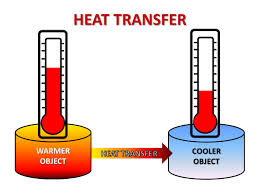
From warmer objects to cooler objects
From metal objects to nonmetal objects
Very quickly in all directions
Heating a room with a fireplace
Conduction
Convection
Radiation
Which of the following is not a method for heat transfer
Radiation
Insulation
Conduction
Convection
In which of the following state are the particles closest together?
Fluid
Gas
Liquid
Solid
Which of the following is not a method for heat transfer
Radiation
Insulation
Conduction
Convection
How does heat energy reach the Earth from the Sun
Convection
Radiation
Conduction
Insulation
Which is the best surface for reflecting heat radiation?
Shiny white
Dull white
Shiny black
Dull black
Which is the best surface for absorbing heat radiation?
Shiny white
Dull white
Shiny black
Dull black

Conduction
Convection
Radiation

Conduction
Convection
Radiation
What is the definition of CONDUCTION?
Heat is transferred from objects like rays of light
A hot liquid or air that expands, becomes less dense, and rises
Heat transfers from objects that are touching
Heat transfers through the heater in your house
What is the definition of CONVECTION
Heat transfers through waves
Heat transfers from objects that are touching
Hot liquid or air that expands, becomes less dense and rises
Heat travelling from the sun
Which of the following is an example of convection?
Hair dryer is drying up your hair
A heater changes the temperature
A car engine turns hot after being turned on
When you are making soup and the water is rising and lowering
What heat transfer happens when you burn your hand by touching a fire?
Radiation
Conduction
Convection
I don't know!



A circuit has a switch, a battery, and a bulb. When the switch is closed, the light turns on. What type of energy moves through the wires of this closed circuit?
sound
chemical
electrical
physical
What is the purpose of a switch in an electric circuit?
to change the direction of the electricity
to allow the electric circuit to be opened or closed
to provide a "push" for the electricity
to increase the electric power of the bulb

Brayson made the circuit shown here in his science class. What is the most likely reason that the bulb is not lit?
The bulb is cracked.
He did not use the right size battery.
He used too many pieces of wire.
He left the switch open.
Metal is __________________ because it allows heat and electricity to flow through.
magnetic
a conductor
an insulator
a circuit
The rubber coating on a wire cord is __________________ because it does not allow electricity to pass through to you.
magnetic
a conductor
an insulator
a circuit
_____________ electricity is the build-up of an electrical charge on the surface of an object. The charges stay in one place and do not flow to another area.
Static
Current
Circuit
Battery
The flow of electrons along a path is called _______________________.
static electricity
current electricity
lightning
magnetic field

Students are using the set-up pictured here to test how energy can move through a circuit. In order to complete this circuit, they should connect wires between which two points?
A and C
A and B
A and D
B and D

Which statements are true about a parallel circuit? (Select the TWO best answers.)
This is a circuit that allows an electric current to flow along more than one path.
This is a circuit that allows only one path for the flow of electricity.
This type of circuit will not work if one or more light bulbs go out.
This type of circuit will work if one or more light bulbs go out.
On most Christmas lights, when one bulb goes out, the other bulbs on that string of lights will also go out. This is an example of a _________________ circuit.
simple
parallel
series
closed
Electric current is defined as
detect electric current
negative terminal to positive terminal
positive terminal to negative terminal
the flow rate of electric charges through a conductor
Electric current flows from
detect electric current
negative terminal to positive terminal
positive terminal to negative terminal
the flow rate of electric charges through a conductor
Electrons flows from
detect electric current
negative terminal to positive terminal
positive terminal to negative terminal
the flow rate of electric charges through a conductor

Which light globe(s) would never light up?
A
B,C,D
A,B,C,D
None
Voltage is the measure of the...
difference in electrical energy between 2 parts of a circuit
amount of electric charge that flows through a circuit

If you increase the voltage across a resistor, what will happen to the current?
Current will increase
Current will decrease
Current will stay the same
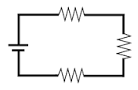

An electric kettle is commonly used to heat up water at home. The heating element used is nichrome wire and not copper. Which of the following reasons best explains why nichrome is used instead of copper?
Nichrome conducts more current than copper, so more heat can be generated.
Nichrome has higher resistance than copper, so more heat can be generated.
Nichrome has higher voltage than copper, so more heat can be generated.
Nichrome are cheaper than copper, so it is more economical.
Which of the following materials is used in a light bulb to produce heat and light?
Nichrome
Copper
Tungsten
Steel
A higher resistance in a circuit causes a _____________.
higher voltage
larger current
smaller current
lower voltage
Which of the following is not a source of electrical energy?
ammeter
dry cell
mains
dynamo
What is resistance?
Flow of electrical charge
Pressure from power to push electrons
Limits the flow of electrons
What is voltage?
Flow of electrical charge
Pressure from power to push electrons
Limits the flow of electrons

