
Font size
 Worksheets
Biomolecules
Total questions: 97
Worksheet time: 49mins
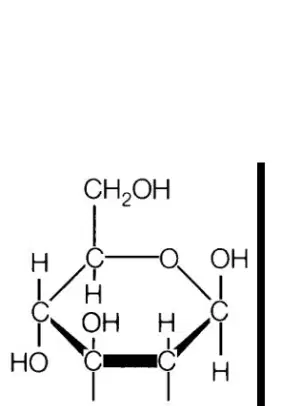
Evelyn, Abigail, and Rohan are on a science adventure! They discover a mysterious biomolecule in the bottom left diagram. Can you help them identify what it is?
Glucose
Fructose
Sucrose
Cellulose
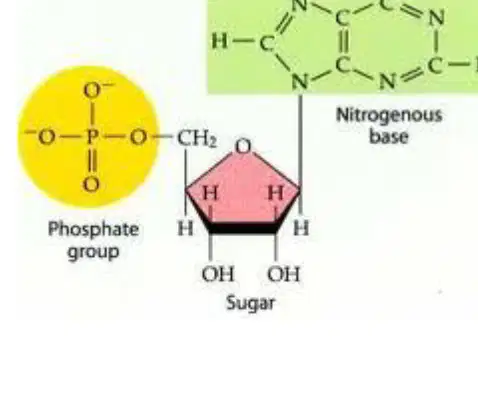
Grace, Olivia, and Benjamin are exploring the central diagram of a nucleotide in science class. Can you help them out? Which of the following is a component of a nucleotide as shown in the central diagram?
Fatty acid
Phosphate group
Amino group
Carboxyl group
Jackson and Aria are looking at two mysterious forms in their science class. What is the main difference between the two forms?
Form 1 is the neutral form, while Form 2 is the zwitterionic form (with both positive and negative charges).
Form 1 is the acidic form, while Form 2 is the basic form.
Form 1 contains only positive charges, while Form 2 contains only negative charges.
Form 1 is a gas, while Form 2 is a liquid.
Benjamin and Aria are in a science contest! They need your help: Which diagram shows a saturated fatty acid?
Top diagram
Bottom diagram
Scarlett and Benjamin are working on their science homework. They come across the symbol 'C' on the periodic table. Can you help them figure out which element it represents?
Carbon
Calcium
Chlorine
Copper
Kai and Emma are in science class, and their teacher asks: What is the symbol for Hydrogen?
H
He
O
N
Kai and Zoe are playing a science quiz. They come across this question: What is the element represented by the symbol 'O'?
Oxygen
Gold
Hydrogen
Carbon
Emma and David are playing a science quiz. Emma asks, "David, can you tell me what the symbol for Nitrogen is?" Help David choose the correct answer!
N
Na
Ni
Ne
Zoe and Aiden are playing a science trivia game. Zoe asks, "Aiden, can you tell me which element is represented by the symbol 'P'?" Help Aiden choose the correct answer!
Phosphorus
Potassium
Platinum
Polonium
Noah and Luna are working together in science class. They find a mysterious element in their experiment. Can you help Daniel tell them what the symbol for Sulfur is?
S
Su
Sf
Sr
Charlotte and William are curious about science! Can you help them fill in the blank: A biomolecule is any molecule that is present in ______ organisms.
living
non-living
artificial
synthetic
Emma, Elijah, and Kai are on a science adventure! They need your help to identify which of the following is a biomolecule. Can you help them choose the right answer?
Carbohydrates
Water
Oxygen
Carbon dioxide
William, Ava, and Maya are exploring the world of science! Which of the following is an example of a biomolecule that they might discover?
Lipids
Salt
Iron
Nitrogen
Priya and Daniel are on a science adventure! They need your help to find out which of the following is a biomolecule. Can you help them choose the right answer?
Nucleic Acids
Helium
Sand
Plastic
Grace and Rohan are on a science adventure! They need your help to find out which of the following is a biomolecule. Can you help them choose the right answer?
Proteins
Glass
Copper
Hydrogen
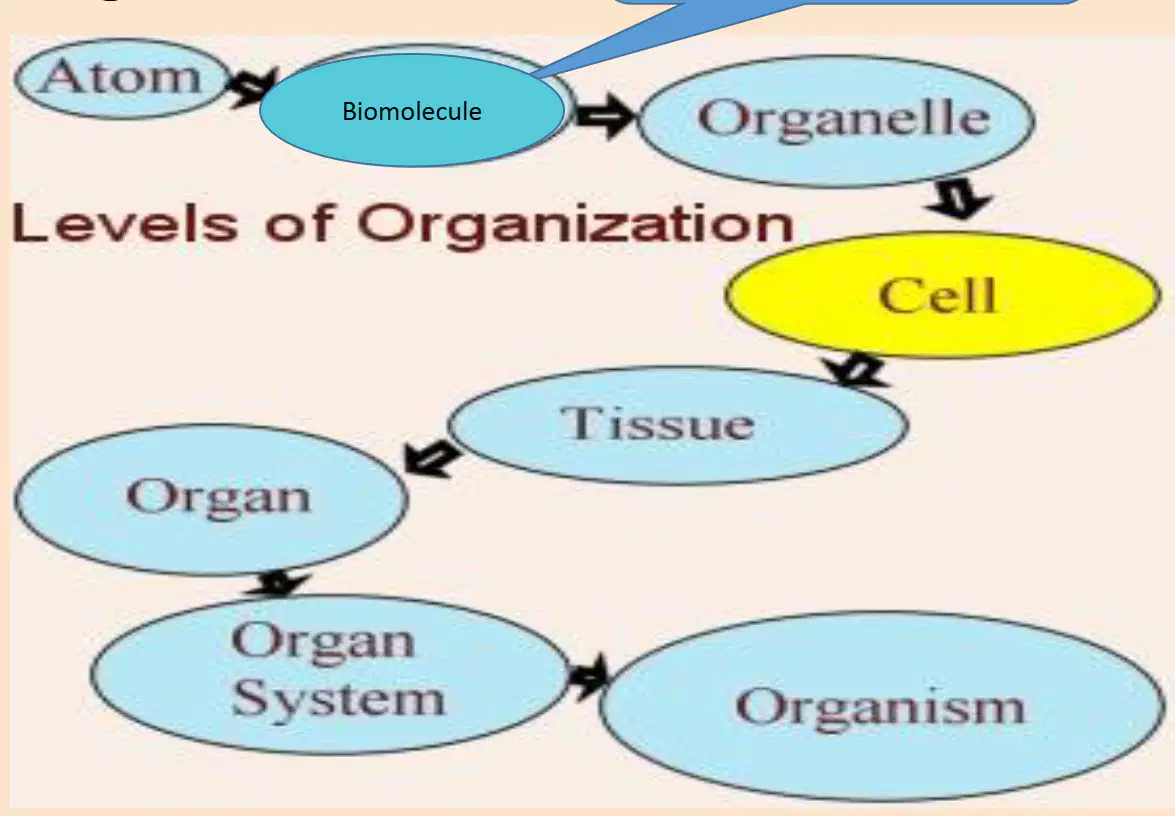
Maya, Mason, and Kai are on a science adventure! They found a mysterious diagram showing the Levels of Organization. Can you help them figure out the correct order of biological organization from smallest to largest?
Atom, Biomolecule, Organelle, Cell, Tissue, Organ, Organ System, Organism
Organism, Organ System, Organ, Tissue, Cell, Organelle, Biomolecule, Atom
Cell, Tissue, Organ, Organ System, Organism, Atom, Biomolecule, Organelle
Atom, Organelle, Biomolecule, Cell, Tissue, Organ, Organ System, Organism

Henry, Aria, and Benjamin are exploring the Levels of Organization diagram together! Can you help them out? Fill in the blank: The level of organization that comes after 'Tissue' is _______.
Organ
Cell
Organism
Molecule
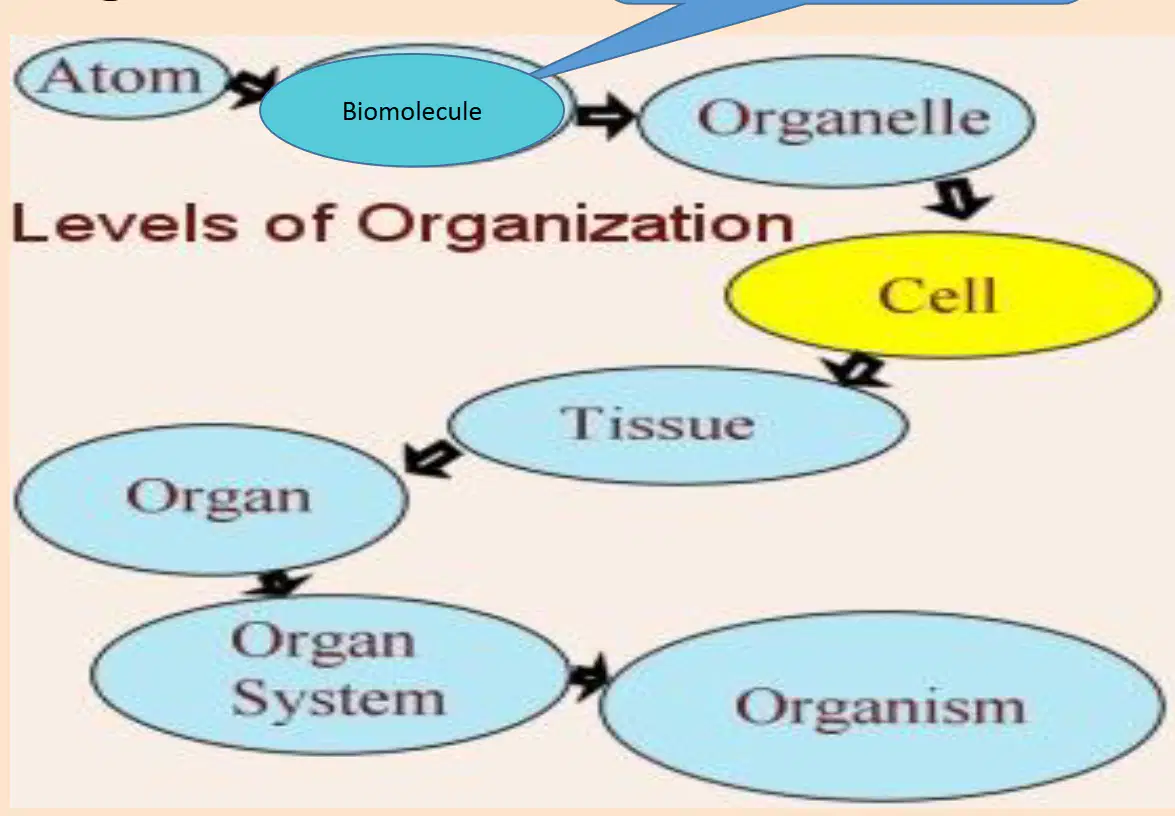
Abigail, Aiden, and Oliver are exploring the Levels of Organization diagram. They want to impress their science teacher by identifying which of the following are examples of biomolecules. Can you help them out?
A) Carbohydrates, proteins, lipids, and nucleic acids
B) Organs and tissues
C) Cells and organelles
D) Atoms and molecules
Evelyn and Grace are in science class, and their teacher asks: What is a compound? Fill in the blank: A compound is a thing composed of two or more separate elements. Can you help them answer?
A thing composed of two or more separate elements (such as carbon, nitrogen, oxygen etc.)
A single element in its purest form
A mixture of substances that can be separated physically
A type of energy produced by chemical reactions
Avery and Benjamin are in the science lab, and they need your help! They are trying to find out which of the following are examples of compounds. Can you help them choose the right answer?
H2O
CO2
O2
Both A and B
Nora and Ethan are on a science adventure! They discover a mysterious compound in a plant. Fill in the blank to help them out: Most compounds that contain ______ and are found in living organisms or once living. What is an organic compound?
carbon
hydrogen
oxygen
nitrogen
During a science quiz, Aiden asked Scarlett and Daniel: "Where are organic compounds most commonly found?" Can you help them choose the right answer?
Non-living things
Living organisms or once living
Only in water
Only in air
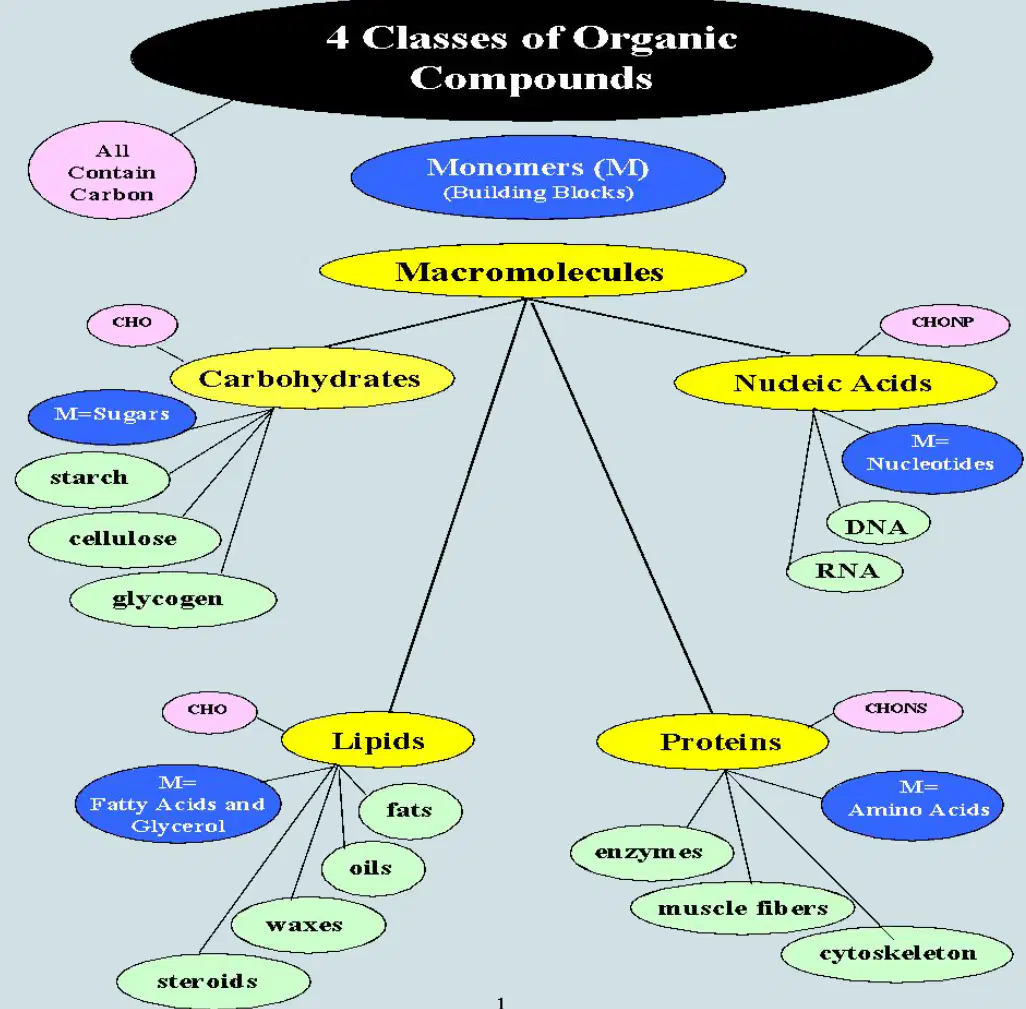
Kai, Liam, and Benjamin are having a science quiz! Can you help them out? Which of the following is NOT one of the four classes of organic compounds?
Carbohydrate
Lipid
Protein
Mineral
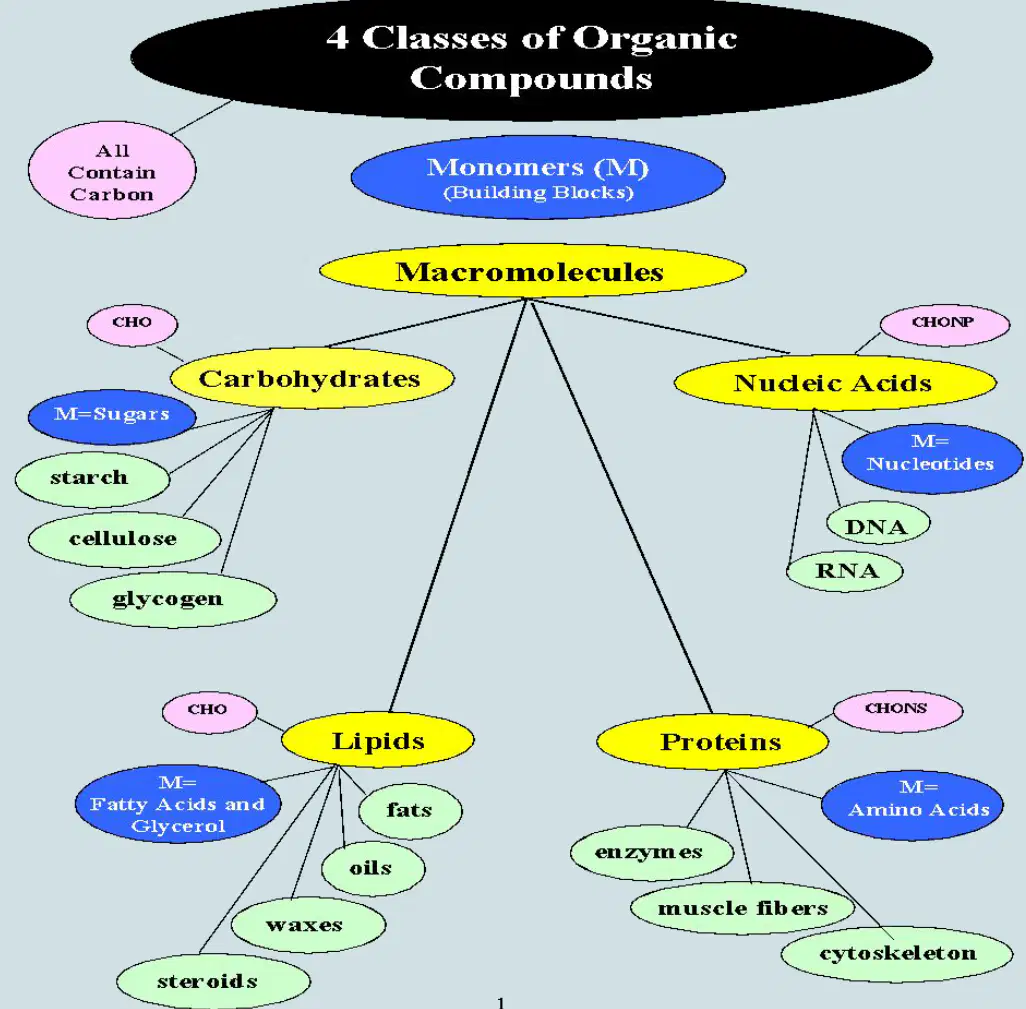
Noah, James, and Mia are building a model of proteins in science class. Can you help them out? Fill in the blank: The monomers (building blocks) of proteins are _________.
Amino Acids
Fatty Acids
Nucleotides
Monosaccharides

Arjun, Daniel, and Sophia are on a science adventure! They need your help to identify which of the following is a function or example of lipids. Can you help them choose the right answer?
Starch
Waxes
Cellulose
Enzymes

Emma, Oliver, and Scarlett are having a science debate! They want to know: True or False—do all organic compounds contain carbon? What do you think?
True
False

Arjun, Maya, and Aria are on a quest to find the odd one out! Which of the following is NOT an example of a carbohydrate?
Starch
Cellulose
Glycogen
Steroids

Anika and David are having a science quiz showdown! Can you help them out? Fill in the blank: DNA and RNA are examples of _________?
Nucleic Acids
Carbohydrates
Lipids
Proteins
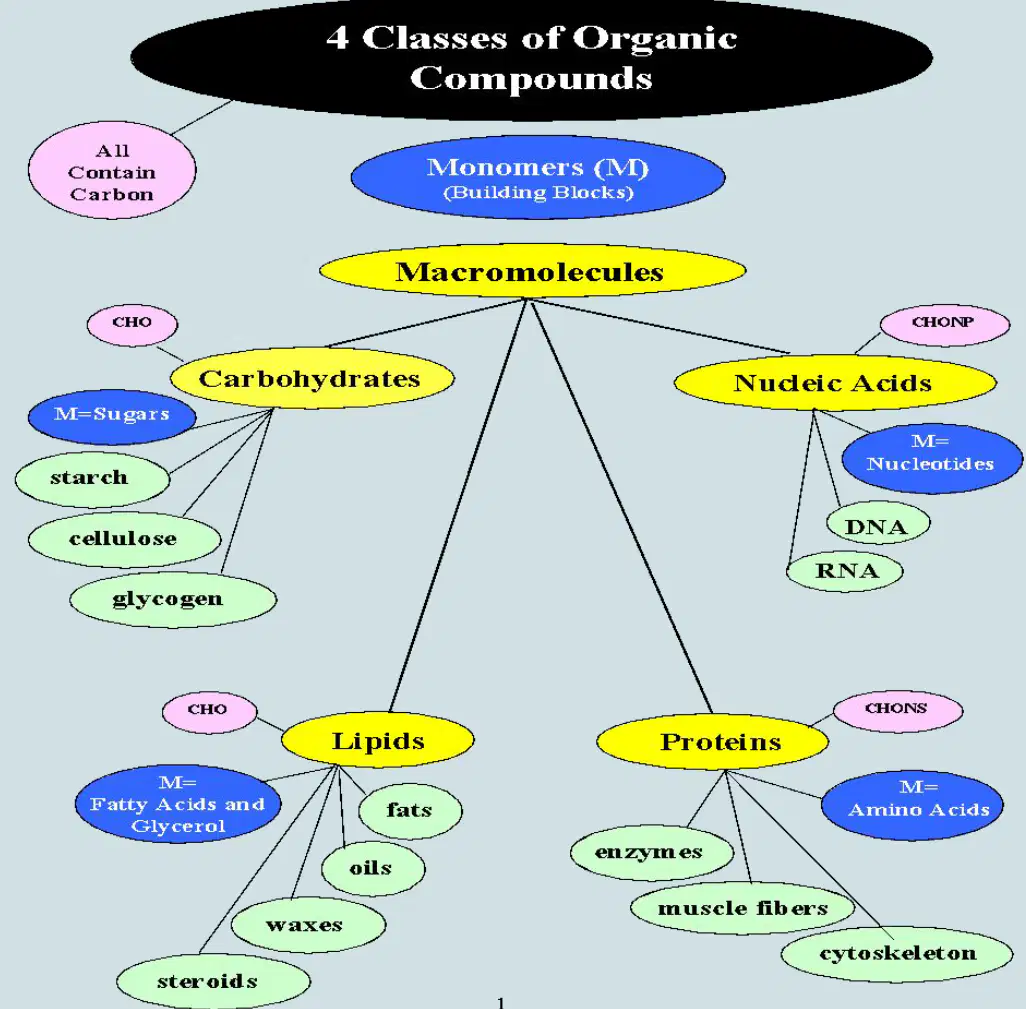
Lily, Samuel, and Noah are on a science adventure! They want to discover which element is found in all four classes of organic compounds. Can you help them solve this mystery?
Nitrogen
Carbon
Phosphorus
Sulfur
Benjamin and Evelyn are building a giant LEGO tower. Each LEGO block represents a basic building unit. What do we call a single LEGO block in science terms?
A single unit
Many single units joined together
A type of carbohydrate
A protein
During science class, Sophia and Arjun are building models. Sophia asks, "What do you call it when many single units join together to make something bigger?" What is a polymer?
A single unit
Many single units joined together
A type of protein
A lipid
Abigail and Jackson are building a brick house together: the brick is the _______; the house is the _______. Who can guess the right answer?
brick is the monomer; house is the polymer
brick is the polymer; house is the monomer
brick is the atom; house is the molecule
brick is the cell; house is the tissue
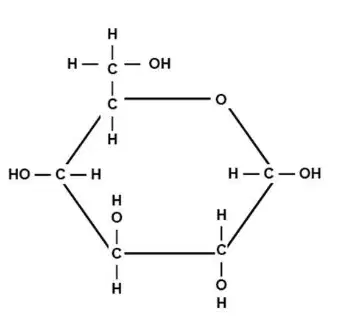
Avery, Michael, and Benjamin are on a science adventure! They discover the mysterious structure shown below. Can you help them figure out: What is the monomer of a carbohydrate?
Polysaccharide
Monosaccharide
Protein
Lipid
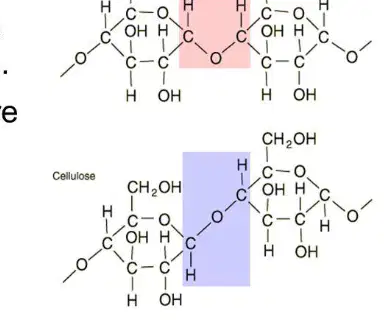
Liam, Aria, and Avery are on a science adventure! They discover a mysterious chain made up of repeating sugar units. Can you help them figure out: What is the polymer of a carbohydrate?
Monosaccharide
Polysaccharide
Protein
Nucleotide
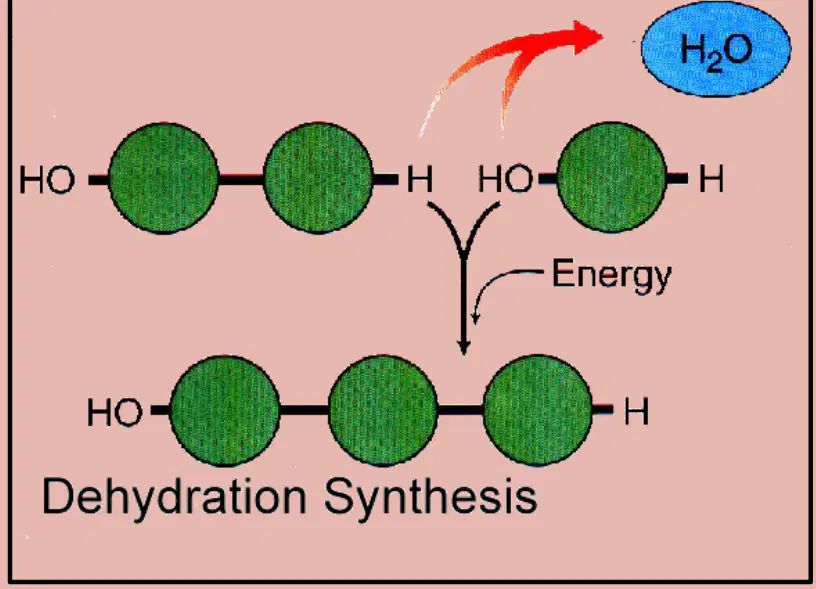
Daniel, Arjun, and Ethan are building a giant polymer chain in science class! To connect the monomers, they need to use a special process called Dehydration Synthesis. What does this process involve?
Adding water to break down polymers into monomers
Removing water to form polymers
Adding energy to form monomers
Removing energy to break down polymers
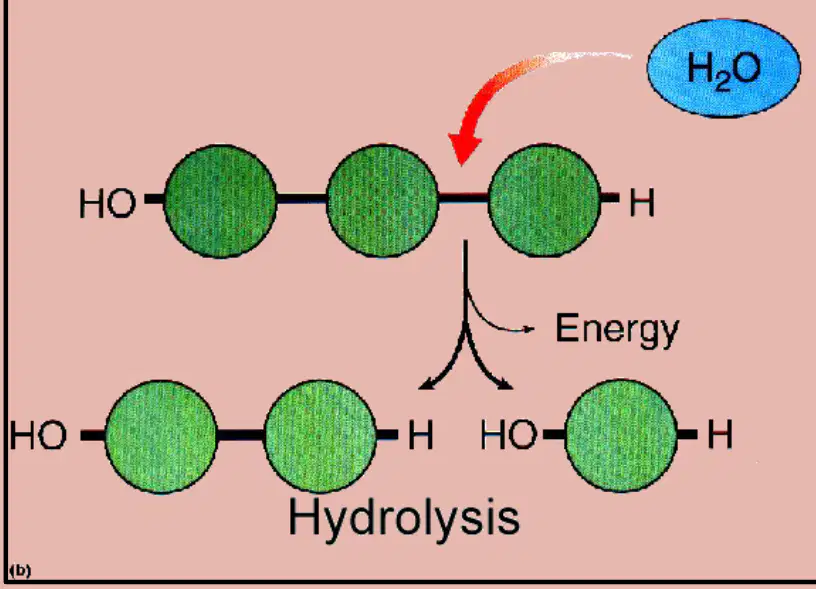
Aria, Oliver, and Noah are on a science adventure! They discover a mysterious process called Hydrolysis. Can you help them figure out what Hydrolysis means?
Removing water to form polymers
Adding water to break down polymers into monomers
Adding energy to form polymers
Removing energy to break down monomers
Benjamin and Ava are building a chain of molecules in science class. To connect the pieces, they need to remove something. Fill in the blank: In Dehydration Synthesis, _______ is removed to form polymers.
water
oxygen
carbon dioxide
glucose
Olivia and David are in science class, and their teacher asks: In Hydrolysis, _______ is added to break down polymers into monomers. Can you help them choose the right answer?
water
oxygen
carbon dioxide
salt
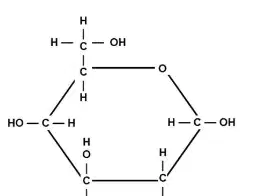
Grace, Mia, and Elijah are on a science adventure! They discover a mysterious molecule (see the diagram above) and need your help. What is the monomer of carbohydrates that they found?
Glucose
Amino acid
Fatty acid
Nucleotide
David, Avery, and Mason are baking cookies in science class. They want to know which elements are found in carbohydrates, the main ingredient in their recipe. Can you help them figure it out?
Carbon, hydrogen, oxygen (C, H, O)
Carbon, nitrogen, oxygen (C, N, O)
Hydrogen, sulfur, oxygen (H, S, O)
Carbon, phosphorus, hydrogen (C, P, H)
Jackson, Zoe, and Abigail are running a relay race and need a quick burst of energy to win! What is the main function of carbohydrates in living organisms that would help them out?
Quick energy, main source of energy, short term energy
Building genetic material
Long-term energy storage
Providing insulation
Ava, Avery, and Arjun are having a snack break! They have a list of foods, but one of them is NOT a carbohydrate. Can you help them spot the odd one out?
Glycogen
Glucose
Starch
Protein
David, Maya, and Benjamin are baking cookies and want to get the perfect mix of ingredients! Can you help them remember the typical ratio of carbon, hydrogen, and oxygen in carbohydrates?
1:2:1
2:1:2
1:1:2
2:2:1
Aria and Aiden are in a science quiz! They stumble upon this question: What do saccharides refer to?
Sack of sugar
Type of protein
Mineral compound
Fatty acid
Aria and Aiden are in a science lab, and they discover some sugars with a ring structure of CHO. What are these sugars called?
Ring pop sugars
Amino acids
Fatty acids
Nucleotides
Aria and Olivia are learning about carbohydrates in science class. They notice that most carbohydrate names share a common ending. Can you help them figure out which suffix most carbohydrate names end with?
-ose
-ase
-ine
-one
Olivia and Daniel are in a science quiz! They need your help: What is the monomer of lipids?
Triglyceride
Amino acid
Nucleotide
Monosaccharide
Aria, Anika, and Isla are on a science adventure! They discover a mysterious substance and need your help to identify which elements are found in lipids. Can you help them choose the right combination?
Carbon, hydrogen, oxygen (C, H, O)
Nitrogen, sulfur, phosphorus (N, S, P)
Sodium, potassium, chlorine (Na, K, Cl)
Calcium, magnesium, iron (Ca, Mg, Fe)
Aria, Harper, and Zoe are studying for their biology quiz! Which of the following is NOT a function of lipids in living organisms?
Long term energy reserve
Main component of cell membranes
Insulation & organ protection
Genetic information storage
Scarlett, Charlotte, and Maya are having a snack break! They want to know which of the following is an example of a lipid. Can you help them figure it out?
Fat
Wax
Cholesterol
All of the above
Lipids are made of CHO in a chain like a chain of “fatty bacon”.
True
False
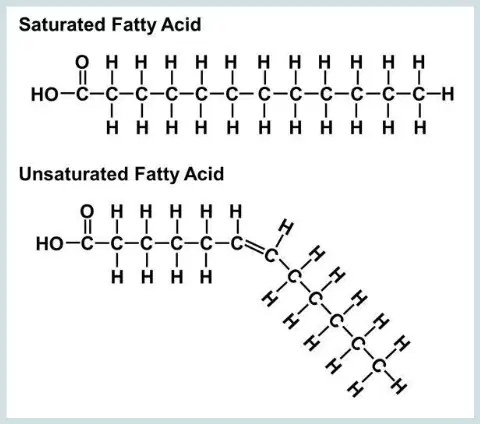
What is the difference between a saturated fatty acid and an unsaturated fatty acid as shown in the diagram?
A saturated fatty acid has no double bonds between carbon atoms, while an unsaturated fatty acid has at least one double bond.
A saturated fatty acid contains more oxygen atoms than an unsaturated fatty acid.
A saturated fatty acid has at least one triple bond between carbon atoms, while an unsaturated fatty acid has only single bonds.
A saturated fatty acid is always liquid at room temperature, while an unsaturated fatty acid is always solid.
What is the monomer of proteins?
amino acid
fatty acid
nucleotide
monosaccharide
Which elements are found in proteins?
Carbon
Hydrogen
Oxygen
Nitrogen
Sulfur
What are some functions of proteins in living organisms?
Muscle, enzymes, cell structure, transport
Energy storage, insulation, waterproofing
Genetic information storage, heredity, mutation
Photosynthesis, light absorption, pigment production
Give an example of a protein.
Enzymes
Glucose
Cholesterol
Cellulose
Proteins are bonded by ______ bonds. (Fill in the blank)
peptide
glycosidic
hydrogen
ionic
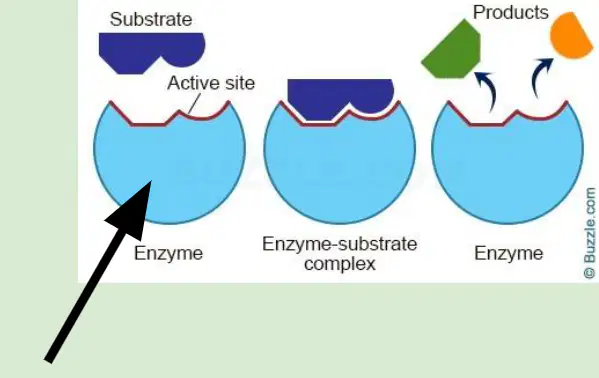
What is the role of the enzyme in the reaction shown?
The enzyme binds to the substrate at the active site, forming an enzyme-substrate complex, and helps convert the substrate into products.
The enzyme is consumed during the reaction and becomes part of the product.
The enzyme acts as a substrate and is changed into a different molecule.
The enzyme prevents the reaction from occurring by blocking the active site.
What is the monomer of nucleic acids?
nucleotide
amino acid
fatty acid
monosaccharide
Which elements are found in nucleic acids?
Carbon
Hydrogen
Oxygen
Phosphorus
Nitrogen
What is the main function of nucleic acids in living organisms?
Stores genetic information which codes for traits
Provides structural support to cells
Regulates body temperature
Acts as a primary energy source
Which of the following are examples of nucleic acids?
DNA
RNA
ATP
Glucose
Fill in the blank: Nucleic acids store ________ information which codes for traits.
genetic
chemical
thermal
mechanical
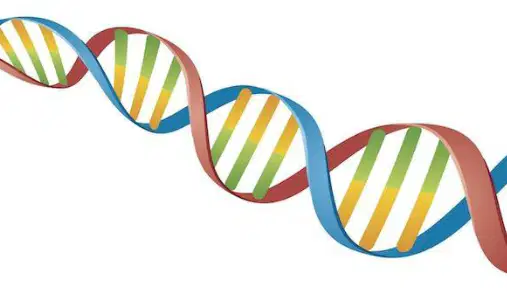
Identify the components labeled in the diagram:
Phosphate Group, Pentose Sugar, Nitrogenous Base
Amino Group, Carboxyl Group, R Group
Glycerol, Fatty Acid, Phosphate Group
Monosaccharide, Disaccharide, Polysaccharide

What is the monomer of carbohydrates?
Sugar
Amino acid
Fatty acid
Nucleotide
Which elements are found in carbohydrates?
C, H, O (Carbon, Hydrogen, Oxygen)
N, O, S (Nitrogen, Oxygen, Sulfur)
Na, Cl, K (Sodium, Chlorine, Potassium)
Fe, Mg, Zn (Iron, Magnesium, Zinc)
What is the main function of carbohydrates?
Main source of energy, especially short term energy
Building genetic material
Providing insulation for the body
Acting as enzymes
Which of the following is a polysaccharide?
Glucose
Starch
Fructose
Sucrose

What is the monomer of lipids?
Triglyceride
Amino acid
Nucleotide
Monosaccharide
Lipids are used for:
Short term energy
Long term energy storage
Genetic material
Cell structure
What elements are found in lipids?
C, H, O (Carbon, Hydrogen, Oxygen)
N, H, O (Nitrogen, Hydrogen, Oxygen)
C, N, S (Carbon, Nitrogen, Sulfur)
H, O, P (Hydrogen, Oxygen, Phosphorus)

What is the monomer of nucleic acids?
Nucleotide
Amino acid
Fatty acid
Monosaccharide
Which elements are found in nucleic acids?
C, H, O, N, P (Carbon, Hydrogen, Oxygen, Nitrogen, Phosphorus)
C, H, O, S (Carbon, Hydrogen, Oxygen, Sulfur)
C, H, O, Ca (Carbon, Hydrogen, Oxygen, Calcium)
C, H, O, Na (Carbon, Hydrogen, Oxygen, Sodium)
DNA contains which nitrogen bases?
A) A, G, C, T
B) A, G, C, U
C) A, T, G, U
D) A, C, G, U
What is the main function of nucleic acids?
Used for genetic material, which codes for traits
Provide energy for cellular processes
Act as structural components of cell membranes
Serve as enzymes to speed up chemical reactions

What is the monomer of proteins?
Amino Acid
Fatty Acid
Nucleotide
Monosaccharide
Proteins are used for:
Energy storage
Genetic material
Enzymes, cell structure, antibodies, muscle movement, hormones, structure, transport, and to store amino acids
Short term energy
Which elements are found in proteins?
C, H, O, N (S) (Carbon, Hydrogen, Oxygen, Nitrogen, sometimes Sulfur)
C, H, O, P (Carbon, Hydrogen, Oxygen, Phosphorus)
Na, Cl, K (Sodium, Chlorine, Potassium)
Fe, Mg, Zn (Iron, Magnesium, Zinc)
Part A. Classify each as a carbohydrate, protein, lipid or nucleic acid. 1. __________ starch
carbohydrate
protein
lipid
nucleic acid
Part A. Classify each as a carbohydrate, protein, lipid or nucleic acid. 2. __________ cholesterol
lipid
carbohydrate
protein
nucleic acid
Classify each as a carbohydrate, protein, lipid or nucleic acid. 3. __________ steroid
lipid
carbohydrate
protein
nucleic acid
Part A. Classify each as a carbohydrate, protein, lipid or nucleic acid. 4. __________ glycogen
carbohydrate
protein
lipid
nucleic acid
Part A. Classify each as a carbohydrate, protein, lipid or nucleic acid. 5. __________ nucleotide
nucleic acid
carbohydrate
protein
lipid
Classify each as a carbohydrate, protein, lipid or nucleic acid. 6. __________ RNA
nucleic acid
carbohydrate
protein
lipid
Classify each as a carbohydrate, protein, lipid or nucleic acid. 7. __________ polypeptide chain
protein
carbohydrate
lipid
nucleic acid
Part A. Classify each as a carbohydrate, protein, lipid or nucleic acid. 8. __________ glucose
carbohydrate
protein
lipid
nucleic acid
Classify each as a carbohydrate, protein, lipid or nucleic acid. 9. __________ unsaturated fatty acid
lipid
carbohydrate
protein
nucleic acid
Classify each as a carbohydrate, protein, lipid or nucleic acid. 10. __________ polysaccharide
carbohydrate
protein
lipid
nucleic acid
Classify each as a carbohydrate, protein, lipid or nucleic acid. 11. __________ phospholipid
lipid
carbohydrate
protein
nucleic acid
Classify each as a carbohydrate, protein, lipid or nucleic acid. 12. __________ glycerol
lipid
carbohydrate
protein
nucleic acid
Part A. Classify each as a carbohydrate, protein, lipid or nucleic acid. 13. __________ monosaccharide
carbohydrate
protein
lipid
nucleic acid
Classify each as a carbohydrate, protein, lipid or nucleic acid. 14. __________ cellulose
carbohydrate
protein
lipid
nucleic acid
Classify each as a carbohydrate, protein, lipid or nucleic acid. 15. __________ amino acid
protein
carbohydrate
lipid
nucleic acid
Classify each as a carbohydrate, protein, lipid or nucleic acid. 16. __________ enzyme
protein
carbohydrate
lipid
nucleic acid
Classify each as a carbohydrate, protein, lipid or nucleic acid. 17. __________ saturated fat
lipid
carbohydrate
protein
nucleic acid
Part A. Classify each as a carbohydrate, protein, lipid or nucleic acid. 18. __________ DNA
nucleic acid
carbohydrate
protein
lipid
Enzymes are a type of _______.
Proteins
Carbohydrates
Lipids
Nucleic acids

