
 Worksheets
Atmospheric Layers and Weather Events
Total questions: 86
Worksheet time: 2hrs 54mins
Which layer of the atmosphere is closest to Earth's surface?
Stratosphere
Troposphere
Mesosphere
Thermosphere
What is the name of the atmospheric layer where most weather events occur?
Exosphere
Troposphere
Mesosphere
Thermosphere
Which atmospheric layer contains the ozone layer?
Stratosphere
Troposphere
Mesosphere
Exosphere
What is the correct order of the atmospheric layers from lowest to highest?
Troposphere, Stratosphere, Mesosphere, Thermosphere, Exosphere
Stratosphere, Troposphere, Mesosphere, Thermosphere, Exosphere
Troposphere, Mesosphere, Stratosphere, Thermosphere, Exosphere
Troposphere, Stratosphere, Thermosphere, Mesosphere, Exosphere
Why does temperature increase with altitude in the stratosphere?
Due to the presence of the ozone layer absorbing ultraviolet radiation
Because of high air pressure
Due to the presence of water vapor
Because of volcanic activity
A team of scientists wants to study auroras, which are natural light displays in the sky. In which atmospheric layer should they focus their observations, and what causes these auroras?
Thermosphere; caused by charged particles from the sun interacting with gases in the atmosphere
Troposphere; caused by weather patterns
Stratosphere; caused by ozone reactions
Mesosphere; caused by meteors burning up
Both El Nino and La Nina have this in common
Influence birds that migrate over the ocean
Influence rainy / dry weather world wide
The weather at the polar regions
The directions that ships travel in the oceans
How often do El Nino events occur?
2-5 years
2-7 years
7-10 years

The picture below is of a(n) ____ event.
Non-El Nino (Normal)
El Nino
La Nina

The image is of a(n):
El Nino event
La Nina event
Non-El Nino (normal conditions)

The picture represents a(n) ___ event.
El Nino
La Nina
Non-El Nino (normal conditions)
Without question, ENSO events:
Are preventable
Eliminate sources of rain
Are really scary
Impact everyone on the planet somehow
An event that occurs in the Pacific Ocean where warmer ocean currents replace the more common colder ocean currents is called:
El Nino
La Nina
El Capitan
La Bamba
What is the cause of rising surface temperatures of the Pacific Ocean,
drought in the western United States, and flooding on the Pacific coast of
South America?
the Gulf Stream
the jet stream
La Niña
El Niño
As you swim deeper towards the ocean floor, (a) (compression force) and (b) (salt concentration) increase.
The semi-molten rock underneath a volcano is called ____________
geyser
lahar
lava
magma
Active volcanoes are most likely to be found ___________
in convergent boundaries
in the Pacific Ring of Fire
where tectonic plates pull apart
in transformed boundaries
When magma is thick with more dissolved gas, we can expect the volcanic eruption to be a/an _______
oozing ash and lava
lava frothing over the crater
spewing water like a geyser
violent ejection of ash and lava
What is a volcano?
The movement of the Earth's crust by the movement of plate boundaries
A mountain created by the folding of the Earth's crust
A cone-shaped mountain or hill formed by eruptions of lava and ash
A landform that extends above the surrounding terrain
The "Ring of Fire" is a volcanic island arc extending from the southwestern Pacific through Indonesia. The island arc formed as a result of ________ collision.
oceanic plate-continental plate
oceanic plate-oceanic plate
continental-plate-continental plate
terrane-craton

What process causes the volcanoes of the Hawaiian Islands to form?
subduction zones
divergent boundaries
hot spots
convergent boundaries


Study the diagram. What season for the Northern Hemisphere does the diagram represent?
Winter
Spring/Fall
Summer

Which of the following best describes the tilt of the earth during the spring and fall equinoxes?
The earth is tilted away from the sun (Northern hemisphere)
The earth is tilted neither toward or away from the sun (tilt is side to side)
The earth is tilted toward the sun (Northern hemisphere)
The earth is not tilted during spring and fall


Which diagram represents the sun in summer (direct heat energy)?
Diagram A
Diagram B
neither diagram
both diagrams

What description matches the season for position B?
Roughly equal day and night lengths, moderate temperatures, nearing summer
Roughly equal day and night lengths, moderate temperatures, nearing winter
Longer days, shorter night, and hot temperatures
Shorter days, longer nights, and cold temperatures
Takes 24 hours
Revolution
Rotation
Axis
North Star
Tilted 23.5 degrees from the perpendicular to its orbit.
Earths Tilt
Hemisphere
Axis
Angles
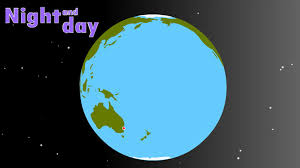
The objects orbital motion around another object.
Axis
Rotation
Hemisphere
Revolution
What takes 365.25 days?
Rotation
Axis
Revolution
Earths Tilted Axis
An invisible line around which an object rotates or spins.
Axis
Rotation
Hemisphere
Revolution
The path Earth takes around the sun
Axis
Hemisphere
Orbit
Ellipse
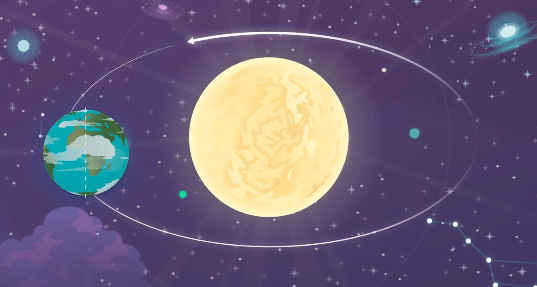
What are the most type of green house gases
Carbon dioxide
acid rain
air
pizza
methane
Which is Carbon dioxide symbol
(gh)
(th)
(C02)
(heat)
what is carbon dioxide made from
factories, cars
gold ,pizza
farts, books
plants, animals
Earth's average temperature has increased 1°C in the past century. Which reason best explains this increase in temperature?
lower levels of ozone in the atmosphere
lower levels of nitrogen in the atmosphere
higher levels of carbon dioxide in the atmosphere
higher levels of oxygen in the atmosphere
The main human activity that releases carbon dioxide (CO2) into the atmosphere is...
using bottled water
burning fossil fuels
texting on cellphones
eating meat
An example of a climate change mitigation strategy is
mandating more fuel efficient vehicles
building structures to protect from rising sea levels
species migration
using drought resistant crops

What is a major cause of coral bleaching?
Too much carbon dioxide is dissolved in ocean water
Not enough carbon dioxide is dissolved in ocean water
Whales chewing on coral reefs
Too much sunlight
Give an example of a green house gas.
Carbon Dioxide
Ozone
Methane
Nitrogen Dioxide
What is the significance of the ozone layer?
It helps in the formation of clouds.
It protects Earth from harmful ultraviolet (UV) radiation from the sun.
It regulates the Earth's temperature.
It is a source of oxygen for living organisms.
Green House gases
absorb the sun's radiation and trap heat
are good for our health
absorb gravity and keep us attached to Earth
expulse radiation to the sun and prevent us from getting to warm
What would be Earth's temperature without green house gases?
Earth's temperatures would be cold, oceans would freeze
The same, green house gases do not affect Earth's temperature
Earth's temperature would be 90 Fahrenheit
What activity is increasing green house gases?
Ocean and air currents
Volcanic activity
Plants activity
Human activity
Greenhouse effect refers to:
A. Ability of atmosphere to retain water vapor
B. Ability of certain atmospheric gases to trap heat and keep the planet relatively warm
C. Ability of cloud to scatter electromagnetic radiation
D. None of the above
Burning of fossil
fuels
a) Decrease green house gases
b)Increase green house gases
c)No effect
d)Increase ethane
Which of these is NOT a greenhouse gas?
Carbon Dioxide
Nitrous Oxide
Oxygen Gas
Methane
What is deforestation?
Taking care of forest.
The action of clearing large areas of trees .
Removing one tree.
What are the effects of deforestation ?
soil erosion and flooding
increased green house gasses
loss of habitat
all of the above

Deforestation would (a) the amount of carbon in the atmosphere.
increase
decrease
have no impact on

Why is methane considered a potent greenhouse gas?
It is more abundant than carbon dioxide
It traps heat 80 times better than carbon dioxide
It dissolves well in water
It is easier to capture and use as fuel
What is the main source of methane emissions linked to human activities?
Burning fossil fuels
Cow burps and rotting manure
Deforestation
Industrial waste
What is a stable ecological community that has reached equilibrium called? This ecosystem will have a high amount of biodiversity.
ecological succession
climax community
secondary succession
pioneer species
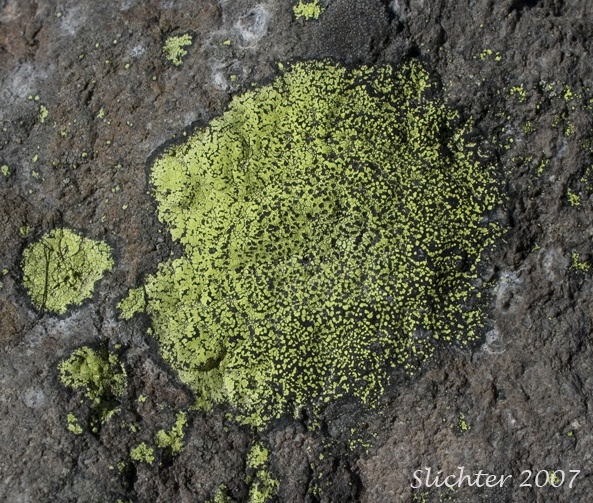
What process starts with bare/barren rock followed by lichen?
primary succession
secondary succession
both types of succession
What type of succession occurs after an event like a forest fire?
primary succession
secondary succession
both
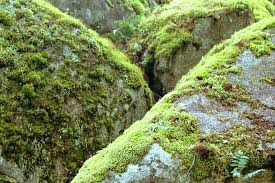
What are examples of pioneer species in primary succession?
Bushes and Shrubs
Oak trees
Mosses and Lichens
A rose bush
How do lichens contribute to primary succession?
Lichens produce glucose like plants
Lichens begin to break down rock to form soil
Lichens are nitrogen fixing bacteria to help plants grow
Lichens convert carbohydrates into fossil fuels.
Which catastrophic event would lead to primary succession?
A tornado
A volcanic eruption
A flood
A drought (no rain for long periods of time)
Biodiversity (the amount of different living things in an area) should be highest during which example below?
Immediately after a tornado
When a volcano erupts and covers an area in lava
When a forest has reached its climax community
When an ecosystem is damaged by a hurricane
Which would result in primary succession?
Volcano destroying habitat leaving only soil and ash
Tornado destroying a crop leaving very little soil
Glacier retreating exposing bare rock
Hurricane knocking down trees and power lines
Which statement is true?
Primary succession starts with NO soil, Secondary succession starts WITH soil
Primary succession starts WITH soil, Secondary succession starts with no soil
In a climax community, the amount of ___________ should be much higher than when succession first begins.
biodiversity
rock
soil
plants only

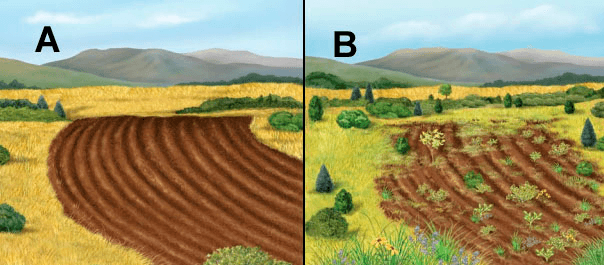


Why does increased biodiversity result in a more sustainable ecosystem?
greater number of plants
more able to adapt
narrow transistion
fewer species
Primary and secondary succession start with pioneer species that...
allow predators
invade and take over
allow more complex organisms
prevent non-native organisms

