
Font size
 Worksheets
1st Weeks Test -2025
Total questions: 71
Worksheet time: 2hrs 45mins
Which process is an example of of a physical change?
ice melting
milk souring
metal rusting
wood burning
Which of the following can be signs that a chemical change has occurred?
color change
formation of a gas (bubbles)
energy change
All of the above
A change in size, shape, or state of matter that does not change into a new kind of matter is a
product
chemical change
physical change
reactant
What type of change takes place when you separate a mixture
chemical change
physical change
mixture
solution
The best way to separate a mixture of salt and water is by
chemical change
evaporation
burn it
shape

This is a __________ change.
Physical
Metaphysical
Chemical
Logical

When chameleons want to hide from predators and blend into their surroundings, they are undergoing a ___________ change in the skin.
Also, they are adorable.
Physical
Chemical

This is a _____________ change.
Chemical
Physical
Percy is cutting the grass and picks up the clippings. He hates lawn work but loves the smell of cut grass. Percy has created a _________ change.
Physical
Chemical
When two liquids are mixed and a solid is formed, the new solid is called a ________________.
Levitate
Precipitate
Palpitate
Bad date
When lithium metal is dropped into a container of water, the lithium sparks and fizzes and the water begins to bubble violently. The conclusion that can be drawn from that is:
A new substance is created because this is a chemical change.
No new substances are created because there is a chemical change.
No new substances are created because this is a physical change.
A new substance is created because this is a physical change.
Cutting a tree limb into logs is (a)____________ and burning them in the fireplace is (b)____________.
(a) A Physical Change
(b) Also a Physical Change
(a) A Physical Change
(b) A Chemical Change
(a) A Chemical Change
(b) Also a Chemical Change
(a) A Chemical Change
(b) A Physical Change


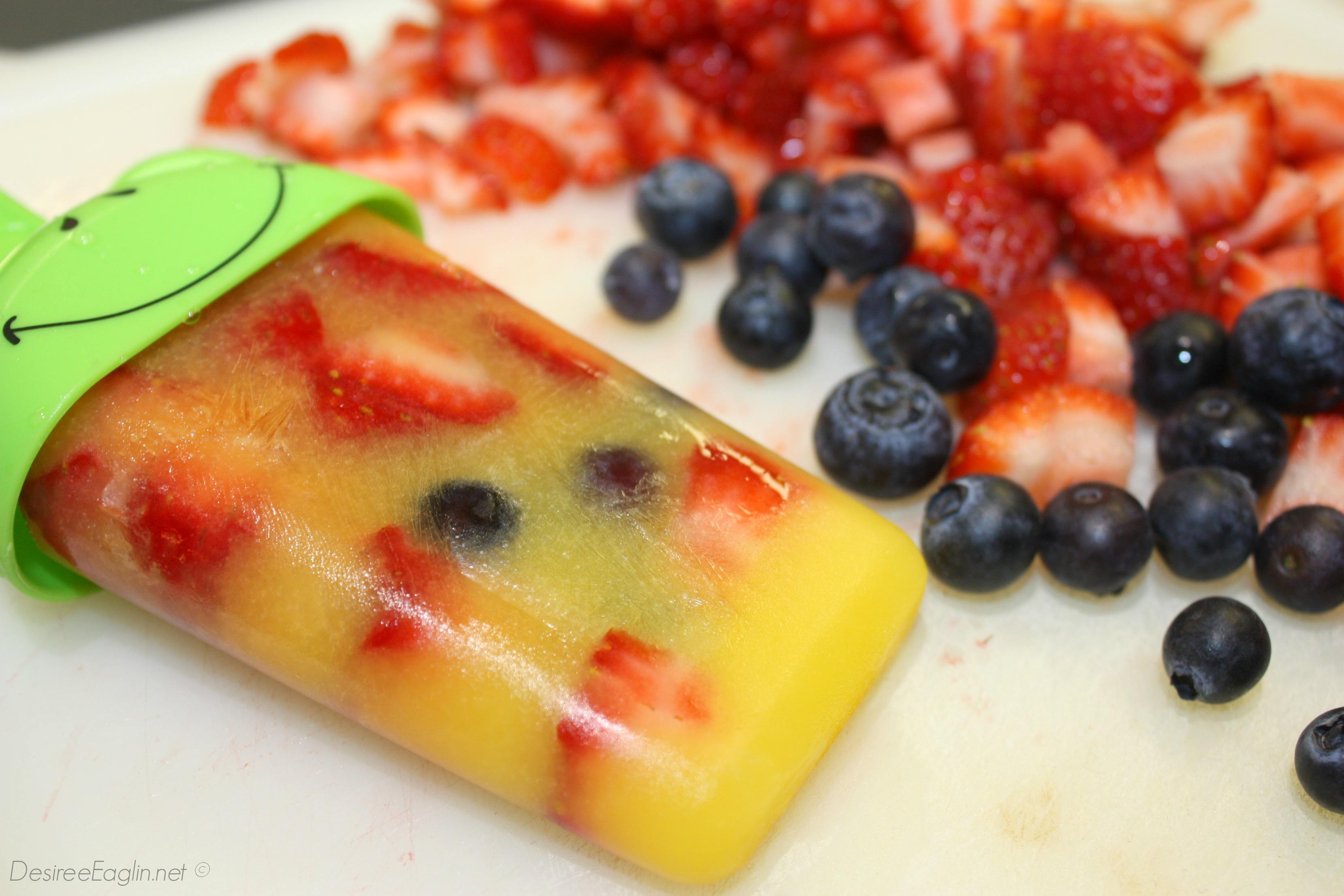
Which of the following are examples of a Chemical Change? (Select THREE-3)
Iron Rusting
Gas Burning
Breaking a glass
Boiling water
Burning Wood
three hydrogen (H)
one sulfur (S)
four oxygen (O)
H2SO4
What are the reactants?
What are the products?
Mg2As3COHNi2
(rust) made up of?
3 oxygen
(Sulfuric Acid) made up of?
(hydrochloric acid) made up of?

How many different kinds of elements are there?
4
3
2
1

How many carbon atoms are there?
2
3
8
16

How many atoms of carbon are there?
2
4
12

How many total atoms are there?
8
5
3
1
In the equation what is the mass of the new substance FeS?
S + Fe = FeS
32g + 56g = ?

Take inventory:
H = 3
O = 3
H = 6
O = 1
H = 2
O = 1
H = 6
O = 3

Take inventory:
H = 3
O = 3
H = 6
O = 1
H = 2
O = 1
H = 6
O = 3

How many grams of OXYGEN would be needed to show conservation of mass in the example below?
100 g
93 g
7 g
0 g

How many grams of coal were present at the start of the chemical change?
Unknown
100 g
200 g
50 g

How many grams of CHOCOLATE POWDER are shown in the example of conservation of mass below?
450 g
465 g
0 g
15 g

How many grams of LIQUID WATER are shown in the example of conservation of mass?
0 g
50 g
100 g
200 g
Mass is neither created nor ______________.
made
destroyed
changed

How many kilograms of SMOKE are shown in the example of conservation of mass?
1 kg
30 kg
28 kg
3 kg

True or False: The mass of the reactants is equal to the mass of the products?
True
False
C + O2 → CO2
Balanced
Unbalanced
6C + 6H2O → C6H12O6
Balanced
Unbalanced
Na + Cl2 → NaCl
Balanced
Unbalanced
CH4 + O2 → CO2 + 2H2O
Balanced
Unbalanced
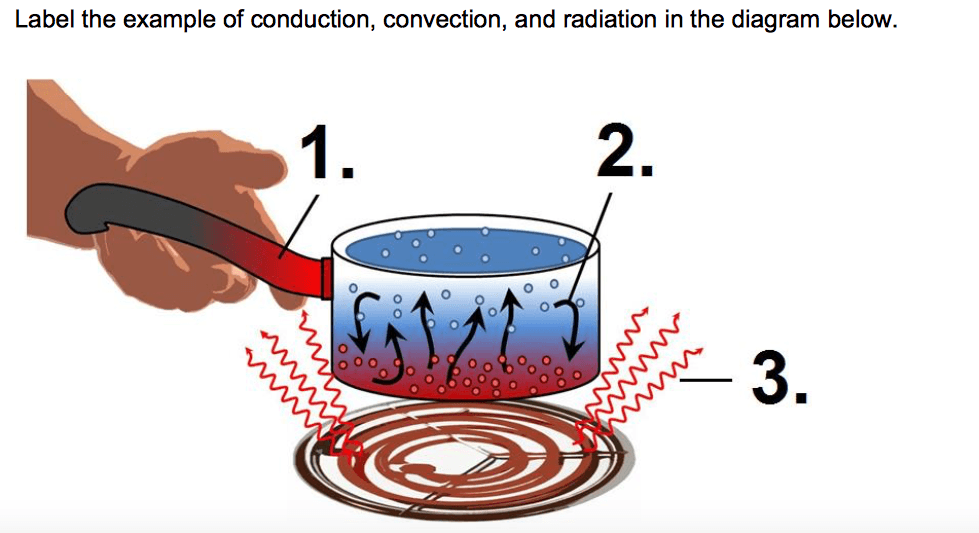
What type of thermal energy transfer is number 1 pointing to?
Convection
Conduction
Radiation
Insulation

What type of thermal energy transfer is number 3 pointing to?
Convection
Conduction
Radiation
Insulation
What is the definition of CONVECTION
When heat transfers through waves.
When heat transfers from objects that are touching.
a hot liquid or air that expands, becomes less dense, and rises or becomes more dense, and sinks.
Heat traveling from the sun
A lava lamp contains colored liquids. These liquids form globs that break off and rise to the top of the liquid. The globs rise due to
Conduction
Convection
Radiation
Insulation
Warm air over the beach rises while cooler dense air from the ocean rushes in this is due to..
Conduction
Convection
Radiation
Insulation
Which of the following statements about convection is true?
all types of currents are convection currents
Convection occurs between solids only at high temperatures
Convection can only occur during the process of boiling
Convection always involves the circulation of liquids and gases
A boy sits to the side of a campfire. He is 10 feet away but still feels warm. This is an example of ....
Conduction
Convection
Radiation
Insulation

Conduction
Convection
Radiation

Conduction
Convection
Radiation

Conduction
Convection
Radiation

Conduction
Convection
Radiation

Conduction
Convection
Radiation

Conduction
Convection
Radiation

Conduction
Convection
Radiation
Kinetic energy is the energy of————-
Temperature
Ocean
Lotion
Motion
Thermal energy is transferred from————-
A cooler object to a hotter one
A hotter object to a cooler one
Molecules with more kinetic energy move ———- than molecules with less kinetic energy
Lower
Faster
Higher
Slower
Energy transfers from ________ to ____________.
hot , cold
warm , cool
liquid , gas
solid , liquid
What is the effect of cooling on the kinetic energy of particles?
The kinetic energy increases.
The kinetic energy remains the same.
The kinetic energy decreases.
The kinetic energy fluctuates.
In which state of matter do particles have the most kinetic energy?
Solid
Liquid
Gas
Plasma
The more kinetic energy a particle has, the __________ it will move.
slower
faster
more erratically
less smoothly
What state of matter has particles that are tightly packed together?
Liquid
Gas
Solid
Plasma

