
 Worksheets
Intro to A&P Exam
Total questions: 39
Worksheet time: 40mins
What is the study of the structure of body parts called?
Physiology
Biology
Anatomy
Pathology
What does physiology study?
The structure of body parts
The function of body parts
The history of medicine
The process of evolution
What historical challenge did the study of anatomy face?
Lack of interest
Restrictions and laws on human dissection
Insufficient funding
Technological limitations
Which characteristic of human life involves reactions in the body that require energy?
Organization
Metabolism
Growth
Movement
What is the term for the characteristic of human life that involves passing DNA to new individuals?
Growth
Development
Reproduction
Responsiveness
What is the definition of homeostasis?
The body's ability to change its internal environment
The tendency of the body to maintain a stable internal environment
The process of energy production in cells
The body's response to external stimuli
What is the correct order of the levels of organization from simplest to most complex?
Cells → Tissues → Molecules → Atoms → Organ Systems → Organism → Organs
Atoms → Molecules → Cells → Tissues → Organs → Organ Systems → Organism
Organism → Organ Systems → Organs → Tissues → Cells → Molecules → Atoms
Molecules → Atoms → Cells → Tissues → Organs → Organ Systems → Organism
At which level do two or more different tissues combine to form an organ?
Cellular level
Tissue level
Organ level
Organ system level
What is the process by which a cell becomes specialized to perform a specific function?
Differentiation
Photosynthesis
Respiration
Mitosis
What is the primary role of oxygen in the human body?
To provide nutrients
To make ATP, cell energy
To regulate temperature
To maintain atmospheric pressure
Why is it important for the human body to maintain a narrow range of temperature?
To ensure proper nutrient absorption
To allow the body to respond to changes in temperature
To maintain atmospheric pressure
To produce more oxygen
What is meant by the term "set point" in the context of homeostasis?
The point where the body stops functioning.
The normal range where conditions fluctuate.
The temperature at which the body overheats.
The level at which effectors stop working.
What is the function of the effector in a negative feedback loop?
To detect changes in the environment
To process information from the sensor
To carry out the response to restore balance
To store information for future use
What is the primary function of a positive feedback loop?
To decrease the occurrence of events
To maintain the occurrence of events
To amplify or increase the occurrence of events
To eliminate the occurrence of events
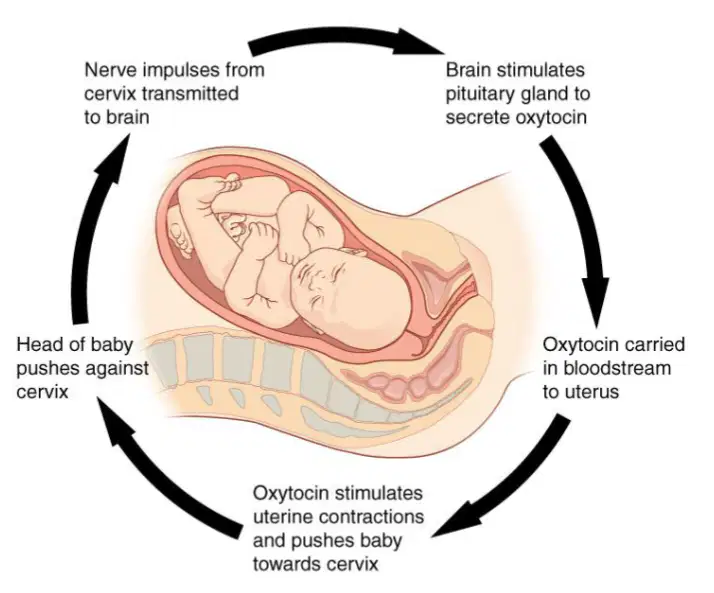
What happens when a baby suckles on the nipple?
The pituitary gland stops producing hormones
A nerve response is sent to the brain
The spinal cord is deactivated
The brain decreases hormone production
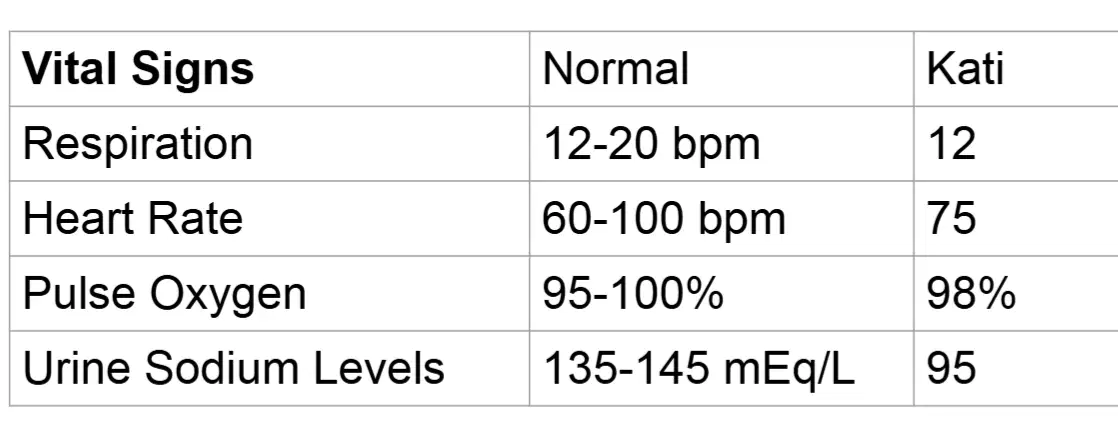
Which vital sign provides a clue to Kati’s problem?
Respiration
Heart Rate
Pulse Oxygen
Urine Sodium Levels
What is a characteristic of hyponatremia?
Excess of total body sodium compared to water
Excess of total body water compared to sodium
Deficiency of total body water compared to sodium
Balanced body water and sodium levels
How does Kati’s story relate to homeostasis?
It shows the body's ability to maintain a stable internal environment by removing excess water.
It demonstrates the body's failure to regulate temperature.
It highlights the importance of maintaining a constant heart rate.
It illustrates the body's need to balance blood sugar levels.
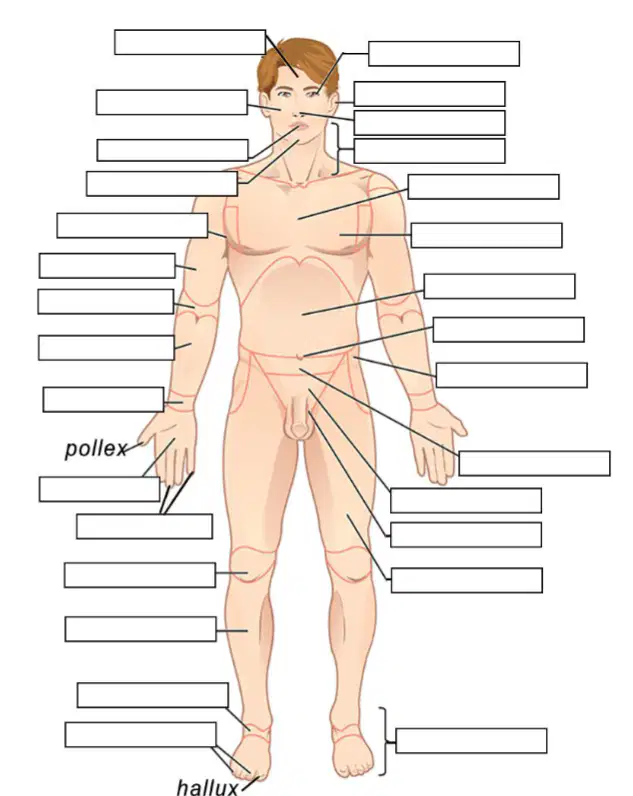
Where is the brachial artery located?
In the lower leg
In the center of the arm
In the neck
In the abdomen
Which plane divides the body into left and right sections?
Sagittal Plane
Transverse Plane
Coronal Plane
Axial Plane
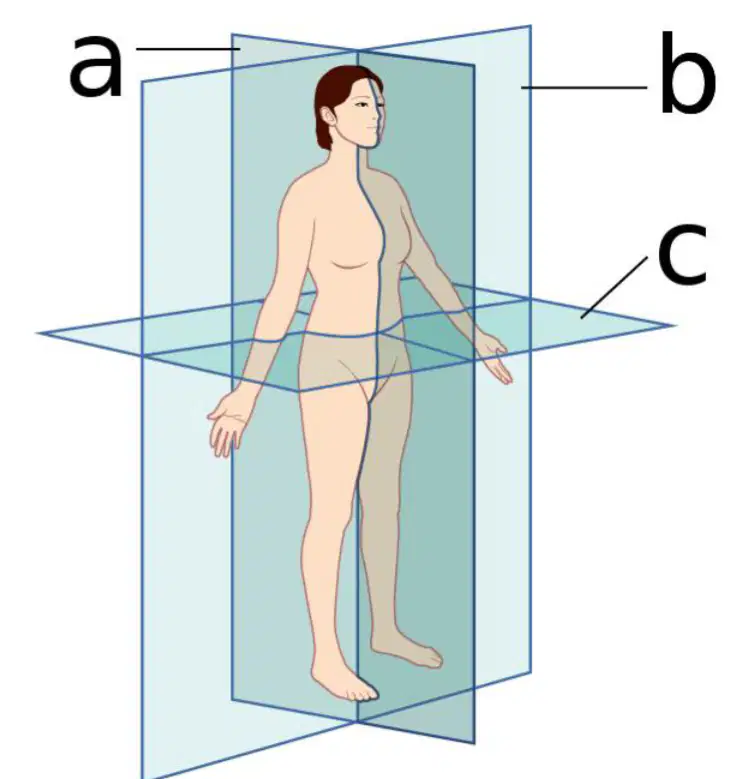
Which anatomical plane is represented by label 'c' in the diagram?
Sagittal
Transverse
Coronal
Oblique
What does the axial part of the body include?
Arms and legs
Internal organs
Head, neck, spine
Hands and feet
Which part of the body is referred to as appendicular?
Head and neck
Arms and legs
Internal organs
Spine and ribs
What area does the thoracic region refer to?
Stomach area
Chest area
Lower abdomen
Head area
What is the function of the diaphragm in the human body?
Separates the thoracic cavity from the abdominal cavity
Protects the brain
Supports the spinal cord
Houses the digestive organs
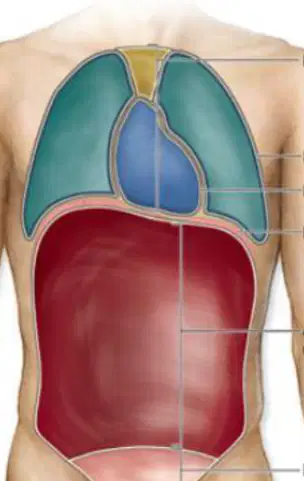
In the coronal view, which cavity is directly below the pleural cavity?
Abdominal cavity
Pericardial cavity
Pelvic cavity
Vertebral canal
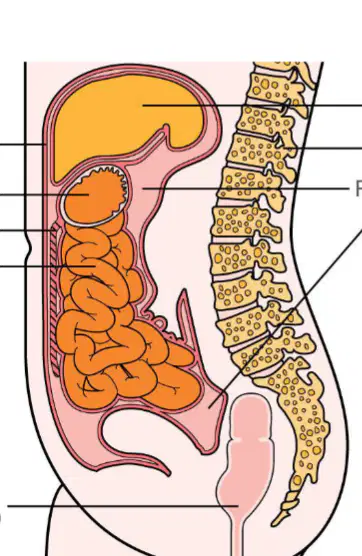
Which membrane is associated with the abdominal organs?
Pleura
Pericardium
Peritoneum
Omentum
Match the following
Distal - (a)
Proximal - (b)
Medial - (c)
Lateral - (d)
What is made up of different types of tissue?
cell
organ
organ systems
molecules
Match the following
Nervous System - (a)
Endocrine System - (b)
Digestive System - (c)
Muscular System - (d)
Male Reproductive System - (e)
The neck is (a) to the arms.
The nose is (a) to the cheekbones.

The heart is ________ compared to my ribcage.

5) (a) 9) (b) 10) (c) 6) (d) 11) (e)

What do you have when organ systems work together?
organs
organism
cells
tissue
Body laying face up
prone
supine
superior
inferior

