
Font size
 Worksheets
Ecology: Biomes, Food Chains, and Food Webs Worksheet
Total questions: 98
Worksheet time: 49mins
What does the term 'biome' mean?
A biome is a large geographical area with similar climate, plants, and animals.
A biome is a type of weather pattern found in deserts.
A biome is a single species of plant found in a region.
A biome is a small pond ecosystem.
What is a food chain?
A food chain is a series of steps in which organisms transfer energy by eating and being eaten.
A food chain is a group of animals living together in one place.
A food chain is a process of plants making their own food using sunlight.
A food chain is a list of all the animals found in a forest.
Energy flows in a food web in which of the following ways?
From producers to consumers to decomposers
From consumers to producers to decomposers
From decomposers to producers to consumers
From consumers to decomposers to producers
The difference between a food chain and a food web is:
A food chain shows a single path of energy flow, while a food web shows multiple interconnected paths.
A food chain includes only plants, while a food web includes only animals.
A food chain is found in water, while a food web is found on land.
A food chain is longer than a food web.
What is a trophic level?
A trophic level is each step in a food chain or food web.
A trophic level is a type of ecosystem.
A trophic level is a type of organism.
A trophic level is a type of habitat.
Which of the following is a producer?
Grass
Rabbit
Hawk
Snake
Decomposers break down dead organisms and recycle nutrients back into the ecosystem.
True
False
Tectonics: Identify two examples each of passive and active margins from the following options.
Passive: Eastern US, Western Africa; Active: Western South America, Eastern Japan
Passive: Western South America, Eastern Japan; Active: Eastern US, Western Africa
Passive: Eastern US, Eastern Japan; Active: Western Africa, Western South America
Passive: Western South America, Western Africa; Active: Eastern US, Eastern Japan
A turbidite is:
a sedimentary deposit formed by a turbidity current
a type of volcanic rock
a fossilized plant remain
a layer of metamorphic rock
A sulfidic facies is:
a sedimentary environment rich in sulfide minerals
a type of volcanic rock
an area with high oxygen content
a region dominated by carbonate rocks
Name one example of a major orogeny.
Grenville Orogeny.
Pacific Trench Formation.
Sahara Desert Expansion.
Amazon River Formation.
What mineral is commonly associated with barite and anhydrite in sedimentary environments?
Gypsum.
Quartz.
Calcite.
Halite.
The significance of the Great Oxidation Event (GOE) is that it:
led to a significant increase in atmospheric oxygen levels.
caused the extinction of all life on Earth.
resulted in the formation of the first continents.
marked the beginning of the Ice Age.
A paleosol is:
an ancient soil preserved in the geologic record
a type of volcanic rock
a recently formed soil
a layer of fossilized plants
What is the main characteristic of the O2S domain?
High levels of oxygen (O2) and sulfur (S) in the environment.
Low levels of oxygen (O2) and high levels of nitrogen (N).
High levels of carbon dioxide (CO2) and sulfur (S).
Absence of both oxygen (O2) and sulfur (S) in the environment.
What is a typical feature of basin communities?
High diversity of organisms adapted to specific environmental conditions.
Low levels of biodiversity due to harsh conditions.
Absence of any aquatic life forms.
Uniform temperature throughout the year.
The first place where we learn to be safe is:
School
Playground
Home
Park
It is important to have rules at home because:
they help maintain order and safety.
they make the house look bigger.
they allow everyone to do whatever they want.
they make chores unnecessary.
The person who makes the rules at home is:
the parents
the children
the neighbors
the guests
A rule that you might have at home is:
No running indoors
No homework
No eating vegetables
No bedtime
Rules at home are different from rules at school because:
They are made for different environments and purposes.
They are exactly the same everywhere.
School rules are always stricter than home rules.
Home rules are only about studying.
We need to follow the rules at home and at school because:
it helps maintain order and safety.
it makes things more difficult for everyone.
it allows us to ignore responsibilities.
it is only for fun.
What are the steps in the International Convergence Cycle?
Start at 0° (ITCZ) – convergence zone
Descend at subtropical highs, move poleward
Meet at Polar Front, rise, and return to equator
All of the above
What is the main characteristic of El Niño events?
A) Trade winds weaken or reverse, warm water moves east
B) Trade winds strengthen, cold water upwelling increases
C) No change in ocean currents
D) None of the above
During La Niña, what happens to the trade winds and ocean currents?
Trade winds weaken, warm water moves east
Trade winds strengthen, cold water upwelling increases
Trade winds reverse, warm water moves west
No change in ocean currents
List two limiting factors for plant growth.
Nutrient supply and temperature
Wind speed and rainfall
Sunlight and soil color
Leaf size and flower color
What are the main components of the Global Carbon Cycle?
Atmosphere, terrestrial biosphere, oceans, and sediments
Atmosphere, mantle, core, and crust
Rivers, lakes, glaciers, and mountains
Deserts, rainforests, tundra, and savannas
What is the greenhouse effect?
The trapping of heat in the Earth's atmosphere by greenhouse gases
The process of photosynthesis in plants
The reflection of sunlight by ice caps
The movement of tectonic plates
Name one major terrestrial biome and a characteristic of it.
Tropical Rainforest – high biodiversity and rainfall
Desert – low rainfall and sparse vegetation
Tundra – high temperatures and dense forests
Grassland – covered mostly by ice year-round
The ITCZ is a zone of convergence at the equator.
True
False
What is the main function of the Polar Front in the atmospheric circulation?
It is where warm and cold air masses meet, causing rising air and storm formation.
It is the boundary where trade winds converge, causing calm weather.
It is the region where only cold air descends, leading to clear skies.
It is the area responsible for the formation of tropical cyclones.
Describe one effect of El Niño on global weather patterns.
El Niño can cause increased rainfall in some regions and droughts in others.
El Niño causes the Earth's magnetic field to reverse.
El Niño leads to a permanent increase in global temperatures.
El Niño causes the polar ice caps to instantly melt.
The difference between direct and indirect transmission of infectious diseases is:
Direct transmission involves immediate transfer of pathogens from person to person, while indirect transmission involves transfer through an intermediate object or organism.
Direct transmission occurs only through air, while indirect transmission occurs only through water.
Direct transmission requires physical contact, while indirect transmission does not involve any contact at all.
Direct transmission is less dangerous than indirect transmission.
Fill in the blank: A ________ is a disease that is constantly present in a population.
endemic
epidemic
pandemic
sporadic
Fill in the blank: An ________ is a sudden increase in the number of cases of a disease above what is normally expected.
epidemic
pandemic
endemic
outbreak
Fill in the blank: A ________ is an epidemic that has spread over several countries or continents, usually affecting a large number of people.
pandemic
endemic
outbreak
epizootic
Which of the following is NOT a physical barrier to infection?
Skin
Mucous membranes
Antibodies
Stomach acid
The role of the immune system in fighting infection is to:
defend the body against harmful pathogens
produce energy for the body
regulate body temperature
aid in digestion of food
Fill in the blank: The ________ period is the time between exposure to a pathogen and the appearance of symptoms.
incubation
recovery
latent
infectious
Pathogens can only be transmitted through direct contact.
True
False
What are the two types of stress responses mentioned in the worksheet?
Autonomic (arousal) and Anabolic (recovery)
Sympathetic and Parasympathetic
Acute and Chronic
Physical and Emotional
Which of the following is an example of an autonomic (arousal) response?
Increased heart rate
Muscle recovery
Relaxation
Deep sleep
Which of the following is an example of an anabolic (recovery) response?
Sweating
Muscle recovery
Rapid breathing
Pupil dilation
Name two features of the stress response process.
Involves autonomic (arousal) and anabolic (recovery) responses.
Only involves voluntary muscle movements.
Is unrelated to hormonal changes in the body.
Occurs only during sleep.
What is the main function of the autonomic (arousal) response?
To prepare the body for action (fight or flight).
To increase memory retention during sleep.
To improve digestion after eating.
To enhance voluntary muscle control.
What is the main function of the anabolic (recovery) response?
To help the body recover and restore energy.
To break down muscle tissue for energy.
To increase the heart rate during exercise.
To dehydrate the body after activity.
List one example of a stressor.
Exams, deadlines, relationship issues, etc.
Drinking water
Sleeping at night
Watching a movie
What is self-efficacy?
Self-efficacy is the belief in one's ability to succeed in specific situations or accomplish a task.
Self-efficacy is the tendency to rely on others for support in difficult situations.
Self-efficacy is the process of learning through observation and imitation.
Self-efficacy is the ability to memorize large amounts of information quickly.
Group coping and support can help reduce the effects of stress.
True
False
A sustainable classroom is:
a classroom that uses resources efficiently and promotes environmental responsibility
a classroom with the latest technology only
a classroom that ignores recycling and waste management
a classroom that focuses only on academic results
Protecting the environment is important because:
it helps preserve natural resources and supports life on Earth.
it increases pollution and harms wildlife.
it reduces the quality of air and water.
it leads to the extinction of plant and animal species.
The word 'reuse' means:
to use something again instead of throwing it away
to throw something away after one use
to break something into pieces
to buy something new every time
Reusing an item instead of throwing it away can be done by:
Donating it to someone else
Burning it
Throwing it in the trash
Burying it in the ground
The word 'recycle' means:
to use something again instead of throwing it away
to burn things to get rid of them
to bury things in the ground
to break things for fun
Recycling can help save the planet by:
Reducing waste and conserving resources
Increasing pollution
Depleting natural resources
Causing more landfill problems
Customs & Cultures: 1. An example of a custom from your culture is:
Celebrating traditional festivals
Ignoring family gatherings
Avoiding cultural foods
Not participating in any rituals
Customs help people in a community by:
bringing people together and creating a sense of belonging.
making everyone the same as each other.
preventing people from celebrating traditions.
causing confusion among community members.
Card Game: 1. Identify whether a tradition that has lasted for 50+ years is considered long-term or short-term.
Long-term
Short-term
Neither long-term nor short-term
Depends on the tradition
A custom and a tradition are defined as:
A custom is a usual way of behaving or doing something, and a tradition is a belief or behavior passed down within a group.
A custom is a law, and a tradition is a new invention.
A custom is a type of food, and a tradition is a type of clothing.
A custom is a holiday, and a tradition is a sport.
The difference between a custom and a tradition is:
A custom is a specific practice, while a tradition is a belief or behavior passed down through generations.
A custom is always religious, while a tradition is always secular.
A custom is a law, while a tradition is a suggestion.
A custom is a holiday, while a tradition is a meal.
Working in a group can help you learn better because:
you can share ideas and learn from others
you do not have to do any work
it is always faster than working alone
everyone learns the same way
What is the main characteristic of the Tundra biome?
Permafrost (soil that is frozen year-round)
Dense tropical forests
High annual rainfall
Volcanic soil
Which biome is known for having permafrost and very low temperatures?
Tundra
Desert
Rainforest
Savanna
Which biome is characterized by coniferous forests and long, cold winters?
Taiga (Boreal Forest)
Savanna
Desert
Tundra
What type of trees are commonly found in the Taiga biome?
Coniferous trees (such as spruce, fir, and pine)
Deciduous trees (such as oak and maple)
Mangrove trees
Cactus plants
Which biome has four distinct seasons and a moderate climate?
Temperate Forest
Desert
Tundra
Rainforest
Which biome is known for having the greatest biodiversity?
Tropical Rainforest
Desert
Tundra
Taiga
What is the main difference between freshwater and saltwater aquatic biomes?
Freshwater biomes have low salt content, while saltwater biomes have high salt content.
Freshwater biomes are only found in cold regions, while saltwater biomes are only found in warm regions.
Freshwater biomes contain more plant species than saltwater biomes.
Freshwater biomes have higher water pressure than saltwater biomes.
What is an estuary?
An estuary is an area where freshwater from rivers meets and mixes with saltwater from the ocean.
An estuary is a large desert area with little rainfall.
An estuary is a mountain range covered with snow year-round.
An estuary is a deep underground cave system.
Which biome is described as the largest biome on Earth, covering about 70% of the planet's surface?
Open Deep Sea (Ocean)
Desert
Tundra
Rainforest
What is a coral reef?
A coral reef is a diverse underwater ecosystem held together by calcium carbonate structures secreted by corals.
A coral reef is a type of floating plant found in freshwater lakes.
A coral reef is a mountain range found on the ocean floor.
A coral reef is a type of fish that lives in the deep sea.
Some drugs can increase your risk. Which of the following is an example?
Corticosteroids
Vitamin C
Antibiotics
Antacids
Some medical conditions can cause complications. Name them.
Diabetes, hypertension, and heart disease
Common cold, mild headache, and hiccups
Seasonal allergies, minor cuts, and bruises
Mild dehydration, slight fatigue, and yawning
"Self-perception of your place in society" is important because:
it influences your confidence and interactions with others.
it determines your physical health only.
it is unrelated to your daily life.
it only affects your financial status.
The impact of all the examples can be explained as:
They demonstrate the consequences or results of certain actions or events.
They provide unrelated information to the topic.
They confuse the main idea of the discussion.
They have no effect on understanding the topic.
The impact of being in a busy lounge is:
It can be distracting and overwhelming.
It provides complete silence for concentration.
It guarantees privacy and solitude.
It ensures no interruptions at all.
The impact of being in a busy lounge is:
Increased distractions and noise levels
Complete silence and calm
Guaranteed privacy
No effect on concentration
Communication: The impact of being in a busy lounge is that it can make communication more difficult due to noise and distractions.
It can make communication more difficult due to noise and distractions.
It improves communication by providing a quiet environment.
It has no effect on communication.
It makes communication easier by reducing background noise.
Muscles: The impact of being in a busy lounge is most likely to be:
Increased muscle tension due to noise and activity
Decreased muscle strength
Improved muscle flexibility
No effect on muscles
Joints: The impact of being in a busy lounge is most likely to be:
Increased stress on joints due to prolonged sitting or awkward postures
Improved joint flexibility from constant movement
No effect on joints at all
Decreased risk of joint discomfort
Aspects such as muscles or joints impact the body overall by:
enabling movement and supporting bodily functions
causing diseases in the body
producing hormones for the body
regulating body temperature only
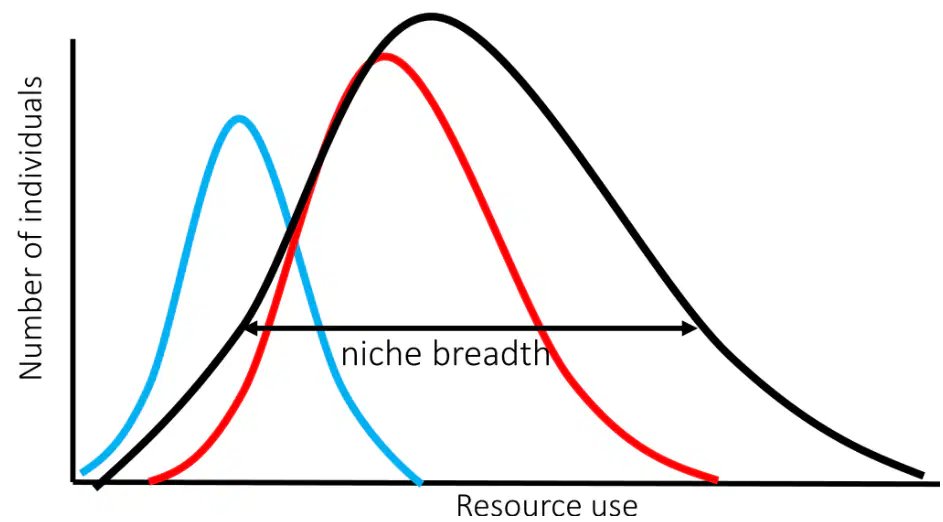
Refer to the diagram showing three curves representing the number of individuals versus resource use, with an arrow labeled 'niche breadth.' What does the term 'niche breadth' refer to in this context?
The number of individuals in a population
The range of resources a species uses
The height of the population curve
The time period of resource use
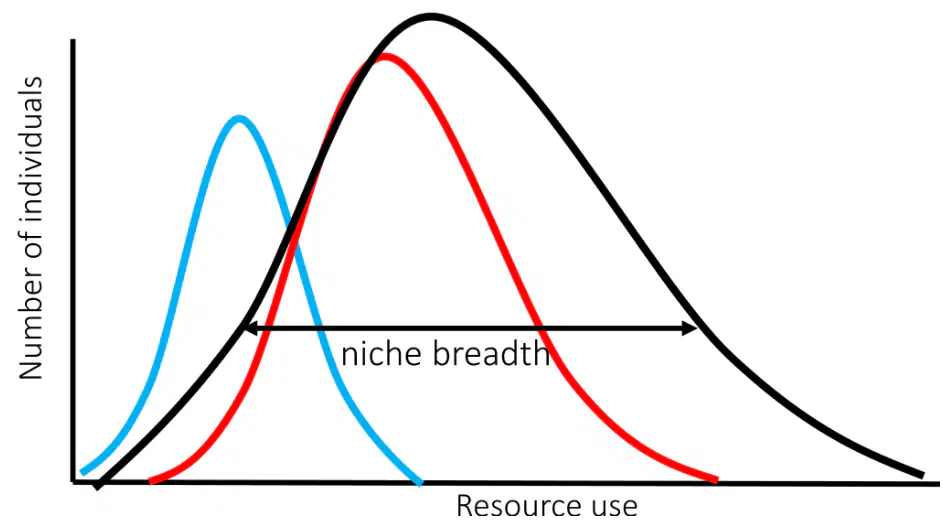
The black curve in the diagram represents a species with a ______ niche breadth compared to the blue curve.
wider
narrower
similar
smaller
According to the theory of plate tectonics, the crust of the earth is broken up into a number of plates of various sizes that move over the mantle of the earth.
The earth's crust is divided into plates that move over the mantle.
The earth's crust is a single solid piece with no movement.
The earth's crust is made entirely of liquid magma.
The earth's crust is fixed and does not interact with the mantle.
Based on the figure, identify the material found at each location.
Rock is found at location A, soil at location B, and water at location C.
Soil is found at location A, water at location B, and rock at location C.
Water is found at location A, rock at location B, and soil at location C.
Soil is found at location A, rock at location B, and water at location C.
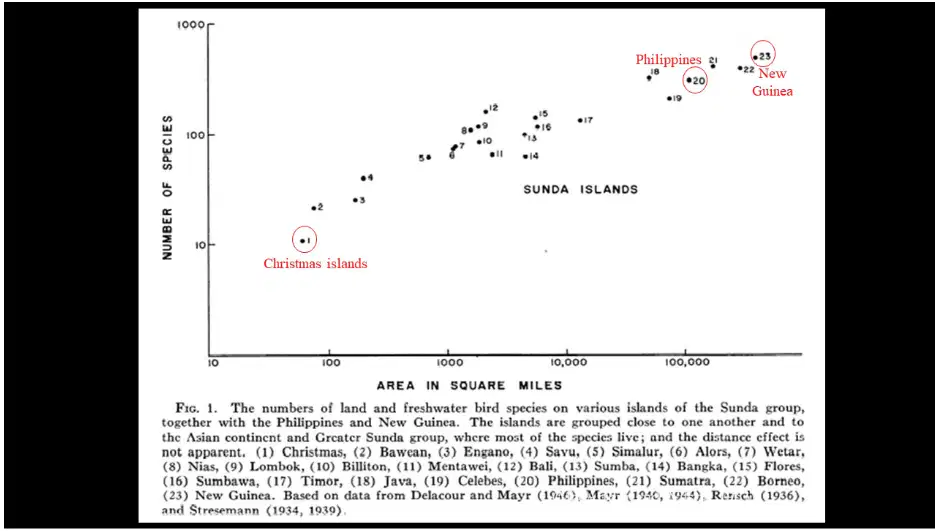
Refer to the graph and caption for the Philippines. The Sunda Islands group the Philippines.
True
False
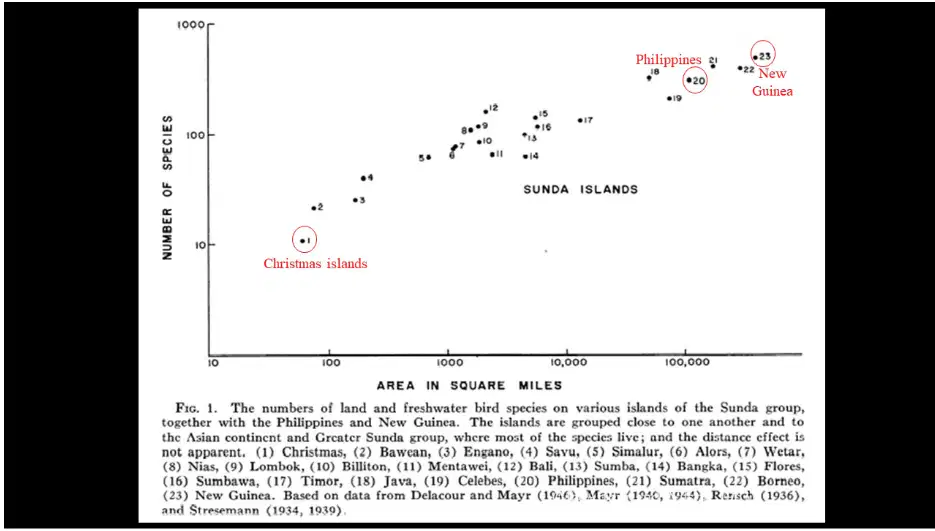
Refer to the graph and caption for the Philippines. The Celebes is in the same group as the Philippines.
True
False
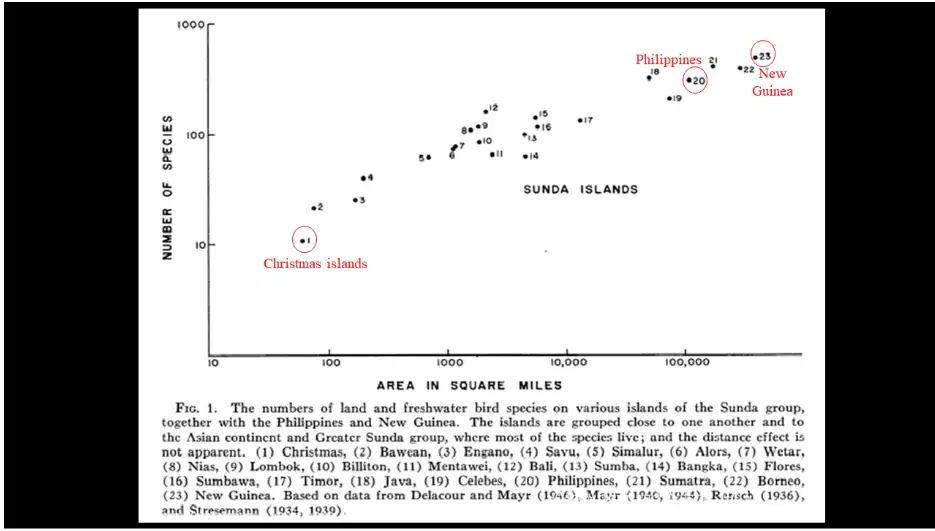
Philippines has a higher count of species than Celebes.
True
False
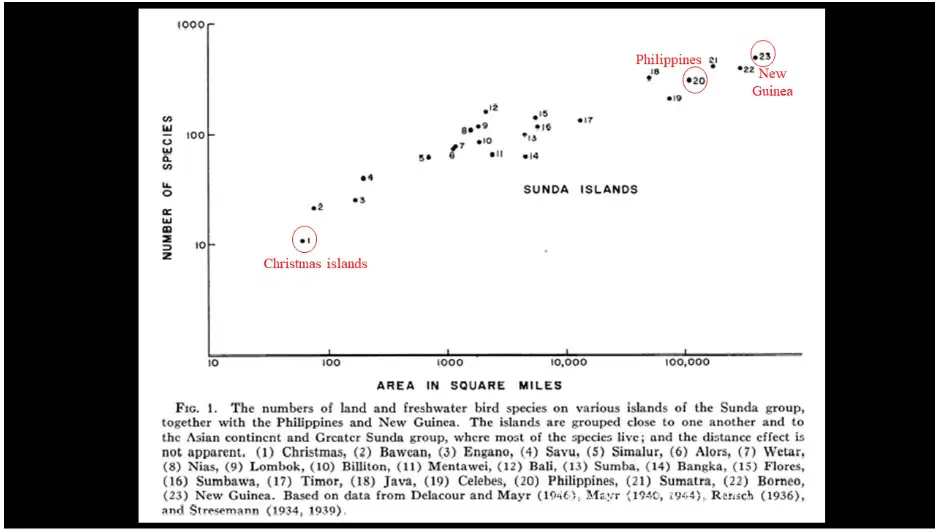
Habitat of Christmas islands and the Christmas islands are similar.
True
False
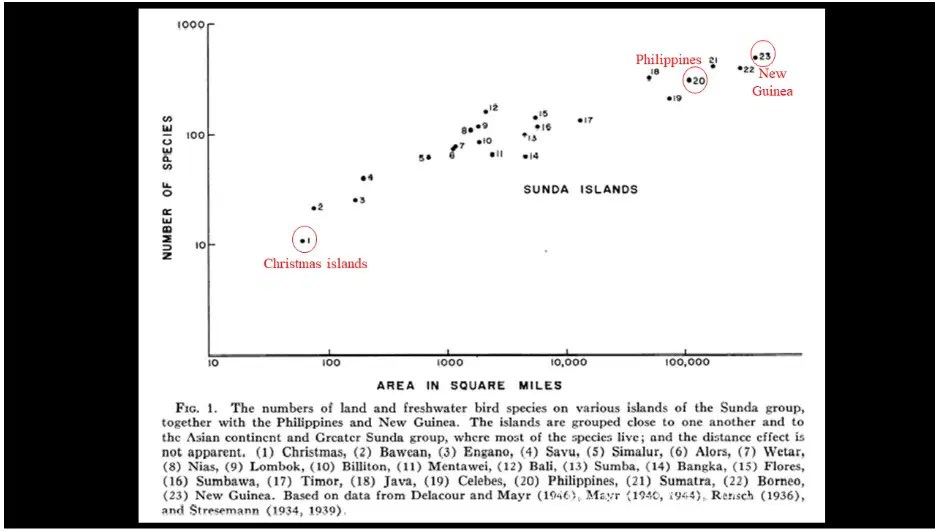
Based on Fig. 1, which location has the highest number of bird species?
Philippines
Christmas Island
New Guinea
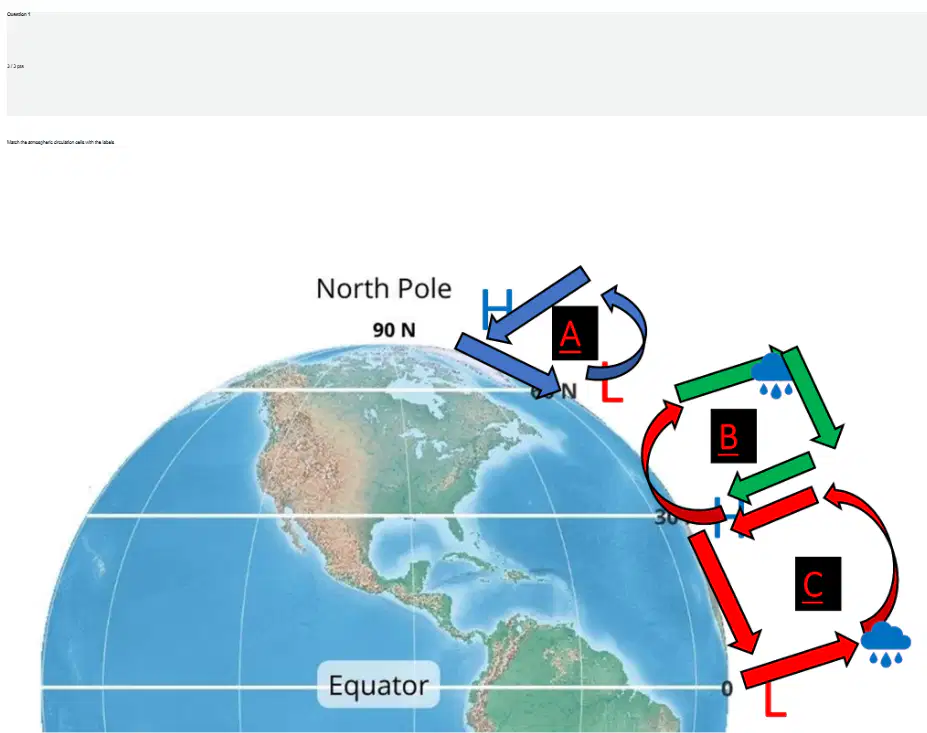
What type of atmospheric cell is labeled 'A'?
Hadley Cell
Ferrel Cell
Polar Cell
Walker Cell
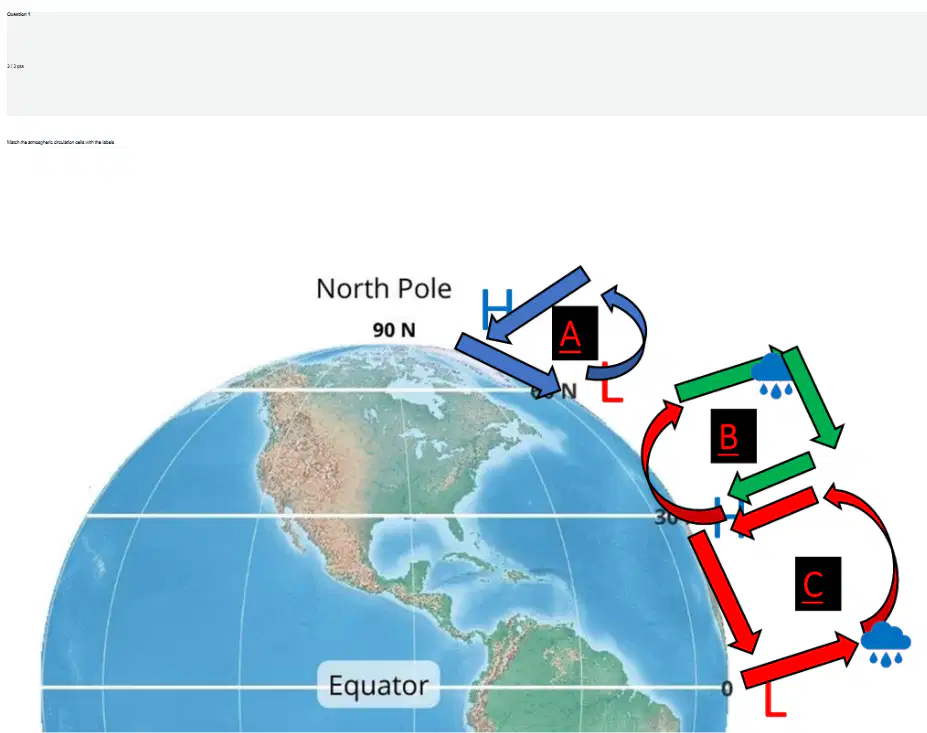
What type of atmospheric cell is labeled 'B'?
Hadley Cell
Ferrel Cell
Polar Cell
Walker Cell
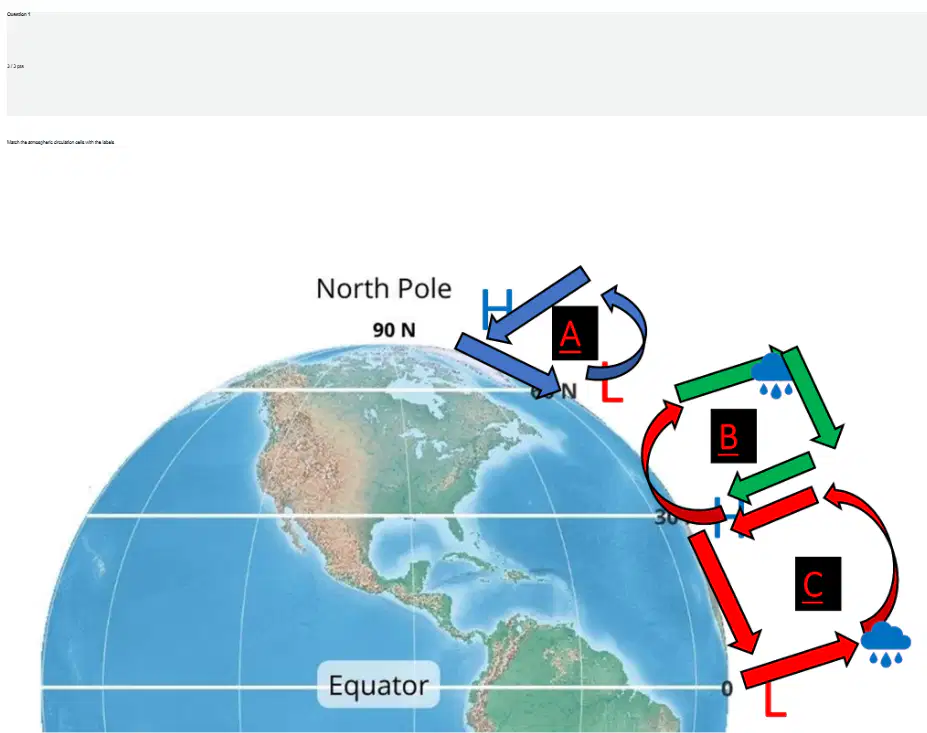
What type of atmospheric cell is labeled 'C'?
Hadley Cell
Ferrel Cell
Polar Cell
Walker Cell
James learned in Sunday school that building a solid life on the right foundation means:
Trusting and following God's teachings
Accumulating wealth and possessions
Relying only on personal strength
Ignoring advice from others
Brutus and Julius were best friends. The author (Plutarch) is describing this.
True
False
Question 1: (1.5 pts) Which feature allows you to view keyboard shortcuts?
View keyboard shortcuts
Type your answer in the space provided below
Save and submit
Open settings
Question 2: (1.5 pts) Which of the following is used to view keyboard shortcuts?
A help menu or shortcut guide
The print dialog box
The file save option
The font selection menu
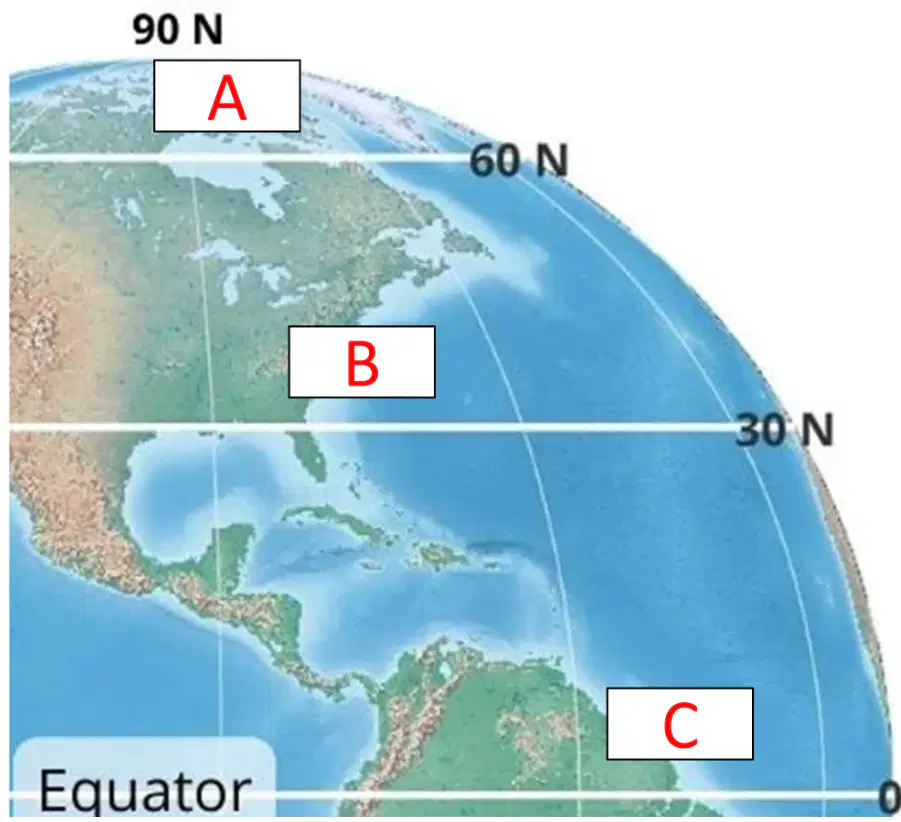
What is the latitude of point A?
90°N
0° (Equator)
45°S
23.5°N

