Worksheets
Enzyme Review
Total questions: 60
Worksheet time: 3hrs 37mins
What is a substance called if it speeds up a chemical reaction?
reusable
catalyst
specific
fragile
With what 3 letters do enzymes typically end?
-ose
-ase
-ese
-tic
Enzymes are an example of
Lipids
Carbohydrate
Protein
Nucleic Acid
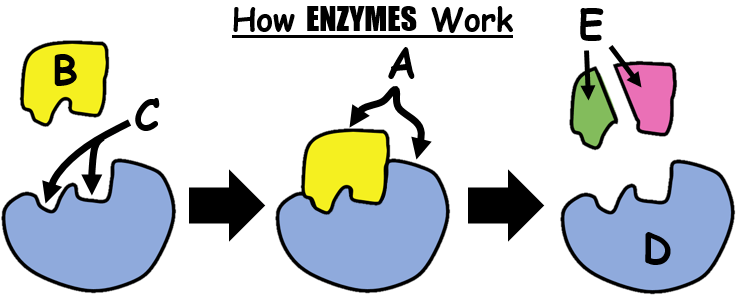
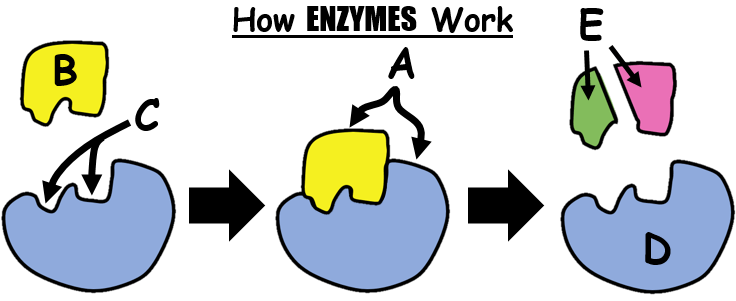
Letter D...
active site
enzyme
substrate
products
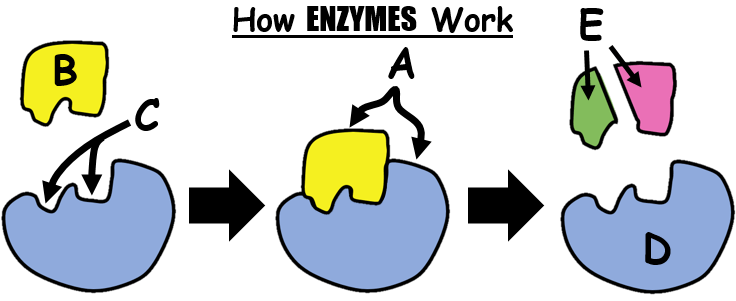
Letter B...
active site
enzyme
substrate
products
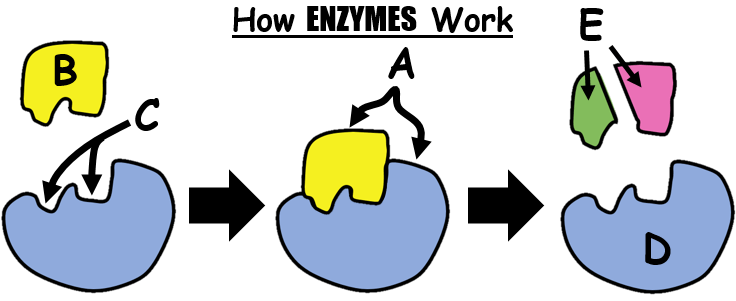
Letter C...
active site
enzymes
substrate
products
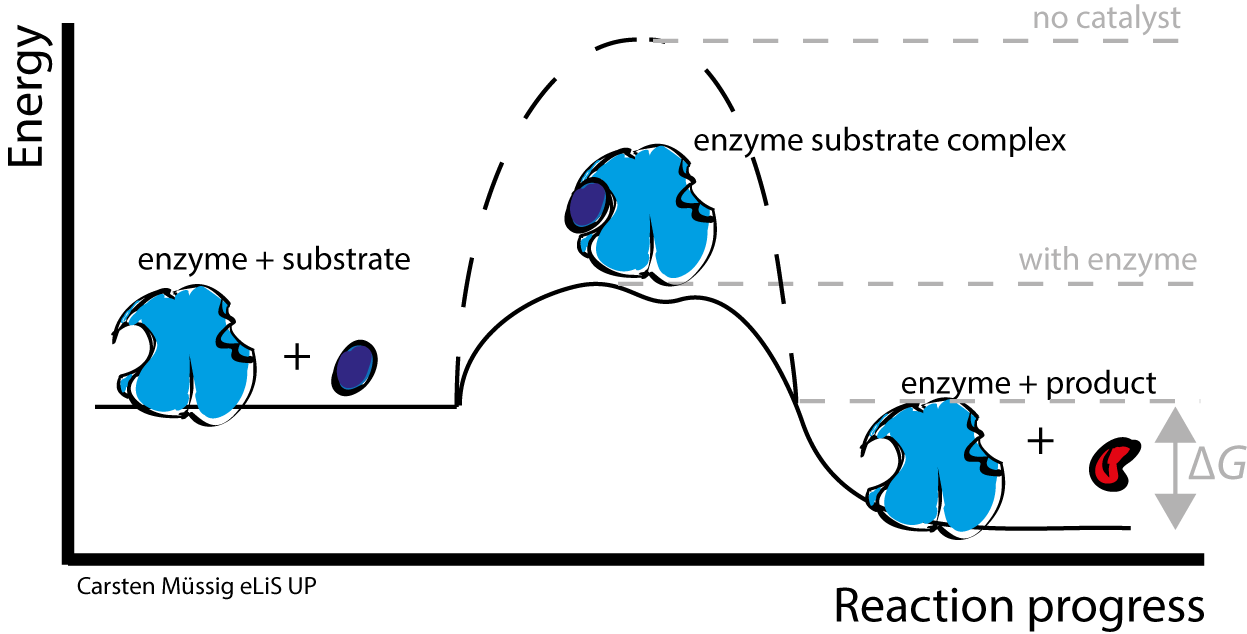
Letter E...
active site
enzyme
substrate
products
An enzyme speeds up a reaction by
lowering the activation energy.
raising the activation energy.
releasing energy.
absorbing energy.
What happens when enzymes are heated to a high temperature?
The enzymes die.
The shape of the enzyme are changed and it denatures
The enzymes' amino acid sequence changes.
The enzymes remain the same
Which of these is most likely an enzyme?
Sucrose
Galactose
Fructose
Amylase

What is the optimum temperature for this enzyme?
20 degrees Celsius
45 degrees Celsius
52 degrees Celsius
64 degrees Celsius

What can be inferred using the graph?
Cells can function equally as well at all pH values.
Cells do not function well at pH values that are too high or too low.
Cells function best at high pH values.
Cells function best at low pH values.
Which of the following two factors affect an enzyme's operation the most?
amount of light and temperature
blood glucose and pH
temperature and pH
amount of light and pressure
What is activation energy?
the energy from the sun
the energy produced by an enzyme
the energy needed to get a reaction going
none of these
In the lock-and-key model of enzyme action, the __________ fits into the __________ of the enzyme.
product; substrate
active site; product
substrate; active site
active site; substrate

What do enzymes do?
Build things up or break them down
Help filter waste from the body
Create environments where food can be eaten
Add and remove water
Enzymes are specific. This means that an enzyme only works with molecules that are....
the right size and shape
broken down already
present in water
too big for the body to handle
What happens to an enzyme when it is denatured?
Activation energy is lowered
It becomes stronger
It loses its shape
Activation energy is raised
What happens when enzymes are heated to a high temperature?
The enzymes die.
The shape of the enzyme are changed and it denatures
The enzymes' amino acid sequence changes.
The enzymes remain the same
With what 3 letters do enzymes typically end?
-ose
-ase
-ese
-tic
Enzymes are an example of
Lipids
Carbohydrate
Protein
Nucleic Acid
Each enzyme only has 1 substrate that will fit its active site. What is this called?
reusable
catalyst
specific
fragile
Letter D...
active site
enzyme
substrate
products
Letter B...
active site
enzyme
substrate
products
An enzyme speeds up a reaction by
lowering the activation energy.
raising the activation energy.
releasing energy.
absorbing energy.
What happens when enzymes are heated to a high temperature?
The enzymes die.
The shape of the enzyme are changed and it denatures
The enzymes' amino acid sequence changes.
The enzymes remain the same

When looking at the enzyme substrate model, the substrate turns into what at the end of the chemical reaction?
Nothing
It does not change
Products
Pieces

What is the monomer for protein?
Polymer
Nucleic Acids
Amino Acids
Fatty Acids
What are two factors that can affect an enzymes ability to function?
No changing
temperature and pH
night and day
hot and cold
Proteins are made of...
C H O
C H O N
C H O N P
C H O N S
What is the function of an enzyme?
enzymes break themselves into small pieces
enzymes slow down chemical reactions
enzymes speed up chemical reactions
enzymes combine products to form reactants
How does an enzymes shape relate to its function?
the shape of the enzyme has no relation to its function
the enzyme is shaped specially for certain substrates to perform a specific reaction
the enzyme shape acts as a receptor to certain products
the enzyme shape can fit into specific substrates to cease a reaction
An enzyme speeds up a chemical reaction in the cell but can only be used once. True or False?
true
false
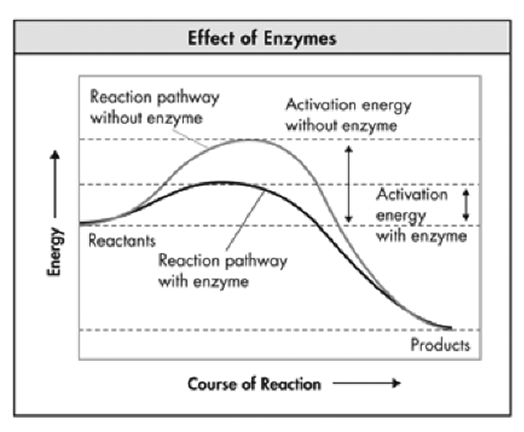
The graph shows how enzymes affect reactions in cells. Which statement best summarizes the information shown in the graph?
Enzymes increase the energy of the reactants.
Enzymes decrease the energy level of the products.
Enzyme decrease the activation energy of the reaction.
Enzymes reverse the direction of the reaction.
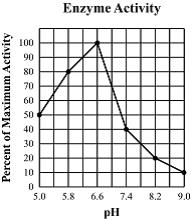
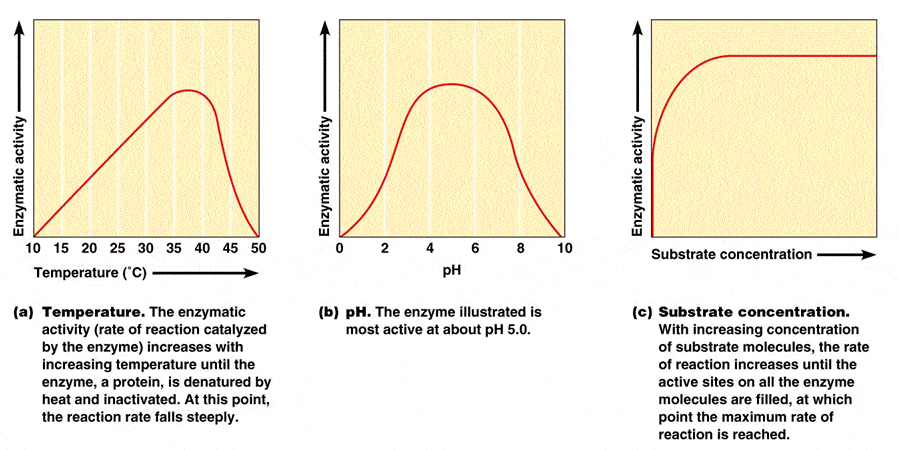
Which of the following conclusions can be drawn from this graph?
The optimum pH of the enzyme is 6.6.
The optimum pH of the enzyme is 5.8
The enzyme’s activity increases as pH increases 5.0 to 9.0
The enzyme’s activity is greater around pH of 8.0 .
Label the Following part for this image
Match the following enzymes to their substrates
Amylase
Sugar
Carobohydrase
Carbohydrates
Peptidase
Protein
Lipase
Lipids
Nuclease
Nucleic acid

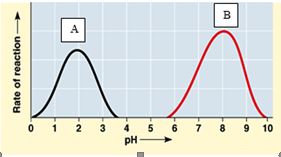
Which Enzyme works best at a pH of 7?
Enzyme A
Enzyme B

What can we conclude from the graph? At a temperature of 62 ...
Enzyme activity is highest
Enzyme activity is low but working
Enzyme is denatured
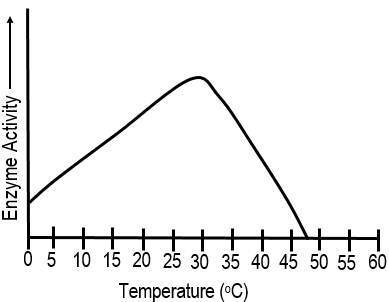
Based on the graph, what temperature does this enzyme work best?
15 C
40 C
30 C
47 C
In the lock-and-key model of enzyme action, the __________ fits into the __________ of the enzyme.
product; substrate
active site; product
substrate; active site
active site; substrate
If an enzyme becomes over heated what effect, if any, will the heat have on the enzymatic activity?
The enzyme will not store much chemical energy.
The enzyme will not be able to catalyze reactions.
The enzyme will lose its net electrical charge.
The enzyme will lose stored genetic information.
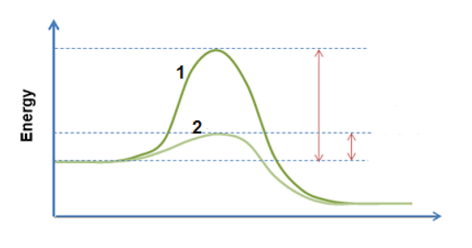
Which line represents an enzyme-catalyzed reaction?
Line 1
Line 2
Which of the following is true of enzymes?
Enzymes may require a non-protein cofactor or ion for catalysis to take place
Enzyme function is influenced by physical and chemical environmental factors such as pH and temperature
Enzymes increase the rate of chemical reaction by lowering activation energy
All of these are correct
The substrate that is acted upon by the enzyme lactase is
lactose only
glucose and galactose
any disaccharide
lactose, glucose and galactose
What are all of the chemical reactions that occur within an
organism referred to?
Enzymes
Macromolecules
Metabolism
Activation Energy

The graph below shows the results of an action of the enzyme catalase on a piece of meat. Evidence of enzyme activity is indicated by bubbles of oxygen. Which statement best summarizes the activity of catalase shown in the graph?
The enzyme works better at 10°C than at 50°C.
The enzyme works better at 5°C than at 65°C.
The enzyme works better at 35°C than at either temperature extreme.
The enzyme works at the same level in all environments.
One effect of uncontrolled diabetes is that the blood might develop an acidic pH. As a result, cells may not be able to regulate their internal pH. Within these cells, this could cause a disruption of the function of biological catalysts known as
enzymes
toxins
antibodies
antigens
Babies do not have well developed digestive systems for breaking down proteins; therefore baby food is prepared after treatment with which enzyme?
protease
lipase
carbohydrase
synthase
The pH at which an enzyme is most efficient is called the _________ pH of an enzyme.
neutral
optimum
minimum
experimental
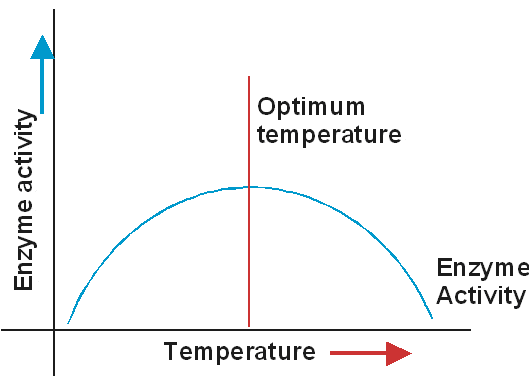
At high temperatures enzyme activity declines because of:
Denaturation
Decreased Kinetic Motion
Increased H-Bonding
Dissociation of Ionic Compounds

The graph shows the relative rates of action of four enzymes, A, B, C, and D. Which enzyme shows the greatest change in its rate of action with the least change in pH?
enzyme A
enzyme B
enzyme C
enzyme D
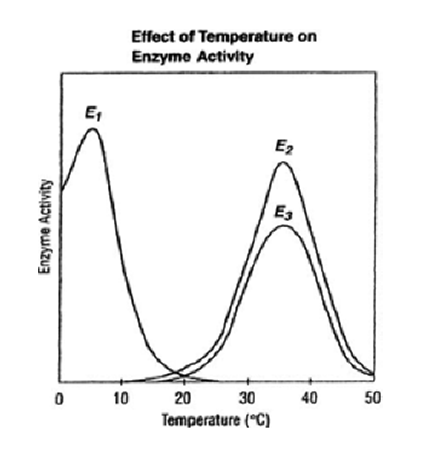
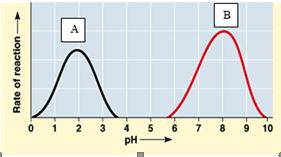
What is the optimal pH of enzyme A?
8
2
5.7-10
10