
 Worksheets
Gr.9 Revision Ch.8
Total questions: 76
Worksheet time: 1hrs 4mins
What is the basic unit of structure and function in living things?
Tissue
Atom
Cell
Molecule
Who was the first person to observe living cells through a microscope?
Robert Hooke
Anton van Leeuwenhoek
Rudolf
Theodor Schwann
What does cell theory state about all living things?
All living things are made of organs.
All living things are made of tissues.
All living things are made of cells.
All living things are made of atoms.
What is the function of a microscope?
To measure temperature
To produce a magnified image
To produce sound
To analyze chemical composition
What did Robert Hooke observe in tree bark?
Living cells
Bacteria
Dead cells
Viruses
What is the role of Rudolf in cell theory?
He studied plant cells.
He observed living cells.
He discovered the microscope.
He stated that cells are made of other cells.
What type of microscope uses beams of electrons?
Light microscope
Electron microscope
Simple microscope
Compound microscope
Which of the following is a component of cell theory?
Cells are only found in plants.
All new cells are produced from existing cells.
Cells do not perform functions.
Cells can be created from nothing.
What is the main function of a cell?
To grow larger
To create energy
To perform functions necessary for life
To reproduce only
What is the difference between light microscopes and electron microscopes?
Light microscopes use light; electron microscopes use sound.
Light microscopes have lower resolution than electron microscopes.
Electron microscopes are simpler to use.
Light microscopes can only see dead cells.
What is one similarity between a single cell and an elephant?
Both can fly.
Both perform functions to stay alive.
Both are made of tissues.
Both can reproduce quickly.
After much research, Matthias Schleiden concluded that
all animals are made of cells
all plants are made of cells
all cells come from cells
pond water is teeming with life
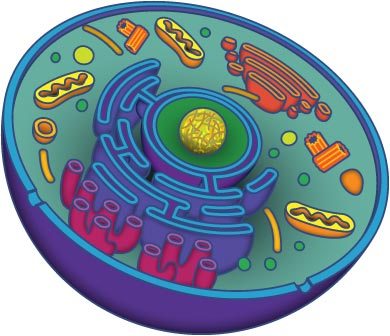
This is a larger cell and has a nucleus.
Prokaryotic
Eukaryotic
Both
This cell has DNA.
Prokaryotic
Eukaryotic
Both
This cell can be a protist, fungi, plant, or animal cell.
Prokaryotic
Eukaryotic
Both
This cell is smaller and does NOT have a nucleus.
Prokaryotic
Eukaryotic
Both
Who discovered and named cells while looking at cork?
Captain Hook
Robert Hooke
Matthais Schleiden
Rudolf Virchow
Which organelle is needed for plants to make energy?
vacuole
cytoplasm
mitochondrion
cell membrane
Why is a cell membrane important to both plant and animal cells?
It stores food and water.
It controls the activities of the cell.
It uses energy from the sun to perform photosynthesis.
It provides a barrier between the cell and its environment.
Which job is performed by the cell wall of a plant?
maintaining shape and structure
controlling functions
breaking down materials
passing on genetic material
How does a plant collect energy from light?
with its cell wall
with its cytoplasm
with its chloroplast
with its cell membrane
What invention made the discovery of cells possible?
The lightbulb
The phonograph
The kinetoscope
The microscope
What structures do all cells have in common?
cytoplasm
Ribosomes
DNA
cell membrane
nucleus
What do plant cells have that animal cells do not?
Chloroplasts
Cell wall
Large vacuoles
Nucleus
ribosomes
An organelle involved in breaking down lipids, proteins, carbohydrates, damage organelles, and bacteria are ___
Golgi Appaparatus
Vesicles
Vacule
Lysosomes
Both mitochondria and chloroplasts ____
contain their own unique ribosomes that are different than the cells
contain their own unique DNA that are different than the cells
are specialized organelles that capture and release energy
are found in both in plants and animals
The cell semipermeable membrane governs what comes in and out of the cell through
Diffusion
Osmosis
Facilitated Diffusion
Protein Pumps
The Fluid Mosaic Model __
describes the process of making proteins through the fluid movement of ribosomes to the golgi apparatus
describes the movement of RNA through the nuclear pore into the cytoplasm
describes the cell's boundary composed of the cell wall and the cytoskeleton
describes the cell membrane as made of many different parts that are not fixed in one place.
In diffusion
water moves from a high concentration to a low concentration
water moves from a low concentration to a high concentration
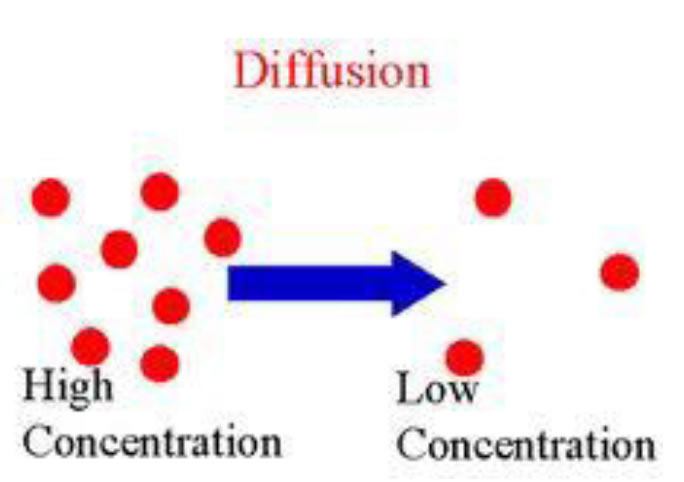
molecules move from a high concentration to a low concentration
molecules move from a low concentration to a high concentration
Water, oxygen and carbon dioxide move across the permeable cell membrane by ____
diffusion
facilitated diffusion
endocytosis
exocytosis
What does SEM stand for?
scanning electron microscope
sandwich electron microscope
soft electron microscope
Sara eats margarine
a microscope that uses a light and only one lens to magnify an image
(a)
In this type of microscope, electrons pass through objects as they are viewed
(a)
In this type of microscope electrons bounce off an object and computers produce a 3-D image of the objects
(a)
What is the difference between diffusion and osmosis?
Diffusion is the general movement of molecules; osmosis specifically refers to the movement of water across a membrane.
Osmosis is the movement of all types of molecules, while diffusion is only for water.
Diffusion requires energy input, whereas osmosis does not.
Diffusion only occurs in gases, while osmosis occurs in liquids.
Which of the following is TRUE about active transport?
it requires energy
it does not require energy
It moves substances down their concentration gradient.
It moves substances from a high to a low concentration.
A solution in which the concentration of solutes is the same inside and outside of a cell is a _____________________ solution.
hypertonic
hypotonic
isotonic
homeotonic
Cell "drinking" is referred to as which of the following?
phagocytosis
pinocytosis
exocytosis
passive transport
Cell "eating" is referred to as which of the following?
phagocytosis
exocytosis
pinocytosis
passive transport
What can happen to a cell in a hypotonic solution?
It can shrink and shrivel up.
It can swell and burst.
Nothing will happen.
All of these are correct.


The cell membrane maintains...
Energy
Homeostasis/Equilibrium
The cell looking good
What kind of energy is used in active transport?
ENERGY IS NOT USED IN ACTIVE TRANSPORT!!!!!
Solar Energy
ATP
Mechanical Energy
Several parts of an animal cell are involved in the processes of protein synthesis, packaging, and export. Which of the following correctly places the cell parts in the order in which they are involved?
nucleus → vacuole → cell membrane
mitochondria → vacuole → cell membrane
ribosome → endoplasmic reticulum → Golgi apparatus → cell membrane
lysosome → endoplasmic reticulum → Golgi apparatus → cell membrane
Golgi apparatus
A flattened stack of tubular membranes that modifies proteins and packages them for distribution outside the cell.
A vesicle that contains digestive enzymes for the breakdown of excess or worn out cellular substances
A framework for the cell within the cytoplasm.
The control center of the cell that contains coded directions for the production of proteins and cell division.
Nucleus
The control center of the cell that contains coded directions for the production of proteins and cell division.
Organelle that is the site of protein synthesis.
A vesicle that contains digestive enzymes for the breakdown of excess or worn out cellular substances
A framework for the cell within the cytoplasm.
lysosomes
An inflexible barrier that provides support and protect the plant cell.
A double membrane organelle with thylakoids containing chlorophyll
A vesicle that contains digestive enzymes for the breakdown of excess or worn out cellular substances
Projections that aid in locomotion and feeding.
cytoskeleton
A framework for the cell within the cytoplasm.An inflexible barrier that provides support and protect the plant cell.
A membrane bound organelle that makes energy available to the rest of the cell.
A framework for the cell within the cytoplasm.
A membrane bound vesicle for the temporary storage of materials.
Ribosomes
Projections that aid in locomotion and feeding.
Organelle that is the site of protein synthesis.
A membrane bound organelle that makes energy available to the rest of the cell.
A flexible boundary that controls the movement of substances into and out of the cell.
plasma membrane
A flexible boundary that controls the movement of substances into and out of the cell.
A membrane bound vesicle for the temporary storage of materials.
A vesicle that contains digestive enzymes for the breakdown of excess or worn out cellular substances
An inflexible barrier that provides support and protect the plant cell.
endoplasmic reticulum
A flexible boundary that controls the movement of substances into and out of the cell.
A membrane bound vesicle for the temporary storage of materials.
A highly folded membrane that is the site of protein synthesis.
An inflexible barrier that provides support and protect the plant cell.
chloroplast
An inflexible barrier that provides support and protect the plant cell.
Projections that aid in locomotion and feeding. Also used to sweep substances along surfaces.
Organelles that occur in pairs and are important for cell division.
A double membrane organelle with thylakoids containing chlorophyll
centrioles
Projections that aid in locomotion and feeding. Also used to sweep substances along surfaces.
Organelles that occur in pairs and are important for cell division.
A flexible boundary that controls the movement of substances into and out of the cell.
A vesicle that contains digestive enzymes for the breakdown of excess or worn out cellular substances
What fluid can be found in cells that holds organelles?
Cytoplasm
Chlorine
Blood
Plasma
Which plant organelle transforms light into glucose to use as food?
Nucleus
Vacuoles
Mitochondria
Chloroplasts
What organelle is used as storage?
Ribosome
Cell Wall
Vacuole
Cell
example of a prokaryote cell is
Animal Cell
Plant Cell
Virus
Bacteria
The function of the smooth ER is to
Make lipids
Make proteins
Make carbohydrates
Make nucleic acids


