
 Worksheets
Blood and Hematopoiesis Quiz
Total questions: 25
Worksheet time: 13mins
What is hematopoiesis?
The production of blood cells and platelets
The breakdown of blood cells
The circulation of blood in the body
The oxygenation of blood
Which of the following is a component of whole blood?
Plasma and cells
Only plasma
Only red blood cells
Only white blood cells
Which of the following is a type of granulocyte?
Neutrophils
Lymphocytes
Monocytes
Platelets
What are the two types of agranulocytes?
Neutrophils and Eosinophils
Lymphocytes and Monocytes
Basophils and Neutrophils
Eosinophils and Basophils
Which of the following is NOT a type of granulocyte?
Neutrophils
Eosinophils
Basophils
Monocytes
Where does hematopoietic activity primarily occur in adults?
Liver
Spleen
Thymus
Red bone marrow
What is the process of erythropoiesis responsible for?
Production of leukocytes
Production of thrombocytes
Production of erythrocytes
Production of antibodies
Which process involves the production of leukocytes?
Thrombopoiesis
Erythropoiesis
Leukopoiesis
Hemopoiesis
Thrombopoiesis is the production of which type of cells?
Erythrocytes
Leukocytes
Thrombocytes
Lymphocytes
What is the primary function of cytokines?
To store genetic information
To provide structural support to cells
To affect the behavior of other cells through signaling
To transport oxygen in the bloodstream
How does erythropoietin (EPO) affect erythroid precursor cells?
It causes them to shrink
It causes them to divide and mature
It causes them to die
It causes them to become inactive
What triggers the production of erythropoietin (EPO) in the kidneys?
Increase in blood sugar levels
Decrease in oxygen tension in blood
Increase in blood pressure
Decrease in body temperature
What is the primary function of erythropoietin (EPO)?
To control blood pressure
To regulate erythropoiesis or red blood cell production
To aid in digestion
To enhance muscle growth
What happens to the nucleus of rubricytes as they mature?
It becomes more visible
It disappears completely
It clumps and changes
It enlarges
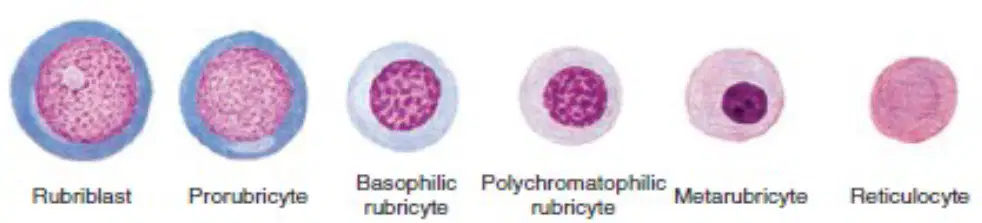
What is a characteristic of metarubricytes?
They can divide
They have a deep red cytoplasm
They are mature RBCs
Hemoglobin formation is incomplete
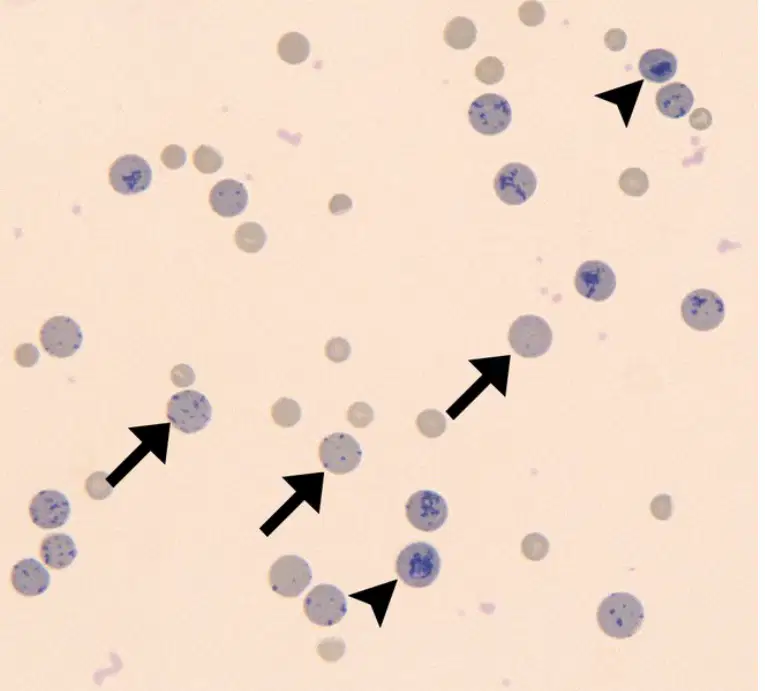
What type of stain is used in the image to analyze feline blood?
Wright's Stain
New Methylene Blue Stain
Gram Stain
Hematoxylin and Eosin Stain
What is another name for a reticulocyte?
Polychromatic RBC
Erythrocyte
Leukocyte
Thrombocyte
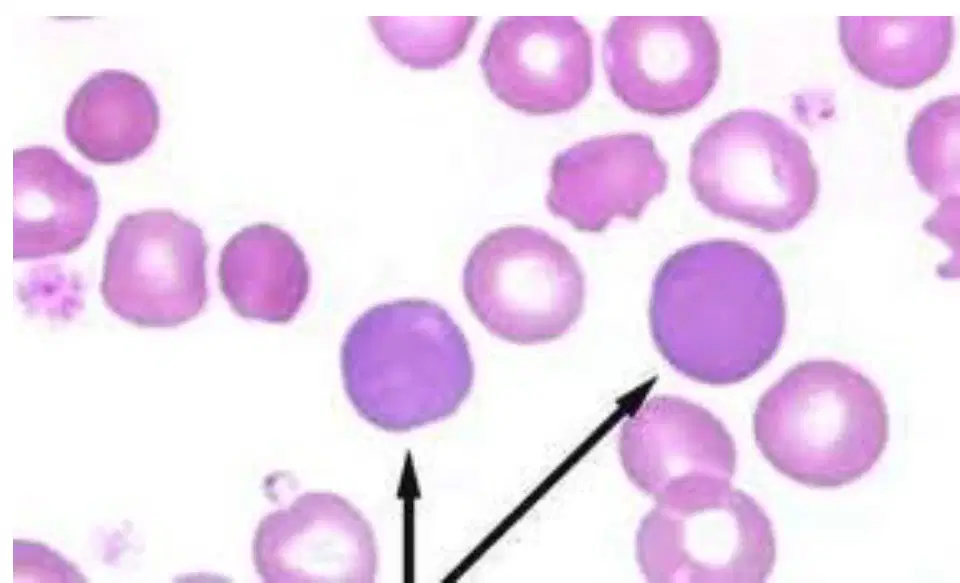
What type of stain is used in the image to identify canine blood cells?
Wright's stain
Diff Quik
Gram stain
Hematoxylin and eosin
What is thrombopoietin primarily produced in?
Kidney
Liver
Heart
Pancreas
Which of the following cells are part of the proliferation pool in granulopoiesis?
Myeloblasts
Band cells
Segmented granulocytes
Erythrocytes
What is a characteristic feature of myeloblasts?
Large with a round to oval nucleus, prominent nucleolus, pale gray-blue cytoplasm
Large, pale-staining, prominent reddish cytoplasmic granules with no obvious nuclei
Smaller with a round nucleus—characteristics of mature cells appear
Nuclei with two or more lobes
Which cell type in granulopoiesis has a horseshoe-shaped nucleus with parallel sides?
Myeloblasts
Promyelocytes
Band cells
Segmented granulocytes
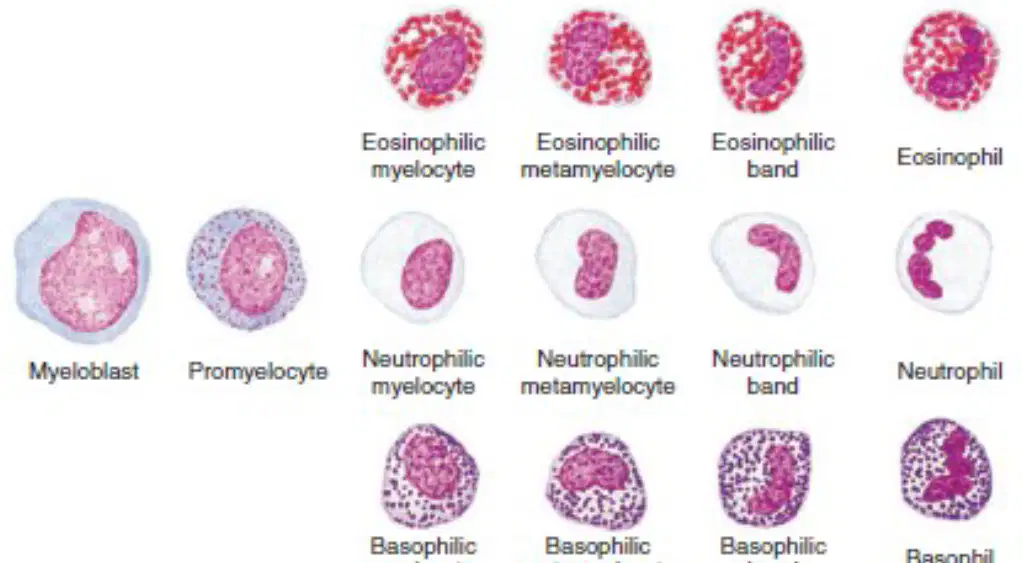
What is the process of granulocyte formation called?
Granulopoiesis
Hematopoiesis
Lymphopoiesis
Thrombopoiesis
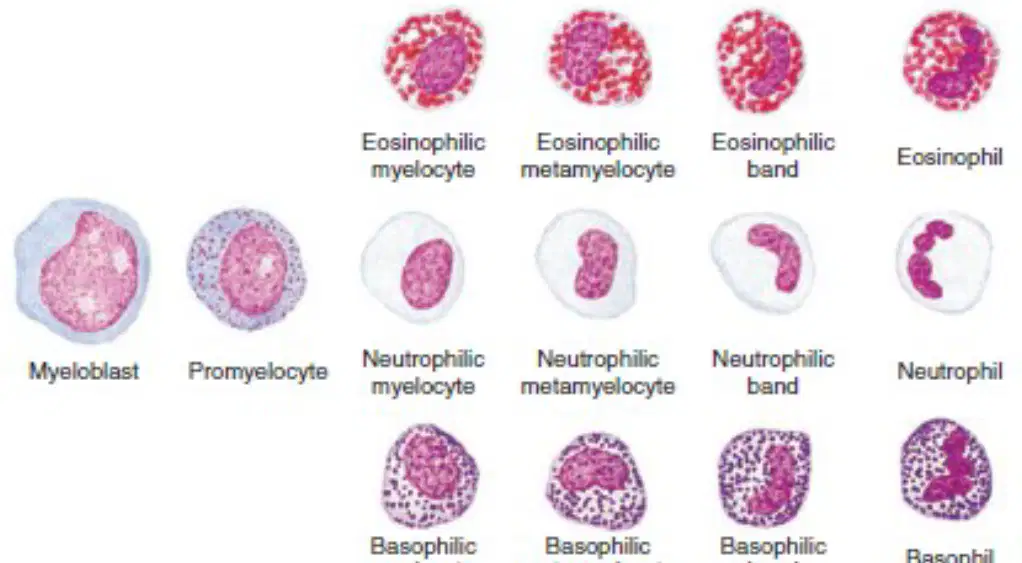
Which cell type is the earliest stage in granulopoiesis?
Myeloblast
Neutrophil
Eosinophil
Basophil
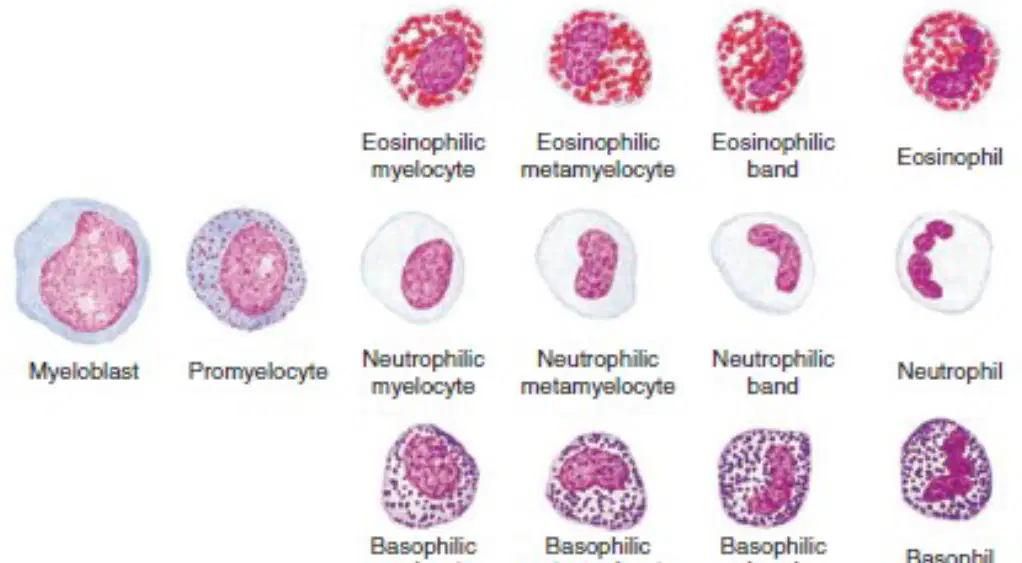
Identify the cell type that is a mature granulocyte.
Neutrophil
Promyelocyte
Myeloblast
Metamyelocyte

