
 Worksheets
THE OBGYN CHALLENGE QUIZ 2025 - SIMSOG
Total questions: 20
Worksheet time: 30mins
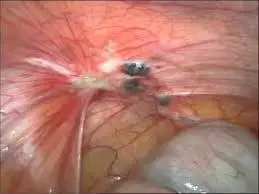
A 29-year-old woman presents with severe dysmenorrhea and deep dyspareunia. Laparoscopic image shows bluish-black “powder burn” lesions on the uterosacral ligament. Which of the following findings is most consistent with the diagnosis?
Elevated serum CA-125 suggesting possible ovarian malignancy
Cyclic dyschezia from rectovaginal septum involvement
Absence of inflammatory markers in peritoneal fluid
Chocolate cysts are pathognomonic
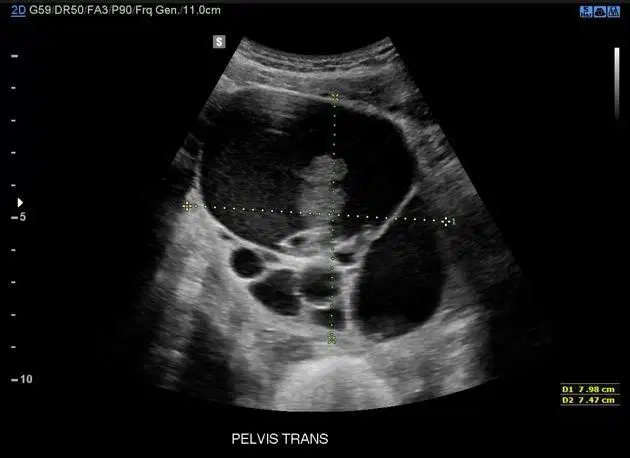
A 45-year-old woman presents with mild fatigue and occasional palpitations for 2 months. She has no heat intolerance, weight loss, or prior thyroid disease. Pelvic discomfort is minimal. Thyroid function tests are normal. Serum CA-125 is 95 U/mL. Pelvic ultrasound shows a 6.5-cm right ovarian mass with predominantly solid components and a few small cystic areas. Minimal ascites are noted. Which of the following is the most likely explanation for the elevated CA-125?
Early-stage epithelial ovarian carcinoma confined to the ovary
Benign ovarian tumor causing peritoneal irritation
Endometriosis involving the ovarian mass and peritoneum
Hyperfunctioning struma ovarii
A postpartum woman with minimal breast development wishes to breastfeed. Best initial management to establish lactation is:
Arrange urgent endocrine workup for possible 46,XY gonadal dysgenesis before any lactation attempt.
Give high-dose estrogen to promote breast growth before attempting breastfeeding.
Recommend exclusive formula feeding without attempting induction.
Initiate regular breast stimulation with supervised domperidone and scheduled lactation-support follow-up.
I. Right-upper-quadrant pain after pelvic infection; laparoscopy reveals multiple “violin-string” adhesions on the liver capsule. A. Complete androgen insensitivity syndrome II. Young adult with primary amenorrhea, normal breast development, absent uterus on imaging, and firm inguinal masses. B. Piskacek's sign III. Sudden, profuse, watery vaginal discharge in a postmenopausal woman, sometimes accompanied by intermittent lower abdominal cramping. C. Fitz-Hugh-Curtis syndrome IV. Palpable asymmetry of the uterus due to lateral implantation of the embryo - classic sign of ectopic pregnancy, detectable during early pelvic examination. Which of the following best matches the statements?
I - A, II - B, III - C, IV - D
I - C, II - A, III - D, IV - B
I - D, II - A, III - C, IV - B
I - C, II - A, III - B, IV - D
A 29-year-old woman presents with primary infertility for 2 years. She reports mild lower abdominal discomfort and scant, irregular menstrual bleeding. She denies fever, weight loss, or history of pelvic inflammatory disease. Ultrasound shows normal uterus and ovaries. Hysterosalpingography demonstrates bilateral distal tubal narrowing with irregular contour and minimal peritubal spillage. Which of the following is the next best step in management?
Perform endometrial sampling for Mycobacterium tuberculosis PCR and histopathology
Proceed with diagnostic laparoscopy and chromopertubation to assess tubal patency
Start empirical anti-tubercular therapy for 6 months without histological confirmation
Attempt hysteroscopic tuboplasty for both fallopian tubes before confirming infection
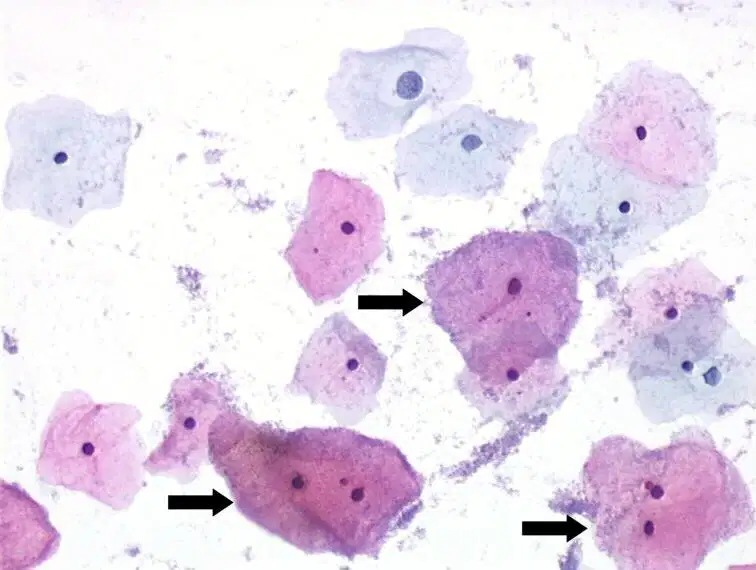
A 26-year-old woman presents with vague vaginal discharge, mildly off-white, intermittent odor, and occasional pruritus. She completed oral metronidazole 500 mg twice daily for 7 days one week ago, but symptoms persist. Vaginal pH is 4.7. Which of the following best explains her persistent symptoms; and what is the most appropriate next step in management? Image showing vaginal smear with scattered epithelial cells with subtle bacterial adherence and mixed background flora.
Bacterial biofilm resistant to metronidazole; repeat oral metronidazole for 7 more days
Mixed vaginal biofilm with partial anaerobic dominance; intravaginal clindamycin 2% cream for 7 days
Reinfection from sexual partner harboring Gardnerella; intravaginal clindamycin for 7 days
Subclinical Trichomonas infection with coexisting biofilm; empirical oral tinidazole for 5 days
A 28-year-old woman at 30 weeks gestation presents with progressive shortness of breath on exertion, orthopnea, and mild bilateral leg swelling. She has a history of chronic hypertension and obesity. Vital signs: BP 130/80 mmHg, HR 110/min, RR 22/min, SpO₂ 95% on room air. Echocardiography shows left ventricular ejection fraction of 35% with global hypokinesia. BNP is mildly elevated. Which of the following is the next best step in management?
Initiate low-dose intravenous furosemide with careful maternal and fetal monitoring
Start low-dose oral carvedilol immediately to improve systolic function
Admit for strict bed rest and fluid restriction only
Plan for early delivery at 31 weeks to reduce maternal cardiac workload
A 30-year-old woman, 22 weeks pregnant, undergoes routine cervical cytology screening. Her Pap smear shows HSIL (High-grade Squamous Intraepithelial Lesion). She has no prior abnormal results and is otherwise asymptomatic. Which of the following is the next best step in management?
Immediate colposcopic examination with directed biopsy if indicated
Deferral of all evaluation until 6 weeks postpartum
Excisional procedure (LEEP/conization) during pregnancy
Repeat Pap smear and HPV co-testing after delivery
A 58-year-old multiparous woman presents with pelvic heaviness and stress urinary leakage. On exam, the cervix is visible at the introitus. Which of the following best explains her urinary symptoms?
Bladder base descent secondary to apical prolapse
Urethral hypermobility from anterior vaginal wall laxity
Functional urethral kinking due to uterine descent
Estrogen-deficiency–related sphincter weakness
A 25-year-old G2P1 woman at 12 weeks gestation, on carbamazepine for epilepsy, is worried about neural tube defects. On examination, she appears pale, and her heart rate is 110/min. Laboratory investigations reveal hemoglobin of 6.5 g/dL, MCV 68 fL, and peripheral smear shows microcytic hypochromic anemia. Which of the following is the most immediate maternal concern in this patient?
Folic acid supplementation to reduce fetal neural tube defects
Switching antiepileptic therapy to levetiracetam
Maternal iron deficiency anemia
Prenatal screening for fetal anomalies
A 22-year-old patient with 46,XY androgen insensitivity syndrome is undergoing laparoscopic gonadectomy. The surgeon plans to place three laparoscopic ports: one just above the umbilicus, and two in the lower abdomen. Postoperatively, the patient notices mild numbness over the skin just above the pubic bone. Which port placement is most likely responsible for this sensory change?
Umbilical port
Left lower abdominal port near the anterior superior iliac spine
Right lower abdominal port 2–3 cm above the pubic symphysis, lateral to midline
Suprapubic midline port just above the symphysis
A 30-year-old G3P2 woman at 36 weeks gestation presents with mild right upper quadrant discomfort and nausea. She is anxious because she read about preeclampsia. On examination, BP is 150/95 mmHg. Labs reveal: AST 95 U/L, ALT 90 U/L, platelets 150,000/μL, hemoglobin 11 g/dL. Fetal heart rate is reassuring. What is the most likely diagnosis?
HELLP syndrome
Preeclampsia with mild liver involvement
Acute fatty liver of pregnancy
Viral hepatitis
A primigravida in active labour develops intense uterine contractions after artificial rupture of membranes. Soon after, despite full cervical dilation, oxytocin infusion is stopped and uterine contractions begin to weaken. Which of the following best explains why uterine activity decreases even though circulating oxytocin levels remain elevated?
Oxytocin receptors become saturated and unresponsive due to receptor desensitization
Loss of cervical stretch interrupts the afferent limb of the Ferguson reflex
Stretch of the vagina rather than cervix now inhibits oxytocin secretion
Placental prostaglandins downregulate myometrial responsiveness to oxytocin
A fetus with a 46,XX karyotype develops a mutation at five months of gestation that halts germ cell mitosis but does not affect other ovarian tissue. At birth, her ovaries appear structurally normal but contain very few germ cells. Which future finding is most likely?
Normal puberty with regular ovulatory cycles
Primary amenorrhea due to streak gonads
Premature ovarian insufficiency with early menopause
Normal puberty but rapid decline in fertility after adolescence
A 50-year-old woman presents for routine gynecologic evaluation. Her history includes: ● Menarche at 12, menopause at 49 ● Three full-term pregnancies ● Infertility treated for 1 year with clomiphene in her late 20s ● Endometriosis diagnosed at 30, managed surgically and medically ● Oral contraceptive use for 2 years in her 20s ● Mother diagnosed with ovarian cancer at 60. Which of the following statements best integrates her overall epithelial ovarian cancer risk?
Multiple pregnancies and short-term oral contraceptive use largely neutralize risk from early menarche and endometriosis
Family history alone without BRCA testing or Lynch testing is sufficient to place her at very high ovarian cancer risk
Prior infertility treatment, endometriosis, and early menarche increase lifetime ovulatory cycles, and elevate risk despite high parity
Endometriosis reduces ovarian cancer risk, so she is overall at lower risk despite reproductive history
20 year old woman presents to ED due to severe abdominal pain. She has a past history of regular but extremely painful periods. She is sexually active with a single, long-term partner and states she always uses condoms. Her last menstrual period was 2 weeks ago and was normal for her in terms of duration and volume of blood loss. A transvaginal ultrasound shows 30mLs of free fluid in the pouch of douglas, normal vascularity to the ovaries bilaterally and a 4cm right unilocular ovarian cyst with homogenous ‘ground-glass’ contents. What is the most likely cause of her abdominal pain?
Ovarian torsion
Ruptured endometrioma
Ectopic pregnancy
Hydrosalpinx
Pelvic inflammatory disease
A 38-year-old G₂P₂ woman with a confirmed BRCA1 mutation comes for a “tubal ligation” after completing her family. She has no breast symptoms and normal pelvic imaging. Which management is most appropriate?
Laparoscopic tubal ligation
Bilateral salpingectomy alone
Bilateral salpingo-oophorectomy
Salpingectomy with ovarian conservation until menopause
A 30-year-old G₂P₁ woman presents with 7 weeks of amenorrhea, mild right lower abdominal pain, and spotting. She has a history of treated chlamydial infection and prior laparoscopic appendectomy. Vital signs are stable. Transvaginal ultrasound shows no intrauterine gestational sac, a 1.8 cm right adnexal mass with peripheral vascularity, and minimal free fluid. Serum β-hCG is 1,600 mIU/mL. Which of the following statements is incorrect regarding this case?
Interstitial ectopics have higher rupture risk due to surrounding myometrial stretch.
Methotrexate efficacy decreases if β-hCG rises >5% between two measurements 48 hours apart.
Progesterone supplementation improves ectopic implantation outcomes in conservative management.
Prior chlamydial infection increases ectopic risk by impairing tubal motility and local immune defense.
A 32-year-old woman presents with chronic suprapubic discomfort, urinary urgency, and frequency for the past 6 months. Symptoms worsen during her period but are not associated with hematuria. Pelvic exam and ultrasound are normal. Which is the most likely diagnosis?
Bladder endometriosis
Interstitial cystitis
Urachal remnant hemorrhage
Vesical carcinoma
A 32 year old woman presents with secondary amenorrhea and cyclic pelvic pain after a postpartum D and C, consistent with intrauterine adhesions (Asherman’s syndrome). She also has persistent fatigue and low blood pressure since her complicated postpartum hemorrhage. Hormonal profile shows low FSH, LH, and prolactin, with normal estradiol. Which of the following is the most appropriate next step?
Hysteroscopic adhesiolysis with post operative estrogen therapy
Pituitary MRI with endocrine evaluation for Sheehan’s syndrome
Progesterone withdrawal challenge to assess endometrial response
Observation with reassurance and repeat labs in 3 months

