
 Worksheets
APES Unit 1 Review
Total questions: 60
Worksheet time: 53mins
This biome has grass, but few trees due to fires, drought, and grazing
temperate grassland
coniferous forest
desert
savanna
What is the main function of photosynthesis for a plant?
To make glucose
To make carbon dioxide
To make oxygen
To make proteins
What service do decomposers perform?
Store carbon dioxide
Recycle nutrients from organic matter (cycle C, N and P in their cycles)
Produce phosphorus for plants
Filter water
A forest has a GPP of 3.8 kcal/m^2/year and the rate of cellular respiration is 2.4 kcal/m^2/year. What is the NPP?
6.2 kcal/m^2/year
1.4 kcal/m^2/year
1.0 kcal/m^2/year
9.12 kcal/m^2/year
1.58 kcal/m^2/year
Choose the correct sequence for energy flow within an ecosystem
Herbivores --> producers --> carnivores --> scavengers
Producers --> herbivores--> carnivores --> decomposers
Producers --> carnivores --> herbivores--> carnivores
Scavengers--> carnivores --> herbivores--> producers

One characteristic feature of the tundra is that only the surface thaws in the summer and refreezes in the winter, leaving a permanently frozen subsoil. This characteristic is known as
Hoarfrost
Glaciation
Permafrost
Crystallization

The kangaroo rat is able to get all of the water it needs through its food and therefore, never needs to drink liquid. This animal has adapted to survive in which biome?
Forest
Tundra
Desert
Grassland


The rain forest soil is
poor and rocky
frozen soil
thick and nutrient rich
thin and nutrient poor
Which biome, because of its climate, has the largest number of species of plants and animals?
Tundra
Tropical Rainforest
Desert
Coniferous forest

__________ primary productivity = the organic materials that remain after photosynthetic organisms in the ecosystem have used some of these compounds for their cellular energy needs (cellular respiration).
Gross
Total
Net
Secondary

Ecological efficiency from one trophic level to the next is generally:
1%
10%
75%
90%
Which of the following is something that mangroves provide?
nursery habitats for fish
rookeries, nesting areas, for birds
protection from storm winds, waves, and floods
an underwater rainforest
Which part of the mangrove ecosystem plays a crucial role in trapping and storing carbon?
Mangrove leaves
Mangrove roots
Mangrove flowers
Mangrove fruits

In the nitrogen cycle, denitrification is the process of _______
No3 to N2 so it can return to the atmosphere
N2 to NH3 and NH4
Evaporation
Photosynthesis & respiration through fossil fuels.
Organisms like plants and animals assimilate nitrogen and incorporate it into __________.
ammonia
nitrate
glucose C6H12O6
This is NOT a part of the phosphorus cycle.
Phosphate is incorporated into sedimentary rocks
Phosphate bound to soil
Atmospheric phosphate
Phosphate is absorbed from the soil by plants

In general, algal blooms occur when
toxins accumulate in shellfish.
nutrients decrease in the water.
nutrients increase in the water.
The phosphorus cycle occurs much more quickly than the carbon and nitrogen cycles.
true
false
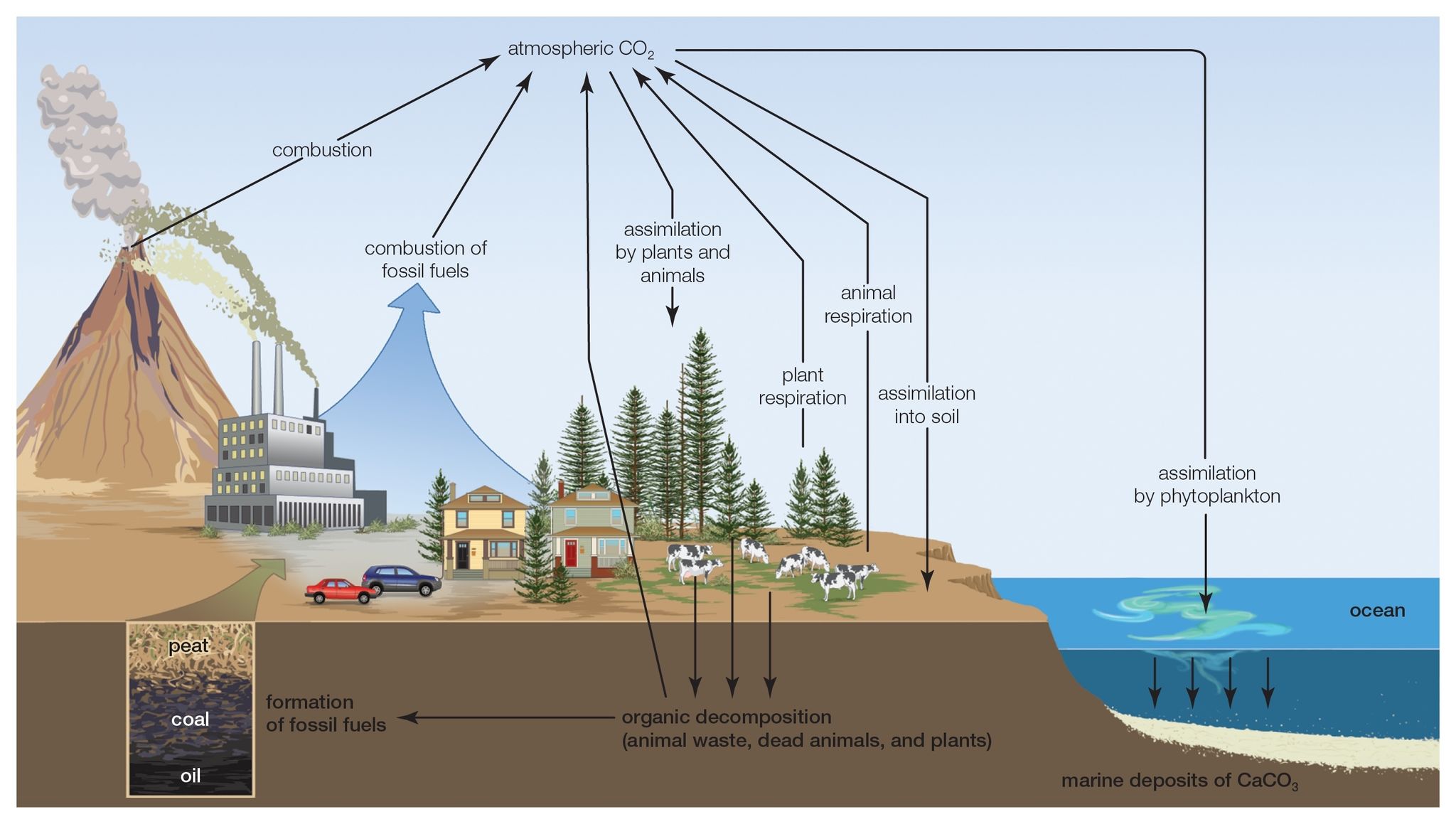
What is the main reservoir for the carbon cycle?
Atmosphere
Ocean sediment
Coal
Vegetation

Which element makes up the majority of the atmosphere?
Carbon
Oxygen
Phosphorus
Nitrogen
Which of the following describes the role of nitrogen-fixing bacteria in the nitrogen cycle? Nitrogen-fixing bacteria convert....
nitrates intro nitrogen gas
ammonia into proteins
nitrogen gas into ammonium ions
proteins into nitrates

Which of the following processes shown in the diagram leads to precipitation? Evaporation rate, Runoff rate, Surface infiltration rate, Deep infiltration rate
Evaporation rate
Runoff rate
Surface infiltration rate
Deep infiltration rate
Mutualism
None of the following
When the relationship between two organisms is beneficial for both
When the relationship between two organisms benefits one and does on effect the other.
A relationship between two organisms where the parasite benefits and the hose is negatively impacted.
Commensalism
When the relationship between two organisms positively benefits both.
When the host is negatively impacted while the parasite is benefited.
When the relationship between two organisms benefits one and does on effect the other.
Parasitism
When the host is negatively impacted and the parasite is positively impacted.
When the relationship between two organisms positively benifits both
When one organism is positively affected while the other is not effected.
Inter-specific competition
A long term relationship between two organisms
When two different species in an ecosystem compete for the same resources.
When two of the same species are competing for the same resources.
When both species in a relationship benifit
Biotic factors
The living factors in an enviornment
The non-living factors in an environment.
Abiotic factors
The living factors in an environment
The non-living factors in an environment.
Detrivores
An organism that feeds on dead or decaying matter
An organism that converts sunlight into energy
An organism that eats primary consumers
None of the above
If the producer level starts with 8500 calories, how many would make it to the tertiary level?
850 calories
85 calories
8.5 calories
.85 calories

What would happen if the krill sharply declined?
Zooplankton would decline
Cod would increase
Penguins would decline
Squid would increase
Penguins would increase

The kind of wetland formed where saltwater and fresh water meet is called
brujeria
estuary
swamp
marsh

An ecosystem where water covers the soil or water is near the surface of the soil is called
a desert
an ocean
an estuary
a wetland

Adaptations in the deep ocean might include
the ability for plants to excrete salt water
the ability to hold on to rocks against strong current
strong swimming abilities
glowing bacteria to signal in the dark
Adaptations in the river biome might include the ability to ___________
ability to produce energy from sulfur
excrete salt water
resist a strong current
conserve oxygen by not moving

Decomposition and Photosynthesis and part of which carbon cycle?
Geological
Biological
What is the primary driver of fast carbon cycling?
Weathering of rocks
Volcanic eruptions
Cellular metabolism of producers
Ocean currents
Which of the following is a major long-term carbon reservoir?
The atmosphere
Plant biomass
Fossil fuels
Ocean surface waters
How does decomposition contribute to the carbon cycle?
It only releases carbon dioxide into the atmosphere.
It only returns carbon to the soil.
It can release carbon dioxide and return carbon compounds to the soil.
It has no significant impact on the carbon cycle.
The major sink for phosphorus is
sedimentary rock
atmospheric gases
seawater
plants
What things add phosphorus to the soil? Check all that apply.
Decomposition
Erosion
Excretion
Lightning
Respiration

What organism fixes nitrogen in order for plants to use it?
legume plants
bacteria
squirrels
lightening

True or False:
Bacteria create a form of nitrogen that animals can use directly
True
False

What would happen to this nitrogen cycle if a virus killed all the bacteria?
Nitrogen would just keep on cycling
The cycle would stop
Plants would take over for the bacteria
Fish would grow more because there's no bacteria
When deciduous trees shed their leaves, specialized soil bacterial will consume the leaf material for energy and, in the process, will return some of the leaf nitrogen to the soil. What nitrogen cycle process is taking place?
nitrogen fixation
nitrification
denitrification
ammonification
assimilation
Carbon dioxide in the atmosphere enters the biotic parts of the biosphere through _____.
burning of forests
photosynthesis
combustion of fossil fuels
all of these
Cellular respiration occurs in both animal and plant cells.
true
false

