
 Worksheets
Bonds
Total questions: 87
Worksheet time: 44mins
Fill in the blank: ________ are strong bonds with a complete electron transfer (gain or loss of electrons).
Ionic bonds
Covalent bonds
Hydrogen bonds
Metallic bonds
Fill in the blank: ________ are strong bonds where electrons are shared.
Covalent bonds
Ionic bonds
Hydrogen bonds
Metallic bonds
Fill in the blank: ________ are weak bonds between H atoms.
Hydrogen bonds
Ionic bonds
Covalent bonds
Metallic bonds
Carbon is the ___ element in the periodic table.
6th
8th
12th
14th
How many valence electrons does carbon have?
2
4
6
8
What is the study of carbon-containing molecules called?
Organic Chemistry
Inorganic Chemistry
Physical Chemistry
Biochemistry
Which of the following best describes organic chemistry?
Study of metals
Study of carbon-containing molecules
Study of gases
Study of acids
What element is represented by the letter 'C' in the structure shown?
Carbon
Calcium
Chlorine
Copper
What are organic compounds?
Compounds that contain carbon atoms covalently bonded to other elements
Compounds that contain only hydrogen atoms
Compounds that do not contain carbon
Compounds that are only found in gases
Which of the following elements can carbon atoms be covalently bonded to in organic compounds?
Hydrogen (H)
Oxygen (O)
Nitrogen (N)
Other carbon (C) atoms
All of the above
Cells are made of many different ______ compounds.
organic
metallic
radioactive
synthetic
What are macromolecules also known as?
Small molecules
Giant molecules
Simple molecules
Ionic molecules
Polymerization/Dehydration synthesis is the process of making large compounds (polymers) from simple monomers using ________ bonds.
covalent
ionic
hydrogen
metallic
What is the process called where large compounds (polymers) are made from simple monomers using covalent bonds?
Hydrolysis
Polymerization/Dehydration synthesis
Photosynthesis
Respiration

Refer to the diagram showing monomers and a polymer. What does the diagram illustrate?
A) Breaking down polymers into monomers
B) Combining monomers to form a polymer
C) Changing the color of molecules
D) Dissolving monomers in water
What is hydrolysis?
Building up organic compounds (monomers to polymers)
Breaking down organic compounds (polymers to monomers)
Forming ionic bonds
None of the above
Hydrolysis involves breaking ________ bonds.
covalent
ionic
hydrogen
metallic
In the hydrolysis reaction shown, maltose reacts with water to produce which two products?
Glucose and fructose
Glucose and glucose
Maltose and sucrose
Sucrose and water
Fill in the blank: One of the 4 main types of organic compounds in biology is _________.
carbohydrates
metals
minerals
salts
Fill in the blank: One of the 4 main types of organic compounds in biology is _________.
lipids
minerals
metals
salts
Fill in the blank: One of the 4 main types of organic compounds in biology is _________.
proteins
minerals
salts
metals
Fill in the blank: One of the 4 main types of organic compounds in biology is _________.
nucleic acids (DNA & RNA)
minerals
water
salts
What elements make up carbohydrates and in what proportion?
Carbohydrates are made of carbon, hydrogen, and oxygen atoms in the proportion of 1:2:1.
Carbohydrates are made of nitrogen, hydrogen, and oxygen atoms in the proportion of 2:1:2.
Carbohydrates are made of carbon, hydrogen, and nitrogen atoms in the proportion of 1:1:2.
Carbohydrates are made of carbon, oxygen, and sulfur atoms in the proportion of 1:2:1.
Which of the following is an example of a carbohydrate?
Glucose
Water
Sodium chloride
Oxygen
What is the chemical formula for glucose?
C6H12O6
C2H5OH
C12H22O11
CH4
Carbohydrates provide structural support in plants.
True
False
What is a major source of energy for the cell according to the information about carbohydrates?
Glucose
Cellulose
Starch
Glycogen
What is a monosaccharide?
1 sugar molecule
2 sugar molecules
Many sugar molecules in a chain
Which of the following is an example of a monosaccharide?
A) Sucrose
B) Glucose
C) Cellulose
A disaccharide consists of how many sugar molecules?
1
2
Many
Which of the following is an example of a disaccharide?
Glucose
Sucrose
Starch
A polysaccharide is made up of ______ sugar molecules in a chain.
many
one
two
few
Which of the following is an example of a polysaccharide?
Glucose
Sucrose
Starch
What is released when two monosaccharides combine to form a disaccharide?
CO2
H2O
O2
What are lipids?
Polar molecules that are soluble in water
Nonpolar molecules that are insoluble (or mostly insoluble) in water
Polar molecules that are insoluble in water
Nonpolar molecules that are soluble in water
Fats are made up of which elements?
Carbon and Oxygen
Carbon and Hydrogen
Hydrogen and Nitrogen
Oxygen and Nitrogen
Fill in the blank: The subunits of fats are ______ and 3 fatty acids.
glycerol
glucose
amino acid
nucleotide
What is the primary function of fats?
Short-term energy storage
Long-term energy storage
Structural support
Enzyme activity
How many fatty acids are attached to the glycerol backbone?
Three fatty acids
One fatty acid
Two fatty acids
Four fatty acids
Which type of fat has fatty acids with only C-C single bonds?
Saturated Fats
Unsaturated Fats
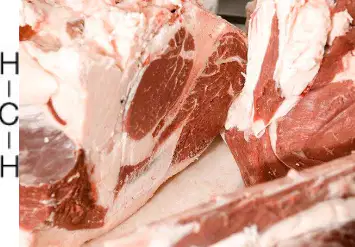
Which type of fat is solid at room temperature?
Saturated Fats
Unsaturated Fats
Trans Fats
Polyunsaturated Fats
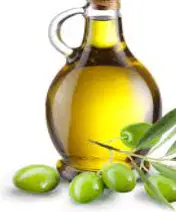
Chains of unsaturated fats 'kink' and are ______ at room temperature.
liquid
solid
gaseous
frozen
Saturated fats make good intermolecular bonds and are solid at room temperature.
True
False
What are the long chains of smaller molecules that make up nucleic acids called?
Nucleotides
Amino acids
Fatty acids
Monosaccharides
Nucleotides join together by ______ bonds to make DNA & RNA.
phosphate
hydrogen
ionic
peptide
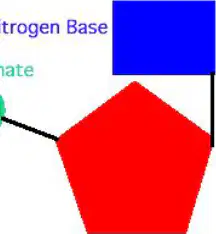
Which of the following is NOT a component of a basic nucleotide structure?
Nitrogen Base
Phosphate
Five Carbon Sugar
Amino Acid
Nucleotides join together by phosphate bonds to make DNA & RNA.
True
False
What does DNA stand for?
Deoxyribonucleic acid
Deoxyribose acid
Dioxyribonucleic acid
Deoxyribonitric acid
Is DNA double-stranded or single-stranded?
Double-stranded
Single-stranded
Triple-stranded
Circular
What is the sugar present in DNA?
Ribose
Deoxyribose
Glucose
Fructose
Which of the following is NOT a nitrogenous base in DNA?
A) Adenine
B) Guanine
C) Uracil
D) Thymine
What is the main function of DNA?
Providing energy
Storing hereditary information
Transporting oxygen
Breaking down food
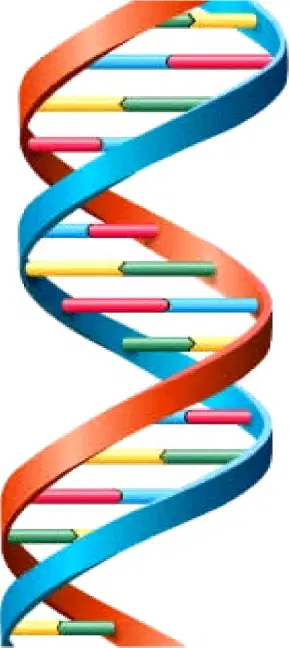
Refer to the diagram of the DNA double helix. Which base pairs with adenine (A)?
Guanine (G)
Thymine (T)
Cytosine (C)
Uracil (U)
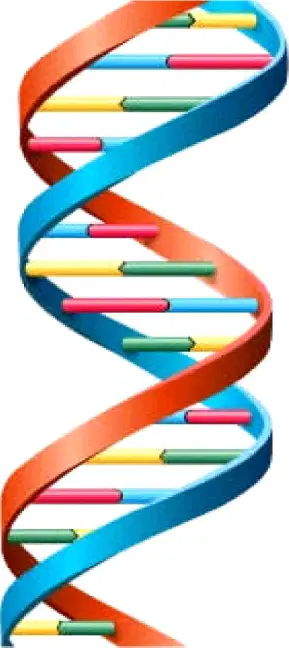
Refer to the diagram of the DNA double helix. Which base pairs with cytosine (C)?
Guanine (G)
Thymine (T)
Adenine (A)
Uracil (U)
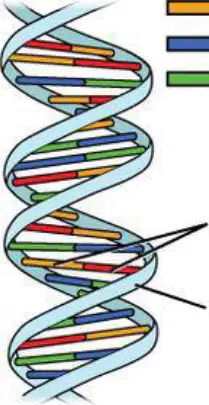
Which of the following is a nitrogenous base found in DNA?
A) Adenine
B) Glucose
C) Ribose
D) Fructose
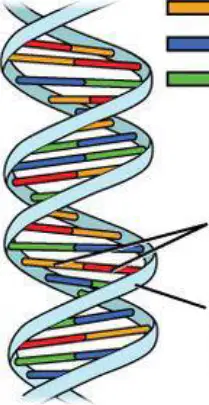
Fill in the blank: The backbone of the DNA molecule is made up of _________
sugar-phosphate
amino acids
fatty acids
nitrogen bases
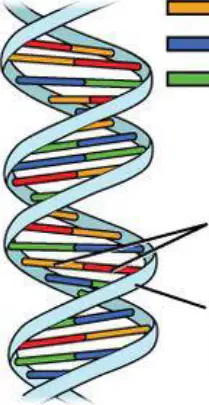
Which nitrogenous base pairs with Thymine in DNA?
Guanine
Cytosine
Adenine
Uracil
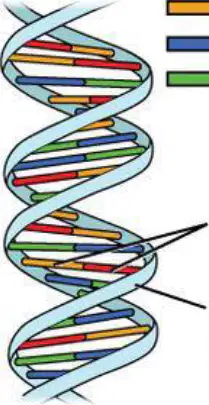
Fill in the blank: In DNA, Guanine always pairs with _________.
Cytosine
Adenine
Thymine
Uracil
What does RNA stand for?
Ribonucleic acid
Ribose nucleic acid
Ribosome nucleic acid
Ribonitric acid
Which of the following is a characteristic of RNA?
Double-stranded
Single-stranded
Contains deoxyribose
Contains thymine
The sugar present in RNA is _______.
ribose
glucose
deoxyribose
fructose
Which of the following is NOT a nitrogenous base found in RNA?
A) Adenine
B) Guanine
C) Thymine
D) Uracil
RNA makes up ribosomes (rRNA) and is involved in protein synthesis (mRNA, tRNA).
True
False
What are proteins made up of?
Nucleic acids
Amino acids
Fatty acids
Sugars
Amino acids are joined together by _______ to make proteins.
peptide bonds
hydrogen bonds
glycosidic bonds
ester bonds
Which of the following elements are found in proteins?
Hydrogen, oxygen, nitrogen, carbon, phosphorus
Sodium, chlorine, potassium, calcium
Iron, copper, zinc, magnesium
Sulfur, selenium, iodine, fluorine
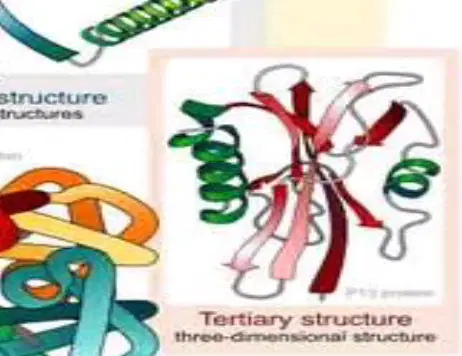
Which structure represents the three-dimensional shape of a single polypeptide chain?
Primary structure
Secondary structure
Tertiary structure
Quaternary structure
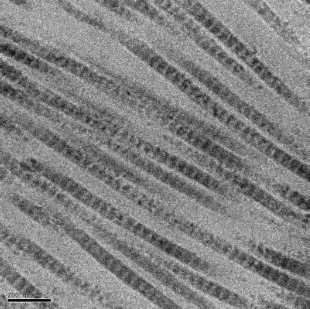
Fill in the blank: One of the functions of proteins is to provide support and structure. An example of such a protein is ________.
collagen
insulin
hemoglobin
amylase
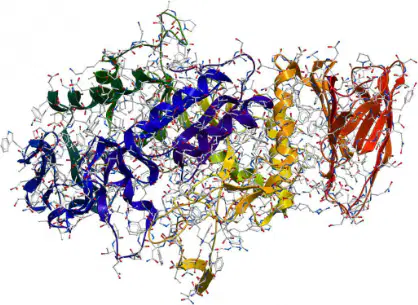
Fill in the blank: Proteins that speed up chemical reactions are called ________.
enzymes
lipids
hormones
carbohydrates
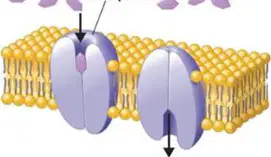
Fill in the blank: Proteins that help in the transport of substances across cell membranes are called ________.
carrier proteins
structural proteins
enzymes
receptor proteins
Which of the following is a function of proteins?
Defense
Hormones
Motion
All of the above
Which protein is responsible for defense in the body?
Insulin
Antibodies
Myosin
Actin
Which protein acts as a hormone?
Insulin
Flagella
Myosin
Actin
Name a protein involved in motion in the body.
Flagella, myosin, or actin
Insulin
Hemoglobin
Collagen
Fill in the blank: ________ are proteins that help defend the body against pathogens.
Antibodies
Enzymes
Hormones
Carbohydrates
Fill in the blank: The protein ________ is a hormone that regulates blood sugar levels.
Insulin
Hemoglobin
Keratin
Collagen
What is a chemical reaction?
A process that releases or stores energy and breaks or forms new chemical bonds
A process that only stores energy
A process that only breaks bonds
A process that does not involve energy
In a chemical reaction, what are the starting materials called?
Products
Reactants
Catalysts
Enzymes
In a chemical reaction, what are the ending materials called?
Reactants
Products
Catalysts
Enzymes
In a chemical equation, the arrow means ________ or _________.
yields; produces
reacts; combines
melts; dissolves
splits; separates
A chemical reaction can both release and store energy.
True
False
Fill in the blank for the photosynthesis chemical reaction: 6CO₂ + 6H₂O + solar energy → ______ + 6O₂.
C₆H₁₂O₆
C₂H₅OH
CH₄
C₆H₆
What is the product formed when sodium (Na) reacts with chlorine (Cl₂)?
NaCl
NaCl₂
Na₂Cl
Na₂Cl₂
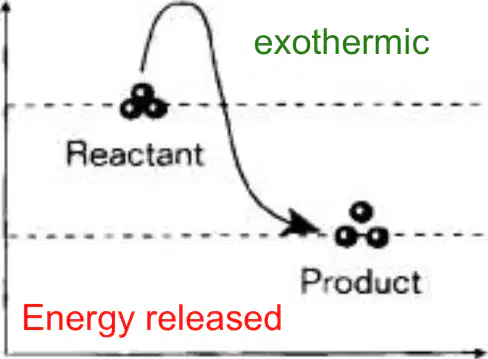
Refer to the diagrams labeled Graph A and Graph B. Which type of reaction is represented by Graph A?
Exothermic
Endothermic
Both
Neither
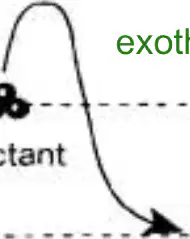
Fill in the blank: In an ________ reaction, energy is released to the surroundings. (Refer to the diagrams labeled Graph A and Graph B.)
exothermic
endothermic
isothermal
photochemical
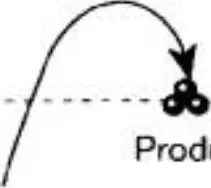
Fill in the blank: In an ________ reaction, energy is stored in the products. (Refer to the diagrams labeled Graph A and Graph B.)
endothermic
exothermic
combustion
decomposition
What is activation energy?
Energy needed to start a chemical reaction.
Energy released during a chemical reaction.
Energy stored in the products of a reaction.
Energy lost as heat in a reaction.

