
 Worksheets
Functions of the US Government Review
Total questions: 40
Worksheet time: 20mins
Which of the following is a function of the Executive Branch?
Interprets laws
Enforces laws
Makes laws
Reviews laws
Which branch of government is responsible for making laws?
Executive Branch
Judicial Branch
Legislative Branch
Federal Courts

What is the purpose of checks and balances in the government?
To ensure one branch has all the power
To allow the federal courts to make laws
To prevent any one branch from becoming too powerful
To give the Executive Branch control over the Judicial Branch
What are the two parts of Congress?
Senate and House of Representatives
Executive and Judicial
Parliament and Council
Assembly and Senate
How many senators are there in total?
50
100
200
435
What authority does Congress have concerning international relations?
Coin money
Declare war
Set up post offices
Punish counterfeiting
What is the purpose of the necessary and proper clause?
To limit the powers of Congress
To give Congress the power to make laws necessary and proper to carry out its duties
To restrict the judicial branch
To define the powers of the President
What is another name for the necessary and proper clause?
The supremacy clause
The commerce clause
The elastic clause
The establishment clause
What are off-year elections?
Elections held during presidential election years
Congressional elections held between presidential elections
Elections held every odd-numbered year
Elections held every four years
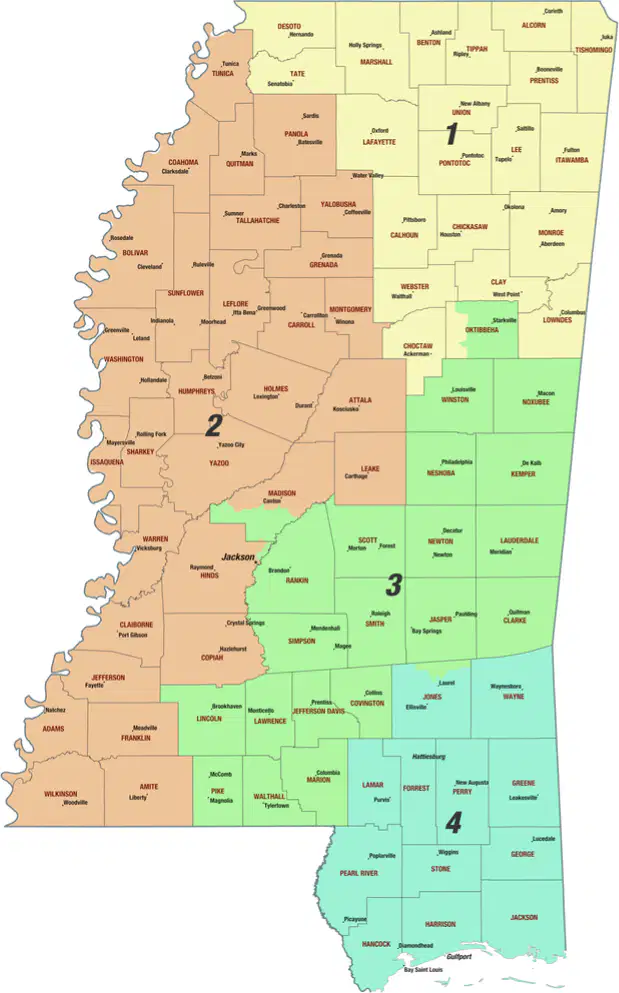
How many seats does Mississippi have in the U.S. House of Representatives?
2
3
4
5
What does Article I of the Constitution direct Congress to do after each census?
Increase the number of states
Reapportion the seats in the House
Elect a new President
Amend the Constitution

What is the term for drawing boundaries of legislative districts to benefit one party or group and handicap another?
Redistricting
Reapportionment
Gerrymandering
Zoning
What is the term length for a U.S. Senator?
2 years
4 years
6 years
8 years
How many Senators are there from each state?
One
Two
Three
Four
Why might Senators be less scrutinized with day-to-day politics?
They serve shorter terms
They focus on local issues
They serve longer terms
They have fewer responsibilities
How many members are there in the House of Representatives?
100
435
50
200
How long is the term for a Representative in the House?
Four years
Six years
Two years
One year

What is a session of Congress?
A period when Congress meets and conducts business
A time when Congress is on vacation
A special meeting called by the Vice President
A year-round meeting of Congress
Who has the authority to call Congress into a special session?
The Vice President
The Speaker of the House
The President
The Chief Justice
What is the most important and powerful position in the House of Representatives?
Majority Whip
Speaker of the House
Minority Leader
Committee Chair
What role does the Speaker of the House play in committee assignments?
Assigns bills to committees
Decides the budget for committees
Appoints committee chairs
Reviews committee reports
In the line of presidential succession, where does the Speaker of the House stand?
First
Second
Third
Fourth
What is one of the roles of committee members, senators, and representatives in the legislative process?
To draft executive orders
To screen proposed laws before they are voted on
To enforce laws
To appoint judges
Who is the leader of the executive branch?
The Vice President
The President
The Cabinet
The Congress
Who assists the President in the executive branch?
The Congress and Senate
The Vice President and Cabinet
The Supreme Court
The Governors
How long is the President's term in office?
2 years
4 years
6 years
8 years
How many times can the President be elected?
Once
Twice
Three times
Four times
What is one of the President's responsibilities in the judicial system?
Appoint Ambassadors, Judges, & high officials
Conduct trials
Write legal opinions
Overturn court decisions
What happens if a bill is vetoed by the President?
The bill automatically becomes law.
The bill is permanently rejected.
The Senate can override the veto with a 2/3rds vote.
The bill is sent to the Supreme Court for review.
What is the role of the Cabinet in the U.S. government?
A formal legislative body
An informal advisory body
A judicial committee
A constitutional entity
Who appoints the head of each Executive Department in the U.S.?
The Vice President
The Senate
The President
The Supreme Court
How often are Cabinet appointments rejected by the Senate?
Frequently
Rarely
Never
Always

What does the Constitution say about the Cabinet?
It mandates the creation of the Cabinet
It mentions the Cabinet as a formal body
It makes no mention of the Cabinet
It requires Congress to create the Cabinet
What are the three branches of government?
Congress, House of Representatives and the Senate
President, Vice President and the Cabinet
Executive, Legislative and Judicial
Judge, Laws and Executive

Which branch of government interprets (judges) the laws for our country?
Executive Branch
Legislative Branch
Judicial Branch
Supreme Branch
This opinion announces the Court's decision and it's reasoning and sets precedent for future similar cases
concurring
majority
dissenting
per curiam
The court’s job of interpreting laws and deciding on constitutionality of laws is called
precedent
en banc
amicus curiae
judicial review
The Supreme Court requires _________ of its justices to agree to hear a case before proceeding. This is known as the “rule of four”.
4
a majority
all
6
Cases reach the Supreme Court through a
certificate
Writ of Certiorari
slip opinion
hypothetical situation
How many justices currently serve on the court?
5
6
9
10

